- English
- French
- German
- Portuguese
- Spanish
- Russian
- Japanese
- Korean
- Arabic
- Greek
- German
- Turkish
- Italian
- Danish
- Romanian
- Indonesian
- Czech
- Afrikaans
- Swedish
- Polish
- Basque
- Catalan
- Esperanto
- Hindi
- Lao
- Albanian
- Amharic
- Armenian
- Azerbaijani
- Belarusian
- Bengali
- Bosnian
- Bulgarian
- Cebuano
- Chichewa
- Corsican
- Croatian
- Dutch
- Estonian
- Filipino
- Finnish
- Frisian
- Galician
- Georgian
- Gujarati
- Haitian
- Hausa
- Hawaiian
- Hebrew
- Hmong
- Hungarian
- Icelandic
- Igbo
- Javanese
- Kannada
- Kazakh
- Khmer
- Kurdish
- Kyrgyz
- Latin
- Latvian
- Lithuanian
- Luxembou..
- Macedonian
- Malagasy
- Malay
- Malayalam
- Maltese
- Maori
- Marathi
- Mongolian
- Burmese
- Nepali
- Norwegian
- Pashto
- Persian
- Punjabi
- Serbian
- Sesotho
- Sinhala
- Slovak
- Slovenian
- Somali
- Samoan
- Scots Gaelic
- Shona
- Sindhi
- Sundanese
- Swahili
- Tajik
- Tamil
- Telugu
- Thai
- Ukrainian
- Urdu
- Uzbek
- Vietnamese
- Welsh
- Xhosa
- Yiddish
- Yoruba
- Zulu
Why Use tantalum round rod in Corrosive Environments?
Few metals handle chemical attacks as well as tantalum, and that is the main reason engineers keep returning to tantalum round rod when a project involves aggressive media. Tantalum forms a stable protective oxide layer, melts at roughly 3,017°C, and remains ductile enough to be machined into fasteners, electrodes, and precision parts. This article explains why tantalum round rod performs so well in corrosive service, where it is used in practice, and which details buyers should confirm before ordering, so that the material you choose matches your process conditions and budget.
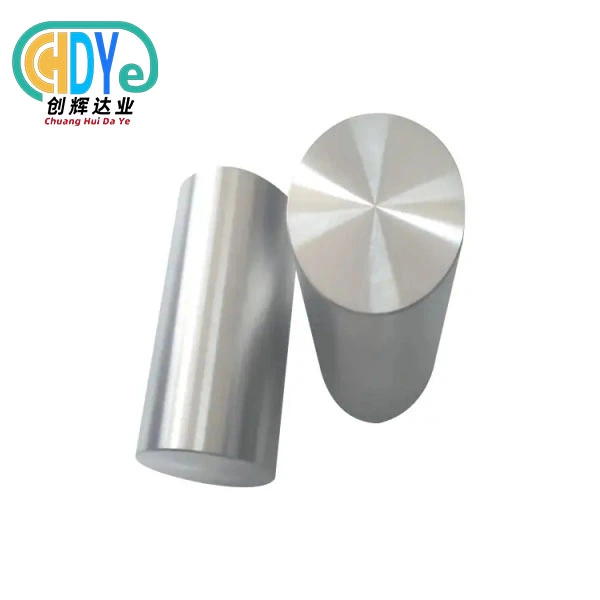
The Science Behind Tantalum Round Rod in Corrosive Service
How the Protective Oxide Layer Works
An oxide coating that is both thin and dense forms on the surface of a tantalum round rod practically immediately after it comes into contact with air or an oxidizing solution. This coating is a result of the interaction between the two. The resilience of the rod to corrosion can be attributed to the inclusion of this oxide coating. Because this layer is chemically stable and has the ability to make a strong bond with the metal, it shields the rod from a wide variety of harsh chemicals that would otherwise eat through normal stainless steels. This is because the rod is protected by the chemical stability of this layer. In the case that the surface is scratched, the film has a propensity to rebuild, which guarantees that the protection will continue to be in place even after extended periods of service. This implies that a tantalum round rod can continue to be reliable in conditions where regular replacement would be expensive. This is significant for those who own equipment since it will allow them to continue to use it.
Compatibility Limits You Should Check
There is no metal that is resistant to every chemical, and in order to select materials in an honest manner, it is necessary to be aware of the boundaries. Nonetheless, compatibility is dependent on the specific chemical, the concentration of the chemical, and the temperature at which it is being used. A tantalum round rod has great performance in a wide variety of acids; nonetheless, compatibility is essential. Hydrofluoric acid and strong alkaline solutions are two examples of compounds that are known to be capable of degrading tantalum that is present in the environment. Before you reach a conclusion on a design, we suggest that you consult our technical experts to discuss the specifics of your operational procedure. This is due to the fact that verifying compatibility at an early stage helps to prevent difficulties and safeguards both your equipment and your timetable.
Thermal Stability in Vacuum and Protective Atmospheres
Tantalum round rod, which has a melting point of around 3,017 degrees Celsius, is ideal for certain high-temperature applications, particularly those that are carried out in vacuum or shielded atmospheres. Tantalum round rod features a melting point of approximately 3,017 degrees Celsius. In contrast to many alloys, which would become softer or more deformed when subjected to these conditions, the metal does not lose its strength or its shape when it is exposed to these conditions. The environment that surrounds tantalum is significant because even at high temperatures, oxygen may still cause damage to tantalum. This is why the atmosphere is so crucial. When the environment is controlled, the use of a tantalum round rod provides furnace designers and laboratory engineers with a material that is stable for the construction of supports, fixtures, and other components associated with heating. This facilitates the creation of these components.
The table below summarizes the main material characteristics.
| Characteristic | Tantalum Round Rod | Practical Meaning |
|---|---|---|
| Melting point | About 3,017°C | Suitable for selected high-temperature use |
| Corrosion resistance | Strong in many acids | Long service life in chemical equipment |
| Ductility | Good | Can be machined and fabricated into parts |
| Surface behavior | Stable oxide layer | Self-protecting in oxidizing media |
| Key caution | Hydrofluoric acid, strong alkalis | Always verify chemical compatibility |
Where Tantalum Round Rod Delivers Value?
Chemical Processing Equipment
Tantalum round rod is utilized in chemical plants for the purpose of fabricating components that are subjected to direct contact with corrosive liquids. These components include stirrers, fasteners, and small internal fittings. As a result of the metal's resistance to a wide variety of acids, components built from it typically have a much longer lifespan than those made from alloys with lower costs. This results in fewer shutdowns and fewer replacement work hours. Additionally, the rod can be utilized as feedstock for the production of specialty parts that are machined according to precise drawings. It is possible for operators of heat-exchange systems and reactors to reduce their long-term maintenance expenses by using a tantalum round rod that has been carefully selected.
Vacuum Furnace and Industrial Electrode Uses
In vacuum furnaces, tantalum round rod is machined into supports, holders, and other components that are required to be able to bear heat without contaminating the load. These components are required to be suitable for use in vacuum furnaces. Furthermore, it is used for industrial electrodes, which require both corrosion resistance and electrical stability. Furthermore, it is utilized for industrial electrodes. The high melting point in severe temperature cycles provides a comfortable margin, and the ductility of the metal makes it easier to form than a large number of other refractory materials. Both of these characteristics make the metal easier to form. When it comes to these duties, producers who work with tantalum round rod get access to a material that is not only durable but also functional in terms of fabrication. This material is a tantalum round rod.
Precision Parts and Laboratory Equipment
When it comes to precision manufacturing and laboratories, tantalum round rod is highly valued due to its ability to be machined, drilled, and polished into small components that are exact. Things such as specific fittings, sample holders, and unique metal pieces for research settings are examples of typical applications. The corrosion resistance of tantalum helps to limit the possibility of contamination in studies, which is especially important given that laboratory work frequently involves the use of powerful reagents. The selection of tantalum round rod for these jobs provides researchers and engineers with a material that is dependable, clean, and continues to operate reliably throughout a large number of test cycles.
The following table lists common uses.
| Application Area | Typical Parts Made from Tantalum Round Rod |
|---|---|
| Chemical processing equipment | Fasteners, stirrers, internal fittings |
| Vacuum furnace components | Supports, holders, fixtures |
| Industrial electrodes | Electrode rods and contacts |
| Precision-machined parts | Custom components, pins, shafts |
| Laboratory equipment | Sample holders, test fixtures |
How to Specify and Machine Tantalum Round Rod
Diameter, Length, and Material Grade
In addition to offering tantalum round rod in a wide range of diameters and cut lengths, CHDY also gives customers the flexibility to choose the material grades and dimensions that correspond to the processing method that they intend to utilize. Because the supply depends on material availability, it is essential that you specify your requirements in advance. As a result of having accurate information on the diameter, length, and grade of the item, we are able to provide an appropriate solution and prevent needless waste from occurring. It is true that a tantalum round rod that has been properly specified will arrive closer to the shape you want it to be when it is finished, but it will also save you time during the machining process and reduce the amount of valuable metal that will be destroyed as chips.
Tolerance, Straightness, and Surface Condition
Confirming the rod diameter, tolerance, straightness, and surface quality prior to placing an order is something that we strongly recommend performing for projects that include machining or fabrication. This is something that comes before placing an order. It is possible for a lathe to be the source of vibration that is brought on by a rod that is not straight enough, and a rough surface can have an effect on the quality of the thing that is finished. It is beneficial to include these parameters in your purchase order to ensure that each tantalum round rod satisfies the production criteria that you have established. The elimination of the requirement for rework is accomplished through the implementation of this simple procedure, which also offers your machinists a better starting point for the production of results that are exact and reproducible.
Machining Practices for Ductile Tantalum
The fact that tantalum is relatively ductile gives it the ability to be forgiving in certain situations while being demanding in others. In the event that the cutting tools are dull or if the feeds and speeds are not selected appropriately, it may gall or smear. Sharp tools, appropriate settings, and effective coolant technique facilitate the production of clean surfaces on a tantalum round rod. Before beginning full production, many businesses conduct trial cuts in order to determine the optimal settings. The rod can be transformed into fasteners, electrodes, and other components that fulfill stringent dimensional requirements if the process of setting it up is carried out with care.
Conclusion
Tantalum round rod is a suitable choice for applications that include high temperatures and corrosive substances because of its working ductility, very high melting point, and stable protective oxide coating. Verifying that the components are chemically compatible with one another and providing accurate information regarding the diameter, tolerance, and surface condition are both essential steps in the process of achieving success. From the inspection of raw materials to the packaging of finished products, Shaanxi Chuanghui Daye Metal Material Co., Ltd., which has its headquarters in Baoji, China's "Titanium Capital," has more than thirty years of experience working with rare metals and is certified to the ISO 9001:2015 standard. The company's headquarters are located in Baoji. Please get in contact with our specialists as soon as possible if you are looking for tantalum materials that are both dependable and inexpensive.
FAQ
Q: Why is tantalum round rod so resistant to corrosion?
A: It forms a stable, dense oxide layer that protects the metal from many aggressive chemicals.
Q: Does tantalum resist every chemical?
A: No. Compatibility depends on the chemical, concentration, and temperature, and substances such as hydrofluoric acid can attack it, so always verify your conditions with us.
Q: What is the melting point of tantalum?
A: The melting point is about 3,017°C, which is suitable for selected high-temperature applications, particularly in vacuum or protective atmospheres.
Q: What should I confirm before ordering for machining?
A: Confirm the rod diameter, tolerance, straightness, and surface condition so the material fits your processing method.
Q: What parts can be made from tantalum round rod?
A: Common examples include fasteners, electrodes, vacuum furnace components, laboratory parts, and other precision-machined components.
Ready to Order Tantalum Round Rod? Contact Us Today
If corrosion is shortening the life of your equipment, tantalum round rod may be the upgrade you need. Shaanxi Chuanghui Daye Metal Material Co., Ltd. supplies tantalum round rod in a range of diameters and lengths, supported by more than three decades of rare metal experience and strict ISO 9001:2015 quality control. Send us your drawings, operating conditions, or questions, and our team will reply with practical advice and a clear quotation. Email us at info@chdymetal.com and let us help you choose the right material.
References
1. Cardarelli, F. (2008). Materials Handbook: A Concise Desktop Reference (2nd ed.). London: Springer.
2. Schweitzer, P. A. (2010). Fundamentals of Corrosion: Mechanisms, Causes, and Preventative Methods. Boca Raton, FL: CRC Press.
3. Haynes, W. M. (Ed.). (2016). CRC Handbook of Chemistry and Physics (97th ed.). Boca Raton, FL: CRC Press.
4. Davis, J. R. (Ed.). (2000). ASM Specialty Handbook: Heat-Resistant Materials. Materials Park, OH: ASM International.
5. Schweitzer, P. A. (Ed.). (2003). Metallic Materials: Physical, Mechanical, and Corrosion Properties. New York: Marcel Dekker.
6. Cardonne, S. M., Kumar, P., Michaluk, C. A., & Schwartz, H. D. (1995). Tantalum and its alloys. International Journal of Refractory Metals and Hard Materials, 13(4), 187–194.
Learn about our latest products and discounts through SMS or email