- English
- French
- German
- Portuguese
- Spanish
- Russian
- Japanese
- Korean
- Arabic
- Greek
- German
- Turkish
- Italian
- Danish
- Romanian
- Indonesian
- Czech
- Afrikaans
- Swedish
- Polish
- Basque
- Catalan
- Esperanto
- Hindi
- Lao
- Albanian
- Amharic
- Armenian
- Azerbaijani
- Belarusian
- Bengali
- Bosnian
- Bulgarian
- Cebuano
- Chichewa
- Corsican
- Croatian
- Dutch
- Estonian
- Filipino
- Finnish
- Frisian
- Galician
- Georgian
- Gujarati
- Haitian
- Hausa
- Hawaiian
- Hebrew
- Hmong
- Hungarian
- Icelandic
- Igbo
- Javanese
- Kannada
- Kazakh
- Khmer
- Kurdish
- Kyrgyz
- Latin
- Latvian
- Lithuanian
- Luxembou..
- Macedonian
- Malagasy
- Malay
- Malayalam
- Maltese
- Maori
- Marathi
- Mongolian
- Burmese
- Nepali
- Norwegian
- Pashto
- Persian
- Punjabi
- Serbian
- Sesotho
- Sinhala
- Slovak
- Slovenian
- Somali
- Samoan
- Scots Gaelic
- Shona
- Sindhi
- Sundanese
- Swahili
- Tajik
- Tamil
- Telugu
- Thai
- Ukrainian
- Urdu
- Uzbek
- Vietnamese
- Welsh
- Xhosa
- Yiddish
- Yoruba
- Zulu
Anodized Titanium Wire Manufacturing Process Explained
Electrochemical oxidation makes anodized titanium wire, which is a unique material. An electric current is used to evenly coat the wire's surface with oxide. This process changes regular titanium into a material that is more resistant to rust, has a harder surface, and can be colored in a wide range of bright colors without changing its basic mechanical qualities. Anodization is different from other covering methods because it builds the protected layer right into the metal structure. This gives performance benefits that are important for high-stakes uses in aircraft, medical implants, and precision electronics. Our factory in Baoji's Titanium Capital makes anodized titanium wire that meets strict international standards. It serves producers around the world who need materials that work reliably.
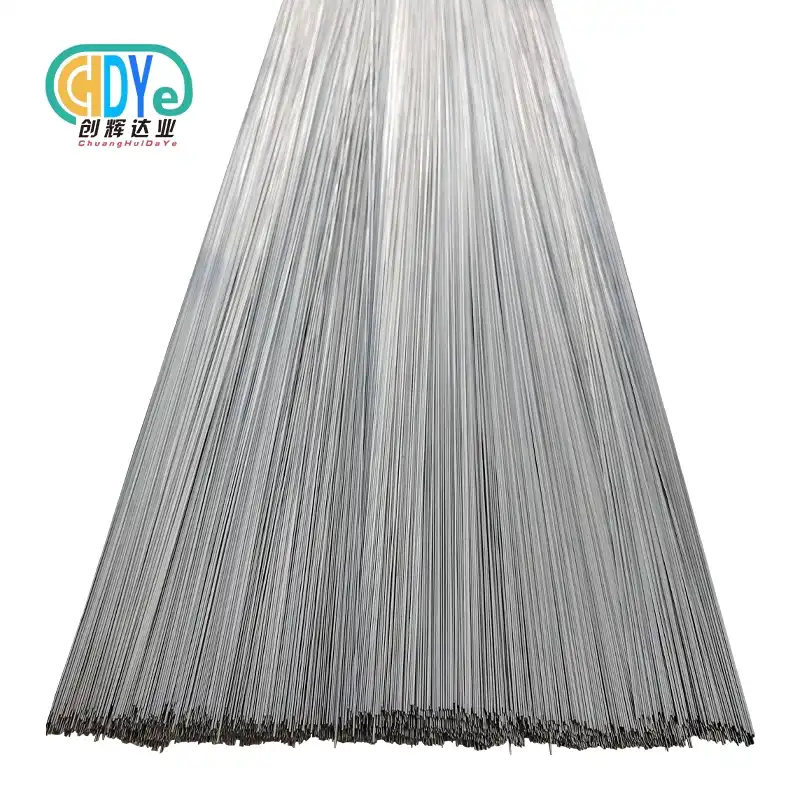
Understanding Anodized Titanium Wire
Anodized titanium wire has been through an electrolytic oxidation process that improves the surface. This process makes the metal much more resistant to rust, stronger, and more attractive, and it can keep its color for a long time.
The Science Behind the Anodization Process
The electrolytic process makes a layer of titanium dioxide (TiO₂) that is 30 to 200 nanometers thick. This tiny barrier works by interfering with light instead of applying pigment. Depending on the voltage settings, it can make colors ranging from bronze and blue to gold and teal. The finished surface is very resistant to chemicals and works well with living things, which makes it perfect for lasting medical devices and chemical processing tools.
Performance Advantages Over Standard Titanium Wire
It is better to use anodized titanium wire than non-anodized titanium wire because it lasts longer and is more durable in tough industrial settings. The oxide layer works as a dry lube, lowering friction and stopping cold-welding in threaded systems, which is a very important problem in aircraft fastening situations. Test results show that anodized surfaces can be sterilized in an autoclave over 500 times without losing their color. This means that tracking codes can still be used when making medical devices.
Industrial Applications Across Critical Sectors
Because it has these better qualities, anodized titanium wire is perfect for tough jobs in the aircraft, medical device, electronics, and jewelry industries. Color-coded wire sizes are used by companies that make surgical instruments so that they can be easily found during treatments. Aerospace engineers use wire that meets AMS 2488 standards for safety closing devices that can handle large changes in temperature. Finding the right material options for high-performance manufacturing needs is easier when buying from workers who know these basic traits.
The Anodized Titanium Wire Manufacturing Process
Anodized titanium wire is made through an exact process that starts with a thorough cleaning of the surface to get rid of any flaws. Our factory uses a multi-stage process to make sure that the quality of every batch we ship around the world is the same.
Pre-Treatment and Surface Preparation
First, the wire is mechanically cleaned, and then it is chemically pickled in controlled acidic solutions. This gets rid of mill scale, oxides, and tiny impurities that would make the anodization process less uniform. We keep the solution chemistry within very tight limits—temperature changes of less than 2°C and pH checks every four hours—so that the titanium surface reacts properly before it goes into the anodization bath.
Electrochemical Oxidation Parameters
The wire then goes through electrolytic oxidation, a process in which an electric current creates a controlled layer of rust on its surface. Voltage decides the end color. Voltages between 15 and 30V make brown tones; 25 to 30V make blue tones; and higher voltages up to 100V make pink and green tones. Our computer-controlled rectifiers keep the voltage stable within ±0.5 V, which is important for color matching between production runs when clients want named parts to look exactly the same.
Post-Treatment Quality Assurance
Post-treatment steps, like rinsing and drying, make sure that the anodized layer stays in place and maintains good quality. Multiple stages of deionized water waterfalls get rid of any leftover electrolyte, which keeps the surface from getting stained or contaminated. The oxide structure is stabilized by controlled-atmosphere drying at 80°C for 15 minutes. Quality control is very important. They do strict tests to find out things like covering thickness (using eddy current gauges), color consistency (using spectrophotometry), tensile strength retention, and salt spray rust protection that lasts more than 500 hours. Automation and customizable anodization methods have made it easier for makers to meet the needs of a wide range of industries quickly and cheaply.
Comparing Anodized Titanium Wire with Alternative Materials
Another option is anodized titanium wire, which is much lighter than stainless steel wire but also stronger and more resistant to rust. It usually costs more at first, though. The choices you make about which materials to use affect the long-term prices of operations and the dependability of their performance in a wide range of industry settings.
Anodized Titanium vs. Stainless Steel Wire
The anodized titanium wire is made from titanium, which is 45% lighter than stainless steel, which has a density of 8.0 g/cm³. This is important for aircraft uses where every gram counts when it comes to fuel economy. The anodized titanium wire maintains strong corrosion resistance in concentrated saltwater at temperatures over 200°C, while 316L stainless steel corrodes in chloride-rich environments above 60°C. Due to its nonmagnetic qualities and better MRI compatibility, titanium is being used more and more in implanted medical devices.
Anodized vs. Coated Titanium Wire
Anodized titanium wire is usually more resistant to weather damage and needs less upkeep than coated titanium wire because it forms a continuous oxide layer during the anodization process. Under mechanical stress, paint or powder coats can chip or peel off, leaving the base open to rust. The anodized layer sticks to the base metal at the atomic level, so there are no risks of failure at the contact. Impact testing shows that anodized surfaces can take a dent with a Rockwell hardness of 0 without the coating breaking, but organic coatings break at the same loads.
Cost-Benefit Analysis for Procurement
By looking at these materials in the context of their intended use, like in jewelry, medical devices, or computer parts, procurement workers can find the best mix of sturdiness, aesthetics, and cost-effectiveness to choose the best material for each job. Initial material prices only make up 15 to 20 percent of total lifetime costs when you consider how often things need to be replaced, how long upkeep takes, and what happens when key systems fail.
Procurement Considerations for Anodized Titanium Wire
Choosing the right source for anodized titanium wire is important to make sure that the product is always the same and that the supply is reliable. We approach business-to-business relationships based on openness and technical know-how, based on 30 years of experience in the rare metals field.
Supplier Qualification and Certification
Manufacturers that are trusted usually have strong OEM capabilities, clear quality approvals, and good reviews from customers. Our ISO 9001:2015 certification makes sure that there are clear records of everything from where the raw materials come from to the final review. There are mill test records for each output batch that list the chemical make-up, mechanical qualities, and anodization factors. As a result of our ties with authorized titanium sponge makers, we can ensure that the quality levels of our Grade 1 and Grade 2 wire are higher than 99.6%.
Order Logistics and Lead Time Management
Order procedures, such as minimum order amounts, wait times, and foreign shipping choices, can help make purchasing and managing costs easier. Our warehouse keeps standard colors and popular sizes (0.5mm to 6.0mm) in stock, so orders under 500 kg can be shipped within 5–7 business days. Custom orders that need special voltage treatments or size limits are shipped within 15 to 20 days. We work with freight forwarders who know how to properly record dangerous goods. This makes sure that foreign exports to the US and other markets go through customs without any problems.
Price-Quality Optimization Strategies
In anodized titanium wire procurement, when buyers compare price structures against quality levels, they can make smart choices that maximize value by combining technical performance with budget limits. This is important for large-scale B2B buying operations around the world. Our factory-direct prices get rid of the markups that distributors add, but we still offer the highest quality. When you commit to a large order, you get a better price. For example, if you sign an annual contract for a series of orders, the cost per kilogram drops by 12–18% compared to buying one item at a time, which helps you plan your budget.
Technical Tips for Using Anodized Titanium Wire
In order to preserve its improved surface qualities and structural integrity, anodized titanium wire must be handled and processed correctly. Through hands-on training, you can learn specific techniques that keep the performance of materials intact during manufacturing and assembly.
Handling and Storage Best Practices
To keep the surface of the wire clean, store it in a controlled-humidity area with a humidity level below 60%. Wear powder-free nitrile gloves when handling to keep fingerprint oils from making spots where rusting can happen. When undoing spools, keep the tension under control. Too much force can cause microcracks in the oxide layer, and not enough tension can cause twisting. Handling tools made of steel will scratch the anodized surface, so use ones made of plastic or rubber instead.
Machining and Fabrication Guidelines
Cutting and bending should be done carefully so as not to damage the oxide covering. The surface should also be cleaned regularly with non-abrasive chemicals to keep the finish and rust resistance. Titanium is not a good conductor of heat, so cutting tools made of it will wear down quickly. Instead, use carbide or ceramic tools. Keep the cutting speed below 30 meters per minute and make sure there is a steady flow of water. To keep the stress side from cracking, mandrels used for bending should have radii at least three times the width of the wire.
Industry-Specific Application Protocols
Industry-specific advice deals with problems that are unique to that industry, like the need for cleaning when making medical devices or the need to integrate wire parts into sensitive aircraft and electronics systems. Medical companies need to make sure that the anodization factors meet the biocompatibility standards set by ISO 10993. Our process paperwork helps with regulatory applications for FDA 510(k) clearances. For aerospace uses, anti-galling features must meet AMS 2488 standards. Our quality processes make sure this happens by checking the thickness of all coatings. Using these best practices will make sure that anodized titanium wire lasts a long time and works well in its final uses.
Conclusion
Anodized titanium wire has designed surface qualities that help industries like aircraft, medicine, electronics, and chemical processing meet important performance challenges. The electrochemical oxidation process adds a protective layer that is paracetic and gives the metal better rust resistance, controlled friction, and a range of looks without lowering its mechanical strength. Partnering with makers who show technical know-how, a mature quality system, and a reliable supply chain is key to successful procurement. Our Baoji plant has been specializing in rare metals for 30 years and has ISO-certified processes and helpful customer service. This means we can meet your most specific material needs with consistent quality and low prices.
FAQ
Q: How does anodization improve corrosion resistance in titanium wire?
A: The electrochemical process makes the natural layer of titanium dioxide thicker, from nanometers to 30–200 nm. This makes a strong shield against chloride ions and acidic surroundings. This oxide layer stays steady at temperatures up to 400°C and pH levels from 3 to 12. It works better than passive films on stainless steel.
Q: Can we specify custom colors for project-specific requirements?
A: Of course. During anodization, careful voltage control gives the metal its color. We can match colors to your specifications by changing the voltage settings, and we can send you sample batches to approve before starting full production runs. Spectrophotometry makes sure that colors are the same from batch to batch as long as the ΔE number is less than 2.0.
Q: What are typical lead times for bulk anodized wire orders?
A: Standard width and color pairings ship in one week for less than 500 kg for anodized titanium wire. It usually takes 15 to 20 business days for custom specs that need tighter tolerances on dimensions than ±0.02 mm or non-standard voltage treatments. Rush orders are given priority ordering, and faster handling is available for projects with tight deadlines.
Q: Does the anodized layer affect wire diameter tolerances?
A: When compared to normal wire limits of ±0.01 mm, the oxide layer only adds 0.03-0.2 microns per surface. For precise uses that need exact post-anodization dimensions, you can select pre-anodization wire diameter correction to get the final numbers you need.
Partner with Chuanghui Daye: Your Trusted Anodized Titanium Wire Supplier
Shaanxi Chuanghui Daye has been working with rare metals for more than 30 years and has excellent production skills in China's titanium capital. We offer precisely designed anodized titanium wire that comes with ISO 9001:2015 approval, full material tracking, and quick expert support. Our plant can handle unique specs and offer low factory-direct prices, whether you need a small number of prototypes for study purposes or a lot of tonnage for production scaling. Email our engineering team at info@chdymetal.com to talk about the needs of your project, get a full quote, or ask for material approvals. We offer free sample evaluation and application advice to make sure that the performance of the material exactly matches the needs of your operations.
References
1. Davis, J.R. (2016). Titanium: A Technical Guide. ASM International Materials Park, Ohio.
2. Simka, W., Nawrat, G., & Chlode, J. (2018). Electrochemical treatment of titanium biomaterials for medical implants. Journal of Medical Devices, 12(4), 041002.
3. Donachie, M.J. (2000). Titanium: A Technical Guide, 2nd Edition. ASM International, Materials Park, Ohio.
4. Liu, X., Chu, P.K., & Ding, C. (2004). Surface modification of titanium, titanium alloys, and related materials for biomedical applications. Materials Science and Engineering R: Reports, 47(3-4), 49-121.
5. Aerospace Material Specification AMS 2488D (2019). Anodic Treatment of Titanium and Titanium Alloys, Solution pH 13 or Higher. SAE International, Warrendale, Pennsylvania.
6. Rack, H.J., & Qazi, J.I. (2006). Titanium alloys for biomedical applications. Materials Science and Engineering C, 26(8), 1269-1277.
Learn about our latest products and discounts through SMS or email