- English
- French
- German
- Portuguese
- Spanish
- Russian
- Japanese
- Korean
- Arabic
- Greek
- German
- Turkish
- Italian
- Danish
- Romanian
- Indonesian
- Czech
- Afrikaans
- Swedish
- Polish
- Basque
- Catalan
- Esperanto
- Hindi
- Lao
- Albanian
- Amharic
- Armenian
- Azerbaijani
- Belarusian
- Bengali
- Bosnian
- Bulgarian
- Cebuano
- Chichewa
- Corsican
- Croatian
- Dutch
- Estonian
- Filipino
- Finnish
- Frisian
- Galician
- Georgian
- Gujarati
- Haitian
- Hausa
- Hawaiian
- Hebrew
- Hmong
- Hungarian
- Icelandic
- Igbo
- Javanese
- Kannada
- Kazakh
- Khmer
- Kurdish
- Kyrgyz
- Latin
- Latvian
- Lithuanian
- Luxembou..
- Macedonian
- Malagasy
- Malay
- Malayalam
- Maltese
- Maori
- Marathi
- Mongolian
- Burmese
- Nepali
- Norwegian
- Pashto
- Persian
- Punjabi
- Serbian
- Sesotho
- Sinhala
- Slovak
- Slovenian
- Somali
- Samoan
- Scots Gaelic
- Shona
- Sindhi
- Sundanese
- Swahili
- Tajik
- Tamil
- Telugu
- Thai
- Ukrainian
- Urdu
- Uzbek
- Vietnamese
- Welsh
- Xhosa
- Yiddish
- Yoruba
- Zulu
How Does GR4 Titanium Bar Perform in Extreme Environments?
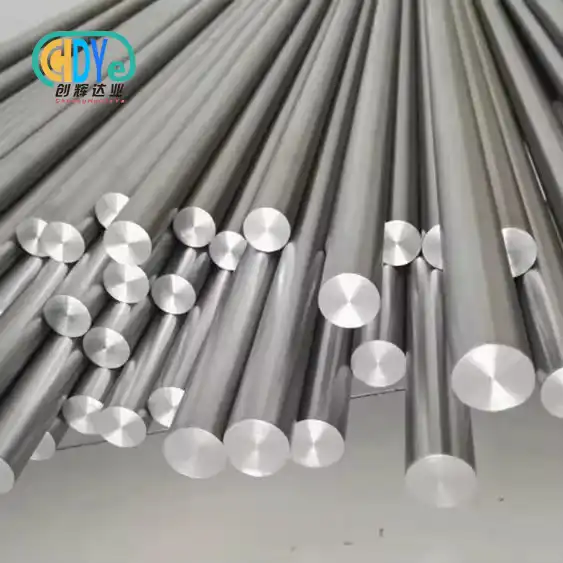
When engineers and buying workers have to choose materials for places with a lot of stress, corrosion, or changing temperatures, the GR4 titanium bar always comes up as a good choice. This widely pure type of titanium has great mechanical strength and great resistance to rust, which makes it essential for industries like aircraft, chemical processing, marine, and medical device manufacturing. Because it can handle strong chemicals, changing temperatures, and long-term mechanical loads, you should use it when dependability can't be compromised.
Understanding GR4 Titanium Bar: Composition and Mechanical Properties
What Makes a GR4 Titanium Bar Unique?
Grade 4 titanium is an important member of the family of commercially pure titanium. Grade 4 is different from alloyed titanium grades that get their strength from elements like aluminum or vanadium. Its mechanical traits come mostly from managed interstitial strengthening. This material has more oxygen (up to 0.40%) and iron than Grades 1 through 3. This increases its tensile and yield strengths significantly while maintaining its natural rust resistance, similar to pure titanium.
At Chuanghui Daye, we use strict quality controls in our manufacturing process to make sure that every batch is the same. International standards like ASTM B348, ASME SB348, and ASTM F-67 are met by the material, making sure that every bar meets the strict needs of businesses around the world. The end product has a minimum tensile strength of 550 MPa and a yield strength of 480 MPa. The result is much stronger than Grade 2 and cheaper than alloyed options like Grade 5.
Core Mechanical Advantages
The technical structure of a GR4 titanium bar solves important problems in the business world. Tensile strength that is close to that of mild steel lets engineers make structural parts that are lighter without lowering their ability to hold weight. For cold casting, elongation values of at least 15% are enough to make the metal flexible, but because it is stronger than lower grades, it needs stronger tools.
This mix between strength and shapeability is especially useful in situations where longevity and weight reduction are both important. Manufacturers of chemical processing equipment, aircraft parts, and medical devices depend on this material to meet requirements that would otherwise call for heavy, less corrosion-resistant materials.
How Does GR4 Titanium Bar Excel in Extreme Environments?
Unmatched Corrosion Resistance Across Aggressive Media
Grade 4 titanium works well in corrosive settings because it can build up a steady, passive oxide layer on its surface. This protected film heals itself when it gets broken, so it can keep working even when it's exposed to damaging acids, chlorides, and seawater. Manufacturers of marine equipment use this material for parts that are immersed in saltwater all the time, because stainless steel would rust and pit in just a few months.
Grade 4 bars are used in chemical processing plants where hypochlorites, wet chlorine gas, and acidic liquids are present. Heat exchanger tie-rods, reactor vessel supports, and pump shafts made from this material have service lives that are measured in decades, not years. Because the material doesn't break down easily when exposed to hydrogen, it can be used in high-pressure hydrogen service, which is becoming more important in new energy fields.
Temperature Stability Across Operational Ranges
A very wide range of temperatures doesn't affect the structure of the Gr4 titanium bar. At very low temperatures, close to -200°C, the material stays flexible without the risk of breaking easily, which comes with many structural metals. Because of this, it can be used for equipment that processes liquid natural gas (LNG) and aircraft parts that are exposed to extremely high-altitude circumstances.
The material keeps its mechanical qualities well at high temperatures up to 300°C, making it suitable for non-structural aircraft parts and chemical processing equipment. Even though it's not as good for uses that need to withstand high temperatures as refractory metals like tungsten or molybdenum, its ability to withstand high temperatures and prevent rust makes it a unique choice for tough settings with mild temperatures.
Fatigue and Wear Performance Under Cyclic Loading
Grade 4 titanium is naturally resistant to wear, which makes it a good choice for equipment that has to deal with shaking, changing temperatures, and repeated mechanical stress. Parts of aerospace hydraulic systems, medical device posts, and underwater diving tools go through millions of stress cycles over the course of their useful lives. The material's ability to stop cracks from starting and spreading in these situations directly leads to shorter upkeep periods and lower costs over the product's lifetime.
In real life, performance data from offshore platform owners shows that titanium parts last three to five times longer than stainless steel ones in underwater settings. When rust protection and mechanical longevity are combined, they create economic benefits that make up for the higher original material cost.
Comparing the GR4 Titanium Bar with Alternative Materials
Grade 4 Versus Stainless Steel: A Decisive Performance Gap
When buying, teams look at different types of materials; they often compare Grade 4 titanium to austenitic stainless steel grades like 316L. Some materials are cheaper to buy in stainless steel, but Grade 4 is 45% lighter and better at resisting stress corrosion cracks caused by salt. Specifically, this means parts that stay the same size and shape over long periods of time when used in sea and chemical processing uses.
The strength-to-weight ratio edge is especially important in medical and aircraft settings, where every gram helps save fuel or make patients more comfortable. When compared to stainless steel options, structural parts made of Grade 4 titanium can hold the same amount of weight while still being strong.
Positioning Within the Titanium Grade Spectrum
Figuring out where Grade 4 fits in relation to other titanium choices can help you make better decisions about which material to choose. Grade 4 has a tensile strength that is about 60% higher than Grade 2, which has a lower strength level but better formability and rust protection. This rise in strength lets the cross-sections of parts be made smaller, which cuts down on material use and system weight.
Compared to Grade 5 (Ti-6Al-4V), which is stronger thanks to alpha-beta phase alloying, the Gr4 titanium bar has some benefits in certain situations. Because it doesn't contain aluminum or vanadium, it is better for medical devices where long-term biocompatibility is a concern. Even though Grade 5 has higher pure strength numbers, it is more suitable for chemical processing applications because it resists corrosion better in acidic conditions.
Because of this complicated placement, Grade 4 is the best choice when users need strength above widely pure Grades 1-3 but don't need the cost and processing difficulty of heavily alloyed titanium grades.
Procurement Insights: How to Source a GR4 Titanium Bar?
Evaluating Supplier Qualifications and Certifications
Finding suppliers of Grade 4 titanium bars starts with a thorough evaluation of each one. ISO 9001:2015 approval is the basic standard for quality management, but there are other things that are very important to think about as well. Titanium production hubs like Baoji, China (known around the world as the "Titanium Capital") offer suppliers a lot of specialized knowledge, easy access to specialized tools, and well-established supply lines for high-purity raw materials.
Paperwork that shows how materials were sourced is an absolute must. Mill Test Certificates (MTC) that meet EN 10204 3.1 norms should be included with every package. These certificates should show the full chemical makeup analysis and mechanical property test results. In aircraft, medical, and pressure equipment uses, these papers make it possible to do quality checks and make sure that regulations are being followed.
Understanding Lead Times and Customization Options
Most commercial needs can be met by standard diameters from 6 mm to 200 mm and lengths from 1000 mm to 6000 mm. Production lead times depend on how complicated the specifications are and how many orders are placed. Standard sizes from stock usually ship within two to three weeks. Custom sizes that need special production runs, on the other hand, may take six to eight weeks.
Precision cutting, centerless grinding, and heat treatment optimization are some of the customization services that add value by lowering the need for further processing. When comparing providers, make sure that the prices they give you include surface treatment to get rid of alpha-case, which is the oxygen-rich layer that forms on the surface during hot working. This preprocessing can make cutting much easier and reduce tool wear in customer sites by a large amount.
Price Benchmarking and Total Cost of Ownership
A clear way to compare prices is to look at the material's cost per kilogram, but a full purchase study also looks at the total cost of ownership. Suppliers who offer expert help, adjustable minimum order amounts, and reliable shipping performance add value that goes beyond the price per unit. When materials aren't delivered on time, or there are problems with their quality, production delays often cost more than the savings from choosing the cheapest source.
Gr4 titanium bar production at Chuanghui Daye's position in Baoji gives them direct access to the main titanium-mining operations. This cuts down on the complexity and prices of the supply chain. Because we've been making rare metals for 30 years, we can offer reasonable prices while still meeting the high-quality standards needed by aircraft and medical device companies around the world.
Best Practices for Using GR4 Titanium Bar in Extreme Environments
Material Handling and Storage Protocols
Proper handling and storage are the first steps in keeping a material's qualities. To keep grade 4 titanium from galvanic rusting while it is being processed, it should be kept in clean, dry places away from carbon steel and aluminum. Protective wrapping should stay in place until the material is used in production. This will keep the surface from getting dirty, which could lower the quality of the weld or the surface finish.
When machining a GR4 titanium bar, its sticky nature and low thermal conductivity require specific tooling strategies. Sharp carbide cutting tools with controlled feed rates and aggressive coolant application prevent work hardening and built-up edge formation. Knowing these things about a material helps manufacturing teams make the most of their time and energy while still meeting limits for size.
Heat Treatment and Surface Finishing Considerations
At annealing temperatures of 650°C to 750°C in neutral or vacuum atmospheres, leftover pressures from cold working are removed, and the mechanical properties are improved. This heat treatment is especially important for parts that are loaded for a long time or that are worn down over time. Controlling the rate of cooling is important to stop alpha case formation, which makes a hard, oxygen-rich layer on the surface that can start cracks when the material is loaded and unloaded again and again.
Surface processes like chemical grinding, electropolishing, and passivation make things less likely to rust and make them easier to clean for health purposes. Manufacturers of medical devices and food preparation equipment often include these finishing steps to meet legal requirements and standards for operating cleanliness.
Inspection and Maintenance in Service
Parts made from Grade 4 titanium work better when they are inspected on a regular basis according to rules that are specific to their surroundings. In chemical processing, looking at the surface for darkening or cracking gives you early notice of changes in the process conditions that could hurt the material's performance. Ultrasonic testing finds internal flaws or hydrogen embrittlement before they cause big problems.
For aerospace uses, non-destructive testing plans are matched with airworthiness instructions. Medical devices, on the other hand, follow review times set by the maker based on how often they are used in hospital settings. Setting up standard data during initial setup lets you measure how wear, rust, or stress damage changes over the span of a component.
Conclusion
The best way for a GR4 titanium bar to work in harsh settings is because it has the right amount of mechanical strength, rust resistance, and temperature stability. This economically pure grade is used in medical, aircraft, chemical processing, and naval environments where the stability of the material has a direct effect on safety and cost performance. What makes it different from other building materials is that it can resist harsh chemicals, high temperatures, and long-term mechanical loads while keeping its shape.
When making a purchase choice, it helps to know where the material fits in the titanium grade range and what makes it better than options like stainless steel and aluminum. When you work with qualified providers who have strict quality control systems and offer full expert support, you can be sure that the standards of the materials will translate into reliable performance from the parts over long periods of time.
FAQ
Q: What specific advantages does Grade 4 titanium offer over 316 stainless steel in corrosive environments?
A: Grade 4 titanium is much more resistant to pitting and crevice rust caused by chlorine than stainless steel, which happens a lot in coastal and chemical industry settings. The inactive titanium oxide layer stays stable over a wider pH range and heals itself when it gets broken, so it always protects. It's also 45% lighter than stainless steel, which lets structural designs be lighter without losing mechanical performance.
Q: Can Grade 4 titanium bars be customized to specific dimensions and surface finishes?
A: Manufacturers often offer customization services, such as precise control of the thickness, cutting to length, surface grinding, and special heat treatments. Depending on how complicated the custom specs are, production wait times may change. However, well-known providers keep their production skills open to meet a wide range of needs. There are different ways to finish the surface, from leaving it as-rolled to electropolishing it so it can be used in clean situations.
Q: What are typical lead times for bulk orders of Grade 4 titanium bars?
A: After an order is confirmed, standard measurement bars from stock usually ship within two to three weeks. If you need special production runs for custom specs, wait times can go up to six to eight weeks, based on the size, number, and finishing needs. Early on in the project, procurement teams should share schedules so that output can be planned around installation dates.
Partner with Chuanghui Daye for Your Titanium Procurement Needs
We at Shaanxi Chuanghui Daye have been working with rare metals for more than 30 years, and our production processes are ISO 9001:2015 approved. This lets us make Grade 4 titanium bars that meet the strict requirements of the aerospace, chemical processing, and medical device industries around the world. Our strategic position in Baoji gives us direct access to the main facilities for making titanium. This lets us offer reasonable prices without lowering the quality standards needed for important uses.
Our expert team helps you through the whole buying process, whether you need normal stock sizes that can be used right away or custom-machined parts that are made to meet specific engineering needs. We keep detailed records on how materials can be tracked back to their original sources, and we can handle both small amounts for R&D projects and big production runs to support large-scale manufacturing operations.
As a reliable company that makes GR4 titanium bars, we welcome sourcing and engineering teams to email us at info@chdymetal.com to talk about the needs of your project. Our metallurgists and sales experts work with customers to find the best material grades, measurements, and processing standards that meet performance needs and price limits. This makes sure that projects are successful in even the toughest working conditions.
References
1. Boyer, R., Welsch, G., & Collings, E.W. (1994). Materials Properties Handbook: Titanium Alloys. ASM International.
2. Donachie, M.J. (2000). Titanium: A Technical Guide, 2nd Edition. ASM International.
3. Schutz, R.W. & Watkins, H.B. (1998). "Recent Developments in Titanium Alloy Application in the Energy Industry," Materials Science and Engineering: A, 243(1-2), 305-315.
4. Lutjering, G. & Williams, J.C. (2007). Titanium, 2nd Edition. Springer-Verlag Berlin Heidelberg.
5. American Society for Testing and Materials (2020). ASTM B348-13: Standard Specification for Titanium and Titanium Alloy Bars and Billets. ASTM International.
6. Peters, M., Kumpfert, J., Ward, C.H., & Leyens, C. (2003). "Titanium Alloys for Aerospace Applications," Advanced Engineering Materials, 5(6), 419-427.
Learn about our latest products and discounts through SMS or email