- English
- French
- German
- Portuguese
- Spanish
- Russian
- Japanese
- Korean
- Arabic
- Greek
- German
- Turkish
- Italian
- Danish
- Romanian
- Indonesian
- Czech
- Afrikaans
- Swedish
- Polish
- Basque
- Catalan
- Esperanto
- Hindi
- Lao
- Albanian
- Amharic
- Armenian
- Azerbaijani
- Belarusian
- Bengali
- Bosnian
- Bulgarian
- Cebuano
- Chichewa
- Corsican
- Croatian
- Dutch
- Estonian
- Filipino
- Finnish
- Frisian
- Galician
- Georgian
- Gujarati
- Haitian
- Hausa
- Hawaiian
- Hebrew
- Hmong
- Hungarian
- Icelandic
- Igbo
- Javanese
- Kannada
- Kazakh
- Khmer
- Kurdish
- Kyrgyz
- Latin
- Latvian
- Lithuanian
- Luxembou..
- Macedonian
- Malagasy
- Malay
- Malayalam
- Maltese
- Maori
- Marathi
- Mongolian
- Burmese
- Nepali
- Norwegian
- Pashto
- Persian
- Punjabi
- Serbian
- Sesotho
- Sinhala
- Slovak
- Slovenian
- Somali
- Samoan
- Scots Gaelic
- Shona
- Sindhi
- Sundanese
- Swahili
- Tajik
- Tamil
- Telugu
- Thai
- Ukrainian
- Urdu
- Uzbek
- Vietnamese
- Welsh
- Xhosa
- Yiddish
- Yoruba
- Zulu
Are Titanium Metal Plates Ideal for Aerospace Applications?
Titanium metal plates are perfect for aircraft use because they have a great strength-to-weight ratio, are highly resistant to rust, and can work successfully in very high or low temperatures. These materials are always chosen by the aircraft industry for important structure parts, engine parts, and airplane systems where safety and efficiency can't be sacrificed. Because titanium metal plates have properties that are much better than those of common metals like aluminum and steel, aerospace manufacturers have a tried-and-true way to make planes lighter while keeping their structural integrity. This saves fuel and makes planes last longer in both commercial and military aviation.
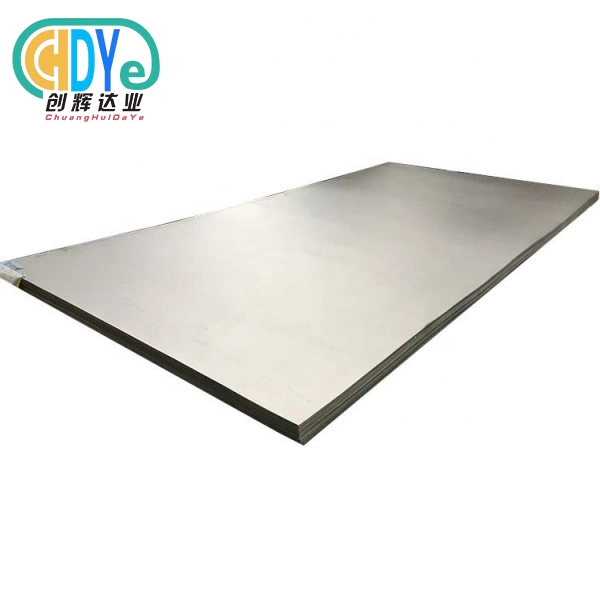
Understanding Titanium Metal Plates in the Aerospace Context
Defining Aerospace-Grade Titanium Plates
Aerospace-grade titanium metal plates are flat-rolled mill goods that are made using strict methods such as controlled heating, vacuum arc remelting (VAR), and hot rolling. These plates are usually thicker than 4.75 mm and are made from commercially pure titanium metal plates or special alloys made to meet strict aircraft standards. To make things that are precise enough for aircraft use, tolerances must be very small, and microstructural stability must be perfect.
The aerospace business knows which types of materials are reliable because they have been used in flights for decades. When buying, teams know these differences, and they can make better choices that match performance needs with project costs and delivery dates.
Common Aerospace Titanium Grades
Grade 2 titanium metal plate is the most commonly used commercially pure titanium metal plate for aircraft uses. This grade doesn't rust and can be shaped easily, which makes it perfect for parts that aren't solid, like hydraulic tubes and aircraft parts that don't have to withstand heavy loads. Because it is moderately strong and very flexible, makers can shape it into complicated shapes without it cracking or breaking.
Grade 5, which is officially called Ti-6Al-4V, is the most important metal in the aerospace industry. About 6% of this material is aluminum, and 4% is vanadium. Together, they make a titanium metal plate alloy that can hit 550 MPa in tensile strength and 485 MPa in yield strength. Grade 5 titanium is what aerospace engineers use for landing gear parts, engine bolts, wing clips, and other structural parts that have to be strong.
Grade 23, an extra-low interstitial (ELI) version of Ti-6Al-4V, is more resistant to breaking and easier to weld. This type is used in cold fuel tanks and pressure vessels where the ability of the material to stay strong at high and low temperatures is important for the mission's success.
Key Physical Properties Compared to Alternative Metals
When you compare a titanium metal plate to aluminum, the efficiency benefits are clear right away. A titanium metal plate has a density of 4.51 g/cm³, while aluminum metals used in aircraft have a density of about 2.7 g/cm³. A titanium metal plate is bulkier than aluminum, but its strength-to-weight ratio is much higher. This means that engineers can use smaller parts to get the same structural performance, which saves weight in the long run.
The strength of stainless steel is great, but it makes things much heavier. It's possible for a stainless steel part to weigh almost twice as much as a titanium plate of the same size and shape. This weight difference leads to more fuel use over an airplane's life, making titanium plates the more cost-effective option, even though they cost more to make initially.
Nickel metals work really well in places with very high temperatures, like the hottest parts of jet engines. But titanium metal plates keep their mechanical qualities at temperatures up to 600°C and are better at resisting rust in many aircraft service conditions. Which one of these materials to use depends on the temperature and stress levels that each part will be exposed to during operation.
Manufacturing Processes and Quality Standards
First, high-purity titanium metal plate sponge is melted in vacuum or neutral gas ovens to make aerospace titanium metal plates. We use electron beam melting and vacuum arc remelting to get rid of impurities that might make the material less useful. The resulting bars are heated to improve the grain structure and get rid of any holes inside them.
Forged billets are turned into titanium metal plates with exact control over thickness through rolling processes. Multiple rolling passes with cooling processes in between make sure that the material's mechanical traits are the same all over. The annealing process carefully manages the grain size and residual stress levels, which are two important factors in the wear resistance of aircraft structures.
Standards like AMS (Aerospace Material Specifications) and ASTM (American Society for Testing and Materials) certifications must be followed for quality security in aerospace uses. Each package of titanium metal plates comes with full mill test results that show the metal's chemical makeup, its mechanical qualities, and how it can be traced back to the original melt batch. Ultrasonic checking and other non-destructive testing methods find any internal flaws that could turn into cracks during service.
Why Are Titanium Metal Plates Preferred in Aerospace Applications?
Performance Advantages Over Competing Materials
Titanium metal plates don't rust because when they come in contact with oxygen, they form a stable, safe oxide layer. If this passive film gets scratched or broken, it heals itself right away, so it can keep protecting you even in difficult conditions. In contrast, aluminum metals suffer from pitting and rust in salty coastal environments and need protective coats that make them heavier and more difficult to keep up.
When airplane structures are loaded and unloaded many times, titanium metal plate parts have a wear life that is much longer than steel parts. Engineers in the aerospace industry plan for millions of stress cycles over the life of an airplane. The resistance of titanium metal plates to fatigue crack start and spread offers important safety gaps. Because it lasts longer, it needs to be inspected less often and costs less to maintain over its lifetime.
A titanium metal plate is better than aluminum in situations where it would break and lose power at high temperatures because it stays strong. High temperatures last for a long time in engine shields, exhaust shrouds, and parts close to propulsion systems. A titanium metal plate can handle such conditions and keep its structural integrity, while aluminum would need much thicker sections or active cooling systems.
Real-World Aerospace Applications
Titanium metal plates are cut by airframe makers into bulkheads, wing connection fittings, and landing gear parts. These structural parts are put under a lot of stress during takeoff, flying, and landing, and they have to deal with temperature changes from subzero cruise levels to hot ground activities. Because the material works the same way at all of these temperatures, there is no need for thermal expansion joints, which would make the structure more complicated and heavy.
A titanium metal plate is used in engine parts like fan blades, cases, and fixing systems because it can handle high temperatures. While nickel superalloys are needed in the hotter parts of the engine, titanium metal plate is used more in the cooler parts because it is lighter and helps thrust-to-weight ratios. Manufacturers of modern jet engines have slowly added more titanium metal plates to them. In some designs, a titanium metal plate makes up more than 30% of the engine's weight.
The resistance of titanium metal plates to rust also keeps galvanic corrosion from happening when different metals are joined together in fastener systems, which are critical. Aerospace-grade titanium metal plate bolts, screws, and rivets keep their clamp load over decades of use without the problems that come with steel fasteners coming loose. This dependability cuts down on unplanned repairs and raises the safety of operations.
Case Studies From Leading Manufacturers
Leaders in commercial flight have shown that swapping aluminum and steel parts with titanium metal plate frames saves a lot of fuel. One big airplane maker said that switching to a Grade 5 titanium metal plate made the frames that hold the wings together 15% lighter, which led to real gains in range and cargo capability. Because these parts last longer, inspections could happen every 10,000 to 25,000 flight hours instead of every 10,000.
Titanium metal plate technology has been pushed even further by defense and space projects. Military planes that take off or land from aircraft carriers have to deal with saltwater that is very toxic and high loads on the structure during catapult launches and stopped landings. Titanium metal plate aircraft parts in these platforms have been used for more than 30 years with little wear and tear, showing that the material is very durable even in the harshest operating conditions.
Helicopter makers are using titanium metal plates more and more for rotor head parts and transmission housings. Because it doesn't break down easily under repeated loads, the material offers safety gaps that metal can't match. Its lighter weight also increases lift capacity and fuel economy. These uses show how a titanium metal plate can be used in a variety of aircraft systems.
Selecting the Right Titanium Metal Plate for Aerospace Projects
Grade Selection Criteria
When deciding between grades 2 and 5, you need to look at specific stress conditions, weather risk, and cost concerns. Grade 2 is good for parts that are under mild stress and need to be resistant to rust. Applications like hydraulic lines, fuel system parts, and fairings are great for grade 2, because it is cheaper and easier to shape, which saves money.
When a stress study shows loads that are close to or above 400 MPa, grade 5 is needed. An alloyed titanium metal plate is the only way to get the higher strength that is needed for structural parts, landing gear systems, and engine bolts. The higher cost of Grade 5 material is balanced by the fact that smaller cross-sections can be used. This lowers the weight of the whole component and could lower the cost of cutting.
Each package must come with material approval paperwork that proves it meets aircraft standards. We make sure that every titanium metal plate comes with mill test reports that show the results of chemistry analyses, data from mechanical property tests, and tracking codes that connect the material to records of its production. This paperwork is added to the plane's ongoing repair records and helps with airworthiness approval for as long as the platform is in use.
Thickness and Dimensional Considerations
Standard military titanium metal plates come in a range of thicknesses, from 0.5 mm for thin sheets to 50 mm for structural parts that are highly loaded. With widths ranging from 500mm to 2000mm and lengths up to 6000mm, these panels can be used for most aircraft needs without having to be joined together, which could lead to weak spots. It is easy to get custom measurements for specific uses where standard sizes would lead to too much material waste during cutting.
For aircraft uses, tolerances usually say that changes in thickness must be within ±0.1 mm and changes in smoothness must not be more than 2 mm per meter of length. These close tolerances ensure that the manufactured parts meet the design requirements without excessive stock removal. This lowers the cost of production and the amount of material that is wasted. We keep the sizes correct by using controlled rolling methods and smoothing steps after rolling.
Supply Chain and Quality Assurance Factors
Getting titanium metal plates from providers that are ISO 9001:2015 approved ensures that quality control is maintained throughout the whole production process. Our factory in Baoji, China's "Titanium Capital," follows strict quality control rules that include checking raw materials, keeping an eye on the production process, and checking the finished product. Every step of the production process is written down, so you can follow it all the way from the titanium metal plate material to the finished plate.
Lead times for normal grades and sizes are usually between four and eight weeks, but this depends on how many items are ordered and how busy the factory is at the moment. For special melting campaigns or rolling processes, custom specs may need more time. We work closely with flight-buying teams to make sure that shipping dates and assembly dates are compatible. We also keep extra parts on hand in case projects need quick prototypes or requirements change without warning.
Standard testing methods include tensile testing, measuring hardness, ultrasound inspection, and chemical analysis on samples from each production batch that are meant to be representative. These steps for quality control find any problems with the material before it is shipped. This keeps expensive delays from happening when non-conforming material gets to the manufacturing facilities. Every shipment comes with a certification package that includes the paperwork that aircraft quality systems need.
Procurement Insights for Buying Titanium Metal Plates in Aerospace
Identifying Qualified Suppliers
When buying aerospace products, companies need to work with sellers that have the right industry certifications and a history of serving flight customers. We are certified by ISO 9001:2015 and have manufacturing facilities that are set up to meet the needs of aerospace-grade materials. We have thirty years of experience making things out of rare metals, which gives us the mechanical know-how that aircraft projects need.
When evaluating a supplier, you should look at their manufacturing tools, quality control systems, and ability to handle both large production runs and small sample amounts. We have vacuum melting furnaces, electron beam equipment, precision rolling mills, and advanced machining centers at our plant that can work with titanium metal plates to meet the strict requirements of the aerospace industry. This combined feature makes supply chains more efficient and makes teamwork easier.
Lead times and transportation prices are affected by where things are located. Our location in Shaanxi Province gives us easy access to sources of titanium metal plate raw materials and keeps our export infrastructure running smoothly so that we can ship goods all over the world. We work with freight forwarders who know how to handle aircraft materials to make sure that the right packing, paperwork, and travel conditions are used to keep the quality of the materials safe during foreign shipping.
Market Pricing and Ordering Dynamics
The cost of raw materials, the difficulty of handling, and the number of orders all affect the price of titanium metal plates. Because it is easier to make and handle, a Grade 2 commercially pure titanium metal plate usually costs less per kilogram than a Grade 5 alloy. Titanium metal plates made for aircraft use cost between $25 and $55 per kilogram on the market right now, based on the grade, thickness, and number of plates ordered.
From supplier to supplier, the smallest amount you can buy is different, but for normal requirements, it's usually 100 kilos. Smaller amounts might be offered at a higher cost to cover setup costs and material return losses. When you buy more than 1,000 kilograms, you can get big savings on the prices, which makes joint buying plans a good idea for programs that need to buy materials on a regular basis.
When planning lead times, you should take into account shipping times, quality checks, and production processes. Standard items in stock can be shipped within days, but special orders need to be scheduled for production, which can take several months during times of high demand. We keep a planned stock of popular aircraft grades to help with quick prototype development and urgent needs for replacement parts.
Negotiating Custom Specifications
Misunderstandings that could lead to supplies of non-conforming materials can be avoided by making sure that technical communication is clear. In the procurement specs, you should list the grade, the size requirements, the expected surface finish, the testing procedures, and the approval paperwork that you need. We help engineers come up with specifications and make suggestions based on what can be made and what has worked in the past for aircraft uses.
Custom cutting services can make parts that are close to being in a net form, which saves customers time and material. We can turn titanium metal plates into finished or nearly finished parts at our plant, which has CNC machining centers, wire EDM equipment, and precise cutting tools. This work adds value, streamlines supply chains, and shortens project timelines.
To handle delivery plans, provider production planning, and customer assembly schedules need to work together. We can handle scheduled supplies that match the supply of materials with the rate at which they are used in manufacturing. This lowers the costs for customers of keeping goods on hand while keeping production flowing. When aircraft makers have flexible schedules, they can adapt to changes in the program without having to worry about material obsolescence.
Future Trends and Innovations in Aerospace Titanium Metal Plates
Emerging Alloy Developments
Metallurgical study is still going on to make titanium metal plates with better qualities for the next generation of spacecraft. Beta titanium metal plate alloys are more easily shaped and have a higher strength potential, but they cost more to make. These high-tech metals could be used in hypersonic vehicles, which are in places where normal titanium metal plate grades can't handle the harsh circumstances.
Titanium-aluminum intermetallic compounds are a new area of research that offers temperatures close to those of nickel superalloys at much lower densities. Manufacturing problems are currently stopping a lot of people from using it, but a study is still going on to solve the processing problems that have stopped commercial-scale production in the past. Within the next ten years, these materials could change the way high-temperature aircraft structures are made.
Composite titanium metal plate materials that use a titanium metal plate core and ceramic supports could be stronger than standard military metals. These experimental materials are still mostly in the research stages, but they show promise for important uses where every kilogram of weight saved means better mission capabilities.
Advanced Manufacturing Technologies
The way aircraft businesses use titanium metal plate materials is changing because of additive production technologies. Selective laser melting and electron beam melting can make complicated titanium metal plate parts straight from powder material, which cuts down on a lot of the trash that comes with making things from plate stock. These methods allow physical improvements that aren't possible with traditional methods, which makes buildings lighter while keeping their power.
Better cutting tools and better machining strategies have made precision machining better, which has cut down on the time and money needed to turn titanium metal plates into finished parts. When working with titanium metal plates, advanced treatments on carbide tools make them last longer, which lowers production costs and improves the surface finish. With these small changes, a titanium metal plate can now compete more cheaply with other materials.
Using artificial intelligence, automated screening systems can find flaws in materials and differences in dimensions more quickly and accurately than people can. We are putting money into these tools to improve quality control while cutting down on the time and money needed for inspections. More accurate and faster quality checks speed up delivery times and give more faith in material conformance.
Sustainability and the Economics of Life Cycle
Titanium metal plate recovery methods have improved to the point where recovered titanium metal plates have the same qualities as new titanium metal plates. Manufacturers of aerospace parts are choosing recovered materials more and more when standards allow it. This lowers the impact on the environment without affecting performance. When compared to making a titanium metal plate from metal, recycling the titanium metal plate scrap saves about 90% of the energy needed.
Lifecycle cost studies always show that a titanium metal plate is the best material for long-lasting aircraft systems. Even though the original cost of the materials is higher than that of aluminum or steel, the longer component lifespans, more frequent upkeep times, and lower rust repair needs make the total ownership cost benefits greater. The strength and dependability of titanium metal plates are especially useful for military airplane projects that need to last 40 years or more.
Because of concerns about their carbon footprint, aircraft businesses are moving toward products and methods that have smaller effects on the environment. The low weight of a titanium metal plate helps improve fuel economy, which lowers working pollution over the life of an airplane. This environmental benefit fits with the industry's promises to care for the earth and makes titanium metal plating a better choice for future material choices.
Conclusion
Titanium metal plates have been used in aircraft for decades and have been proven to be effective in the harshest conditions. Because of their high strength-to-weight ratio, resistance to rust, and safety at high and low temperatures, they can't be replaced for important structural parts, engine parts, and aircraft sections. The use of titanium metal plates continues to grow as aircraft technology improves to make bases that work better and last longer. Professionals in procurement who know about grade selection criteria, quality standards, and best practices for the supply chain can use the benefits of titanium metal plates to improve project performance and keep costs low. The material's ability to be recycled and its lifetime economics make it an even better choice for aircraft makers who care about both business efficiency and the environment.
FAQ
Q: What makes titanium plates superior for aerospace use?
A: Titanium metal plates have the best mix of high strength-to-weight ratio, excellent rust protection, and steady performance in temperatures ranging from -200°C to 600°C. These features let aircraft engineers make structures that are smaller, keep their safety limits when under heavy loads, and don't break down in the environment over decades of use.
Q: Which certifications are essential for aerospace titanium?
A: For aerospace uses, materials must meet AMS (Aerospace Material Specifications) standards and ASTM standards and be certified by the AS9100 quality management system. These approvals verify the chemical makeup, mechanical qualities, and controls on the manufacturing process that are needed for safety in flight and to follow the rules.
Q: How does titanium compare cost-wise to aluminum?
A: The price of a kilogram of titanium metal plate material is usually three to five times that of an aircraft aluminum alloy. Lifecycle cost studies, however, show that titanium metal plates often have lower total ownership costs for long-term aircraft projects because they last longer, have a longer service life, and need repairs less often, especially in acidic conditions where aluminum needs to be replaced more often.
Partner With a Trusted Titanium Metal Plate Supplier
When aerospace buying pros need solid, high-performance titanium metal plate options, Shaanxi Chuanghui Daye is the best company to work with. We are in Baoji, China, which is known as the "Titanium Capital," and we have been making aerospace-grade titanium metal plates from 0.5 mm to 50 mm thick in Grade 2 and Grade 5 standards for over 30 years. Our ISO 9001:2015-certified factory keeps strict quality control and full tracking throughout the whole production process, making sure that every package meets the strict AMS and ASTM standards. Get in touch with our expert team at info@chdymetal.com to talk about your unique needs and get creative solutions backed by low factory-direct prices, the ability to make small batches on demand, and reliable global delivery.
References
1. Boyer, R., Welsch, G., & Collings, E.W. (1994). Materials Properties Handbook: Titanium Alloys. ASM International, Materials Park, Ohio.
2. Donachie, M.J. (2000). Titanium: A Technical Guide, 2nd Edition. ASM International, Materials Park, Ohio.
3. Peters, M., Kumpfert, J., Ward, C.H., & Leyens, C. (2003). Titanium Alloys for Aerospace Applications. Advanced Engineering Materials, Volume 5, Issue 6.
4. Lutjering, G. & Williams, J.C. (2007). Titanium, 2nd Edition. Springer-Verlag, Berlin Heidelberg.
5. Froes, F.H., Gungor, M.N., & Imam, M.A. (2007). Cost-Affordable Titanium: The Component Fabrication Perspective. Journal of Materials, Volume 59, Issue 6.
6. Jackson, M., Dashwood, R., Flower, H., & Christodoulou, L. (2005). The Microstructural Evolution of Near Beta Alloy Titanium During Subtransus Forging. Metallurgical and Materials Transactions A, Volume 36A.
Learn about our latest products and discounts through SMS or email