- English
- French
- German
- Portuguese
- Spanish
- Russian
- Japanese
- Korean
- Arabic
- Greek
- German
- Turkish
- Italian
- Danish
- Romanian
- Indonesian
- Czech
- Afrikaans
- Swedish
- Polish
- Basque
- Catalan
- Esperanto
- Hindi
- Lao
- Albanian
- Amharic
- Armenian
- Azerbaijani
- Belarusian
- Bengali
- Bosnian
- Bulgarian
- Cebuano
- Chichewa
- Corsican
- Croatian
- Dutch
- Estonian
- Filipino
- Finnish
- Frisian
- Galician
- Georgian
- Gujarati
- Haitian
- Hausa
- Hawaiian
- Hebrew
- Hmong
- Hungarian
- Icelandic
- Igbo
- Javanese
- Kannada
- Kazakh
- Khmer
- Kurdish
- Kyrgyz
- Latin
- Latvian
- Lithuanian
- Luxembou..
- Macedonian
- Malagasy
- Malay
- Malayalam
- Maltese
- Maori
- Marathi
- Mongolian
- Burmese
- Nepali
- Norwegian
- Pashto
- Persian
- Punjabi
- Serbian
- Sesotho
- Sinhala
- Slovak
- Slovenian
- Somali
- Samoan
- Scots Gaelic
- Shona
- Sindhi
- Sundanese
- Swahili
- Tajik
- Tamil
- Telugu
- Thai
- Ukrainian
- Urdu
- Uzbek
- Vietnamese
- Welsh
- Xhosa
- Yiddish
- Yoruba
- Zulu
Can Polishing Tantalum Rod Improve Corrosion Resistance?
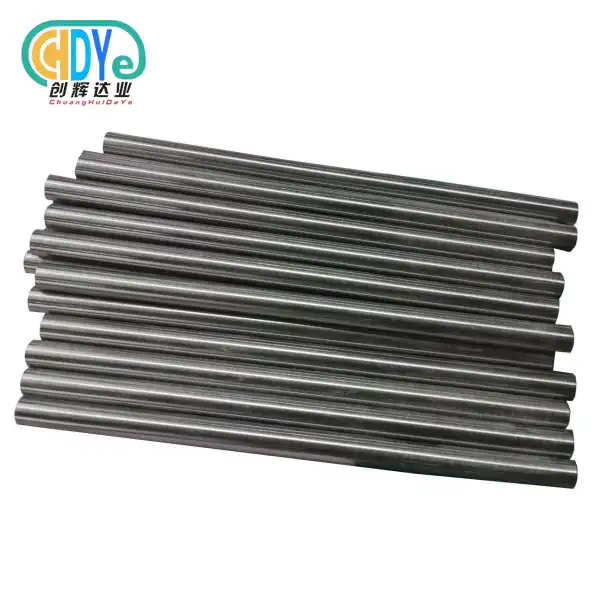
Yes, cleaning tantalum rods makes them much more resistant to corrosion by getting rid of surface flaws, polishing tantalum rods, and imperfections, which are common places for corrosion to start. There is a smooth, mirror-like surface on a polishing tantalum rod that makes it less vulnerable to harsh chemicals, gets rid of stress concentration points, and lowers the amount of surface area that is exposed to them. The natural passivation layer of tantalum oxide is improved by this process. This makes a more even barrier against acidic and oxidising conditions. Precision polishing methods create a smoother surface finish that ensures better performance in demanding chemical processing, semiconductor manufacturing, and lab settings where even small corrosion can damage the integrity of the system.
Introduction
Tantalum rods are now essential in many fields, such as chemical processing, aircraft, electronics, and the production of medical devices. Their high resistance to corrosion comes from a thick layer of tantalum pentoxide that forms on its own and protects the metal below from harsh environments. In business-to-business settings, keeping corrosion resistance at its best means reliable equipment, longer service life, and much lower upkeep costs, all of which have an effect on your bottom line. Surface finishing is a key part of maximising these natural qualities. Even though tantalum that hasn't been processed much or at all is chemically inert, the surface condition has a huge effect on how well the material fights corrosive attack. By understanding the connection between surface treatment and corrosion performance, procurement professionals can choose products that provide measurable operational benefits. Polishing is one of the best ways to improve the corrosion resistance of tantalum components. This process changes more than just the way something looks; it also changes the surface properties that affect how it reacts with acidic media. When you understand these technical details, you can work with suppliers who will give you steady quality that fits with your business goals.
Understanding Tantalum Rod Polishing and Its Impact on Corrosion Resistance
What Polishing Means for Tantalum Components
Polishing tantalum rods involves systematic surface refinement through mechanical, chemical, or electrochemical processes that progressively reduce roughness and eliminate microscopic imperfections. Unlike simple cleaning or degreasing, true polishing removes material layers to create a smoother topography. This transformation matters because corrosion often begins at surface irregularities—microscopic valleys, scratches, or contaminated zones where aggressive chemicals concentrate. The refined surface achieved through proper polishing enhances the uniformity of the natural oxide layer. This passive film, typically 2-5 nanometers thick, provides tantalum's legendary chemical resistance. When surface roughness decreases, the oxide layer forms more consistently, eliminating weak spots where localized corrosion might penetrate. Smoother surfaces also reduce the actual surface area exposed to corrosive media compared to rough finishes with the same nominal dimensions.
Common Challenges That Compromise Corrosion Resistance
During the handling of tantalum, surface contamination is a big problem. Iron bits from cutting tools, old lubricants, polishing tantalum rod, or dirt from handling can get stuck in surface flaws. These contaminants make galvanic cells that speed up localised rusting, especially in places where chloride is present. Polishing gets rid of these embedded particles and the surface spots where they gather at the same time. Uneven finishes caused by uneven processing create areas that are more or less likely to rust. Different oxide layer properties form in areas with greater scratches or machining marks compared to areas that are smoother. Because of this variation, some parts fail before they should, even though the rest of the part still has good strength. When you follow the right steps for cleaning, the surface of the whole part will be the same, so you can be sure it will work well for a long time.
Polishing Techniques for Tantalum Rods: Best Practices for Optimal Corrosion Resistance
Mechanical Polishing Methods
In mechanical polishing, abrasive compounds of increasingly finer grades are used to smooth out the surface over time. Using buffing wheels and polishing compounds by hand gives you the freedom to make unique shapes and small batches. Pressure, speed, and compound choice can all be changed by the operator depending on the surface condition and the amount of finish they want. This method works well for research projects or prototypes where investing in automated equipment isn't worth it because of the small number of items being made. For large-scale production, automated mechanical polishing using centerless grinding and specialised polishing tools gives better consistency. Computer-controlled systems keep the contact pressure and movement patterns exact, so the whole length of the stick removes the same amount of material. The roughness of the surface of these systems is usually less than 0.2 micrometres, which meets strict requirements for important uses. Repeatability of automated processes lowers variation between production lots, which is important for buyers who care about quality.
Chemical and Electrochemical Polishing Alternatives
Chemical polishing uses acid mixes that are specially made for tantalum to dissolve surface material in a controlled way. This method takes material evenly from the whole surface that is visible, automatically smoothing out high points and filling in low points at the microscopic level. This method works especially well for complicated shapes that are hard to get to mechanically. Electrochemical polishing combines chemical dissolution with electrical current to achieve better surface refinement. Mechanical processes can sometimes leave behind a work-hardened layer on the surface. This reduces the amount of stress that could affect rust performance. As the tantalum part is the anode in an electrolyte bath, controlled oxidation gets rid of surface flaws, polishing tantalum rod more efficiently. This method makes results that are very smooth, with surface roughness usually being less than 0.1 micrometres Ra. The surface that is left has a more uniform oxide layer, which directly leads to better corrosion protection in harsh chemical environments. Chemical and electrochemical methods each have their own benefits for certain uses. In this way, they get rid of the directional grinding marks that mechanical processes leave behind, making the surface features truly isotropic.
Comparing Polishing Methods and Surface Finishes for Tantalum Rods
Polishing vs. Standard Grinding Finishes
When you grind something normally, it gets to a useful size, but the surface is left pretty rough and has obvious directional marks. Even though these surfaces are good enough for structural uses where corrosion protection isn't important, they make it easy for chemicals to attack. Cutting wheels leave grooves that catch corrosive materials and stop them from draining completely. This keeps the materials in contact for a longer time, which speeds up the loss of material. Polishing gets rid of these features, making surfaces that are better at shedding liquids. The difference in surface roughness between ground and polished finishes has a big effect on how rust behaves. Surfaces that have been ground usually have Ra values between 0.8 and 3.2 micrometres, while surfaces that have been polished have Ra values of 0.2 micrometres or higher. This difference in numbers, which doesn't seem like much, actually shows changes of orders of magnitude in the real surface area and defect density. Components that work in very corrosive settings are worth the extra money spent on polishing because they last longer between service visits and are less likely to break.
Mechanical vs. Chemical Polishing Trade-offs
For simple cylindrical shapes where automatic equipment works well, mechanical polishing is a cost-effective option. The cost of buying cleaning equipment is spread out over a lot of units, which lowers the cost per unit. Material removal rates can be changed to balance processing speed and surface quality. This lets manufacturers make the best product for each purpose. Because it is so flexible, mechanical polishing is the standard choice for many industrial tasks. Chemical and electrochemical polishing are more expensive, but they offer benefits that make the prices worth it for important tasks. When mechanical access isn't possible because of complicated shapes, internal pathways, or threaded features, these methods work great. Chemical processes relieve stress, which is good for parts that are being loaded over and over or heated and cooled many times. Chemical methods can solve problems that mechanical methods can't, like when you need the best corrosion protection or when geometry makes mechanical methods hard to use.
Procurement Considerations for Polished Tantalum Rods in Industrial Applications
Critical Specifications and Certification Requirements
Surface roughness specifications require careful definition, matching your actual application needs. Over-specifying creates unnecessary costs while under-specifying risks premature failure. Chemical processing applications typically function well with Ra 0.4 micrometers or better, while semiconductor applications may demand Ra 0.1 micrometers. Discuss your operating environment with suppliers to establish appropriate targets rather than defaulting to arbitrary values. Material certifications verify the tantalum purity and composition that underpin corrosion resistance. Our polished tantalum rods feature alloy purity exceeding Ta 99.95%, meeting ASTM B365 standards for unalloyed tantalum. Mill test reports document chemical analysis, mechanical properties including tensile strength ranging from 200-300 MPa, and density measurements confirming 16.65 g/cm³. These certifications provide traceability from raw material through finished product, essential for regulated industries and quality management systems. ISO 9001:2015 certification demonstrates systematic quality control throughout manufacturing. This standard ensures suppliers maintain documented procedures, conduct regular audits, and implement continuous improvement practices.
Cost Implications and Total Ownership Analysis
Polishing adds incremental cost compared to as-machined finishes, but this expense often represents a small fraction of total tantalum material cost. Raw material pricing dominates component economics due to tantalum's inherent value. The corrosion resistance enhancement from proper polishing typically costs a 5-15% premium while potentially doubling service life in aggressive environments. This return on investment becomes particularly compelling when considering equipment downtime, emergency replacement costs, and production losses from premature component failure. Comparing polishing methods requires examining both direct processing costs and downstream implications. Chemical polishing may cost more per unit than mechanical methods, but eliminate secondary operations like deburring or stress relief. The total cost evaluation should include inspection requirements, rejection rates, and any qualification testing specifications demanded. Suppliers offering turnkey solutions that bundle polishing with other value-added services often deliver better total value than focusing exclusively on per-unit polishing costs. Volume commitments influence unit pricing significantly in tantalum component polishing tantalum rod manufacturing.
Case Studies and Real-World Benefits of Polished Tantalum Rods
Chemical Processing Equipment Performance
A specialty chemical manufacturer processing concentrated sulfuric acid at elevated temperatures experienced repeated component failures with standard machined tantalum rods. Surface roughness traps acid in microscopic valleys, maintaining corrosive contact even during intermittent operation. Pitting initiated at machining marks propagated into through-wall failures requiring unplanned shutdowns averaging three times annually. Switching to mechanically polished tantalum rods with Ra 0.3 micrometers eliminated premature failures. The refined surface allowed complete drainage during shutdown periods, reducing cumulative exposure time. The manufacturer reported extending service intervals from 18 months to over 48 months while maintaining production capacity. This improvement reduced annual maintenance costs by approximately 60% when accounting for replacement parts, labor, and lost production value.
Semiconductor Manufacturing Applications
A semiconductor equipment manufacturer specified tantalum sputtering targets requiring ultra-clean surfaces to prevent particulate contamination. Initial suppliers provided chemically etched surfaces that shed particles during the sputtering process, creating defects in deposited films. Contamination issues reduced production yield by 8-12%, creating significant economic losses in high-value wafer processing. Implementing electrochemically polished tantalum rods reduced particle generation to acceptable levels. The smooth, stress-free surface exhibited minimal material release during the energetic sputtering environment. Production yield improved to target levels within two process qualification runs. The manufacturer calculated that surface finish investment returned value within three months through yield improvement alone, with additional benefits from reduced target replacement frequency.
Conclusion
Polishing tantalum rods delivers measurable corrosion resistance improvements that justify investment across numerous industrial applications. The refined surface characteristics achieved through proper polishing techniques eliminate defect initiation sites, promote uniform oxide layer formation, and reduce the actual surface area exposed to aggressive chemicals. Whether selecting mechanical, chemical, or electrochemical polishing depends on your specific geometry, performance requirements, and economic constraints. Procurement success requires understanding the technical nuances separating adequate from exceptional corrosion performance. Partnering with experienced suppliers who maintain rigorous quality systems ensures you receive components meeting specifications consistently. The operational benefits—extended service life, reduced maintenance frequency, and improved process reliability—typically provide compelling return on investment that validates polished tantalum rod specifications.
FAQ
1. Can Polishing Replace Protective Coatings on Tantalum?
Properly polished tantalum typically outperforms coated alternatives in severely corrosive environments. Tantalum's natural oxide layer provides superior protection compared to most applied coatings, particularly at elevated temperatures where organic coatings degrade. Polishing enhances this natural protection by ensuring uniform oxide formation rather than introducing foreign materials with potential adhesion or compatibility issues. Coatings sometimes make sense for specific galvanic protection scenarios or to facilitate joining operations, but bare polished tantalum remains the preferred approach for ultimate corrosion resistance.
2. What Equipment Verifies Corrosion Resistance Quality?
Surface roughness measurement using contact or optical profilometers quantifies finish quality objectively. These instruments provide Ra, Rz, and other parameters characterizing surface topography. Visual inspection under controlled lighting reveals defects that profilometers might miss. Advanced verification includes scanning electron microscopy, examining surface structure at high magnification, and energy-dispersive X-ray spectroscopy, confirming surface composition and contamination absence. Electrochemical testing in simulated service environments provides direct corrosion rate measurements validating surface treatment effectiveness.
3. How Do You Confirm Quality Before Purchase?
Request material certifications documenting chemical composition, mechanical properties, and manufacturing traceability. Ask for surface roughness data from the specific production lot rather than generic, typical values. Many buyers specify witness testing where supplier quality personnel perform measurements while customer representatives observe. Requesting sample components for your own testing before committing to volume purchases reduces risk when qualifying new suppliers. Reputable manufacturers welcome such verification, viewing it as an opportunity to demonstrate capabilities.
Source Premium Polished Tantalum Rods from Experienced Manufacturers
Shaanxi Chuanghui Daye Metal Material Co., Ltd. delivers high-performance polished tantalum rod products engineered for superior corrosion resistance in your critical applications. Our manufacturing expertise spans over 30 years in rare metal processing, combining advanced equipment with meticulous quality control. We offer tantalum rods from 1-50 mm in diameter with purity exceeding 99.95%, custom lengths matching your requirements, and polished surface finishes meeting stringent specifications.
As a certified ISO 9001:2015 manufacturer, we provide complete traceability documentation, polishing tantalum rods, and supporting your quality management requirements. Our factory-direct pricing eliminates distributor markups while maintaining responsive delivery for both prototype quantities and production volumes. Contact our technical team at info@chdymetal.com to discuss your specific application requirements, obtain detailed quotations, or arrange expedited delivery. Partner with a reliable polishing tantalum rod supplier committed to supporting your operational success through consistent quality and professional service.
References
1. Davis, J. R. (2000). Corrosion: Understanding the Basics. ASM International, Materials Park, Ohio.
2. ASTM International (2019). ASTM B365-12: Standard Specification for Tantalum and Tantalum Alloy Rod and Wire. West Conshohocken, Pennsylvania.
3. Schweitzer, P. A. (2010). Fundamentals of Corrosion: Mechanisms, Causes, and Preventive Methods. CRC Press, Boca Raton, Florida.
4. Shrier, L. L., Jarman, R. A., and Burstein, G. T. (1994). Corrosion Metal/Environment Reactions, Volume 1. Butterworth-Heinemann, Oxford, United Kingdom.
5. Miller, G. L. (1959). Tantalum and Niobium. Butterworths Scientific Publications, London, United Kingdom.
6. Pourbaix, M. (1974). Atlas of Electrochemical Equilibria in Aqueous Solutions. National Association of Corrosion Engineers, Houston, Texas.
Learn about our latest products and discounts through SMS or email