- English
- French
- German
- Portuguese
- Spanish
- Russian
- Japanese
- Korean
- Arabic
- Greek
- German
- Turkish
- Italian
- Danish
- Romanian
- Indonesian
- Czech
- Afrikaans
- Swedish
- Polish
- Basque
- Catalan
- Esperanto
- Hindi
- Lao
- Albanian
- Amharic
- Armenian
- Azerbaijani
- Belarusian
- Bengali
- Bosnian
- Bulgarian
- Cebuano
- Chichewa
- Corsican
- Croatian
- Dutch
- Estonian
- Filipino
- Finnish
- Frisian
- Galician
- Georgian
- Gujarati
- Haitian
- Hausa
- Hawaiian
- Hebrew
- Hmong
- Hungarian
- Icelandic
- Igbo
- Javanese
- Kannada
- Kazakh
- Khmer
- Kurdish
- Kyrgyz
- Latin
- Latvian
- Lithuanian
- Luxembou..
- Macedonian
- Malagasy
- Malay
- Malayalam
- Maltese
- Maori
- Marathi
- Mongolian
- Burmese
- Nepali
- Norwegian
- Pashto
- Persian
- Punjabi
- Serbian
- Sesotho
- Sinhala
- Slovak
- Slovenian
- Somali
- Samoan
- Scots Gaelic
- Shona
- Sindhi
- Sundanese
- Swahili
- Tajik
- Tamil
- Telugu
- Thai
- Ukrainian
- Urdu
- Uzbek
- Vietnamese
- Welsh
- Xhosa
- Yiddish
- Yoruba
- Zulu
ASTM B 348: The Standard for Industrial Titanium Rod Applications
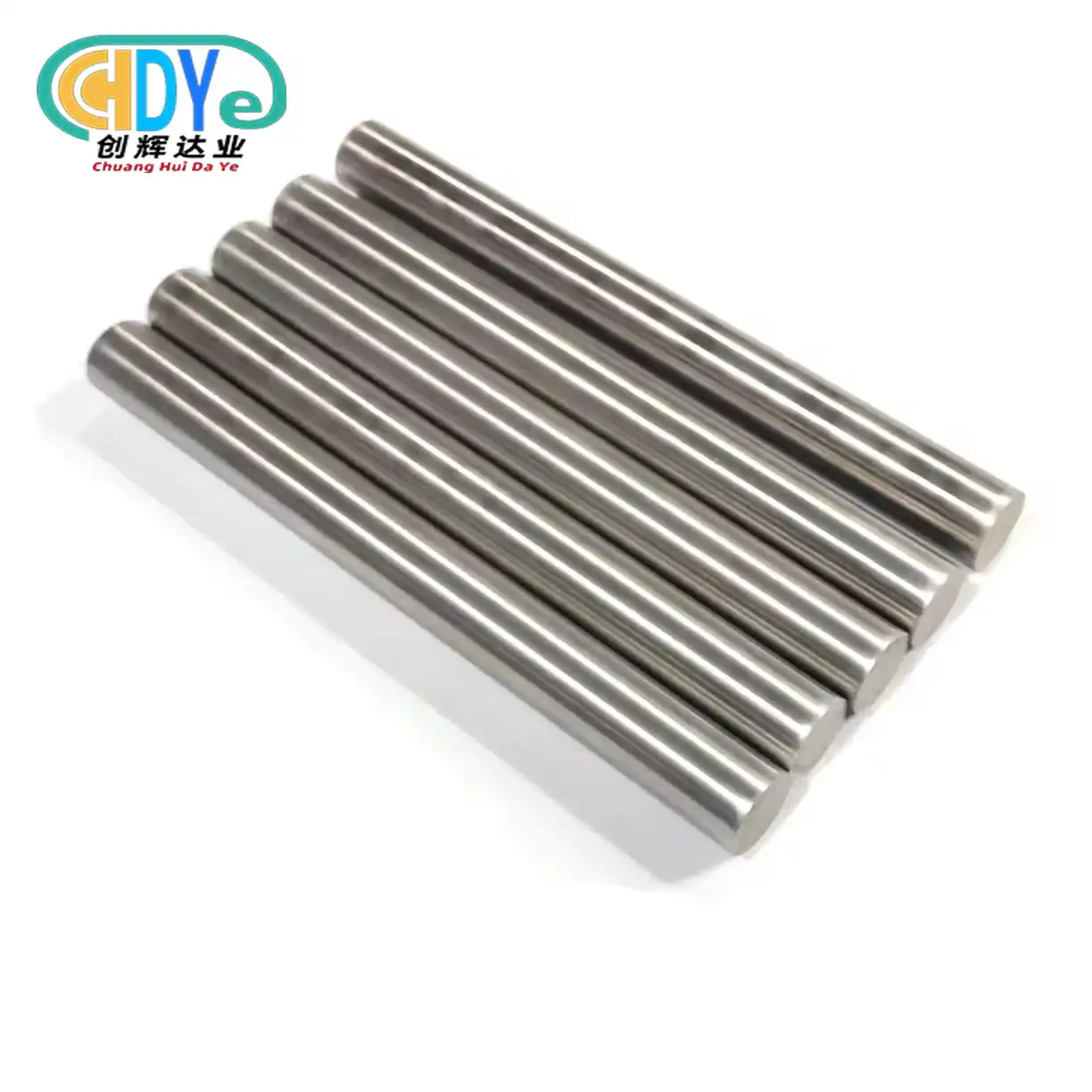
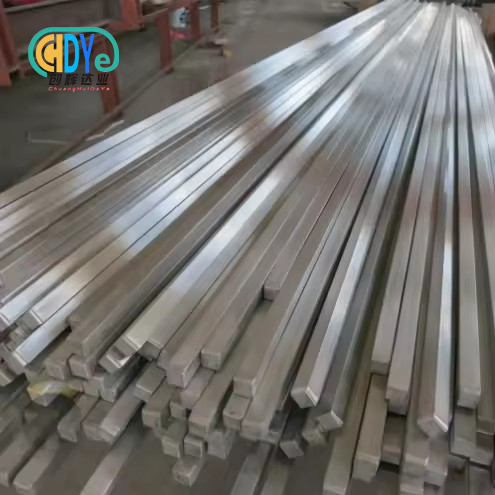
The ASTM B 348 industrial titanium rod is a high-quality titanium product that was made to work in harsh industrial settings. These rods are made according to ASTM B348 standards, which means they are very pure, have great strength-to-weight ratios, and are very resistant to rust. This detailed specification covers the making of titanium and titanium alloy bars in different grades. This makes them perfect for use in chemical processing, aerospace parts, marine systems, power generation, and medical devices, where performance and dependability are still very important.
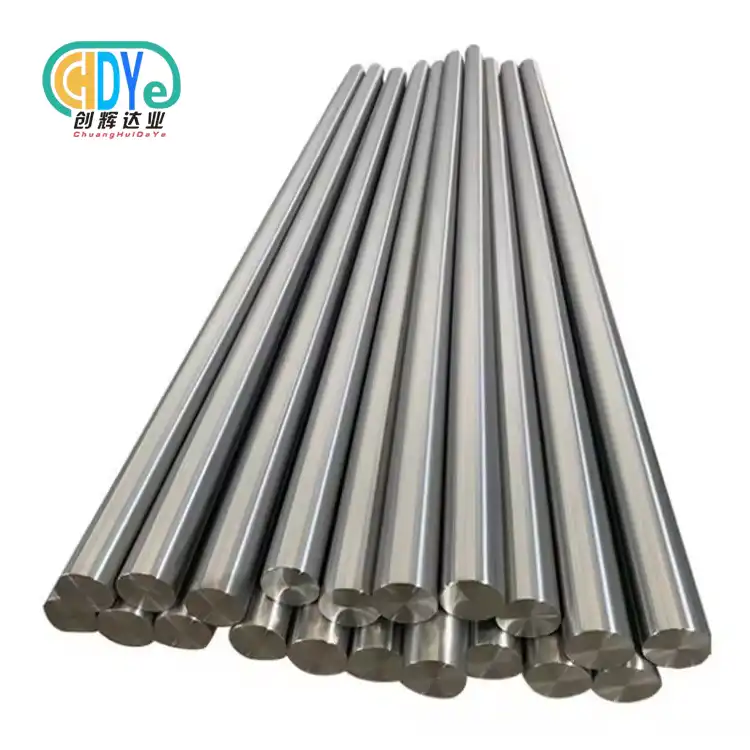
Understanding ASTM B 348 Titanium Rods: Specifications and Properties
To fully grasp the technical details of titanium rods that are controlled by ASTM B348 standards, one must look at their exact chemical makeup and mechanical properties. These requirements make sure that the performance is the same in all tech tasks.
Chemical Composition Standards
To keep the purity of the material, the ASTM B348 standard sets strict limits on chemical elements. Titanium that is grade 2 is commercially pure and has no more than 0.25% oxygen, 0.03% nitrogen, and 0.08% carbon. It also has less than 0.30% iron. These managed interstitial elements have a direct effect on how flexible and resistant to rust the material is. To make Grade 5 titanium alloy (Ti-6Al-4V), 5.5–6.75% aluminum and 3.5–4.5% vanadium are added. This makes the metal stronger while still being biocompatible.
The amount of hydrogen in all grades must stay below 0.015 percent so that hydrogen embrittlement doesn't happen, which could cause catastrophic failure in high-stress situations. This careful chemical control makes sure that every ASTM B 348 industrial titanium rod performs in a way that can be predicted, which is important for many industrial uses.
Mechanical Properties and Performance Metrics
Different types of ASTM B348 titanium rods have very different mechanical features. This lets engineers choose materials that work best for certain tasks. Grade 2 economically pure titanium has a minimum tensile strength of 345 MPa and a yield strength of 275 MPa. It is also very flexible, with stretch values above 20%. Because of this, it is perfect for uses that need high corrosion protection while also needing modest strength.
With a minimum tensile strength of 895 MPa and a yield strength of 828 MPa, Grade 5 titanium metal has great mechanical properties. The material can stretch about 10% of its length while having a mass of only 4.43 g/cm³, which is about 56% of steel. This better strength-to-weight ratio makes it possible to reduce weight by a lot in aircraft and automotive uses without weakening the structure.
Heat Treatment Protocols and Dimensional Tolerances
Heat treatment methods are very important for making sure that titanium bars have the best mechanical qualities. In the normal annealing process, materials are heated to temperatures between 650°C and 750°C and then cooled slowly to remove internal stresses and improve grain structure. This process makes sure that the rod's mechanical qualities are the same across its cross-section.
The ASTM B348 standards for dimensional limits keep width changes under tight control, usually at the h9 or h11 tolerance levels. Rods up to 3000mm long have length tolerances that stay within ±6mm. This makes sure that they can be used with precision cutting processes. The surface finish needs to be hot-rolled or centerless ground, so there are choices that work with different manufacturing methods.
Comparing ASTM B 348 Titanium Rods with Alternatives
To choose the right material, you need to know the differences between the different types of titanium and other materials. This study helps people who work in procurement make smart choices based on the needs of the product and costs.
ASTM B 348 vs. ASTM B 863 Specifications
In the titanium business, ASTM B 348 and ASTM B 863 are used for different things, but they both control the production of titanium rods. ASTM B 348 covers grades 1 through 39 in an annealed state and is mainly used in general industry settings. It focuses on mechanical qualities and corrosion protection. ASTM B 863 is a standard that goes over specific uses for titanium wire. It includes more cold-working requirements and different size limits.
The main difference is in how they are processed and what they are used for in the end. Hot working methods, such as casting and rolling, make ASTM B 348 rods ideal for use in structural parts and finished parts. ASTM B 863 wire products are made by cold drawing, which gives them different surface features and mechanical qualities that make them good for use in fastener and spring applications.
Titanium vs. Stainless Steel Performance Analysis
When you compare titanium rods to stainless steel options, you can see that titanium rods work much better in some situations. Titanium is more resistant to rust in chloride conditions, so it can keep its shape in saltwater, where stainless steel gets pitting and crevice corrosion. Titanium surfaces form a passive oxide coat that helps them heal themselves, which increases their useful life in harsh chemical conditions.
Because titanium is about 43% lighter than stainless steel and has the same amount of strength, it is a much better choice when weight is an issue. This weight advantage means that a lot less fuel is used in aircraft, and portable equipment is easier to handle. However, titanium still has higher starting material prices, so a lifecycle cost analysis is needed to make the choice.
Grade Selection Criteria for Industrial Applications
Choosing the right titanium types means finding a balance between technical needs, the environment, and cost considerations. Here are the most important things to think about when choosing an industrial grade:
- Grades 1 and 2: These are the best for chemical processing equipment, heat exchanges, and naval uses where flexibility is more important than strength.
- Grade 5 (Ti-6Al-4V): This grade is best for aircraft parts, car parts, and high-stress situations that need the highest strength-to-weight ratios.
- Grade 7: Specifically made for chemical processing tasks that involve reducing acids, with palladium added to make it more resistant to rust.
- Grade 12: Designed for high-temperature uses with molybdenum and nickel added to make it more resistant to creep and rust.
These traits that are special to each grade help engineers choose the best material for each operation's needs while keeping costs low.
Procurement Guide for ASTM B 348 Titanium Rods
To buy titanium rods successfully, you need to know what the suppliers can do, how the market works, and how to make sure the quality of the rods. This advice helps people who work in buying get around the complicated titanium supply chain.
Supplier Selection and Certification Requirements
When looking for titanium rod providers, you should look at their production skills, quality certifications, and history of providing consistent materials. ISO 9001:2015 certification is the basic level for quality management. It makes sure that processes are written down so that materials can be tracked and quality is controlled. For military uses, extra certifications like AS9100 or ISO 13485 may be needed. For medical uses, it may be necessary without these certificates.
When evaluating a company's production capabilities, melting technology should be taken into account. Vacuum arc remelting (VAR) or electron beam melting are the best ways to keep materials clean. The forge's capacity determines the size ranges that are available, and the machine's ability to machine affects the wait time for custom specs. Materials must meet ASTM standards using testing tools like ultrasound inspection, chemistry analysis, and mechanical testing.
Both wait times and total prices are affected by where the supplier is located. When you need a lot of something, foreign suppliers may be cheaper, but domestic suppliers may have faster lead times and make logistics easier. Checking a supplier's ability to pay and make things makes sure that the supply chain works reliably for important uses.
Pricing Factors and Market Dynamics
Titanium rod prices are affected by many market factors, such as the cost of raw materials, the difficulty of handling, and changes in demand. Titanium sponge prices, which are the main raw material, change based on changes in world supply and demand. They usually make up 30 to 40 percent of the cost of the finished product. Processing prices depend on the grade's level of difficulty, the size requirements, and the amount of testing that is needed.
Prices are affected by market demand from the chemical processing and aircraft businesses. The economic trends that affect these areas have an effect on the prices and supply of titanium rods. Geographical factors also come into play, as the cost of shipping can cause prices to vary between regions.
Cost optimization can be done through quantity savings and supply deals when volume is taken into account. Depending on the requirements, the minimum order quantity is usually between 100 kg and 1000 kg, with better prices for bigger orders. Long-term supply deals can keep prices stable and make sure that materials are always available for projects that are already underway.
Lead Time Planning and Order Management
It is still very important to plan for enough extra time when buying titanium rods. Standard specs from well-known providers usually take 4 to 8 weeks to deliver, while custom specifications can take up to 12 to 16 weeks, based on how complicated they are. Mill orders for sizes that aren't normal or for tests that need to be done in a certain way can lead to lead times of 20 weeks or longer.
Lead times are greatly affected by production schedules. For example, suppliers usually make certain grades and sizes every three months. Knowing when your suppliers make things lets you time your orders in the best way to cut down on wait times. Orders for emergencies may be filled at a higher cost, but supplies are still limited.
Strategic stocking of widely used specifications can help cut down on long wait times as part of inventory management strategies. Some sellers offer consignment programs that let you get their products without having to pay for them all at once, but you usually have to agree to use them a certain number of times.
Application and Technical Guidance for ASTM B 348 Titanium Rods
To effectively use ASTM B 348 industrial titanium rod, you need to know the unique needs of your product and how to handle it correctly. This advice helps engineers and buying teams get the most out of titanium rods.
Aerospace and Defense Applications
Titanium's high strength-to-weight ratio and resistance to wear make it ideal for use in aerospace for important structural parts. Grade 5 titanium rods are used in landing gear parts because they are strong and don't break easily when they hit something. They also help keep the weight down, which is important for the performance of the plane. Titanium is resistant to rusting and stable at high temperatures, which is good for engine parts that are exposed to heat.
Centerless grinding processes are the best way to get the exact dimension control and high-quality surface finish that is needed for fastener uses in aircraft structures. The non-magnetic properties of the material are important for navigation and electrical systems. Its spark-resistant properties make fuel system use safer.
When the material is used in defense, its ballistic qualities and ability to withstand dangerous conditions are emphasized. Titanium is used for armor plate because it absorbs energy, and it is also used in the military because it is more resistant to corrosion in salt water than other marine metals.
Chemical Processing and Marine Engineering
Chemical processing settings are very prone to corrosion, but titanium bars do better than other materials in these conditions. Titanium doesn't crack when exposed to chloride stress, which means that heat exchanger tubes and reactor parts can last much longer than stainless steel options. Because it can stand up to sulfuric acid, hydrochloric acid, and other strong acids, the material is essential for process equipment.
Marine uses take advantage of titanium's high resistance to corrosion in saltwater. For example, pump shafts and blade parts stay strong in tough saltwater settings. Titanium is used on offshore sites for important equipment where the cost of repair would be higher than the material premium. Because marine organisms can't stick to the material, it needs less upkeep in underwater uses.
To keep corrosion protection, welding methods and joint design must be carefully thought out for use in the process industry. When welding, using the right purge gas protection stops pollution that could hurt performance in harsh settings.
Machining and Fabrication Best Practices
To get the best surface finish and precise accuracy when milling titanium rods without causing work hardening, you need to use special methods. Cutting tools that are sharp and have positive rake angles produce less cutting force and heat, which increases tool life and surface quality. Work hardening, which can damage cutting tools and make measurements less accurate, can't happen when feed rates stay the same.
Here are some important cutting factors for working with titanium rods:
- Cutting Speed: 50 to 150 square feet per minute, based on the grade and the tool.
- Feed Rate: 0.005-0.020 inches per rotation, which makes chip formation better.
- Coolant: Using flood coolant is necessary to keep the temperature down and get rid of chips.
- Tool Geometry: It has sharp edges and positive rake angles of 10 to 15 degrees, which reduces cutting forces.
These factors make sure that the best machining results are achieved while the material's purity is maintained throughout the production process.
When welding titanium, inert gas protection is needed to keep oxygen and nitrogen from getting into the weld. 99.99% pure argon shielding gas stops oxides from forming, which could damage material qualities. Surface contaminants that could lead to weld flaws can be removed by properly preparing the joint and cleaning it well.
Advantages of Choosing ASTM B 348 Titanium Rods
Choosing ASTM B 348 industrial titanium rod has many benefits that make the extra cost worth it because it performs better and costs less over its lifetime. These benefits go beyond the initial qualities of the material and include things like environmental concerns and operating efficiency.
Superior Performance Characteristics
Titanium bars work very well in several important ways that are important for industrial uses. The material is stronger than most metals and lighter than most plastics. This lets structures be lighter without losing their ability to hold weight. In cyclic loading situations, which are common in the aircraft and automobile industries, fatigue resistance traits make parts last longer.
Corrosion protection means that protective coatings aren't needed in many situations. This lowers the cost of upkeep and the total cost of ownership. The passive oxide film development helps the surface fix itself, so it stays protected even after it gets damaged. Stability at high temperatures lets things work in harsh conditions where other materials would fail.
Titanium bars can be used in medical devices like surgical tools and implant parts because they are biocompatible. Non-toxic features make sure safety in pharmacy and food processing settings, where material purity is still very important.
Economic Benefits and Lifecycle Cost Analysis
Titanium rods are more expensive than other options at first, but they save a lot of money over their lifetime because they don't need as much upkeep and last longer. Corrosion resistance gets rid of the need to replace materials that break down, and weight reduction saves money on operating costs in transportation uses.
Less upkeep means fewer problems with operations and lower costs that come with them. When titanium is used in equipment, corrosion-related failures cause fewer unplanned shutdowns, which improves total working efficiency. Because the material doesn't wear down easily, inspections can be done more often, which saves money on upkeep work.
Less weight in rotating tools means less power needed and lower operating costs, which all lead to better energy economy. During the equipment's useful life, these operating savings often exceed the initial material premiums, giving a good return on investment.
Environmental and Sustainability Advantages
Titanium's low environmental impact and ability to be recycled make it a good material for green efforts. The material can be recycled over and over again without losing any of its properties, which is in line with the ideas of the circular economy. Improvements to mining and processing keep lowering their effect on the environment while keeping the quality of the materials.
Longevity properties lower the number of replacements needed, which lowers the environmental impact of making and transporting the product. Because something doesn't rust, it doesn't need to be treated with chemicals or coated with protective materials that could be bad for the environment.
Non-toxic properties protect the earth from the time an object is made until it is thrown away or recycled. The traits listed here are in line with stricter environmental rules and help companies reach their sustainability goals.
Conclusion
Titanium bars that meet ASTM B 348 standards are an important material option for tough industrial uses where other materials fail. The standard covers a wide range of grades, from commercially pure to high-strength alloys. This lets users choose the best material for a wide range of uses, such as medical devices, chemical processing, aircraft, and marine engineering. By learning about the technical specs, buying tips, and application rules for ASTM B 348 industrial titanium rod, you can use it successfully in projects that need high performance, resistance to rust, and structural integrity. The material has a lot of great qualities that make it expensive, but it pays for itself over time in lower maintenance costs, longer service life, and better operating efficiency, which makes the investment worth it in many industries.
FAQ
Q: What industries commonly use ASTM B348 titanium rods?
A: ASTM B 348 titanium rods are used in many important ways in the aircraft, chemical processing, marine engineering, medical device making, and power generation fields. The material's high strength-to-weight ratio makes it useful for bolts and structural parts in aerospace. Chemical-making businesses use equipment that doesn't rust when it comes into contact with harsh chemicals. Marine applications benefit from not corroding in salt water, and medical applications use biocompatibility features.
Q: How does heat treatment affect mechanical properties?
A: Heat treatment changes the mechanical qualities of titanium rods in a big way by changing the grain structure and relieving stress. Standard annealing methods improve ductility and relieve stress, while solution treatment and aging can make metal grades stronger. The right heat treatment gets rid of any leftover stresses from the making process and makes sure that the material's mechanical properties are the same across its cross-section.
Q: What factors influence lead times for titanium rod orders?
A: Lead times vary depending on the difficulty of the specification, the size of the order, the supplier's stock, and the need for tests. Standard specifications from stock usually ship in 1-2 weeks, while special specifications take 2-3 weeks. Lead times can go up to 3-4 weeks or more for mill orders for sizes that aren't common. Delivery times are affected by when the materials are available, how they are scheduled to be made, and how they need to be tested.
Q: Which grade offers the best corrosion resistance?
A: Palladium additions to Grade 7 titanium make it more resistant to corrosion in less acidic environments. Grade 2 titanium, on the other hand, is great for most commercial uses and offers great overall corrosion resistance. Choosing the right grade relies on the surroundings. For example, Grade 7 is best for chemical processing, while Grade 2 is good for marine and general industry uses.
Q: Can titanium rods be welded effectively?
A: Titanium bars can be successfully welded using the right methods, such as using inert gas to protect them and keeping them from getting contaminated. 99.99% pure argon protection keeps the air from getting dirty while welding. Cleaning and preparing the joint properly are important for getting good welds that maintain the material's qualities. For important jobs, you might need to use special welding techniques.
Partner with Chuanghui Daye for Premium Titanium Rod Solutions
Shaanxi Chuanghui Daye Metal Material Co., Ltd. stands ready to support your ASTM B 348 industrial titanium rod needs with over 30 years of experience in making rare metals. Located in China's renowned "Titanium Capital" of Baoji, we combine advanced production facilities with ISO 9001:2015 certification to deliver superior quality materials. Our comprehensive processing capabilities span grades Gr1 through Gr12 in diameters from 4mm to 350mm, supporting both standard and custom specifications. As your trusted industrial titanium rod supplier, we provide competitive factory-direct pricing, reliable global shipping, and responsive technical support to ensure your project's success. Contact our experienced team at info@chdymetal.com to discuss your specific requirements and experience the Chuanghui Daye advantage in titanium rod manufacturing excellence.
References
1. Boyer, R.R. "An Overview on the Use of Titanium in the Aerospace Industry." Materials Science and Engineering: A, vol. 213, 1996, pp. 103-114.
2. Donachie, Matthew J. "Titanium: A Technical Guide, 2nd Edition." ASM International, 2000.
3. Peters, M., Kumpfert, J., Ward, C.H., and Leyens, C. "Titanium Alloys for Aerospace Applications." Advanced Engineering Materials, vol. 5, 2003, pp. 419-427.
4. Schutz, R.W. and Thomas, D.E. "Corrosion of Titanium and Titanium Alloys." ASM Handbook Volume 13: Corrosion, ASM International, 1987, pp. 669-706.
5. American Society for Testing and Materials. "Standard Specification for Titanium and Titanium Alloy Bars and Billets." ASTM B348-19, ASTM International, 2019.
6. Lutjering, G. and Williams, J.C. "Titanium: Engineering Materials and Processes, 2nd Edition." Springer-Verlag Berlin Heidelberg, 2007.
Learn about our latest products and discounts through SMS or email