- English
- French
- German
- Portuguese
- Spanish
- Russian
- Japanese
- Korean
- Arabic
- Greek
- German
- Turkish
- Italian
- Danish
- Romanian
- Indonesian
- Czech
- Afrikaans
- Swedish
- Polish
- Basque
- Catalan
- Esperanto
- Hindi
- Lao
- Albanian
- Amharic
- Armenian
- Azerbaijani
- Belarusian
- Bengali
- Bosnian
- Bulgarian
- Cebuano
- Chichewa
- Corsican
- Croatian
- Dutch
- Estonian
- Filipino
- Finnish
- Frisian
- Galician
- Georgian
- Gujarati
- Haitian
- Hausa
- Hawaiian
- Hebrew
- Hmong
- Hungarian
- Icelandic
- Igbo
- Javanese
- Kannada
- Kazakh
- Khmer
- Kurdish
- Kyrgyz
- Latin
- Latvian
- Lithuanian
- Luxembou..
- Macedonian
- Malagasy
- Malay
- Malayalam
- Maltese
- Maori
- Marathi
- Mongolian
- Burmese
- Nepali
- Norwegian
- Pashto
- Persian
- Punjabi
- Serbian
- Sesotho
- Sinhala
- Slovak
- Slovenian
- Somali
- Samoan
- Scots Gaelic
- Shona
- Sindhi
- Sundanese
- Swahili
- Tajik
- Tamil
- Telugu
- Thai
- Ukrainian
- Urdu
- Uzbek
- Vietnamese
- Welsh
- Xhosa
- Yiddish
- Yoruba
- Zulu
What Industries Rely on GR2 Titanium Sheet Plate Most?
A lot of different businesses count on gr2 titanium sheet plate because it is so good at resisting corrosion, being strong, and being able to be shaped. Most of this Grade 2 commercially pure titanium is used in technology for space and the ocean, making medical devices, and power systems. Things that go in these places need to be strong enough to last through rough conditions and keep their shape for a long time.
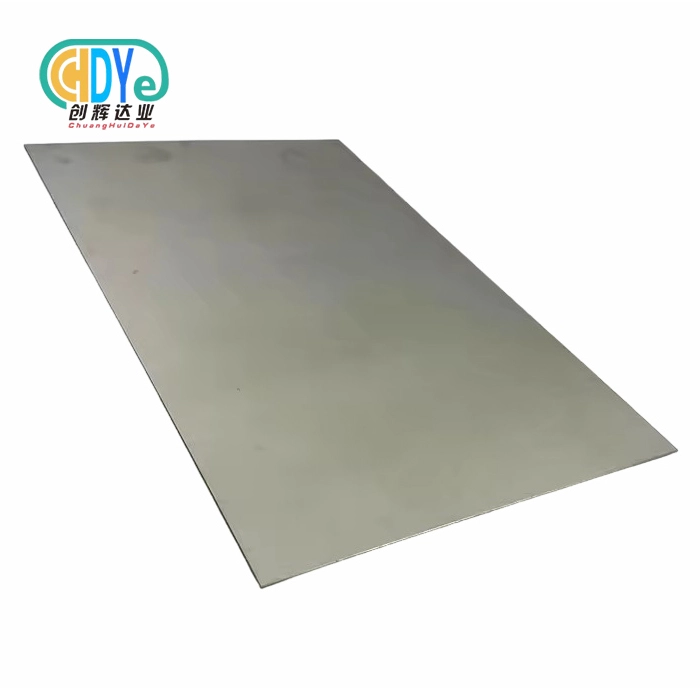
Understanding GR2 Titanium Sheet Plate: Specifications and Properties
This is a pure titanium grade 2 sheet plate that can be bought. Well done, it doesn't rust, is strong for its weight, and lasts a long time. A few alloying elements are mixed in with the titanium to make it stronger. It's better than many other materials because it's flexible and simple to weld.
Chemical Composition and Mechanical Properties
The material has a minimum yield strength of 275 MPa and can stretch a lot, making it ideal for uses that need to be shaped. gr2 titanium sheet plate performs consistently in a wide range of working situations because it has an iron content below 0.30% and oxygen levels that are carefully managed. Because of its alpha-phase microstructure, it is very good at cold-forming, which means that makers can make complicated shapes without damaging the material.
Available Specifications and Processing Options
Specifications for manufacturing include thicknesses between 0.5 mm and 50 mm and widths between 1000 mm and 3000 mm that meet ASTM B265 and ASME SB265 standards. Different types of applications can use surface processes like bright finishing, sanding, pickling, and sandblasting. Both cold rolling and hot rolling are good ways to make sure that the grain structure and functional qualities are just right for the end use.
Key Industries That Depend on GR2 Titanium Sheet Plate
Many different types of businesses count on gr2 titanium sheet plate because it has special qualities that make it useful in many situations. Each industry uses different properties of this material to improve efficiency, lower maintenance costs, and make tools last longer.
Chemical Processing and Chlor-Alkali Production
In chemical plants, it is often used to line reaction vessels, plate heat exchangers, and other tools that need to work in harsh chemical environments. Stress corrosion cracking is a process that normally breaks down austenitic stainless steels in places where chlorine is present in large amounts. This substance stops it. Chlor-alkali plants need gr2 titanium sheet plate for their anodes and cathodes. This type of plate doesn't change shape when it comes in contact with wet chlorine gas and hot, acidic brine solutions.
Aerospace and Defense Applications
Aerospace makers like gr2 titanium sheet plate because it is strong and light, which directly leads to better fuel economy and better structural performance. Because it can keep its mechanical qualities over a wide range of temperatures, the material is important for military equipment, airplane parts, and satellite structures. Its high resistance to wear means that it will work reliably under the cyclic loading conditions that are typical in aircraft use.
Marine Engineering and Desalination Systems
Marine settings have their own problems that the gr2 titanium sheet plate can solve well because it is very resistant to rust in salt water. This material is used in plate-and-frame heat exchangers and condenser tube sheets at desalination plants, where fast-moving seawater would quickly break down other metals. Because there can be no rust, engineers can make heat-transferring surfaces that are smaller and work better than copper-nickel ones.
Medical Device Manufacturing
Biocompatibility of gr2 titanium sheet plate is important for medical device makers who make surgical instruments, implants, and monitoring tools. Because the material is non-toxic and doesn't react with body fluids, it's perfect for long-term internal devices. In orthopedic and oral uses, it is essential because it can fuse with bone tissue and keep its shape over many years of use.
Comparison to Alternative Materials in Industry Applications
In terms of rust protection and strength-to-weight ratio, gr2 titanium sheet plate stands out from competing materials like GR5 titanium, stainless steel, and aluminum. Knowing these differences helps people who work in buying make smart choices based on the needs of each application.
GR2 Titanium Versus GR5 Titanium Alloy
Even though GR5 titanium has a higher final tensile strength, GR2 titanium sheet plate is often better for uses that need a lot of fabrication because it is easier to shape and costs less. While gr2 titanium sheet plate is easy to weld using normal TIG or MIG methods, GR5 needs more advanced welding techniques and heat treatment. The commercially pure quality of gr2 titanium sheet plate also makes it more resistant to corrosion in saltwater than the alloyed GR5 makeup.
Performance Comparison with Stainless Steel
Gr2 titanium sheet plate is more expensive at first, but its lighter weight and better resistance to rust make up for it in harsh settings. The material has a 10–20 times longer useful life in chemical processes and marine uses, which greatly lowers the overall cost of ownership. Without the early failures that are common with stainless steel options, this material is resistant to pitting and crevice rust in chloride settings.
Economic Considerations Against Aluminum Alloys
Aluminum is cheaper to work with, but it doesn't last as long when exposed to stress or corrosion. The strength-to-weight ratio of gr2 titanium sheet plate is similar to that of aluminum, but it is much more resistant to the environment. The lower upkeep needs and longer service gaps often lead to a lower total cost of ownership, even though the original material costs were higher.
Optimizing Your GR2 Titanium Sheet Plate Procurement
Getting a gr2 titanium sheet plate is only possible if you choose providers that promise approval, quality control, and on-time delivery. In all apps, strategic choices about sourcing have a direct effect on how well operations run and how well projects turn out.
Supplier Qualification and Certification Requirements
To build trusting relationships with suppliers, buyers should look at their qualifications, such as ISO 9001:2015 approval, customer references, and OEM memberships. Checking mill test certificates against EN 10204 3.1 standards makes sure that materials meet the required chemical makeup and mechanical properties. Suppliers with well-established quality control systems offer better paperwork for tracking and stability from batch to batch.
Pricing Strategies and Order Optimization
When setting prices, things like current market rates, minimum order amounts, and possible volume deals for buying in bulk are taken into account. Many providers offer better prices for normal sizes and surface conditions. On the other hand, custom specs may cost more. Knowing about wait times and production schedules can help you get the most out of your order timing and inventory management costs.
Value-Added Services and Customization Options
Leading providers offer precise cutting, making, and surface cleaning services that cut down on the work that needs to be done later. Waterjet and laser cutting make sure that very little material is wasted, and that exact measurements are kept. Custom packing and shipping plans are made to fit the details of a project and meet delivery deadlines.
Future Trends and Industry Outlook for GR2 Titanium Sheet Plate
It looks like the future of gr2 titanium sheet plate will be bright, thanks to rising demand in flight, renewable energy, and green technology. Titanium is becoming more popular in emerging countries because it is good for the climate and has great lifecycle performance qualities.
Technological Advancements in Processing
New developments in melting, rolling, and surface treatment technologies keep making materials work better and be used in more situations. New electron beam melting methods make materials purer and more consistent, and new surface sealing methods make them last longer in harsh settings. Because of these changes, engineers can now use titanium in ways that weren't possible before.
Market Growth Drivers and Emerging Applications
More old and new businesses are using titanium because of the growing focus on making equipment more reliable and protecting the environment. Manufacturers of electric vehicles are looking into how titanium can be used for structural parts and battery housings. In offshore wind farms and solar thermal sites, where corrosion protection and structural stability are very important, titanium is used in renewable energy systems.
Conclusion
Gr2 titanium sheet plate is most commonly used in chemical processing, aircraft, marine engineering, medical devices, and energy systems. Titanium's unique mix of resistance to rust, high strength-to-weight ratio, and biocompatibility helps these industries solve important problems. Since technology keeps getting better and protecting the earth is becoming more important, this material will probably be used for more things. To be a good buyer, you need to carefully choose your suppliers, know the specs of the materials you're buying, and think about the total cost of ownership, not just the purchase price.
FAQ
Q: What makes GR2 titanium different from other types of titanium?
A: gr2 titanium sheet plate is commercially pure titanium that is very resistant to rust and easier to shape than titanium alloys like GR5. It has the best mix of strength and flexibility, which makes it easier to work with and gives it great protection for the environment.
Q: Is it easy to weld GR2 titanium sheet plate?
A: The gr2 titanium sheet plate can be welded very well with either TIG or MIG welding. But it's important to use the right amount of protective gas, like argon or helium, on both the weld pool and the heat-affected zone to keep the material's qualities and stop oxidation.
Q: What is the highest temperature that GR2 titanium can be used at?
A: Gr2 titanium sheet plate can handle temperatures up to about 1660°C, which is its melting point. However, it is usually only used in constant service at 425°C. Above 300°C, creep strength needs to be taken into account in the planning process, and above 400°C, oxidation rates go up a lot.
Q: What is the price difference between GR2 titanium and stainless steel?
A: Even though gr2 titanium sheet plate costs more than stainless steel to buy at first, its better rust resistance often means that it costs less over its lifetime. The longer working life and lower upkeep needs of the material can make the extra cost worth it in tough situations.
Q: What kinds of quality marks should I look for in suppliers?
A: Suppliers you can trust should give you mill test certificates that meet EN 10204 3.1 standards, ISO 9001:2015 quality management approval, and full paperwork for tracking your order. The material must meet the requirements of ASTM B265 and ASME SB265 and have its chemistry make-up and mechanical features checked.
Partner with Chuanghui Daye for Premium GR2 Titanium Sheet Plate Solutions
Shaanxi Chuanghui Daye Metal Material CO.,Ltd stands as your trusted Gr2 titanium sheet plate manufacturer, combining over 30 years of industry expertise with ISO 9001:2015 certified quality management systems. Located in China's renowned "Titanium Capital" of Baoji, we offer comprehensive processing capabilities, including precision cutting, forming, and surface treatment services. Our advanced manufacturing facilities ensure consistent material properties, while our factory-direct pricing delivers exceptional value for your projects. Contact our technical team at info@chdymetal.com to discuss your specific requirements and experience the reliability that leading aerospace, chemical processing, and marine engineering companies depend on worldwide.
References
1. American Society for Testing and Materials. Standard Specification for Titanium and Titanium Alloy Strip, Sheet, and Plate. ASTM International, West Conshohocken, PA.
2. Boyer, R., Welsch, G., & Collings, E.W. Materials Properties Handbook: Titanium Alloys. ASM International, Materials Park, OH.
3. Donachie, Matthew J. Titanium: A Technical Guide, Second Edition. ASM International, Materials Park, OH.
4. Lutjering, Gerd & Williams, James C. Titanium: Engineering Materials and Processes. Springer-Verlag, Berlin Heidelberg.
5. Peters, M., Kumpfert, J., Ward, C.H., & Leyens, C. Titanium Alloys for Aerospace Applications. Advanced Engineering Materials, Volume 5, Issue 6.
6. Schutz, R.W. & Thomas, D.E. Corrosion of Titanium and Titanium Alloys. ASM Handbook Volume 13A: Corrosion Fundamentals, Testing, and Protection. ASM International, Materials Park, OH.
Learn about our latest products and discounts through SMS or email