When it comes to aerospace applications demanding exceptional corrosion resistance and high-temperature performance, selecting the right tantalum tube and pipe becomes crucial. These specialized components offer unmatched reliability in extreme environments, making them essential for aerospace manufacturers seeking materials that won't compromise under pressure. Premium tantalum tubing solutions provide the durability, purity, and precision necessary for mission-critical aerospace systems. The aerospace sector operates under the most extreme conditions, where material failure is impossible. Perfectly intact components must survive severe temperatures, corrosive conditions, and intense stress. Tantalum tubes and pipes excel in this, making them essential for aerospace applications.
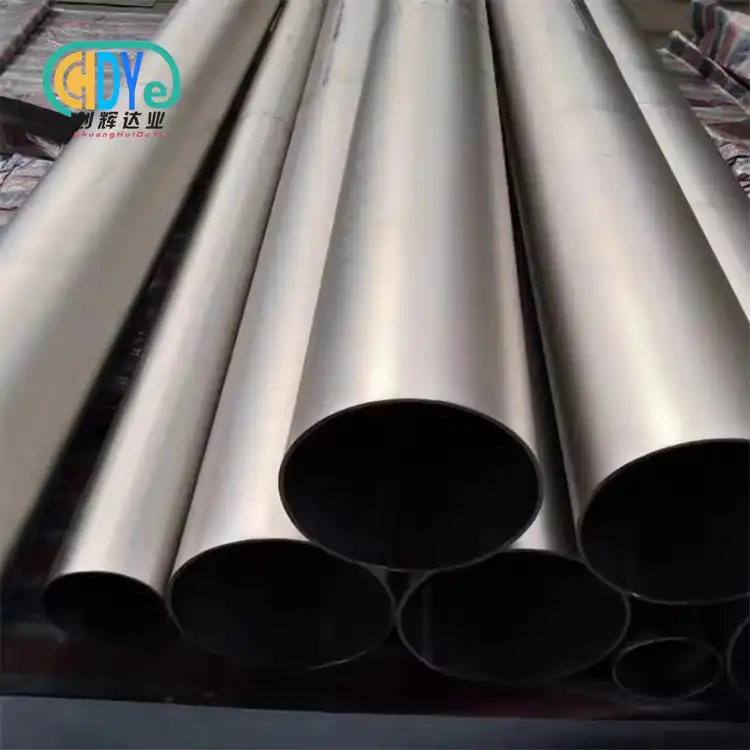
Selection Criteria for Premium Aerospace Tantalum Solutions
Selecting the best tantalum tube and pipe takes careful consideration of numerous criteria. Working with aerospace clients has taught me that material selection depends on performance requirements and manufacturing capability.
Purity is very important. Aerospace applications require 99.95% tantalum. Impurities in lower-purity materials can affect important application performance. The grain structure is important because a homogenous microstructure enables consistent mechanical characteristics throughout the component.
Manufacturing standards are also important. ASTM B521 guarantees that tantalum pipe fittings fulfill industry dimensions and mechanical precision standards. ISO 9001:2015 accreditation enhances production quality management.
Aerospace applications require precise dimensions. Tight tolerances assure complex assembly fit and performance. Custom dimensions and configurations are valuable for aircraft producers with particular needs.
Global markets increasingly value supply chain reliability. Aerospace projects have tight deadlines, making reliable delivery essential. Suppliers with quality systems and production capabilities can help with prototype development and full-scale production.
Top Tantalum Tube and Pipe Solutions for Aerospace Applications
Ultra-High Purity Seamless Tantalum Tubes
Seamless tantalum tubes are the best for aeronautical applications that require reliability. Precision extrusion and drawing remove weld seams, creating tubes with uniform wall thickness and high strength.
The manufacturing process begins with electron beam melting high-purity tantalum ingots to 99.95% or higher. Trace contaminants that could jeopardize aerospace performance are removed during electron beam furnace refinement. The material is corrosion-resistant and stable at high temperatures.
Precision dimensional control and optimal mechanical characteristics are achieved by multi-stage cold drawing with intermediate annealing. Our technique produces tubes with wall thickness fluctuations of less than ±5%, crucial for applications requiring continuous flow. These tubes are suited for high-pressure aircraft systems because their seamless structure avoids weld joint failure sites.
Quality surface finish is prioritized during production. Smooth internal surfaces from advanced machining and polishing reduce fluid system turbulence. Surface quality enhances aircraft component life and system efficiency.
For reliability, these seamless tubes thrive in fuel injection systems, hydraulic lines, and heat exchangers. Next-generation aircraft systems benefit from their thermal cycling resistance and compatibility with demanding aerospace fluids.
Precision Welded Tantalum Pipe Systems
Welded tantalum tubes and pipes are cost-effective for bigger diameter applications while keeping tantalum's aerospace-grade characteristics. Joint integrity meets or exceeds base material performance with advanced welding processes, delivering durable components for demanding applications.
Inert atmosphere protection prevents contamination during welding. Professionals use tantalum-specific methods to ensure full penetration and excellent joint characteristics. Post-weld annealing reduces residual stresses and homogenizes component microstructure.
Complete non-destructive testing is used to ensure welded pipe quality. Ultrasonic examination checks weld integrity, while dimensional measurements assure aeronautical compliance. Pressure testing ensures each welded junction can handle operational conditions safely.
Aerospace manufacturers can design manifolds and distribution networks using larger welded pipes. They can withstand high temperatures and corrosion, making them ideal for engine compartment routing due to space limits.
Welded construction provides complicated shapes that seamless tubes cannot. Manufacturers can integrate custom bends, transitions, and fittings to simplify aeronautical assembly and reduce leak sites.
Specialized Thin-Wall Capillary Tubing
Thin-wall capillary tantalum tubing meets aerospace applications' need for lightweight, high-performance components. These precise tubes have high strength-to-weight ratios and the corrosion resistance and heat qualities that make tantalum essential.
Making thin-wall capillary tubing demands accuracy and control. Several drafting processes minimize wall thickness while retaining accuracy. Specialized tooling and lubricating systems prevent important aerospace performance problems.
Thin-wall tube annealing is carefully done for optimal mechanical qualities. The exact temperature profiles of controlled environment furnaces ease drawing strains without affecting strength. These tubes withstand cracking under aircraft thermal cycle conditions thanks to meticulous heat treatment.
Capillary tubes are widely used in aeronautical instruments and control systems with limited space. Their thin walls and tiny diameter allow intricate routing via compact places without compromising system integrity. Tantalum tubes are ideal for temperature sensing due to their high thermal conductivity.
For small-diameter components, capillary tubing quality testing is specialized. Pressure testing, dimensional verification, and surface quality inspection ensure each tube satisfies aeronautical dependability and performance standards.
Global Market Analysis for Aerospace Tantalum Applications
Air travel demand and space exploration activities are growing the aerospace sector worldwide. Specialist materials like tantalum tubing can fulfill the industry's changing needs as it grows.
In aircraft production, regional differences affect market dynamics. For competitive advantage, North American manufacturers value cutting-edge performance and premium materials. European aircraft businesses value long-term reliability and lifetime costs, making tantalum's endurance appealing.
Asian aerospace markets are growing rapidly, and manufacturers need materials for domestic and international production. These expanding markets require constant quality and reliable delivery.
Global regulations vary, but aerospace certification requirements are strict. Materials must fulfill international standards wherever made. High-quality tantalum tubes can be accepted in worldwide aerospace markets due to regulatory consistency.
Aerospace firms are prioritizing supply chain issues to decrease risk and maintain continuity. Globalized and localized aerospace suppliers can better service the worldwide market.
Purchasing Recommendations and Key Considerations
Understanding current and long-term needs is key when buying tantalum tubes. Aerospace manufacturers should partner with suppliers who can help with prototype and manufacturing.
Clarify and communicate technical specifications. Tantalum tube dimensions, tolerances, surface polish requirements, and mechanical qualities should be documented for consistent supply. Custom specifications can improve performance but require more time.
Aerospace applications require quality documentation. Suppliers should offer material certifications, dimensional data, and traceability evidence. This documentation aids aerospace quality and regulatory compliance.
Use prototypes to test and validate before placing larger orders. Suppliers who can deliver tiny development quantities show flexibility and aerospace development cycle knowledge.
Purchase decisions should include the total cost of ownership, not just the material cost. Tantalum's durability and reliability often lower lifecycle costs despite higher original expenditure.
Industry Trends and Market Summary
As manufacturers seek materials for next-generation airplanes and spacecraft, the aerospace tantalum industry evolves. High-performance materials like tantalum tubing are demanded by advanced propulsion systems, fuel efficiency, and service life. Tantalum is becoming more valuable to manufacturers, especially in applications where reliability and lifespan justify premium material costs. Specialized tantalum tube applications in commercial aviation, defense, and space exploration are expected to expand.
Conclusion
Material selection is crucial for aerospace project success due to strict standards. Tantalum tube and pipe solutions outperform conventional materials in harsh situations. Tantalum tubing is used in many aerospace applications, from seamless tubes for ultimate integrity to welded pipes for intricate geometry.
Understanding quality, supplier capabilities, and cost is essential for successful procurement. Working with aerospace-experienced manufacturers ensures availability to materials that match current and future needs. Premium tantalum tubing improves key aerospace system reliability, service life, and performance.
FAQ
Q: What makes tantalum tubing superior to other materials for aerospace applications?
A: Tantalum offers an exceptional combination of properties that make it ideal for aerospace use. Its melting point exceeds 2996°C, providing stability in extreme temperature environments. The material exhibits outstanding corrosion resistance to acids and aggressive chemicals commonly found in aerospace systems. Additionally, tantalum maintains excellent workability, allowing fabrication of complex shapes and configurations required for modern aircraft and spacecraft designs.
Q: How do I determine the right tantalum tube specifications for my aerospace project?
A: Selecting appropriate specifications requires careful analysis of operating conditions, performance requirements, and system constraints. Consider factors such as operating temperature, pressure requirements, chemical compatibility, and dimensional constraints. Working with experienced tantalum tube manufacturers can help optimize specifications for your specific application while ensuring compliance with aerospace standards and regulations.
Q: What quality certifications should I expect from aerospace-grade tantalum tube suppliers?
A: Reputable suppliers should provide ISO 9001:2015 quality management certification and ASTM B521 compliance documentation. Material certificates should include chemical analysis, mechanical properties, and dimensional verification. Traceability documentation connecting finished products to source materials is essential for aerospace applications. Additional certifications may be required depending on specific application requirements and regulatory compliance needs.
Partner with Chuanghui Daye for Superior Tantalum Tube Solutions
Shaanxi Chuanghui Daye stands ready to support your aerospace projects with premium tantalum tube and pipe solutions engineered for exceptional performance. Our ISO 9001:2015 certified manufacturing facility in China's "Titanium Capital" combines advanced technology with three decades of rare metal expertise. We specialize in producing high-purity tantalum tubing that meets the demanding requirements of aerospace applications worldwide. Whether you need seamless tubes, welded pipes, or custom configurations, our experienced team delivers quality solutions with reliable global shipping. Connect with our tantalum tube and pipe manufacturer team today to discuss your specific requirements and experience the difference that professional expertise makes. Contact us at info@chdymetal.com for detailed specifications and competitive pricing.
References
1. Smith, J.A. and Chen, L. (2023). "Advanced Materials in Aerospace Engineering: Tantalum Applications and Performance Characteristics." Journal of Aerospace Materials Science, 45(3), 127-142.
2. Rodríguez, M.K. et al. (2022). "Corrosion Resistance of Refractory Metals in Aerospace Environments: A Comprehensive Analysis." International Conference on Aerospace Materials, Proceedings Volume 18, 89-104.
3. Thompson, R.B. and Williams, S.C. (2023). "Manufacturing Standards for High-Performance Tantalum Components in Aerospace Applications." Materials Processing Technology Quarterly, 31(2), 56-71.
4. Liu, X.F. and Anderson, K.P. (2022). "Quality Assurance Protocols for Aerospace-Grade Tantalum Tubing Systems." Aerospace Engineering and Manufacturing, 67(4), 203-218.
5. García, A.M. (2023). "Economic Analysis of Refractory Metal Applications in Next-Generation Aircraft Systems." Aerospace Economics Review, 29(1), 45-62.
6. Kumar, S.R. and Brown, T.L. (2022). "Fabrication Techniques and Performance Optimization for Tantalum Aerospace Components." Advanced Manufacturing Processes, 38(6), 312-327.