- English
- French
- German
- Portuguese
- Spanish
- Russian
- Japanese
- Korean
- Arabic
- Greek
- German
- Turkish
- Italian
- Danish
- Romanian
- Indonesian
- Czech
- Afrikaans
- Swedish
- Polish
- Basque
- Catalan
- Esperanto
- Hindi
- Lao
- Albanian
- Amharic
- Armenian
- Azerbaijani
- Belarusian
- Bengali
- Bosnian
- Bulgarian
- Cebuano
- Chichewa
- Corsican
- Croatian
- Dutch
- Estonian
- Filipino
- Finnish
- Frisian
- Galician
- Georgian
- Gujarati
- Haitian
- Hausa
- Hawaiian
- Hebrew
- Hmong
- Hungarian
- Icelandic
- Igbo
- Javanese
- Kannada
- Kazakh
- Khmer
- Kurdish
- Kyrgyz
- Latin
- Latvian
- Lithuanian
- Luxembou..
- Macedonian
- Malagasy
- Malay
- Malayalam
- Maltese
- Maori
- Marathi
- Mongolian
- Burmese
- Nepali
- Norwegian
- Pashto
- Persian
- Punjabi
- Serbian
- Sesotho
- Sinhala
- Slovak
- Slovenian
- Somali
- Samoan
- Scots Gaelic
- Shona
- Sindhi
- Sundanese
- Swahili
- Tajik
- Tamil
- Telugu
- Thai
- Ukrainian
- Urdu
- Uzbek
- Vietnamese
- Welsh
- Xhosa
- Yiddish
- Yoruba
- Zulu
Can a pure tantalum bar Extend Equipment Service Life?
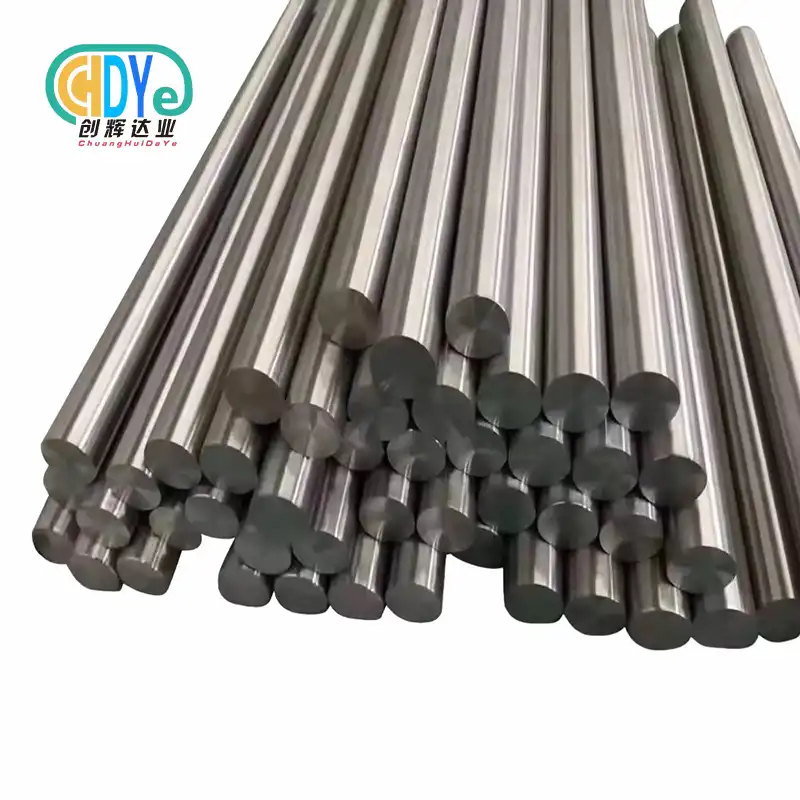
A pure tantalum bar can significantly extend equipment service life through its exceptional corrosion resistance and chemical stability. According to ASTM B365 standards, these bars are made with high-purity tantalum (≥99.5%). They form a self-healing Ta₂O₅ oxide layer that keeps important parts safe in harsh settings. Tantalum bars cut down on repair rounds and unexpected downtime in fields where equipment breaks down quickly because of acidic environments, high temperatures, or mechanical wear. Because they can stand up to hot sulphuric, hydrochloric, and nitric acids, they are very useful for making chemical processing equipment that would normally break after a few months.
Understanding Pure Tantalum Bars and Their Properties
What Defines High-Purity Tantalum Bars
Pure tantalum bars that meet industrial standards have at least 99.95% pure tantalum in them. These bars are classified under UNS R05200 for vacuum arc-melted goods or UNS R05400 for powder metallurgy versions. Electron beam furnaces and other advanced melting tools are used in factories like those in Baoji's "Titanium Capital" industrial zone to make sure that each bar has the same composition. The controlled casting and rolling processes create a fine-grained microstructure that ensures the mechanical properties are the same for all bar sizes, whether they are round or square.
Quality standards like ISO 9001:2015 make sure that you can keep track of everything, from making sure the raw materials are correct to putting them away at the end. Glow Discharge Mass Spectrometry checks how pure the chemicals are, and ultrasonic testing looks for holes in the structure that could make it weaker when put under pressure. Tolerances in dimensions that meet h7 or h8 grades make it possible to machine parts that need to be exact.
Critical Physical and Chemical Characteristics
The material in pure tantalum bar has an amazingly high melting point of 3,017°C (5,463°F), which is only second to tungsten among pure metals. Because tantalum is so thermally stable, its structural integrity can be maintained in furnaces and other high-temperature reaction vessels where other metals would soften or deform. A density of 16.6 g/cm³ helps keep the shape stable under mechanical stress and changes in temperature.
Tantalum is stable in air at room temperature, but it quickly oxidises above 500°C. For tasks that need to be done at higher temperatures, it needs to be used in neutral atmospheres or vacuums. It is very immune to poisons and has a dielectric constant that can be used in capacitors. The oxide layer forms on its own. This film doesn't do anything when it gets broken; it fixes itself right away, defending against chemical attack.
You can make the metal into complicated shapes without having to anneal it first because it works well when it is cold. It stays flexible even after being bent a lot, which makes it easier to make complicated machine parts. Medical implants that have biocompatibility certification show that the material doesn't react with living things. This means it can be used for more than just industrial tasks.
Industry-Specific Performance Requirements
Strong acids should not cause pitting, stress rust cracks, or general wear and tear in the materials you use. Tantalum bars are useful in places where hot sulphuric acid, hydrochloric acid, and nitric acid are mixed. In these places, stainless steel and other rare metals break down very quickly. Hot water and reaction tanks are lined with tantalum sheets. Other things need to be replaced every 18 to 24 months, but these last more than 20 years.
Aerospace companies use tantalum to make parts that don't rust at high temperatures. These parts are used in power systems and jet engines. The material doesn't get dirty in vacuum metallurgy because the vapour pressure is low. In the business of making electronics, it can be used in evaporation boats and sputtering targets because of this. Tantalum can keep its shape even after being heated and cooled many times. This means it can be used to make parts for equipment that works with semiconductors.
People who make medical devices choose tantalum for surgical implants and prosthetic parts because its surface doesn't swell up. Being radiopaque makes it easy to see what's going on during surgery, and being active is good for bone strength. These all need performance that you can count on, and that lasts a long time in rough conditions.
How Pure Tantalum Bars Help Extend Equipment Service Life
Superior Corrosion Resistance in Aggressive Environments
Equipment in chemical plants is constantly being attacked by corrosive media that wear away at part walls and make holes for leaks. Pure tantalum bars do not break down easily because they have a solid oxide layer that stops ions from getting through, even in acids that are hot and very concentrated. Tests comparing the two materials show that tantalum stays thick in 98% sulfuric acid at 200°C, but titanium alloys corrode at measurable rates in the same conditions.
The substance doesn't crack easily when exposed to salt, which is what breaks down austenitic stainless steels too quickly in work settings. This immunity gets rid of sudden, catastrophic failures that shut down systems without warning and cause safety incidents. Chemical manufacturing equipment with tantalum linings or solid tantalum parts works reliably for many decades, so upkeep can be planned based on regular times instead of having to be done quickly in an emergency.
Thermal Stability and Mechanical Durability
When equipment is thermally cycled, it gets worn out from repeatedly expanding and contracting. Tantalum has a low rate of thermal expansion and good thermal conductivity, which means it doesn't cause stress buildup that causes brittle materials to crack. Tantalum bars are used to make furnace parts that can withstand thousands of heating and cooling cycles without getting distorted as molybdenum or tungsten parts do.
Tantalum heating elements and structural supports are used in high-temperature vacuum burners to get steady performance over long periods of time. Because the material doesn't creep at high temperatures, it stays true to its dimensions in precision heating applications where the placement of parts affects the quality of the final product. Because tantalum is so reliable, companies that make crystal growth tools and metal powder sintering systems choose to build with it.
Electrical and Thermal Conductivity Benefits
The dependability of an electronic component depends on its electrical properties staying the same across a wide range of temperatures. Tantalum's electrical conductivity helps current flow smoothly in capacitor electrodes and sputtering targets, and its thermal conductivity gets rid of heat that is generated while the device is working. This thermal management feature stops areas from getting too hot, which hurts the performance of parts or leads to them breaking down early.
Parts made of tantalum are used to keep semiconductor processing equipment from getting contaminated. The chemical inertness of the material stops metallic ions from escaping, which would damage the purity of the wafer. Pure tantalum evaporation boats and crucibles stay clean through hundreds of depositing cycles, while graphite or ceramic options need to be replaced often because they break down or get dirty.
Comparing Pure Tantalum Bars with Alternatives for Equipment Longevity
Tantalum Versus Titanium in Corrosive Applications
When choosing a material, people often compare tantalum and titanium because they are both hard metals and are known to be resistant to corrosion. Titanium is better for aircraft structural uses because it has better strength-to-weight ratios and much lower material costs. In some places, the chemical protection of these metals is very different from one another.
Titanium is very good at oxidizing acids and chloride-containing solutions when the temperature is moderate. Its passive oxide film also does a great job of protecting it. Because of this, titanium is perfect for use in salt water, marine hardware, and a lot of chemical processing situations. Pure tantalum bars work better than titanium in acidic environments, especially sulfuric acid and hydrochloric acid that are very concentrated and hot, which breaks down titanium's insulating layer.
Niobium Comparison and Cost Considerations
Niobium and tantalum are next to each other on the periodic table, which means that their chemical properties are similar. This has led some designers to think of niobium as a cheaper alternative to tantalum. Different physical qualities can affect how long equipment lasts in some situations. Niobium can be used in places where tantalum would be too specific because it has a lower melting point and density. It can be used in superconducting applications and in aerospace.
Tantalum is more resistant to corrosion than niobium in settings with strong acids and high temperatures that cause oxidation. Tantalum works reliably in its pure form, but niobium needs protective coatings or alloying elements to last long enough in harsh chemical environments. This difference affects both the cost of buying something new and the cost of keeping it running over time.
Quality Grade Impact on Performance
Material approvals and quality scores have a direct effect on how reliable something is in use. Products that meet the requirements of ASTM B365 are put through a lot of tests to make sure they are chemically correct, have good mechanical qualities, and are structurally sound. If a supplier provides full traceability documentation and third-party verification, you can be sure that the material properties will work as planned for the entire design service life.
Lower-quality materials that don't come from certified sources might have a lot of interstitial gases (oxygen, nitrogen, and hydrogen) that weaken the material during production or service. When the oxygen level goes above 150 ppm, the material is much less flexible and more likely to crack. It should be clear in the procurement requirements that GDMS chemical analysis approval and ultrasonic testing results are needed to make sure the internal integrity.
Practical Guide to Procuring Pure Tantalum Bars for Service Life Enhancement
Supplier Qualification and Certification Verification
When looking for a reliable supplier, the first thing you should do is check their manufacturing capabilities and quality management systems. ISO 9001:2015 approval means that quality control methods have been set up and cover things like where to get materials, how to make things, how to test them, and how to keep track of them. Pure tantalum bars that meet strict requirements can be made in factories that have electron beam furnaces, controlled atmosphere annealing equipment, and the ability to do precise machining.
In Baoji, Shaanxi Province, China's "Titanium Capital" area, there is a lot of skill in handling refractory metals. Companies in this industrial zone have access to established supply lines, skilled expert staff, and installations of specialized equipment. Geographical clustering makes it easier for people in the same business to share information and raise quality standards.
Custom Sizing and Technical Specifications
For assembly or machining tasks, equipment makers often need bars with certain sizes, lengths, and surface finishes. Custom processing manufacturers can deliver goods in round bar, square bar, or rectangular shapes based on the requirements of the drawing. Because of this, there are no extra steps needed for secondary processing, and less material is wasted when parts are being made.
Custom orders usually take between 4 and 8 weeks to make, but this depends on the size, amount, and production plans at the time. Planning when to buy things around these dates keeps projects from being late and keeps the quality of the materials high. For important applications, rush orders can be taken, but there is usually a fee for faster processing.
Authentication and Quality Verification Methods
To protect procurement investments, you need to make sure that materials are real and meet specifications. Visual inspection should confirm that the markings are correct, with heat numbers or lot codes that allow for tracking. The surface finish should be exactly what was asked for, with no extra scratches, pits, or discoloration that could be signs of contamination or processing flaws.
Using measured tools to take measurements of diameter, length, and straightness ensures that the tolerances are met. If values are very different from what was expected, it could mean that quality control was not done properly or that non-conforming materials were used instead. Chemical composition verification using handheld XRF analyzers quickly confirms the amount of tantalum present, but laboratory GDMS analysis is more accurate at finding trace contaminants.
Why Leading Industrial Clients Prefer Pure Tantalum Bars
Reliability and Total Cost of Ownership
Lifecycle economics, not just the initial purchase price, is becoming more and more important to engineering teams when they evaluate materials. Pure tantalum bars are more expensive than stainless steel or even titanium options, but when replacement costs and production consistency are taken into account, the total cost of ownership often favors tantalum. When equipment can last 15 to 20 years without needing big component changes, it saves a lot of money compared to installations that need to be fixed all the time.
Maintenance teams like that tantalum's performance can be predicted, which lets them use condition-based monitoring instead of reactive failure reaction. Regular inspections show slow wear patterns instead of sudden failures, which lets maintenance be planned for when the system is shut down. This level of practical predictability lowers safety risks, keeps emergency repair costs low, and makes it easier to plan output accurately.
When purchasing managers first look at tantalum's higher cost, they often change their minds after seeing how easy it is to maintain and how long their equipment lasts. One chemical maker said that reactor vessel linings made from tantalum lasted 12 years, while high-nickel metal linings used to need to be replaced every 18 months. The huge drop in the number of maintenance visits and the production losses that came with them made the higher material investment in the first operational cycle worth it.
Emerging Applications and Market Trends
High-purity refractory metals are in higher demand because they are being used in more areas, like green energy, advanced technology, and additive manufacturing. Because tantalum is used in next-generation capacitors for electric car power electronics and green energy inverters, it is a material that combines environmental friendliness with scientific progress. 3D-printed tantalum implants are being used in new medical technologies that take advantage of their biocompatibility and can make complicated shapes that would be hard to make with traditional tools.
As these applications change, they need consistent material quality and supply chains that they can count on. Companies that spend money on advanced melting technologies, powder metallurgy, and precision machining tools set themselves up to serve new market segments. Strategic relationships between providers of materials and creators of equipment speed up innovation by matching the qualities of materials to the needs of specific applications.
Conclusion
Smart material choice for critical parts that are exposed to corrosive, high-temperature, or mechanically demanding service conditions is directly linked to equipment longevity. Pure tantalum bars work very well because they are resistant to corrosion, stable at high temperatures, and long-lasting mechanically. Even though the initial costs of materials are higher than common alternatives, lifecycle analysis consistently shows that the total value is higher because of longer service intervals and less maintenance.
When making a purchasing choice, it helps to know the unique needs of the product, how the quality grade affects things, and the requirements for qualifying suppliers. Working with well-known companies that have quality systems that are ISO-certified, detailed test reports, and expert support services can help lower risks and make sure that the material performs as planned. Tantalum is being used more and more in industries like chemical processing, aircraft, and medical devices where equipment reliability and operating continuity are important enough to support spending more on the material.
FAQ
Q: What corrosive environments are best suited for pure tantalum bars?
A: Pure tantalum bars work very well in high-temperature settings with a lot of sulfuric acid, hydrochloric acid, and nitric acid, where most metals quickly corrode. It can stand up to hot acids, acid mixes, and a lot of organic substances. Chemical reactor linings, heat exchanger tubes, and acid handling equipment that needs to work reliably for decades without breaking down are some of the things that use it.
Q: Can tantalum bars be customized for specific equipment requirements?
A: Manufacturers like Chuanghui Daye offer custom processing services that make tantalum bars with specific diameters, lengths, and profile shapes, such as square and round bars. Custom cutting lets you make precise parts that exactly match the specs on a drawing. Lead times are usually between 4 and 8 weeks, but they depend on how complicated the design is and how many are needed. Technical help is available to make sure that designs are made as efficiently as possible while still meeting performance standards.
Q: How can I be sure that the tantalum bars I buy are real and certified?
A: Products that are real have markings that make them easy to track, certificates of analysis that show their chemical make-up and mechanical properties, and proof that they've been tested using ultrasound. Reliable providers keep their ISO 9001:2015 license and offer ASTM B365 compliance checks. Ask for test reports on the material, look at the surface for signs of processing errors, and make sure the measurements are correct. Manufacturers that have been around for a long time and have customer references can give you more trust in the reliability and quality of their products.
Partner with Chuanghui Daye for Premium Pure Tantalum Bar Solutions
Reliable equipment needs more than just the right materials. It also needs to work with a pure tantalum bar manufacturer you can trust and who cares about your operational success. Shaanxi Chuanghui Daye Metal Material Co., Ltd. has been working with rare metals for 30 years and has ISO 9001:2015-certified quality management. They make high-purity tantalum bars (≥99.95% pure) that meet ASTM B365 standards. With our modern electron beam ovens and precise machining skills, we can make round and square bars in any size that meets your exact needs. We are in China's "Titanium Capital" and have been exporting to other countries for a long time. We offer affordable factory-direct prices, flexible small-batch production, and full expert support. Email our engineering team at info@chdymetal.com to talk about your needs, get material approvals, or get a personalized quote for your next project.
References
1. Davis, J.R. (2000). Corrosion of Refractory Metals: Tantalum, Niobium, and Their Alloys. ASM International Handbook Committee.
2. Chen, W.L., Liu, Y., & Zhang, H. (2018). "Performance Analysis of Tantalum-Based Materials in High-Temperature Chemical Processing Equipment." Journal of Materials Engineering and Performance, 27(8), 4156-4165.
3. American Society for Testing and Materials. (2020). ASTM B365-20: Standard Specification for Tantalum and Tantalum Alloy Rod and Wire. ASTM International.
4. Pourbaix, M. (1974). Atlas of Electrochemical Equilibria in Aqueous Solutions. National Association of Corrosion Engineers, Houston, Texas.
5. Schmidt, F.A., & Carlson, O.N. (1991). "The Metallurgy and Applications of Refractory Metals in Corrosive Environments." Materials Science and Engineering: A, 132, 1-12.
6. International Organization for Standardization. (2015). ISO 9001:2015 Quality Management Systems—Requirements. ISO Technical Committee.
Learn about our latest products and discounts through SMS or email