- English
- French
- German
- Portuguese
- Spanish
- Russian
- Japanese
- Korean
- Arabic
- Greek
- German
- Turkish
- Italian
- Danish
- Romanian
- Indonesian
- Czech
- Afrikaans
- Swedish
- Polish
- Basque
- Catalan
- Esperanto
- Hindi
- Lao
- Albanian
- Amharic
- Armenian
- Azerbaijani
- Belarusian
- Bengali
- Bosnian
- Bulgarian
- Cebuano
- Chichewa
- Corsican
- Croatian
- Dutch
- Estonian
- Filipino
- Finnish
- Frisian
- Galician
- Georgian
- Gujarati
- Haitian
- Hausa
- Hawaiian
- Hebrew
- Hmong
- Hungarian
- Icelandic
- Igbo
- Javanese
- Kannada
- Kazakh
- Khmer
- Kurdish
- Kyrgyz
- Latin
- Latvian
- Lithuanian
- Luxembou..
- Macedonian
- Malagasy
- Malay
- Malayalam
- Maltese
- Maori
- Marathi
- Mongolian
- Burmese
- Nepali
- Norwegian
- Pashto
- Persian
- Punjabi
- Serbian
- Sesotho
- Sinhala
- Slovak
- Slovenian
- Somali
- Samoan
- Scots Gaelic
- Shona
- Sindhi
- Sundanese
- Swahili
- Tajik
- Tamil
- Telugu
- Thai
- Ukrainian
- Urdu
- Uzbek
- Vietnamese
- Welsh
- Xhosa
- Yiddish
- Yoruba
- Zulu
Is gr2 titanium pipe the Right Material for High-Purity Applications?
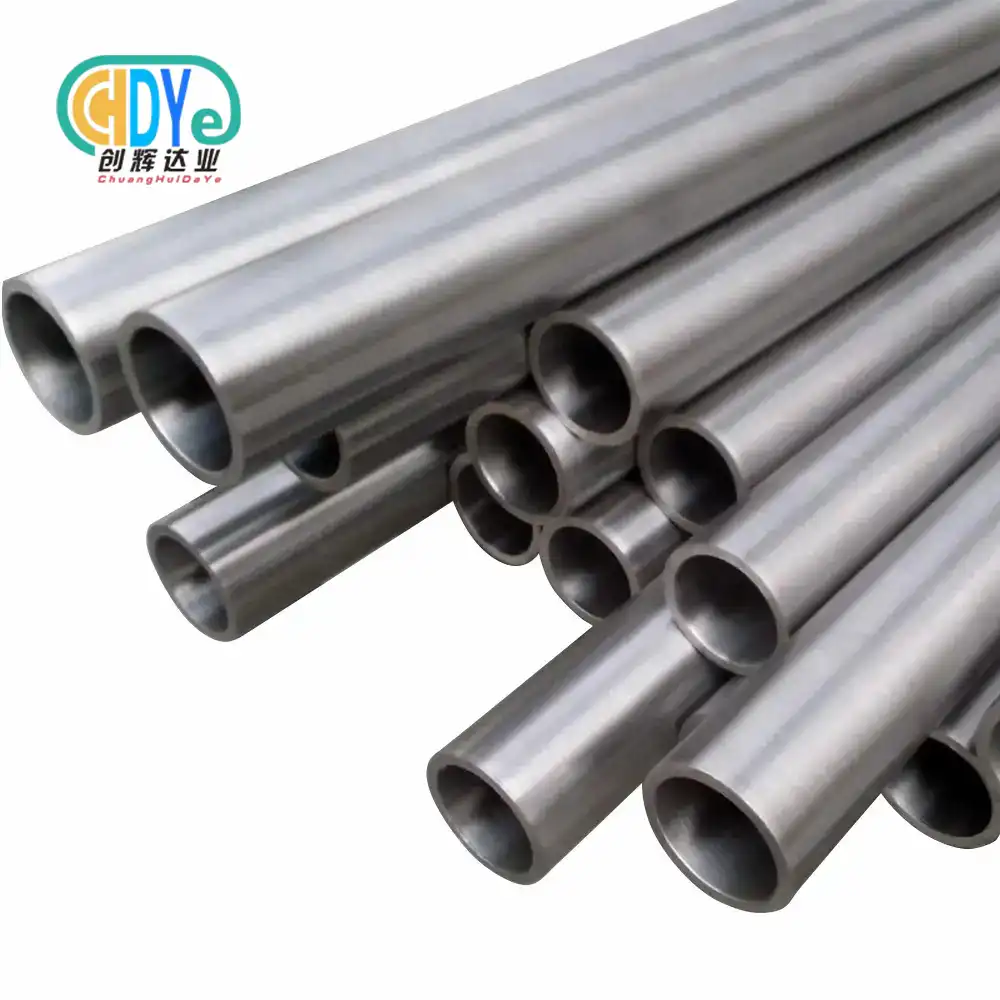
GR2 titanium pipe stands as the optimal material choice for high-purity applications requiring exceptional contamination control and material integrity. Its commercially pure composition, featuring minimal interstitial elements and a self-healing oxide layer, ensures virtual immunity to corrosion-induced contamination in sensitive processing environments. When handling ultra-pure chemicals, pharmaceutical compounds, or semiconductor-grade fluids, the non-reactive nature of commercially pure titanium Grade 2 prevents metallic ion leaching that could compromise product purity. The material's stable passive film regenerates continuously, maintaining surface integrity even under mechanical stress or thermal cycling—a decisive advantage in industries where trace contamination can invalidate entire production batches.
Introduction
One of the most important decisions procurement managers and process engineers have to make today is choosing the right piping material for high-purity industrial processes. One mistake in the material specifications can lead to huge problems like contamination, unexpected shutdowns, and failure to follow regulations that cost millions of dollars. Technical buyers don't want to know if rust protection is important; they want to know which material can keep its purity over decades of use in harsh chemical environments.
We know how hard it is for you to balance performance requirements with budget limits and the complexity of a global supply chain. This thorough review looks at commercially pure GR2 titanium pipe through the lens of problems that people actually face when they try to buy it. Our study gives technical details on the properties of the material, performance information compared to other alloys, and actionable buying strategies made just for B2B buyers looking for parts for critical infrastructure.
Understanding GR2 Titanium Pipe for High-Purity Uses
Chemical Composition and Purity Standards
Commercially pure titanium Grade 2 works so well because of tight controls on its composition. The material keeps the highest amount of oxygen at 0.25%, the highest amount of iron at 0.30%, and the highest amount of hydrogen at 0.015%. These are important levels that keep the material from becoming stiff while keeping its flexibility. This carefully controlled chemistry makes an alpha-phase microstructure that is the building block for its protective oxide layer that can heal itself. Each pipe is made by Shaanxi Chuanghui Daye Metal Material Co., Ltd. using precise melting and rolling methods that keep these tight compositional tolerances. This makes sure that each batch is the same, which is important for validated manufacturing environments.
Mechanical Properties and Performance Specifications
The material in the gr2 titanium pipe has a tensile strength of more than 345 MPa, and it can stretch at least 20%. This gives it the right mix between structural stability and fabrication freedom. It has a density of 4.51 g/cm³, which is about 56% that of stainless steel. Because it is lightweight, it doesn't need as much support for its structure while still being able to hold pressure. As per ASME B31.3 standards, our production method includes controlled heat treatment cycles that improve the structure of the grains. This makes pipes that will behave reliably mechanically across temperature ranges from very cold to 315°C.
Standards Compliance and Certification Requirements
Meeting the requirements of ASTM B861 for seamless pipe and ASTM B338 for heat exchanger tubes is what makes them acceptable around the world. Our factory is ISO 9001:2015 certified, and we follow written quality management rules from checking the raw materials to checking the finished product. Each pipe lot comes with full traceability paperwork, such as mill test certificates with chemical analysis results, mechanical test data, and records of non-destructive examinations. This paperwork meets both customer quality assurance requirements and regulatory authority audit protocols.
Evaluating GR2 Titanium Pipe Performance Compared to Alternatives
Corrosion Resistance in Aggressive Chemical Environments
The titanium dioxide layer that forms on its own protects against rust in a way that is fundamentally different from the chromium-based passivation that stainless steel types use. 316L stainless steel pits and cracks when chloride levels rise above 1000 ppm. Commercially pure titanium Grade 2 doesn't react with seawater, hypochlorite solutions, or wet chlorine, but other materials do break down quickly in these conditions. With this resistance, you don't have to worry about the regular maintenance and unpredictable failure modes that come with traditional piping systems in chemical processing.
Copper-nickel metals have been used in naval condensers for a long time, but they erode and corrode at flow speeds higher than 2.5 meters per second. Commercially pure titanium can keep its shape at speeds of up to 20 meters per second. This lets engineers make heat exchangers that are smaller and more efficient. The substance doesn't react with microbiological rust, which breaks down copper metals when they're not moving or flowing quickly. This is a huge benefit for systems that only work sometimes or shut down for the winter.
Lifecycle Cost Analysis and Total Ownership Economics
Titanium piping usually costs three to five times more than stainless steel equivalents at first, but lifecycle analysis shows that it has strong economic benefits. Getting rid of problems caused by corrosion increases the operating service life beyond 40 years in marine settings where stainless steel needs to be replaced every 10 to 15 years. Better corrosion margins mean that walls don't have to be as thick. This saves weight, which lowers the cost of installation labour and the need for structural support. All of these things work together to make the total cost of ownership lower for long-term projects. This is especially true for offshore platforms, desalination plants, and chemical process units that are hard to get to for upkeep.
Performance Limitations and Application Boundaries
It's just as important to understand material limits as it is to recognise benefits. Titanium reacts violently with dry chlorine gas, which is a major safety risk that needs at least 0.5% water to keep the protective oxide stable. When operating temperatures are higher than 315°C, oxygen can move into the base metal and make a brittle alpha-case layer that weakens the structure. When you directly weld carbon steel or stainless steel together, you get brittle intermetallic compounds at the fusion zone. For metals that don't mix, you need explosion-bonded transition joints or mechanical flange connections.
Manufacturing and Quality Considerations of GR2 Titanium Pipes
Production Methods and Process Control
We can make gr2 titanium pipe with diameters from 6 mm to 273 mm using both seamless extrusion and longitudinal seam welding. The first step in seamless production is to rotate and pierce cast billets. Next, the final measurements are reached by pilgering or cold drawing. Welded tubing is made from a continuous strip that is edge-prepared, TIG-welded with an inert gas backing, and then heat-treated after the welding process to make it as strong as the original material. During production, we keep the argon atmosphere closed during high-temperature processes to keep the atmosphere clean, which would lower the resistance to rust.
Quality Assurance Protocols and Inspection Methods
Ultrasonic testing is done on each production lot according to AMS 2631 standards to find internal flaws bigger than 1 mm in diameter. With a precision of 0.05mm, eddy current testing can find surface flaws and changes in wall thickness. Hydrostatic testing makes sure that the pressure is stable at 1.5 times the original pressure for at least 30 seconds. Destructive testing includes flare tests to make sure the material can be shaped without cracking at the edges and flattening tests to make sure it is flexible. Positive Material Identification with X-ray fluorescence confirms the elements' make-up, which keeps materials from being switched out, which can happen in global supply chains.
Welding Procedures and Joint Integrity
For welding to work, the atmosphere must be fully protected with the following shields and back purging to keep oxygen levels below 20 ppm in the join zone. We suggest TIG welding with titanium filler wire that is commercially pure and keeping the temperatures between passes below 150°C to stop grain growth. Visual inspection gives quick feedback on quality—silver or light straw colouration means the shielding is correct, while blue or purple colours mean oxygen leakage that needs the weld to be taken off and reworked. Radiographic examination of important welds confirms the lack of holes and incomplete fusion that could affect the purity of the process media.
Procurement Insights for GR2 Titanium Pipes in B2B Markets
Supplier Evaluation and Qualification Criteria
To find capable suppliers, you need to check more than just their published capabilities and marketing claims. We suggest looking at the infrastructure of the production center, such as vacuum melting tools, certified testing labs, and quality control systems that have been documented. Ask for proof of past project experience in similar situations, along with contact information for people who are willing to talk about performance history. Check the authenticity of certificates by contacting the organisations that issued them directly instead of relying only on the paperwork that the supplier gives you. Fake certificates are still a problem in the international metals markets.
Customization Capabilities and Order Flexibility
When used in high-purity situations, measurements need to be more precise than what is normally available in catalogues. Shaanxi Chuanghui Daye Metal Material Co., Ltd. has CNC turning, milling, and bending machines that can be used to make helically-coiled tubing, U-bend configurations, and serpentine assemblies directly from pipe stock. For normal diameters, our minimum order quantity starts at 50 kilograms. For bigger orders, we can make sizes to fit your needs. Lead times range from 6 weeks for warehouse stock to 12 weeks for custom extrusion runs. However, if a project needs to be delivered faster, expedited production can shorten schedules.
International Logistics and Regulatory Compliance
To export gr2 titanium pipe goods from China, you need to keep track of a lot of different types of paperwork, like commercial invoices, packing lists, material certificates, and certificates of origin. We handle export declarations through licensed customs agents who know how to classify titanium semi-finished goods by HS code. For shipping, wooden crates are used with moisture-barrier wrapping and desiccant protection to keep the surface from rusting while the goods are in transit across the ocean. To make sure that import rules are followed, the specs of the materials must match the pressure equipment instructions and standards of the target country. Our technical documentation team helps with this coordination process to make sure that customs clearance goes smoothly.
Applications of GR2 Titanium Pipe in High-Purity Industries
When surface condensers are used in coastal power plants, they cool saltwater through tube bundles that condense turbine exhaust steam. This is the biggest volume application. The material doesn't wear away easily at high flow rates, which lets engineers make compact condensers that take up less space and use heat more efficiently. These pipes are used in brine heating parts of multi-stage flash desalination plants, which have temperatures close to 120°C and chloride levels higher than 70,000 ppm. These are conditions that quickly destroy other materials.
Chemical processing plants that work with hypochlorite, wet chlorine, and chlorinated organic chemicals depend on commercially pure titanium to keep nickel alloys and high-grade stainless steels from breaking down in terrible ways. The material's non-shedding surface keeps particles from getting into pharmaceutical production systems that move water for injection and clean steam. These pipes are used in ultrapure water circulation loops at semiconductor production sites to keep metallic ion contamination below parts-per-trillion levels.
A lot of material is needed to make heat exchangers in different shapes and sizes, such as shell-and-tube designs, plate-and-frame assemblies, and spiral-wound units. When rust resistance and high thermal conductivity work together, they make heat transfer efficient with little fouling and longer periods of time between cleaning processes. Offshore oil platforms use these lines in firewater systems and to move ballast water, where lighter weight and resistance to rust make the higher material costs worth it.
Conclusion
Choosing commercially pure GR2 titanium piping for high-purity uses is based on clear performance benefits that go beyond just being resistant to corrosion. The material's self-healing oxide layer, resistance to attack by chloride, and lack of metallic ion leaching make it the best barrier against contamination of any alloy. Even though titanium costs more to buy at first than stainless steel alternatives, it is cheaper over its entire lifetime because it doesn't break down early, needs less upkeep, and can be used for more than 40 years.
To make implementation work, you need to pay attention to the details of the design, like the right way to weld, the right way to switch between materials, and knowing the limits of your temperature and chemical exposure. To get the stability that supports material selection, it is still important to buy from qualified sources with detailed quality systems and production capabilities that can be checked.
FAQ
Q: What distinguishes Grade 2 from Grade 1 commercially pure titanium?
A: Grade 1 has less air, which makes it more flexible and easier to shape cold, which makes it perfect for deep drawing operations. Grade 2 has a little more oxygen in it, which raises the tensile strength to at least 345 MPa while keeping the good corrosion resistance. This makes it the best choice for structural piping uses that need both strength and formability.
Q: Can these pipes handle pharmaceutical-grade water systems?
A: Of course. Commercially pure titanium is perfect for water-for-injection systems, clean steam generation, and purified water loops because its surface is not reactive and does not leach metallic ions. The surface of the material stays clean without having to be electropolished, which is what is needed for 316L stainless steel in similar situations.
Q: How do I verify material authenticity from overseas suppliers?
A: Ask for positive material identification tests that use X-ray fluorescence or optical emission spectroscopy to check the elements that are present. Ask for mill test papers with heat numbers that can be tracked, and make sure that a third party checks the goods before they are shipped. Instead of accepting copies from a supplier without checking them, get in touch with the certification bodies directly to make sure the ISO certificates are real.
Q: What welding qualifications do installers require?
A: Welders should be certified according to ASME Section IX or state standards that are the same or similar, and they should know how to properly work with titanium products. Controlling air contamination, using the right gas shielding methods, and judging the quality of a weld visually based on oxide colouration are all skills that are different from regular stainless steel welding.
Partner with Chuanghui Daye for Certified GR2 Titanium Pipe Supply
You can buy commercially pure GR2 titanium pipes made in China's Titanium Capital directly from the factory through Shaanxi Chuanghui Daye. These pipes are ISO 9001:2015 certified. Our expert team helps you with application engineering to make sure that the material specs meet your high-purity processing needs. We keep our prices low by having combined production facilities that do melting, forming, and precise cutting. This way, we don't have to pay markups to distributors and can track everything from the raw material to the finished product.
Our procurement experts can be reached at info@chdymetal.com to talk about the details of your project, get full technical documentation, or get quotes for the sale of commercially pure titanium pipe. We can accommodate orders starting at 50 kilograms, provide custom construction services such as bending and welding, and speed up production plans to meet urgent project deadlines. We have been making GR2 titanium pipes for 30 years and supply the aircraft, chemical processing, and power generation industries around the world. We can help you find the materials you need.
References
1. American Society of Mechanical Engineers, "ASME SB-338: Specification for Seamless and Welded Titanium and Titanium Alloy Tubes for Condensers and Heat Exchangers," ASME Boiler and Pressure Vessel Code, Section II Part B, 2021 Edition.
2. ASTM International, "ASTM B861-14: Standard Specification for Titanium and Titanium Alloy Seamless Pipe," Annual Book of ASTM Standards, Volume 02.04, West Conshohocken, Pennsylvania, 2020.
3. Schutz, R.W., and Thomas, D.E., "Corrosion of Titanium and Titanium Alloys," ASM Handbook Volume 13B: Corrosion Materials, ASM International, Materials Park, Ohio, 2005, pp. 252-299.
4. Donachie, Matthew J., "Titanium: A Technical Guide, 2nd Edition," ASM International, Materials Park, Ohio, 2000, Chapter 4: Commercially Pure Titanium Grades.
5. Boyer, R., Welsch, G., and Collings, E.W., "Materials Properties Handbook: Titanium Alloys," ASM International, Materials Park, Ohio, 1994, pp. 175-192.
6. Peters, M., Kumpfert, J., Ward, C.H., and Leyens, C., "Titanium Alloys for Aerospace Applications," Advanced Engineering Materials, Volume 5, Number 6, Wiley-VCH, 2003, pp. 419-427.

Learn about our latest products and discounts through SMS or email