- English
- French
- German
- Portuguese
- Spanish
- Russian
- Japanese
- Korean
- Arabic
- Greek
- German
- Turkish
- Italian
- Danish
- Romanian
- Indonesian
- Czech
- Afrikaans
- Swedish
- Polish
- Basque
- Catalan
- Esperanto
- Hindi
- Lao
- Albanian
- Amharic
- Armenian
- Azerbaijani
- Belarusian
- Bengali
- Bosnian
- Bulgarian
- Cebuano
- Chichewa
- Corsican
- Croatian
- Dutch
- Estonian
- Filipino
- Finnish
- Frisian
- Galician
- Georgian
- Gujarati
- Haitian
- Hausa
- Hawaiian
- Hebrew
- Hmong
- Hungarian
- Icelandic
- Igbo
- Javanese
- Kannada
- Kazakh
- Khmer
- Kurdish
- Kyrgyz
- Latin
- Latvian
- Lithuanian
- Luxembou..
- Macedonian
- Malagasy
- Malay
- Malayalam
- Maltese
- Maori
- Marathi
- Mongolian
- Burmese
- Nepali
- Norwegian
- Pashto
- Persian
- Punjabi
- Serbian
- Sesotho
- Sinhala
- Slovak
- Slovenian
- Somali
- Samoan
- Scots Gaelic
- Shona
- Sindhi
- Sundanese
- Swahili
- Tajik
- Tamil
- Telugu
- Thai
- Ukrainian
- Urdu
- Uzbek
- Vietnamese
- Welsh
- Xhosa
- Yiddish
- Yoruba
- Zulu
Can a tantalum alloy plate Increase Equipment Service Life?
Equipment failure costs manufacturers millions in downtime annually. When heat exchangers corrode or reactor vessels fail prematurely, production stops and repair bills escalate. The tantalum alloy plate has emerged as a proven solution to these challenges, offering industries across aerospace, chemical processing, and electronics manufacturing a pathway to dramatically extend equipment longevity. It is more reliable to use these special refractory metal parts because they deal with the main reasons why materials break: rust, heat stress, and mechanical wear. When you pick the right metals, know how they work, and only buy tools from trusted manufacturers, you can make them last decades instead of years.
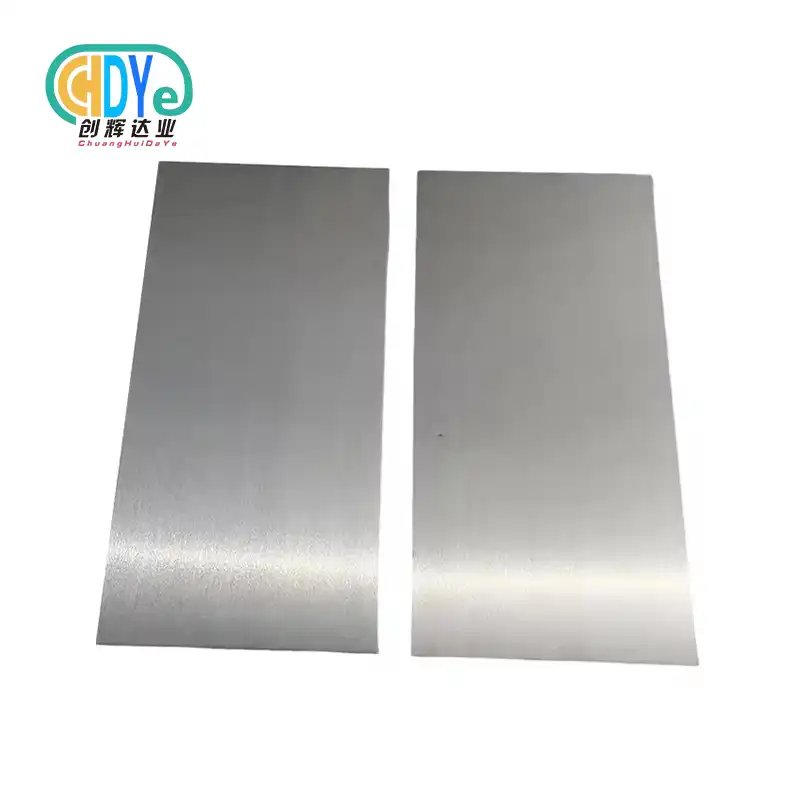
Understanding Tantalum Alloy Plates and Their Impact on Equipment Longevity
The Fundamental Composition That Drives Durability
Tantalum alloy plates are a type of refractory metal mill product that are made by mixing pure tantalum with alloying elements like niobium or tungsten. Compared to pure tantalum, these alloys have 30–50% better tensile strength at high temperatures while still being very resistant to rust. The most common commercial grades are Ta-2.5W (which has 2.5% tungsten, UNS R05252) and Ta-10W (which has 10% tungsten, UNS R05255). These grades are good for shaping and are also strong.
Tantalum alloy plates make a barrier that can't be broken when equipment is used in places where hydrochloric or sulphuric acids would normally damage normal materials. Adding tungsten greatly improves the resistance to creep and the strength of the structure without affecting the naturally occurring oxide layer that protects tantalum surfaces from corrosion. This microstructural stability stops the slow breakdown that shortens the life of equipment in harsh chemical conditions.
Manufacturing Excellence and Quality Control Standards
In Baoji, which is known as the "Titanium Capital," Shaanxi Chuanghui Daye Metal Material Co., Ltd. makes tantalum alloy plates by following strict rules that are meant to make the tools last as long as possible. Bars of very pure tantalum metal are used as one of the first steps in making something. If you melt the material with a vacuum electron beam, it is pure and has a regular make-up. All of these things clean it up so that it works better in the long run.
Next, it is hot-rolled and cast, which makes it harder and thicker. To be exact, you can set the width between 0.5 mm and 20 mm when cold rolling. This process makes it more stable and flexible. Because of this, it doesn't break in weak ways that other strong materials can. The chemicals in each plate are checked by Glow Discharge Mass Spectrometry (GDMS) to make sure there is the right amount of tungsten and that there are no intermediate flaws. When there is more than 100 parts per million of oxygen in the air, things get stiff and hard. In the making process, this can cause cracks. Due to its ISO 9001:2015 certification, our quality control system will never let this happen.
ASTM E8 says that the expansion, tensile strength, and yield strength must all be checked by hand to make sure they meet the standards. AMS 2631 says that holes or laminations inside should be looked for during ultrasound tests. They do a lot of tests on each plate to make sure it meets ASTM B708 standards and has a regular grain that will make it last for decades.
Why Tantalum Alloy Plates Outperform Traditional Materials in Extending Equipment Life
Corrosion Resistance That Eliminates Maintenance Shutdowns
Because of pitting and crevice rust, chemical handling equipment lined with Hastelloy metals needs to be replaced every three to five years. Tantalum alloy plates almost eliminate this way of failing. In 98% sulphuric acid that is boiling, which dissolves most metals in months, Ta-2.5W plates keep their structure indefinitely. This resistance to acid damage directly leads to longer machine life cycles.
After damage from mechanical agitation, a pharmaceutical company replaced glass-lined reactor parts with repair discs made of tantalum alloy. The plates were strong enough to stand up to the mechanical forces inside the reactor, but soft enough to fit against the tank walls and close properly. Instead of glass linings that break and let steel rust, these metal fixes stopped any chance of pollution and made the reactor last 15 years longer than what was originally planned.
High-Temperature Performance That Prevents Structural Failure
When Hoover furnace parts are heated above 2000°C, they are under a lot of thermal stress. Usually, heat shields made from molybdenum or nickel alloys bend or melt over time, needing to be replaced often and causing expensive production delays. Tantalum alloy plates made in grade R05255 (Ta-10W) keep their shape at temperatures above 2500°C when they are in a vacuum or an inert gas environment.
These plates are used as heat screens and heating elements in sintering kilns, where the quality of the product depends on how evenly the heat is distributed. Because these parts have a high melting point (above 3000°C) and excellent creep resistance, they will work steadily for thousands of heat cycles without changing size. The service life of equipment goes from months to years, which cuts down on downtime and makes production more consistent.
Mechanical Endurance in Demanding Applications
Hydraulic pressure, temperature shock from quick heating and cooling cycles, and corrosive fluid contact all happen at the same time on heat exchanger tube sheets. Tantalum alloy plates are stronger and don't rust, so they can have thinner wall sections than pure tantalum. This saves money on materials and weight while keeping the pressure vessel's integrity. This mechanical longevity stops the terrible failures that happen when regular materials wear out after being loaded and unloaded many times.
Chemical processing plants that use harsh media and high temperatures say that tube sheets made from Ta-2.5W plate last longer than 20 years, which is three times as long as tubes made from rare stainless steels used in the same situations. When you think about how much a single unexpected shutdown costs companies every day in missed production, the return on investment becomes clear.
Selecting the Right Tantalum Alloy Plate for Your Equipment Needs
Matching Alloy Grades to Operational Environments
To choose the right materials, you should first look at the circumstances your equipment is in. When used in moderately heated chemical processing environments with hydrochloric or sulphuric acids, Ta-2.5W (grade R05252) is stronger and less likely to corrode than pure tantalum. The small amount of tungsten keeps the material's excellent shapeability for complicated fabrication needs.
For vacuum furnaces that work at temperatures above 1600°C, Ta-10W (grade R05255) is the best material because it doesn't creep. The higher tungsten content in this metal keeps it from bending and losing its shape after being heated for a long time. Aerospace companies that make rocket tube inserts or propulsion parts that need a high kinetic energy density choose this grade because it has both refractory and mechanical toughness qualities.
Custom Fabrication Capabilities and Dimensional Specifications
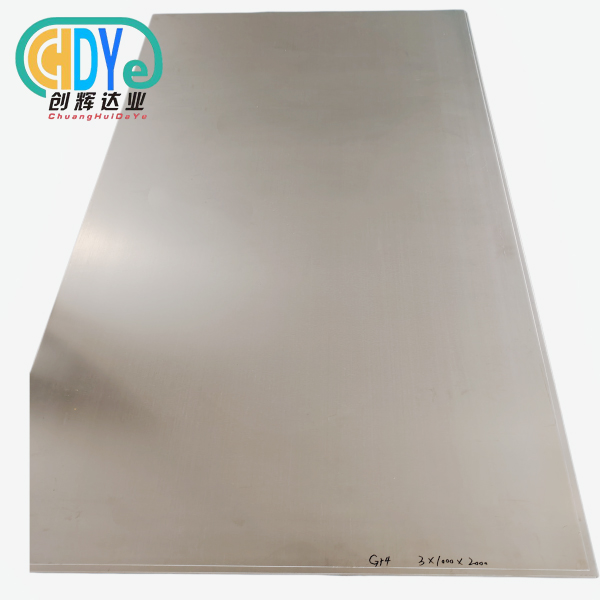
Non-standard dimensions are often needed for retrofitting equipment and making custom designs. Chuanghui Daye makes tantalum alloy plates with thicknesses ranging from 0.5mm to 20mm, widths ranging from 50mm to 1200mm, and lengths ranging from 30mm to 2500mm. These sizes can be used with a variety of equipment. Because of this, engineers can give accurate measurements for tube sheets, reactor covers, baffle plates, and heat shields without affecting how well the materials work.
Because these alloys are so easy to shape and weld, they can be used for custom fabrication, such as cutting, bending, rolling, and precise machining. The purchasing teams can find both standard stock sizes (delivered in one to three days) and custom specifications (takes about fifteen working days to make). This flexible manufacturing feature cuts down on the time that equipment is down for fixes or maintenance.
Certification and Traceability Requirements
Industries like aircraft, defence, and medicines need third-party approval and full material traceability. Chuanghui Daye's tantalum alloy plates come with proof of their chemical make-up, mechanical qualities, heat treatment records, and testing results. Following the ASTM B708 guidelines ensures that the measurements are correct and that the materials are the same from one order to the next.
Metallographic inspection confirms that the grains have fully recrystallised and are all the same size (usually ASTM No. 6 or finer). This stops the "orange peel" effect on the surface that happens when the grains are too big. This microstructural control makes sure that the production behaves consistently and that the long-term performance will be reliable. Procurement professionals can confidently order these materials because certification packages include the proof needed for quality checks and compliance with the rules.
Procurement Insights: How to Source Quality Tantalum Alloy Plates Effectively
Evaluating Supplier Credentials and Manufacturing Capabilities
Finding suppliers of refractory metals takes more than just comparing prices. Companies that have ISO 9001:2015 certification show that they control quality in a planned way throughout the whole production process. Make sure that the providers you're working with have the right melting technology. Vacuum electron beam ovens make sure that the purity needed for corrosion resistance and mechanical qualities are met.
The company Chuanghui Daye was started by a specialist with more than 30 years of experience in the rare metals industry. It blends advanced technical know-how with modern production facilities. Because the business is in the Baoji High-tech Development Zone, it has access to annealing furnaces, rolling machines, and precision machining centers, among other specialised tools. This vertical integration, which goes from melting to final inspection, makes sure that the materials are all the same and lets them be made quickly to meet specific needs.
Understanding Lead Times and Inventory Management
Schedules for maintaining equipment require that materials are always available. Standard stock sizes from well-known makers let you make fixes quickly in case of an emergency. Knowing normal production processes, which are usually 15 working days for custom specs, helps with planning projects and making sure they get done on time.
A lot of the time, framework deals with certified sellers are part of procurement strategies that balance cost with supply stability. These partnerships offer stable prices, priority scheduling for production, and technical support for choosing materials and designing applications. The small extra cost over buying on the spot market saves a lot of money because there is less risk in the purchase and delivery is assured.
Total Cost of Ownership Considerations
Even though the initial cost of materials for tantalum alloy plates is higher than for other alloys, the total cost of ownership calculation shows that they are a very good deal. Increasing the life of equipment from 3 to 15 years cuts lifetime costs by a huge amount. Getting rid of unexpected shutdowns stops production losses that are much bigger than the cost of materials.
When chemical processing plants figure out the costs of replacement parts like labour, equipment rental, production downtime, and quality risks, they always find that tantalum alloy parts give them a good return on their investment within 18 to 24 months. Because these materials don't rust, last a long time, and don't change much in temperature, they can be used to make expensive, important tools that could fail badly.
Future Trends and Innovations Enhancing Tantalum Alloy Plate Performance
Advanced Alloy Formulations and Surface Treatments
Researchers in the field of materials science are still coming up with new tantalum alloy plate compositions that work best for certain uses. Experiments with alloys that contain rhenium or hafnium show promise for being able to withstand even higher temperatures and better resistance to rusting by liquid metals. These formulations meet new needs in advanced nuclear reactor designs and next-generation space propulsion systems.
Ion implantation and thin-film coatings are two surface treatment technologies that can improve certain qualities even more without changing the main properties of the material. Because of these improvements, tantalum alloy plates can meet performance requirements that are getting tougher while still having the basic corrosion resistance and mechanical properties that make the material group what it is.
Sustainability Through Extended Equipment Life Cycles
Environmental laws and business green efforts are having a bigger impact on the choices people make about what materials to use. The very long life of tantalum alloy parts directly helps reach these goals by lowering the number of times they need to be replaced. Cutting down on equipment turnover lowers the amount of raw materials used, the energy used in manufacturing, and the amount of waste made in industry.
Tantalum alloy plates are better for the Earth because they can be recycled naturally. Parts that are no longer useful can be remelted and used to make new products, which saves space in landfills and reuses valuable materials. This circular economy method fits with global efforts to lower the damage that businesses do to the earth while keeping their operations running smoothly.
Conclusion
Tantalum alloy plates clearly extend the useful life of equipment by providing better corrosion protection, high-temperature stability, and tensile endurance than other materials. These refractory metal parts are reliable for decades, which is helpful for industries that work in harsh chemical environments, very hot or cold temperatures, or with heavy mechanical loads. Procurement teams can make smart choices that increase the life of equipment and lower costs over its whole life by choosing the right grade that fits operational needs, working with certified manufacturers that uphold strict quality standards, and knowing the total cost of ownership.
FAQ
Q: What makes tantalum alloy plates last longer than stainless steel?
A: In tantalum alloy plates, an oxide layer forms that is solid and heals itself. This layer protects against acid attack rather than just resisting it. Stainless steels rust in chloride environments, but tantalum stays strong in hot, concentrated acids forever. This means that it doesn't have to worry about the corrosion-related problems that shorten the lives of most materials.
Q: Can tantalum alloy plates handle being heated and cooled many times without breaking down?
A: Tantalum alloy plates can withstand thousands of thermal cycles between room temperature and working temperatures above 2000°C because they have a high melting point, a low thermal expansion rate, and great creep resistance. This resistance to thermal fatigue keeps the material from cracking and warping over time, which happens with other high-temperature materials.
Q: How does the amount of tungsten affect how long something lasts?
A: Adding tungsten makes the material much stronger in tension and against creep at high temperatures. Pure tantalum would soften and deform in situations where Ta-10W alloys keep their shape. This increases the service life of parts in high-temperature vacuum furnaces and aerospace applications that need long-term dimensional stability under thermal stress.
Partner with a Trusted Tantalum Alloy Plate Manufacturer
Shaanxi Chuanghui Daye gives your important tools the consistent materials and professional know-how it needs. Our ISO 9001:2015-certified production methods make sure that every tantalum alloy plate meets the requirements of ASTM B708 and comes with full paperwork for tracking its origin. Our team offers quick service based on over 30 years of experience in the rare metals business, whether you need standard stock sizes shipped within 1 to 3 days or custom fabrication for unique uses. Contact us at info@chdymetal.com to talk about how long your equipment needs to last with engineers who know how to make things work in high-temperature, chemical processing, and aircraft settings.
References
1. Davis, J.R. (2000). Corrosion of Refractory Metals and Alloys. ASM International Materials Reference Series.
2. Schmidt, F.F. & Ogden, H.R. (1963). The Engineering Properties of Tantalum and Tantalum Alloys. Defense Metals Information Center, Battelle Memorial Institute.
3. Cardonne, S.M., Kumar, P., Michaluk, C.A., & Schwartz, H.D. (1995). Tantalum and Its Alloys. International Journal of Refractory Metals and Hard Materials, 13(4), 187-194.
4. Hampton, A.N. & Savage, W.F. (1982). Application of Refractory Metals in the Chemical Process Industries. Materials Performance, 21(8), 23-28.
5. Carlen, J.C. & Bryskin, B.D. (2004). Reactive and Refractory Metals in Medical Applications. JOM: The Journal of The Minerals, Metals & Materials Society, 56(11), 28-31.
6. Shields, J.A. (1999). Applications of Molybdenum Metal and Its Alloys. International Molybdenum Association Technical Report.
Learn about our latest products and discounts through SMS or email