- English
- French
- German
- Portuguese
- Spanish
- Russian
- Japanese
- Korean
- Arabic
- Greek
- German
- Turkish
- Italian
- Danish
- Romanian
- Indonesian
- Czech
- Afrikaans
- Swedish
- Polish
- Basque
- Catalan
- Esperanto
- Hindi
- Lao
- Albanian
- Amharic
- Armenian
- Azerbaijani
- Belarusian
- Bengali
- Bosnian
- Bulgarian
- Cebuano
- Chichewa
- Corsican
- Croatian
- Dutch
- Estonian
- Filipino
- Finnish
- Frisian
- Galician
- Georgian
- Gujarati
- Haitian
- Hausa
- Hawaiian
- Hebrew
- Hmong
- Hungarian
- Icelandic
- Igbo
- Javanese
- Kannada
- Kazakh
- Khmer
- Kurdish
- Kyrgyz
- Latin
- Latvian
- Lithuanian
- Luxembou..
- Macedonian
- Malagasy
- Malay
- Malayalam
- Maltese
- Maori
- Marathi
- Mongolian
- Burmese
- Nepali
- Norwegian
- Pashto
- Persian
- Punjabi
- Serbian
- Sesotho
- Sinhala
- Slovak
- Slovenian
- Somali
- Samoan
- Scots Gaelic
- Shona
- Sindhi
- Sundanese
- Swahili
- Tajik
- Tamil
- Telugu
- Thai
- Ukrainian
- Urdu
- Uzbek
- Vietnamese
- Welsh
- Xhosa
- Yiddish
- Yoruba
- Zulu
Can Tantalum Rods Withstand Extreme Temperatures?
Absolutely, tantalum rods demonstrate exceptional performance in extreme temperature environments, withstanding operational conditions up to approximately 3000°C. This remarkable capability stems from the material's intrinsic properties—a melting point of 2996°C, minimal thermal expansion, tantalum rods and the formation of a protective pentoxide surface layer. Manufactured with purity levels exceeding 99.95%, these refractory metal components maintain structural integrity and corrosion resistance even when subjected to thermal cycling and aggressive chemical exposure simultaneously, making them indispensable for industries requiring reliable performance under hostile conditions.
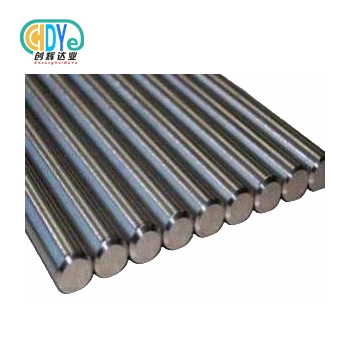
Understanding Tantalum Rods and Their Thermal Properties
What Makes Tantalum Rods Heat-Resistant?
Tantalum's ability to conduct heat comes from the way its atoms are arranged. With an atomic number of 73 and a mass of 16.65 g/cm³, this refractory metal has one of the highest melting points of all metals. When compared to stainless steel, which usually breaks at temperatures above 800°C, tantalum stays strong well past 2000°C. The material's body-centred cubic crystal structure keeps it from deforming under thermal stress. This is important when parts have to go through repeated heating and cooling cycles in vacuum furnaces or aerospace uses. The way the material is processed has a big effect on its thermal performance. Using vacuum arc melting to make tantalum bars with a uniform grain structure gets rid of any impurities that might make them less stable at high temperatures. From small computer parts to strong chemical processing equipment, the diameter range of 2 to 100 mm can meet a wide range of engineering needs. The naturally occurring oxide film (Ta₂O₉) that forms on the surface does two things: it protects against oxidation at high temperatures and is very chemically inert, so it doesn't break down even in hot, acidic conditions.
Thermal Expansion and Dimensional Stability
Low thermal expansion factors make tantalum different from many other metals that change size a lot when they are heated. This quality comes in very handy in precision situations where exact tolerances must be maintained. This steadiness is important for factories that make semiconductor equipment because even tiny changes in dimensions can affect the quality of the finished product. Tantalum has a much lower coefficient of thermal expansion than copper or aluminium, about 6.3 × 10⁻⁋ per Kelvin. This means that engineers can make parts that will behave consistently across a wide range of temperatures. Chemical processing plants that run continuous production cycles benefit the most from this stability in size. When the temperature changes from room temperature to over 200°C during operation, heat exchangers made with tantalum components keep their seals intact. The material doesn't creep, tantalum rods, which exhibit slow deformation under long-term stress at high temperatures. This means it will last a long time in situations where replacement costs are high.
Comparing Tantalum Rods with Other High-Temperature Metals
Tantalum versus Tungsten and Molybdenum
To pick between hard metals, you need to know how to balance how well they work. The surface of tungsten is harder, and its melting point is even higher (3422°C). This makes it useful for high-temperature uses like making cutting blades and parts for rocket nozzles. Tin, on the other hand, isn't very useful because it breaks easily at low temperatures and oxidises quickly above 500°C in ordinary air. Molybdenum has the same issues. It is very strong at high temperatures, but it rusts easily, so it needs safe environments or coats. When it comes to rust, tantalum stands out because it is better at almost all temperatures. Tungsten and molybdenum need neutral or reducing atmospheres to work at high temperatures. On the other hand, tantalum forms a solid protective oxide that stops further breakdown even in places where oxygen is present below 300°C. Tungsten and molybdenum parts are going to be destroyed in just a few hours by hot acids like sulphuric, hydrochloric, or nitric. However, tantalum equipment can last for decades after being introduced to these acids. The material's higher price is justified by the fact that it doesn't corrode in cases where replacing a part would be very inconvenient. Other changes can be seen in the mechanical properties.
Tantalum versus Niobium and Stainless Steel
Niobium is next to tantalum on the periodic table. It has some of the same properties as tantalum, such as a high melting point (2477°C) and good resistance to weathering. Niobium is sometimes seen as a cheaper choice by people who work in procurement because it is available at lower prices. Tantalum, on the other hand, is much better than niobium at resisting chemicals, especially in hot acidic solutions and places with halogens. Pharmaceutical synthesis operations that need materials to be completely pure prefer tantalum because it doesn't allow for any contamination that could affect the quality of the product or the company's ability to follow the rules. Stainless steel grades, such as speciality alloys like Hastelloy or Inconel, are the most common high-temperature materials because they offer the best value for money. When exposed to mildly corrosive environments up to about 1000°C, these alloys work well. But when working conditions get worse—higher temperatures, stronger acids, or a mix of thermal and chemical stress—stainless metals break down quickly through stress corrosion cracking, pitting, or just dissolving in general. When aerospace companies make parts for hypersonic vehicles or reentry systems, they need materials that don't melt as stainless steel would. ntalum Rods for High-Temperature Uses
Precision Machining Best Practices
The unique properties of tantalum make it difficult to machine because it is both flexible and hardens over time. Tantalum doesn't cut easily like brittle ceramics or free-machining steels. Instead, it builds up on cutting tools, making the surface finish and measurement accuracy worse. Unannealed tantalum rod stock is better for cutting because it is harder and doesn't gum up as easily, but it is still flexible enough for threading and shaping. When working with refractory metals, choosing the right tooling—sharp carbide or polycrystalline diamond inserts—along with the right cutting speeds and feed rates results in clean, polished surfaces that don't damage the metal below. Cutting fluids that dissolve in water efficiently remove heat and flush chips out of the cutting zone, keeping both the workpiece and the tools from being damaged by heat. For high-purity uses, machining may need special coolants to keep contaminants from getting into the work. Some precision makers require alcohol-based coolants or even dry machining with cryogenic cooling to keep the 99.95% purity level that is necessary for electronics and semiconductors. Threading operations need extra care when it comes to technique. Tantalum tends to cold-work when thread cutting, and tantalum rods can change the size of the thread if they are not handled properly.
Storage and Pre-Installation Handling
Systematic handling procedures are needed to keep materials pure from the time they are manufactured until they are installed. Tantalum rods should be kept in dry, clean places that are away from things that could be harmful. Tantalum is not as likely to catch fire or explode as volatile metals like sodium or lithium. This makes it easier to store in warehouses. However, because the material is very valuable, it needs to be stored safely, and its location must be tracked so that it doesn't get lost or accessed by people who aren't supposed to. In chemical and electronic uses, surface cleanliness has a direct effect on performance. Even small amounts of contamination from handling, like skin oils, dust, or leftovers from packing, can weaken the resistance to corrosion or make it harder to do the next steps in the process. Using lint-free wipes with the right liquids (usually isopropyl alcohol or acetone) and wearing clean gloves when handling removes surface dirt without hurting the protective oxide layer. For ultra-high vacuum uses, equipment may need extra cleaning steps like ultrasonic baths and high-temperature vacuum baking to get rid of molecules that have stuck to it. The density of tantalum must be taken into account when transporting parts made of it. One meter-long, 100-mm-diameter rod weighs about 130 kilograms, so it needs to be lifted with the right tools and packed securely to keep it from getting damaged during shipping.
Procurement Guide: Buying Tantalum Rods for Extreme Temperature Applications
Evaluating Material Grades and Specifications
When people buy things, knowing what the signs on them mean helps them pick the right materials. The name RO5200 comes from the fact that the tantalum was melted with an electron beam, which means it is generally purer than 99.95%. It can be used in most industrial settings where high temperatures and resistance to rust are needed. Because the grains are small and even, RO5400 is a powder metal that isn't quite as pure but might have better mechanical properties. When you need something that can handle a lot of heating and cooling, like Hoover furnace parts, grain-stabilised types are often the best choice because they don't re-crystallise and keep their mechanical strength through thousands of heating cycles. Testing of the material's chemistry make-up by a third party makes sure that it meets the requirements. You can trust a supplier to give you approved material test reports that show the material's elemental analysis, mechanical properties, and size gaps. You should pay close attention to oxygen, nitrogen, carbon, and metals like iron or nickel because they can make the material less resistant to corrosion or change how it works physically. For medical and electronic uses, purity standards are generally stricter than for general industrial uses. This is why materials that are used in spacecraft or medical devices cost more.
Understanding Minimum Order Quantities and Customisation Options
Minimum order amounts and lead times are affected by the economics of manufacturing. Standard diameter rods in popular sizes (10 mm, 25 mm, 50 mm) may be available from stock at a distributor with only a small order requirement. This makes it possible to get them quickly for prototyping or repairs that need to be done right away. Because of custom sizes, lengths, or grades, production runs need to start with bigger minimum quantities, which are usually measured in tens of kilograms. To balance the costs of keeping goods with the freedom to buy what you need, you need to know how people usually use things and when projects need to be finished. Customers who don't have the right tools or skills can get a lot out of custom machining services. Customers don't have to learn how to work with refractory metals on their own because rod stock can be turned into finished parts like threaded fasteners, precision-ground shafts, or complex machined shapes. Manufacturers who offer integrated services from raw materials to finished parts make supply lines easier to manage and share responsibility for quality. This is especially helpful for small to medium production runs, where managing relationships with multiple vendors would be too much work.
Use Cases and Industry Applications of Tantalum Rods in High-Temperature Settings
Aerospace and Defense Applications
When things fly faster than the speed of sound, they are put under a lot of heat and mechanical stress atthe same time. Leading edges and control tantalum rods surfaces on vehicles going faster than Mach 5 are heated by aerodynamic forces to temperatures higher than 2000°C. They also have to deal with heavy mechanical loads from air pressure and structural vibrations. Tantalum alloys are very important for these mission types because if a material fails, it could have terrible effects. Due to its high melting point and higher strength-to-weight ratio than ceramics, the metal can be used for structural parts instead of just thermal shields. Tantalum is used in important hot-section parts of rocket propulsion systems. Combustion chamber liners, injector plates, and nozzle throat inserts can handle temperatures close to 3000°C and highly reactive combustion products from the fuel. Graphite and other alternatives can handle heat, but they aren't strong enough to last in systems that will be used again and again. Tantalum parts can be used for multiple missions without breaking down. This lowers the costs of operations for space launch companies that are switching from designs that are used once and then thrown away.
Electronics and Semiconductor Manufacturing
The most common use of tantalum in electronics is to make capacitors. Because the metal can form stable, high-dielectric-strength oxide layers, it is possible to make small capacitors that work better. For capacitor-grade tantalum, powder or wire forms are most common. Rod stock, on the other hand, is used as feedstock for sputtering targets that cast tantalum thin films in the making of integrated circuits. Tantalum is the only material that meets the special needs of semiconductor fabrication equipment that works at high temperatures during chemical vapour deposition or plasma etching processes. It needs to be able to keep its shape and purity levels. Tantalum is used a lot in the building of vacuum furnaces for both heating elements and structural parts. It is necessary to carefully control the temperature in order to heat treat special metals, sinter ceramic parts, and let crystals grow on synthetic gemstones or semiconductor substrates. Tantalum resistance heating elements spread heat evenly and can handle thermal cycles that would break ceramic heaters or oxidise regular metal elements. Grain-stabilised tantalum rods increase the time between repair shutdowns, which makes equipment more useful in manufacturing operations that make a lot of things.
Conclusion
Tantalum rods unequivocally demonstrate the capability to withstand extreme temperature environments through a combination of ultra-high melting point, minimal thermal expansion, and protective oxide formation. Comparative analysis against alternative refractory metals reveals tantalum's unique balance of thermal performance, corrosion immunity, and mechanical workability. Proper machining techniques, handling protocols, and supplier selection enable procurement professionals to obtain materials meeting exacting specifications. Real-world applications across aerospace, electronics, chemical processing, and medical sectors validate tantalum's value proposition despite premium pricing, with performance advantages translating to extended service life and reduced total ownership costs in mission-critical applications.
FAQ
1. What temperature range can tantalum rods safely operate in?
Tantalum rods maintain structural integrity and mechanical properties from cryogenic temperatures approaching absolute zero up to approximately 2500°C in inert atmospheres or vacuum. Oxidising environments limit maximum operating temperatures to roughly 300°C for extended exposure, though the protective pentoxide layer provides short-term protection at higher temperatures. Application-specific factors, including mechanical stress, thermal cycling frequency, and chemical exposure, determine practical operating limits.
2. How does purity level affect high-temperature performance?
Higher purity grades (>99.95% Ta) demonstrate superior creep resistance and thermal stability compared to lower purity materials. Impurity elements, particularly interstitials like oxygen, nitrogen, and carbon, can form precipitates that compromise ductility and accelerate grain growth during thermal cycling. Electronic and vacuum applications require ultra-high purity to prevent outgassing and maintain electrical properties.
3. Can tantalum rods be welded for high-temperature assemblies?
Tantalum exhibits excellent weldability using TIG, electron beam, or laser welding processes in inert atmosphere or vacuum conditions. Properly executed welds achieve strength approaching base metal properties without introducing contamination. Welded assemblies serve in chemical processing equipment and vacuum furnaces where mechanical fastening would introduce crevice corrosion risks or outgassing from dissimilar materials.
Partner with Chuanghui Daye for High-Performance Tantalum Rod Solutions
Shaanxi Chuanghui Daye delivers precision-manufactured tantalum rods backed by ISO 9001:2015 certification and over 30 years of rare metal expertise. Our facility in Baoji—China's Titanium Capital—combines advanced electron beam furnaces with precision machining capabilities to produce materials meeting aerospace, semiconductor, and chemical processing specifications. We maintain a comprehensive inventory across diameter ranges from 2 to 100 mm with purity exceeding 99.95%, enabling rapid response to both prototyping requirements and volume tantalum rods production schedules. As a trusted tantalum rods manufacturer, we provide complete material traceability documentation, custom machining services, and technical support throughout your product development cycle. Contact our engineering team at info@chdymetal.com to discuss your extreme temperature application requirements and discover how our factory-direct pricing and flexible minimum order quantities can optimise your supply chain.
References
1. Cardonne, S.M., Kumar, P., Michaluk, C.A., and Schwartz, H.D. (1995). "Tantalum and Its Alloys." International Journal of Refractory Metals and Hard Materials, Vol. 13, pp. 187-194.
2. Shields, J.A. (1996). "Applications of Molybdenum Metal and Its Alloys." International Molybdenum Association, London, United Kingdom.
3. Becker, R. (1999). "Melting and Casting of Refractory Metals." ASM Handbook Volume 2: Properties and Selection of Nonferrous Alloys and Special-Purpose Materials, ASM International.
4. Lassner, E. and Schubert, W.D. (1999). "Tungsten: Properties, Chemistry, Technology of the Element, Alloys, and Chemical Compounds." Kluwer Academic Publishers, New York.
5. Black, J. and Hastings, G. (1998). "Handbook of Biomaterial Properties." Chapman & Hall, London, pp. 179-185.
6. Tietz, T.E. and Wilson, J.W. (1965). "Behavior and Properties of Refractory Metals." Stanford University Press, California, pp. 234-267.
Learn about our latest products and discounts through SMS or email