- English
- French
- German
- Portuguese
- Spanish
- Russian
- Japanese
- Korean
- Arabic
- Greek
- German
- Turkish
- Italian
- Danish
- Romanian
- Indonesian
- Czech
- Afrikaans
- Swedish
- Polish
- Basque
- Catalan
- Esperanto
- Hindi
- Lao
- Albanian
- Amharic
- Armenian
- Azerbaijani
- Belarusian
- Bengali
- Bosnian
- Bulgarian
- Cebuano
- Chichewa
- Corsican
- Croatian
- Dutch
- Estonian
- Filipino
- Finnish
- Frisian
- Galician
- Georgian
- Gujarati
- Haitian
- Hausa
- Hawaiian
- Hebrew
- Hmong
- Hungarian
- Icelandic
- Igbo
- Javanese
- Kannada
- Kazakh
- Khmer
- Kurdish
- Kyrgyz
- Latin
- Latvian
- Lithuanian
- Luxembou..
- Macedonian
- Malagasy
- Malay
- Malayalam
- Maltese
- Maori
- Marathi
- Mongolian
- Burmese
- Nepali
- Norwegian
- Pashto
- Persian
- Punjabi
- Serbian
- Sesotho
- Sinhala
- Slovak
- Slovenian
- Somali
- Samoan
- Scots Gaelic
- Shona
- Sindhi
- Sundanese
- Swahili
- Tajik
- Tamil
- Telugu
- Thai
- Ukrainian
- Urdu
- Uzbek
- Vietnamese
- Welsh
- Xhosa
- Yiddish
- Yoruba
- Zulu
Titanium Filler Wire for TIG Welding: Why Choose It?
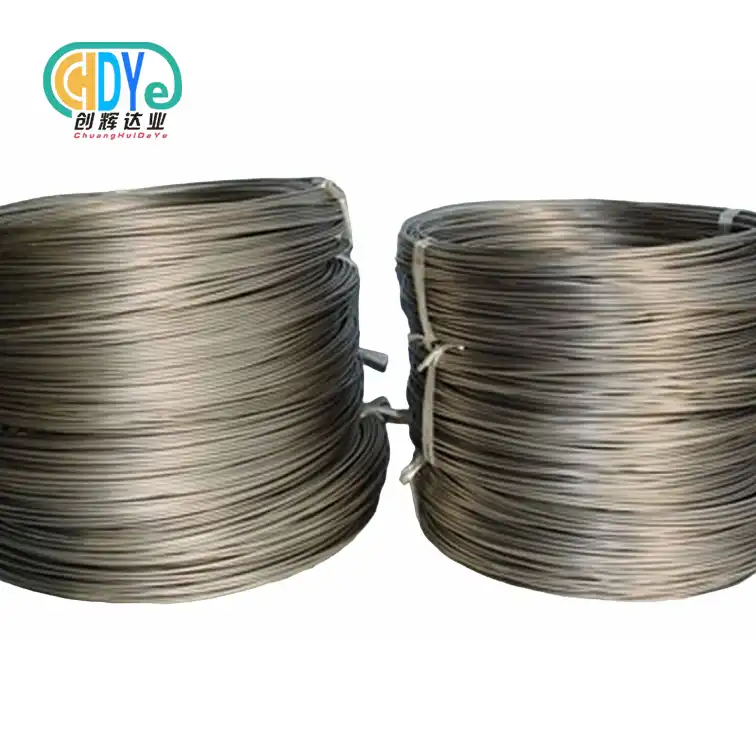
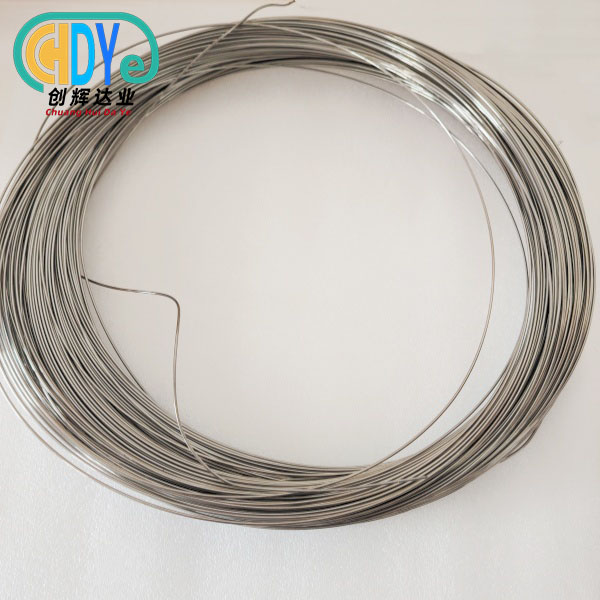
Choosing titanium filler wire for TIG welding applications delivers titanium filler wire unmatched advantages in strength, corrosion resistance, and weld integrity. This specialized welding consumable, manufactured according to AWS A5.16 and ASTM B863 standards, addresses the critical challenge of joining titanium components without compromising their inherent properties. Titanium filler wire maintains ultra-low interstitial element content, preventing weld pool contamination and ensuring joints that match the base metal's exceptional performance characteristics across aerospace, chemical processing, and medical manufacturing environments.
Introduction
When we talk about important fabrication jobs, the choice of welding supplies is very important. Titanium filler wire is an important part of getting good TIG welds, especially in places where material failure can have very bad results. More and more, engineers and sourcing specialists are under pressure to choose materials that will both weld well right away and last a long time. This article talks about the unique needs of places that work with metal, make aerospace equipment, make chemical equipment, and research institutions that need reliable welding solutions. In this talk, we'll look at how titanium welding wire solves long-standing problems in the business, such as stopping interstitial embrittlement and getting rid of porosity defects. Procurement managers will learn useful criteria for evaluating suppliers, and welding experts will learn useful parameters for improving TIG processes. This article is based on decades of metallurgical study and real-world manufacturing experience. It will help your company choose materials that will improve both the quality of your products and the efficiency of your operations.
Understanding Titanium Filler Wire: Properties and Applications
A high-tech metal solution called titanium filler wire was made to be used with gas tungsten arc welding to join titanium surfaces together. The material is mostly commercially pure titanium or titanium alloys, with trace elements that are carefully controlled and used to define its grade. This welding tool is unique because it can stay chemically and mechanically compatible with the parent material even when the temperature of the weld goes over 3,000°F.
Core Composition and Material Science
To make welding-grade titanium wire, the intermediate elements must be carefully controlled. Nitrogen and hydrogen levels stay below 0.03% and 0.015%, respectively. Oxygen levels range from 0.18% to 0.40%, based on the grade. This specific chemistry stops the formation of alpha case, a thin, fragile layer that weakens joints. The manufacturing process includes vacuum arc remelting and drawing, which cleans the surface to a level that can't be reached with regular metal wires.
Mechanical Performance Characteristics
Different grades have very different tensile strengths. Pure commercial forms have strengths between 240 and 550 MPa, titanium filler wire, while Ti-6Al-4V alloy wire has strengths between 895 and 930 MPa. With elongation values between 15% and 24%, the material is very flexible, so welds can handle stress without breaking. Its fatigue strength is much higher than that of stainless steel alternatives, especially in chemical and marine environments where it is subjected to cyclic loading and corrosive attack. Because of these qualities, the material is essential for parts that are heated and cooled many times, or that vibrate mechanically.
Why Titanium Filler Wire Excels in TIG Welding
The Gas Tungsten Arc Welding process demands consumables that perform reliably under intense thermal gradients and inert gas shielding. Titanium welding wire addresses several persistent challenges that plague alternative materials, delivering consistent results across varied applications and operator skill levels.
Superior Weld Quality and Integrity
Joints made with the right filler material have strengths that are the same as or higher than those of the base metal, which is very important for load-bearing aircraft structures. The weld fusion zone keeps the rust resistance of the parent material, stopping galvanic cells that speed up localised attack. When welding rules are followed, radiographic and ultrasonic tests always show very few holes and inclusions. This lowers the number of rejections and the cost of rework. The low thermal expansion rate of the material keeps the dimensions that are important for precision assemblies from changing too much.
Contamination Resistance During Welding
Titanium reacts with gases in the air above 800°F, which creates special problems that good filler wire helps solve. Acid pickling or mechanical shaving are used in surface preparation routines to get rid of oxides and leftover lubricants that let hydrogen into the weld pool. Argon trailing screens keep oxygen and nitrogen from picking up on the cooling weld bead, which would otherwise make weak spots. Because the wire is naturally pure, welders don't add many impurities to it. This is different from copper-coated steel products, which leave impurities all over the joint.
Titanium Filler Wire vs Other Filler Wires: A Comparative Analysis
Material selection decisions hinge on understanding how different welding consumables perform across technical and economic dimensions. While aluminum and stainless steel wires serve many general applications adequately, they fall short in environments where titanium's unique properties become essential.
Performance Against Aluminum Alternatives
It is about 60–70% cheaper to buy aluminium welding wire than titanium welding wire, which makes it a good choice for projects that need to stay within a budget. The density of the material is 2.7 g/cm³, which is lower than that of titanium, 4.5 g/cm³. This makes the structure lighter for use in shipping. But aluminium joints break down quickly in places like seawater and chemical processes, where pitting corrosion starts within months of being exposed. Even with high-strength metals, the tensile strength rarely goes above 310 MPa, which means they can't be used in parts that are heavily loaded. The maximum service temperature for this material is 250°C, which means it can't be used in high-temperature environments like those found in aircraft, titanium filler wire, and power generation.
Comparison With Stainless Steel Consumables
Filler wire made of stainless steel is very resistant to corrosion and costs about half as much as titanium types. The substance works well in slightly acidic and oxidising conditions, which means it can be used in food processing and building. Density is close to 8 g/cm³, which is almost twice as heavy as titanium, making it useless in designs that need to be light. Stainless welds don't hold up as well against wear and break before they should under cyclic loading conditions that titanium joints can handle easily. Because it is magnetic, the material can't be used in medical equipment that needs to work with MRIs. On the other hand, its lower strength-to-weight ratio makes aerospace assemblies heavier.
Procurement Insights: How to Source Quality Titanium Filler Wire Globally
Securing reliable supplies of welding-grade titanium wire requires strategic supplier evaluation and robust quality verification protocols. Organizations that establish comprehensive procurement frameworks minimize supply chain disruptions while optimizing the total cost of ownership.
Supplier Assessment and Certification Requirements
ISO 9001:2015 certification provides baseline assurance that manufacturers maintain documented quality management systems covering production processes, calibration protocols, and corrective action procedures. Suppliers holding AS9100 aerospace certification demonstrate additional capability for managing critical characteristics and maintaining traceability documentation required for flight-rated components. Material test reports should confirm chemical composition via optical emission spectrometry and mechanical properties through tensile testing per ASTM E8 standards. Certifications must reference specific heat lot numbers that enable complete traceability from raw material smelting through finished wire production.
Geographic Sourcing Considerations
United States manufacturers concentrate in aerospace hubs, offering short lead times and streamlined ITAR compliance for defense applications, though pricing typically runs 20-30% above Asian sources. European suppliers provide strong technical support and certifications aligned with EN standards, serving regional chemical processing and medical device sectors effectively. Asian producers, particularly those located in China's Baoji region, deliver competitive factory-direct pricing with established export logistics infrastructure. At Shaanxi Chuanghui Daye Metal Material Co., Ltd., we leverage our location in China's "Titanium Capital" to provide cost-effective solutions without compromising quality standards, maintaining ISO 9001:2015 certification and comprehensive testing capabilities throughout our production facility.
Trustworthy Brands and Suppliers for Titanium Filler Wire
Establishing partnerships with reputable manufacturers protects organizations from the costly consequences of substandard welding consumables. Quality suppliers demonstrate consistent performance through rigorous testing protocols, transparent documentation, and responsive technical support that extends beyond transactional relationships.
Evaluating Manufacturer Credentials
Leading global brands maintain extensive product ranges spanning multiple grades, diameters, titanium filler wire, and surface finishes that accommodate diverse application requirements. Their technical data sheets provide comprehensive mechanical property data, welding parameter recommendations, and proper storage guidelines that enable optimal results. Counterfeit prevention measures include laser-etched lot identification, tamper-evident packaging, and online verification portals where purchasers confirm product authenticity. Long-established manufacturers possess institutional knowledge accumulated over decades, translating to fewer process variations and more predictable weld outcomes.
The Chuanghui Daye Advantage
When we talk to customers, our company brings over 30 years of experience with rare metals to the table. We've seen the titanium industry grow from a few niche aerospace uses to broad industrial use. We have direct access to China's most modern titanium processing infrastructure, such as electron beam melting furnaces, precision drawing tools, and automated testing systems, because we are located in the Baoji High-tech Development Zone. Because we are close to sources of raw materials and specialised equipment, we can give competitive prices while keeping a close eye on quality throughout the whole manufacturing process. We have a wide range of customers, from aerospace makers that need AS9100 documentation to chemical processors that need corrosion test data and research institutions that need small-batch orders that can be changed quickly.
Technical Support and Post-Sale Services
Quality suppliers provide application engineering assistance that helps customers optimize welding parameters for specific joint configurations and material combinations. Metallurgical consultation services address challenges like dissimilar metal joining, repair welding protocols, and procedure qualification test support. Warranty terms typically cover material defects discovered within 12 months of delivery, with replacement product shipped expeditiously to minimize production disruptions. Our technical team responds to inquiries within 24 hours, offering guidance drawn from extensive field experience across multiple industries and application environments.
Conclusion
When joint integrity, corrosion resistance, and long-term dependability are extremely important, titanium filler wire is the best choice for TIG welding. The material's high strength-to-weight ratio, resistance to chemical attack, and ability to fight fatigue make it a top choice for aerospace, chemical processing, and medical device manufacturing. By choosing the right grade, following established welding processes, and working with certified suppliers, you can be sure of consistent results that meet high-quality standards. Companies that spend money on thorough supplier evaluation, follow strict procurement procedures, and use technical knowledge are in a good position to take advantage of titanium's performance benefits while keeping the total cost of ownership low.
FAQ
1. What makes titanium filler wire superior to stainless steel for corrosive environments?
Titanium welding consumables form a stable, self-healing oxide layer that provides protection against chloride attack, acidic media, and seawater exposure, where stainless steel suffers pitting and crevice corrosion. The material maintains integrity in environments with pH levels from 3-12, covering most industrial chemical processes.
2. Can I use the same wire for commercially pure titanium and Ti-6Al-4V alloy substrates?
Matching filler metal grade to base material composition is essential for preventing galvanic corrosion and ensuring mechanical property compatibility. Grade 5 wire works universally across titanium alloy substrates, while commercially pure grades should join similar commercially pure materials to maintain corrosion resistance and avoid strength mismatches.
3. What typical lead times should I expect when ordering internationally?
Standard diameter wire in commercially pure grades ships within 2-3 weeks from established suppliers maintaining inventory. Custom diameters, specialty alloys, and large volume orders require 4-6 weeks for production and quality testing. Expedited processing reduces timelines by 30-40% with appropriate premium charges.
4. How do I verify that the received material meets the specified standards?
Request certified material test reports documenting chemical composition and mechanical properties for each heat lot. Compare certificate data against AWS A5.16 or ASTM B863 specification limits. Independent laboratory verification provides additional assurance for critical applications, with optical emission spectroscopy confirming chemistry within 2-3 business days.
Partner With Chuanghui Daye for Premium Titanium Filler Wire Supply
Elevating your TIG welding operations requires a dependable titanium filler wire supplier committed to consistent quality and responsive service. Shaanxi Chuanghui Daye Metal Material Co., Ltd. combines three decades of rare metal expertise with titanium filler wire and ISO 9001:2015 certified manufacturing processes, delivering welding consumables that meet the exacting standards of aerospace, chemical processing, and medical device industries. Our Baoji facility maintains a comprehensive inventory across commercially pure and alloy grades, with custom spooling and expedited delivery options that align with your production schedules. Technical support teams provide application engineering assistance, helping optimize welding parameters and troubleshoot challenging joint configurations. Contact our procurement specialists at info@chdymetal.com to discuss your specific requirements, request certified material test reports, or obtain competitive quotations for your next project. We deliver factory-direct value without compromising the quality assurance and traceability documentation your critical applications demand.
References
1. American Welding Society. (2018). Specification for Titanium and Titanium Alloy Welding Electrodes and Rods (AWS A5.16/A5.16M). Miami: AWS Publications.
2. Boyer, R., Welsch, G., & Collings, E.W. (2021). Materials Properties Handbook: Titanium Alloys. Materials Park: ASM International.
3. ASTM International. (2020). Standard Specification for Titanium and Titanium Alloy Wire (ASTM B863). West Conshohocken: ASTM Standards.
4. Donachie, M.J. (2019). Titanium: A Technical Guide, Third Edition. Materials Park: ASM International.
5. Lütjering, G. & Williams, J.C. (2017). Titanium: Engineering Materials and Processes. Berlin: Springer-Verlag.
6. Peters, M., Kumpfert, J., Ward, C.H., & Leyens, C. (2020). Titanium and Titanium Alloys: Fundamentals and Applications. Weinheim: Wiley-VCH Publications.
Learn about our latest products and discounts through SMS or email