- English
- French
- German
- Portuguese
- Spanish
- Russian
- Japanese
- Korean
- Arabic
- Greek
- German
- Turkish
- Italian
- Danish
- Romanian
- Indonesian
- Czech
- Afrikaans
- Swedish
- Polish
- Basque
- Catalan
- Esperanto
- Hindi
- Lao
- Albanian
- Amharic
- Armenian
- Azerbaijani
- Belarusian
- Bengali
- Bosnian
- Bulgarian
- Cebuano
- Chichewa
- Corsican
- Croatian
- Dutch
- Estonian
- Filipino
- Finnish
- Frisian
- Galician
- Georgian
- Gujarati
- Haitian
- Hausa
- Hawaiian
- Hebrew
- Hmong
- Hungarian
- Icelandic
- Igbo
- Javanese
- Kannada
- Kazakh
- Khmer
- Kurdish
- Kyrgyz
- Latin
- Latvian
- Lithuanian
- Luxembou..
- Macedonian
- Malagasy
- Malay
- Malayalam
- Maltese
- Maori
- Marathi
- Mongolian
- Burmese
- Nepali
- Norwegian
- Pashto
- Persian
- Punjabi
- Serbian
- Sesotho
- Sinhala
- Slovak
- Slovenian
- Somali
- Samoan
- Scots Gaelic
- Shona
- Sindhi
- Sundanese
- Swahili
- Tajik
- Tamil
- Telugu
- Thai
- Ukrainian
- Urdu
- Uzbek
- Vietnamese
- Welsh
- Xhosa
- Yiddish
- Yoruba
- Zulu
Anodized Titanium Wire vs Raw Titanium Wire: Key Differences
When procurement teams evaluate titanium wire options, understanding the distinction between anodised titanium wire and raw forms proves essential. Anodised titanium wire undergoes an electrochemical passivation process that thickens the natural oxide layer on its surface, creating vibrant interference colours and enhanced performance characteristics without applying external coatings or dyes. Raw titanium wire maintains its original metallic surface with inherent strength and conductivity. The fundamental difference lies in surface treatment: anodization adds a controlled oxide layer (typically 30nm to 200nm thick) that dramatically alters surface properties while preserving the base metal's structural integrity, addressing critical needs in medical device identification, anti-galling aerospace fastening, and biocompatible applications where traditional coatings fail quality standards.
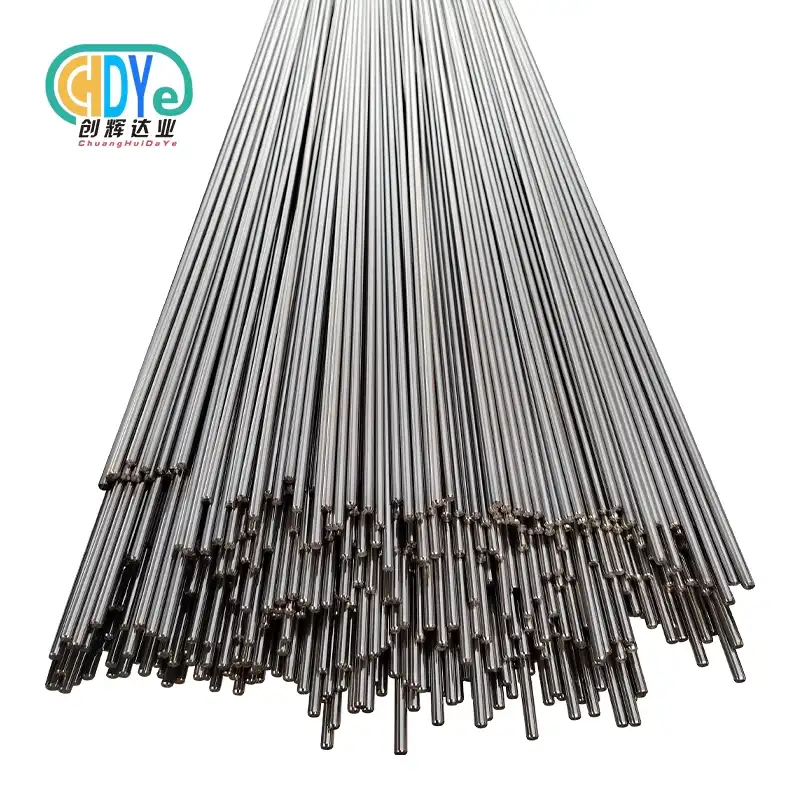
Understanding Raw Titanium Wire and Its Characteristics
Raw titanium wire is the basic form of the product that comes straight from precision manufacturing processes at places like those in China's Titanium Capital region. This substance keeps the naturally occurring oxide layer that forms on titanium surfaces. This layer is usually less than 10nm thick and protects against rusting in a way that is built into the metal itself.
Core Properties of Raw Titanium Wire
Titanium wire that hasn't been treated is useful in many areas because of its mechanical qualities. Tensile strength is usually between 240 and 550 MPa, but it depends on the grade and how it was processed in the past. It is also very flexible, so it can be shaped without breaking. Because it forms a stable passive film, the material is very resistant to corrosion in chloride environments, oxidising environments, and many acidic situations. It has an electrical conductivity of about 3.1% IACS (International Annealed Copper Standard), which means it can be used for tasks that need to send a small amount of current without causing too much resistive heating.
Industrial Applications of Untreated Titanium Wire
In manufacturing, raw titanium wire is used where mechanical performance is more important than how it looks on the outside. Engineers in the aerospace industry use it for structural parts and springs that need to be strong for their weight. It is used in chemical processing plants for welding to build tanks and pipes that are exposed to harsh media. It is used in sputtering targets and vacuum furnace heating elements in the electronics business, and anodised titanium wire, where stability at high temperatures is more important than surface finish.
What is Anodised Titanium Wire and How Is It Made?
Through controlled electrolytic oxidation, the anodising process changes the surfaces of titanium wires, making an oxide layer that is much thicker than what naturally forms. Manufacturers with special electrolytic tanks put clean titanium wire into acid electrolyte solutions, usually phosphoric or sulphuric acid mixtures, while applying a precise DC voltage.
The Anodization Process Explained
Iron ions from the liquid join with titanium atoms on the wire's surface during electrolysis. This creates an amorphous TiO₂ layer atom by atom. Voltage regulation is more important than time control in process control because oxide thickness is closely related to applied voltage. At approximately 20 volts, the oxide reaches 50nm thickness, producing blue interference colours. When the voltage is raised to 80 to 100 volts, the layer grows to 200nm, and the colours change between purple, green, and gold. This method of making colours is based on optical interference—certain wavelengths are reflected, while others pass through or are absorbed by the clear oxide, making bright colours without using dyes or paints.
Enhanced Properties Achieved Through Anodization
Type II anodising, where the surface hardness is much higher than the raw material, is defined by technical standards like AMS 2488. It is used for uses that need to resist wear. The thickened oxide layer is very resistant to chemicals; it didn't break down after over 1000 hours of ASTM B117 salt spray tests. Breakdown voltages can hit 100V for thicker oxide formations, and the dielectric strength gets a lot better. The process keeps the biocompatibility while adding utility; the oxide layer stays chemically stable, doesn't harm cells, and meets ISO 10993 standards for medical devices.
Comparing Anodised Titanium Wire with Raw Titanium Wire
Procurement decisions hinge on understanding how surface treatment of anodised titanium wire affects performance parameters, economic factors, and supply chain considerations. The comparison below examines these dimensions systematically.
Mechanical and Chemical Performance Differences
Measurements of surface hardness show big differences. Raw titanium wire has a Vickers hardness of 200 to 250 HV, while Type II anodised wire has a hardness of 300 to 400 HV in the oxide layer. This increase in hardness lowers abrasive wear in sliding contact uses and keeps the surface from getting scratched while it's being handled. Corrosion tests show that both materials work well in neutral environments, but anodised wire does better in acidic environments with chlorides or fluorides up to 50ppm concentration levels. The trade-off has to do with how the electricity works. Because raw wire keeps its natural conductivity across the whole cross-section, it is better for uses that need to carry current. Anodised wire adds a dielectric oxide layer that stops surface conductivity while the metal body keeps its original properties. This trait is helpful in situations where electrical isolation or controlled dielectric reaction is needed.
Cost Analysis and Economic Considerations
The way prices are set reflects how complicated the work is. For commercial grades, raw titanium wire from well-known manufacturers usually costs between USD 45 and USD 75 per kilogram. The price changes based on the diameter, purity, and order number. Anodised wire costs more than regular wire, between USD 65 and USD 110 per kilogram. This is because it needs to go through more steps of processing, has to be checked for quality, and uses special tools. But the total cost of ownership shows that value is not as simple as it seems. Anodised wire lasts longer in corrosive environments, which means it doesn't need to be replaced as often, and repair downtime is shorter. Surgical methods are more efficient and take less time when colour-coded medical wire is used instead of measuring wires. Fewer galling-related failures and easier inspection processes are good for aerospace applications.
How to Choose Between Anodised and Raw Titanium Wire for Your Business Needs
The selection methodology starts with application requirement analysis and then evaluates supplier capabilities against procurement priorities. The decision framework below guides material specification development.
Application-Driven Material Selection
For projects that need the best electrical conductivity across the whole wire, raw titanium specs are best. For constant resistivity and current distribution, untreated wire is usually used for vacuum furnace heating elements, electrical discharge machining electrodes, and welding. The material's natural resistance to corrosion is good enough for settings with controlled air flow. Anodised wire is used in situations where the performance is affected by the surface qualities. Manufacturers of medical devices that need to identify sizes without labels or marks must use colour-anodised wire that meets biocompatibility standards. Refer to AMS 2488 Type II standards for aerospace assembly tasks that need anti-galling properties for anodised titanium wire safety wiring and critical fasteners. Anodised forms are used for body jewellery and artistic parts by jewellery makers who want hypoallergenic, bright materials that don't pose nickel release risks.
Critical Procurement Criteria
Performance verification requires documentation traceability. Quality-focused suppliers provide material test reports confirming chemical composition per ASTM B863 standards, mechanical property verification through tensile testing, and oxide thickness measurements for anodised products. Certificates should include lot traceability, enabling upstream raw material verification if quality issues emerge during manufacturing. Supplier capability assessment examines production flexibility. Can the manufacturer accommodate custom diameter requirements or alloy variations beyond standard Grade 2 commercial pure titanium? Do they maintain inventory buffers enabling rapid prototype shipments for R&D projects? Technical support availability matters when application engineering questions arise regarding formability, welding parameters, or compatibility with specific environments.
Case Study: Medical Device Application
A surgical instrument manufacturer previously used externally coated wire for K-wire procedures, experiencing coating delamination during autoclaving cycles. Transitioning to anodised titanium wire from a certified supplier eliminated coating failure modes entirely, since the oxide layer integrates atomically with the base metal. Colour-coding reduced instrument preparation time by 40% while meeting ISO 10993 biocompatibility requirements. The procurement team negotiated staged delivery schedules matching production forecasts, minimising inventory costs while ensuring supply continuity.
Conclusion
Selecting between anodised and raw titanium wire requires balancing performance requirements, budget parameters, and supplier partnership quality. Raw wire delivers exceptional mechanical properties and electrical conductivity at accessible price points, serving structural and conductive applications effectively. Anodised wire provides enhanced surface hardness, superior corrosion resistance, colour-coding functionality, and anti-galling properties essential for medical, aerospace, and specialised industrial uses. Procurement success depends on partnering with manufacturers offering rigorous quality systems, technical expertise, and flexible production capabilities aligned with your operational demands and timeline requirements.
FAQ
1. What advantages does anodised titanium wire offer over raw wire?
Anodised titanium wire provides significantly increased surface hardness, reaching 300-400 HV compared to 200-250 HV for raw material. The oxide layer improves corrosion resistance in chloride and acidic environments, enables colour-coding for identification purposes, and reduces surface friction, preventing galling in mechanical assemblies. These characteristics prove valuable in medical devices, aerospace fastening systems, and corrosive chemical environments.
2. Does anodising affect the electrical conductivity of titanium wire?
The oxide layer created through anodization acts as a dielectric insulator on the wire surface, reducing surface-level electrical conductivity. However, the metallic core maintains its baseline conductivity properties. Applications requiring current transmission throughout the wire cross-section typically specify raw titanium wire, while anodised wire suits applications where surface electrical isolation provides advantages or where conductivity remains secondary to other performance factors.
3. Can anodised titanium wire be used for medical implants?
Anodised titanium wire meets ISO 10993 biocompatibility standards, making it suitable for medical device applications, including surgical instruments and temporary fixation devices like K-wires. The oxide layer remains chemically inert, non-cytotoxic, and stable through autoclave sterilisation cycles. Colour anodization enables size differentiation without labels or markings that could harbour bacteria or cause confusion during surgical procedures.
Partner with Chuanghui Daye for Your Anodised Titanium Wire Needs
Shaanxi Chuanghui Daye brings over three decades of rare metal expertise from China's Titanium Capital to global procurement teams seeking reliable anodised titanium wire suppliers. Our ISO 9001:2015 certified production facility maintains complete traceability from raw material inspection through final packaging, ensuring consistent quality across every shipment. We offer custom diameter specifications, flexible small-batch production for R&D projects, anodised titanium wire and competitive factory-direct pricing that respects your budget constraints. Our technical team provides application engineering support, helping you optimise material selection for your specific performance requirements. Contact us at info@chdymetal.com to request samples, discuss your project specifications, and receive detailed quotations for your anodised titanium wire requirements.
References
1. Davis, J.R. (2006). Corrosion of Titanium and Titanium Alloys. ASM International Handbook Committee. Materials Park, OH: ASM International.
2. Sedriks, A.J. (1996). Corrosion Resistance of Titanium and Its Alloys. John Wiley & Sons, New York.
3. ASTM International. (2018). ASTM B863-18: Standard Specification for Titanium and Titanium Alloy Wire. West Conshohocken, PA: ASTM International.
4. SAE International. (2015). AMS 2488D: Anodic Treatment of Titanium and Titanium Alloys Solution pH 13 or Higher. Warrendale, PA: SAE International.
5. Brunette, D.M., Tengvall, P., Textor, M., & Thomsen, P. (2001). Titanium in Medicine: Material Science, Surface Science, Engineering, Biological Responses and Medical Applications. Berlin: Springer-Verlag.
6. Sulka, G.D. (2008). Highly Ordered Anodic Porous Alumina Formation by Self-Organized Anodizing. Nanostructured Materials in Electrochemistry. Weinheim: Wiley-VCH.
Learn about our latest products and discounts through SMS or email