- English
- French
- German
- Portuguese
- Spanish
- Russian
- Japanese
- Korean
- Arabic
- Greek
- German
- Turkish
- Italian
- Danish
- Romanian
- Indonesian
- Czech
- Afrikaans
- Swedish
- Polish
- Basque
- Catalan
- Esperanto
- Hindi
- Lao
- Albanian
- Amharic
- Armenian
- Azerbaijani
- Belarusian
- Bengali
- Bosnian
- Bulgarian
- Cebuano
- Chichewa
- Corsican
- Croatian
- Dutch
- Estonian
- Filipino
- Finnish
- Frisian
- Galician
- Georgian
- Gujarati
- Haitian
- Hausa
- Hawaiian
- Hebrew
- Hmong
- Hungarian
- Icelandic
- Igbo
- Javanese
- Kannada
- Kazakh
- Khmer
- Kurdish
- Kyrgyz
- Latin
- Latvian
- Lithuanian
- Luxembou..
- Macedonian
- Malagasy
- Malay
- Malayalam
- Maltese
- Maori
- Marathi
- Mongolian
- Burmese
- Nepali
- Norwegian
- Pashto
- Persian
- Punjabi
- Serbian
- Sesotho
- Sinhala
- Slovak
- Slovenian
- Somali
- Samoan
- Scots Gaelic
- Shona
- Sindhi
- Sundanese
- Swahili
- Tajik
- Tamil
- Telugu
- Thai
- Ukrainian
- Urdu
- Uzbek
- Vietnamese
- Welsh
- Xhosa
- Yiddish
- Yoruba
- Zulu
GR4 Titanium Bar Strength and Yield Properties Explained
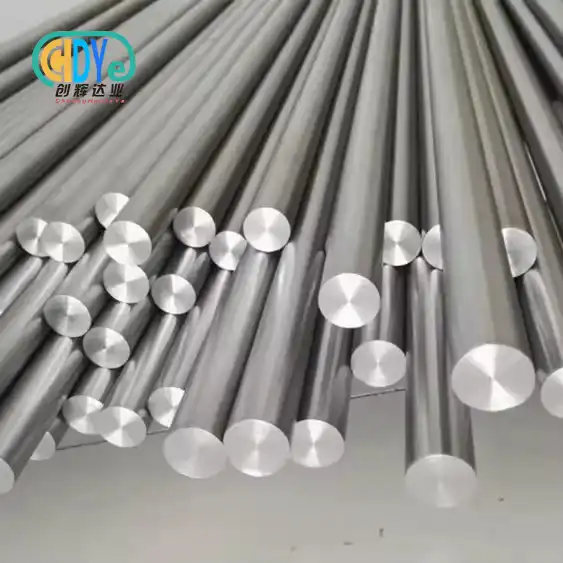
The GR4 titanium bar is the best pure titanium grade that you can find. It is a high-performance material that is strong, doesn't rust, and is reliable. Grade 4 titanium has a minimum tensile strength of 550 MPa and a yield strength of 480 MPa. This makes it much stronger than lower CP grades and much more resistant to harsh chemical conditions. Because of this one-of-a-kind mix, it is essential for structural parts in spacecraft, naval gear, chemical processing equipment, and medical items that must maintain their mechanical integrity.
Introduction
The GR4 titanium bar is an important material choice for purchasing managers, design engineers, and original equipment makers who work in tough industries. Grade 4 titanium is in a key place in the material selection matrix. This is because lower grades may not have enough mechanical strength, and higher-cost metals may add too much complexity. It has better mechanical qualities because of controlled interstitial strengthening, especially higher oxygen content, which raises tensile and yield strength without adding alloying elements. Understanding these qualities of strength and return has a direct effect on the success of a project, how costs are managed, and how well an asset performs over time. This guide gives people who work in buying the detailed information they need to successfully define, source, and use GR4 titanium bars in aerospace, military, chemical processing, medical device manufacturing, and naval engineering.
Understanding GR4 Titanium Bar: Composition and Mechanical Properties
Chemical Composition and Its Impact on Performance
The mechanical strength of GR4 titanium bars comes from their carefully controlled chemical makeup, which is set by ASTM B348 and ASME SB348 standards. The main ingredient is titanium, and the highest amounts of nitrogen (0.05%), carbon (0.08%), hydrogen (0.015%), iron (0.50%), and most importantly, oxygen (0.40%) are allowed. This higher oxygen level makes the solid solution stronger, making the tensile and yield strengths much higher than in Grades 1, 2, and 3. Grade 4 titanium alloy stays economically pure while being 30–40% stronger than Grade 2. Grade 5 (Ti-6Al-4V) titanium alloys need to have aluminum and vanadium added to make them work together. The alpha-phase architecture makes sure that the material can be welded and shaped easily, which is important for complicated production needs.
Core Mechanical Properties That Define Performance
The mechanical shape of GR4 titanium bars meets the performance needs of a wide range of important uses. The mechanical qualities of our goods made in Baoji are always the same. They have a minimum tensile strength of 550 MPa, a yield strength of 480 MPa, and an extension of 15%. These numbers make sure that the material can handle big mechanical loads while still being flexible enough to be cold-formed. The hardness is usually between 200 and 240 HV, which means it doesn't break easily but is resistant to wear. When compared to Grade 2 titanium, which has a tensile strength of about 345 MPa, the performance benefit is clear right away for hydraulic pressure systems, structural bolts, and naval parts that carry weight. This increase in strength doesn't hurt its resistance to corrosion—Grade 4 keeps performing well in acidic solutions, salt conditions, and seawater, all of which would quickly weaken stainless steel options.
Comparative Analysis with Other Titanium Grades
It is common to have to choose between strength, resistance to rust, formability, and cost when choosing a material. Grade 4 titanium is in a special place, in the middle of Grade 2 and Grade 5 metals. It is easier to shape in cold temperatures and costs less, but Grade 2 isn't strong enough for high-stress uses. Grade 5, on the other hand, has very high strength (nearly 900 MPa), but it adds complexity by containing alloying elements that might not be good for biological uses or places that need complete chemical purity. Grade 4 solves this problem by giving strength levels close to those of a combination while keeping the biocompatibility and resistance to rust of commercially pure titanium. Because of this, it is the best material for tooth implant posts, surgery tool shafts, aircraft hydraulic fittings, and chemical processing equipment that needs to be strong and resistant to the environment.
GR4 Titanium Bar Strength vs Other Materials: Key Comparisons for Decision Makers
Performance Against Common Industrial Metals
When looking at different types of materials, GR4 titanium bars are clearly better than most industrial metals. Type 316 stainless steel is about the same strength as GR4 titanium, but it weighs about 45% less. This is a very important factor in aircraft and car use, where less weight means better speed and fuel economy. The corrosion protection profile is much better than stainless steel, especially in chloride-rich settings where 316 stainless steel cracks and pits due to stress corrosion. GR4 titanium is stronger than aluminum alloys like 6061-T6 (550 MPa vs. about 310 MPa) and keeps its mechanical qualities at high temperatures up to 300°C, while aluminum alloys quickly lose their strength at these temperatures. Because of these performance qualities, design engineers can choose smaller cross-sections, lower the weight of the structure, and increase repair times, all at the same time.
Cost-Effectiveness Analysis Beyond Initial Pricing
A lifecycle cost study shows that GR4 titanium bars are not as expensive as other metals, even though the price per kilogram is higher. Because it is so resistant to rust, it doesn't need protective coatings, regular upkeep, or parts that need to be replaced too soon, as they do with carbon steel and stainless steel systems. Titanium bolts, propeller shafts, and heat exchanger parts can last 20 to 30 years without breaking down, while covered steel options only last 3 to 7 years. This makes them ideal for marine uses. The material's strength-to-weight ratio lets engineers use less of it to get the same level of structural performance. This saves money on both materials and shipping. When buying teams, add up the total cost of ownership, which includes installation, maintenance, downtime, and replacement processes. GR4 titanium often shows better economic value, even though it costs more upfront.
Strategic Material Selection Criteria
When multiple performance standards need to be met at the same time, it is strategically advantageous to choose GR4 titanium bars. In chemical processing areas with wet chlorine, hypochlorites, or hot, concentrated acids, materials need to be able to withstand both chemical attack and mechanical stress. This is where GR4 titanium shines, and stainless steels fall short. High strength for load-bearing implants and proven biocompatibility and osseointegration skills are both good for companies that make medical devices. Aerospace engineers use the material's good strength-to-weight ratio and tolerance to shaking for parts of airframes and hydraulic systems that are subject to rapid changes in temperature. When buying, workers know about these application-specific benefits; they can make decisions about which materials to use based on performance needs instead of just price.
Manufacturing and Heat Treatment: How GR4 Titanium Bar Achieves Its Properties
Production Process and Quality Control
Our factory in Baoji, Shaanxi, Chuanghui Daye Metal Material Co., Ltd., uses cutting-edge mechanical methods to make sure that the quality of our GR4 titanium bars stays the same. The first step in the production process is choosing a high-purity titanium sponge. This is followed by vacuum arc remelting in our electron beam furnace to make sure the chemical makeup is uniform and all flaws are removed. Multiple remelting processes make sure that the intermediate elements that control the material qualities are spread out evenly. The bars are then heated and rolled, which improves the structure of the grains and creates the alpha-phase substructure that controls the material's tensile properties. Our quality management system, which is ISO 9001:2015 certified, makes sure that strict inspection procedures are followed at every stage of production. These include spectroscopic analysis to confirm the chemical composition, ultrasonic testing to make sure the inside is sound, and mechanical testing to make sure that the tensile strength, yield strength, and elongation values meet or beat ASTM B348 standards.
Heat Treatment and Property Enhancement
Controlled heat treatment processes are very important for making sure that the mechanical qualities of GR4 titanium bars are just right for each application. When we do annealing in our controlled-atmosphere ovens, we remove any leftover stresses that were created during hot working and fix the grain. The normal melting temperature range for GR4 titanium is between 650°C and 750°C. This range controls the grain size, which makes the metal strong and flexible at the same time. This heat processing also makes sure that the bar's mechanical properties are the same all the way through its cross-section, so there are no hard or soft spots that could affect its performance in service. Stress-relief annealing is especially useful for parts that will be machined later, because it lowers the chance of warping and increases the stability of the dimensions. Our expert team can change the heat treatment settings to meet the exact hardness, strength, or formability needs of each customer, depending on the end use.
Custom Processing Capabilities
We do more than just make standard bars. We also offer full custom processing services that add value and make our customers' supply chains simpler. Precision turning on CNC lathes to achieve tight circle tolerances, centerless grinding for better surface finish and measurement accuracy, and cutting to lengths from 1000mm to 6000mm are some of the things we can do with our machines. We regularly make bars with diameters ranging from 6.0 mm to 200 mm, so we can meet the needs of both large-scale production and small-scale study needs for universities and development labs. To support important uses like aircraft bolts, medical implant blanks, and precision chemical processing parts, custom tolerance requirements can be met. Vertical integration lets us keep an eye on quality all the way through the production chain, from heating the raw materials to doing the final cutting. It also lets us offer low wait times and factory-direct prices that don't include markups from middlemen.
Procurement Guide: How to Buy GR4 Titanium Bars for Your Industrial Needs
Supplier Evaluation Criteria
To find a good GR4 titanium bar provider, you need to carefully look at their many technical and operating skills. Verification of certification is very important. Reliable providers have ISO 9001:2015 quality management certification and can provide full material tracking documents, such as mill test certificates (MTC) that meet EN 10204 3.1 standards. These papers check that each production batch has the right chemical makeup, mechanical qualities, and heat treatment history. As part of the manufacturing capability review, the supplier's heating ovens, shaping presses, and testing labs that make sure the quality of the products are looked at. Geographical factors are also important. For example, suppliers in Baoji, China, are close to factories that make titanium sponge and specialized equipment. This means that they can offer lower prices and more technical knowledge in what is known as China's "Titanium Capital." Customer references from well-known aerospace, medical, or chemical processing companies show that the quality is consistent and the delivery is reliable.
Technical Specifications and Standards Compliance
When making specs for buying GR4 titanium bars, make sure the standards and acceptance factors are very clear. Our goods meet the standards set by ASTM B348 and ASME SB348 for titanium and titanium alloy bars, ASTM F-67 for medical implants, and UNS R50700 (Werkstoff Nr. 3.7065) for materials. It must have a minimum tensile strength of 550 MPa, a minimum yield strength of 480 MPa, and a minimum stretch of 15%. It's important to be clear about the required surface finish, straightness, and dimensional limits so there are no mistakes and the material you receive meets your needs for processing or application. For certain uses, chemical makeup limits are very important. For example, companies that make medical devices might need stricter controls on intermediate elements, and companies that process chemicals might need better rust resistance through controlled chemistry. By asking for certificates of approval, material safety data sheets, and thorough inspection reports, you can set clear quality standards, get proof that you're following the rules, and keep track of your entire supply chain.
Logistics and Commercial Considerations
Good buying includes more than just specifying the materials you need, especially when sourcing gr4 titanium bar for industrial or engineering applications. It also includes business terms that make your supply chain work more efficiently. Knowing the minimum order numbers helps you balance the costs of keeping goods with the benefits of buying things more efficiently. Our building can handle both large production orders and smaller study quantities, right down to single bars for testing. Expected lead times should take into account how long it takes to make materials, which can be anywhere from 4 to 8 weeks based on size, amount, and any special processing needs. Titanium goods need extra care when they are shipped. The right packing keeps the surface from getting dirty, and the parts from breaking while they are in transit, and the paperwork needs to meet foreign shipping rules and customs requirements. Prices are usually listed per kilogram, with savings for bigger orders. However, smart buyers look at the total landing cost, which includes freight, customs taxes, and handling fees. By making framework deals with qualified suppliers like Chuanghui Daye, you can be sure of stable prices, a priority production schedule, and focused technical support. This changes the relationship between you and the seller from a transactional one to a strategic one.
Practical Benefits and Applications of GR4 Titanium Bar Strength Properties
Aerospace and Defense Applications
GR4 titanium bars are used a lot in the aerospace industry for parts because their strength-to-weight ratio has a direct effect on how well airplanes work and how much it costs to run. Parts of hydraulic systems like actuator rods, valve bodies, and pressure fittings benefit from the material's high strength and great resistance to wear when loaded and unloaded many times. Structures of the airframe, like landing gear parts, firewall sections, and bracket systems, use both mechanical strength and rust protection when they are exposed to different weather conditions and chemicals used to melt ice. Because the material's mechanical traits stay the same at temperatures ranging from very cold to very hot, it can be used for parts that will be thermally cycling during flight operations. These benefits are also used in defense applications, like on military ships, where titanium bolts, propeller shaft parts, and seawater pipe systems last for decades without breaking down from rust like steel options do in salty seas.
Medical Device Manufacturing Success Stories
Medical device makers use GR4 titanium bars for important internal uses where biocompatibility, mechanical strength, and life all come together. Dental implant posts made from GR4 bars are strong enough to survive biting forces, and the material's proven osseointegration qualities allow them to join directly with bone for long-term security. The material's high strength and low modulus of flexibility make it a better match for human bone than stainless steel options. It is used in orthopedic uses like bone pins, fixing plates, and spine fusion devices. Concerns about long-term metal ion release in living things are put to rest because Grade 5 titanium alloys don't contain alloying elements like aluminum and vanadium. Surgical instrument makers use GR4 titanium for handles and shafts that need to be strong and able to be sterilized in an autoclave. The corrosion-resistant nature of the material ensures that instruments keep their shape and look good after thousands of cleaning cycles.
Chemical Processing and Industrial Equipment
Chemical processing plants work in tough conditions where normal materials break down quickly. This is why GR4 titanium bars are a good choice, even though they cost more at first. GR4 titanium is used to make heat exchanger tie-rods, tube sheets, and structural supports that can handle being exposed to hot, concentrated acids, chlorine compounds, and other strong media that cause stainless steel parts to break down too soon. The material's resistance to stress corrosion cracking gets rid of a major failure mode that affects equipment that is exposed to salt. This means that maintenance times are longer and there are fewer unexpected shutdowns. In electroplating and metal finishing, GR4 titanium bars are used to make anodes and tank parts that are stable in size and don't rust or corrode when exposed to chemicals or electricity. Titanium is resistant to chlorine dioxide and hypochlorite solutions, which means that cleaning tools used in the pulp and paper business can last decades instead of years. The better rust resistance of the material in these uses shows how it lowers the total cost of ownership by making tools last longer, requiring less upkeep, and making the process more reliable.
Conclusion
GR4 titanium bars have a great mix of high strength, excellent rust resistance, and steady performance that meets important needs in the medical, chemical processing, marine, and aircraft industries. With a minimum tensile strength of 550 MPa and a yield strength of 480 MPa, the material is the strongest available pure titanium grade. It fills the gap between cheaper CP titanium and more expensive alloys. When procurement pros know about a material's makeup, how it's made, and its benefits for a certain purpose, they can choose it in a way that balances the original cost with its performance over time and the total cost of ownership. GR4 titanium bars are the technical base for long-term success, whether your project needs safe implant materials, chemical processing equipment that doesn't rust, or lightweight aircraft parts.
FAQ
Q: What makes Grade 4 titanium stronger than Grade 2?
A: The difference in strength is due to the managed chemical makeup. In Grade 4, there is more oxygen (up to 0.40% vs. 0.25% in Grade 2). Oxygen acts as an intermediate strengthening element, raising both the tensile and yield strengths by about 30 to 40 percent while keeping the properties of commercially pure titanium, such as its high resistance to rust.
Q: Can Grade 4 titanium bars be welded successfully?
A: Standard welding methods, such as TIG and MIG welding, work very well with grade 4 titanium. The right way to do things is to use argon or helium as an inert gas cover on both the front and back of the weld to keep the air from contaminating it and weakening it. When done right, the weld parts that are made are as strong and resistant to rust as the base material.
Q: How does Grade 4 titanium compare to stainless steel for marine applications?
A: In coastal settings, Grade 4 titanium works much better than stainless steel because it is more resistant to stress corrosion cracks and pitting rust caused by salt. The material is 45% lighter than stainless steel but is just as strong, so it can be used to make lighter structures. Marine parts made from Grade 4 titanium usually last 20 to 30 years without any protective coatings. Coated stainless steel parts, on the other hand, only last 3 to 7 years when exposed to salt water.
Partner with Chuanghui Daye for Premium GR4 Titanium Bar Solutions
Shaanxi Chuanghui Daye Metal Material Co., Ltd. can meet all of your needs for GR4 titanium bars with factory-direct prices, quality that is ISO 9001:2015 approved, and full expert support. We have over 30 years of experience working with rare metals and have state-of-the-art production tools like electron beam ovens, precision machining centers, and strict quality control systems. Our factory is located in Baoji, which is a hub for making titanium products. Our selection of GR4 titanium bars has diameters ranging from 6.0 mm to 200 mm. You can choose from different lengths, and we can make them in any way you want. Whether you need large amounts for production or small batches of samples for study purposes, our experienced team can provide uniform quality with full proof of how the materials were sourced. Get a reasonable price from a reliable GR4 titanium bar maker by emailing us at info@chdymetal.com right now to talk about your project needs with our technical experts.
References
1. American Society for Testing and Materials. ASTM B348-13: Standard Specification for Titanium and Titanium Alloy Bars and Billets. West Conshohocken: ASTM International.
2. Boyer, R., Welsch, G., and Collings, E.W. Materials Properties Handbook: Titanium Alloys. Materials Park: ASM International.
3. Donachie, M.J. Titanium: A Technical Guide, 2nd Edition. Materials Park: ASM International.
4. Froes, F.H. Titanium: Physical Metallurgy, Processing, and Applications. Materials Park: ASM International.
5. Lutjering, G. and Williams, J.C. Titanium, 2nd Edition. Berlin: Springer-Verlag.
6. Schutz, R.W. and Watkins, H.B. Recent developments in titanium alloy application in the energy industry. Materials Science and Engineering A, Volume 243, Issues 1-2.
Learn about our latest products and discounts through SMS or email