- English
- French
- German
- Portuguese
- Spanish
- Russian
- Japanese
- Korean
- Arabic
- Greek
- German
- Turkish
- Italian
- Danish
- Romanian
- Indonesian
- Czech
- Afrikaans
- Swedish
- Polish
- Basque
- Catalan
- Esperanto
- Hindi
- Lao
- Albanian
- Amharic
- Armenian
- Azerbaijani
- Belarusian
- Bengali
- Bosnian
- Bulgarian
- Cebuano
- Chichewa
- Corsican
- Croatian
- Dutch
- Estonian
- Filipino
- Finnish
- Frisian
- Galician
- Georgian
- Gujarati
- Haitian
- Hausa
- Hawaiian
- Hebrew
- Hmong
- Hungarian
- Icelandic
- Igbo
- Javanese
- Kannada
- Kazakh
- Khmer
- Kurdish
- Kyrgyz
- Latin
- Latvian
- Lithuanian
- Luxembou..
- Macedonian
- Malagasy
- Malay
- Malayalam
- Maltese
- Maori
- Marathi
- Mongolian
- Burmese
- Nepali
- Norwegian
- Pashto
- Persian
- Punjabi
- Serbian
- Sesotho
- Sinhala
- Slovak
- Slovenian
- Somali
- Samoan
- Scots Gaelic
- Shona
- Sindhi
- Sundanese
- Swahili
- Tajik
- Tamil
- Telugu
- Thai
- Ukrainian
- Urdu
- Uzbek
- Vietnamese
- Welsh
- Xhosa
- Yiddish
- Yoruba
- Zulu
Titanium Metal Plate vs Aluminum: Which Is Better?
It's not enough to just look at price tags to decide between a titanium metal plate and an aluminum one for your business needs. The choice has an effect on the overall cost of purchase, the structural stability, and the operating lifespan. A titanium metal plate is perfect for harsh conditions that need high strength-to-weight ratios, resistance to rust, and temperature stability. This versatility is why it is used so extensively in aircraft, chemical processing, and the production of medical devices. Aluminum is cheaper than other metals and is easy to work with, making it perfect for medium-duty tasks. By understanding the complex trade-offs between these materials, procurement managers, engineers, and OEM clients can improve performance while keeping costs low. This thorough comparison looks at technical qualities, possible uses, and source options to help you choose the right material.
Understanding Titanium Metal Plates and Aluminum Plates
Both materials are widely used in industry for different reasons, but their production methods and natural properties are completely unique.
What Defines Titanium Metal Plates?
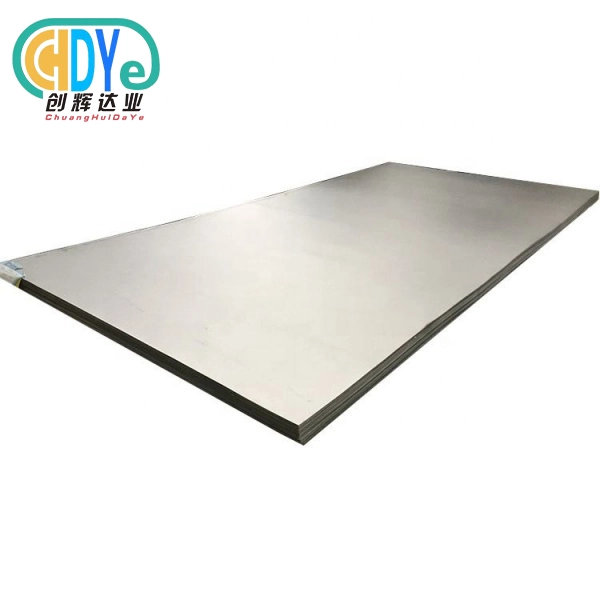
Titanium metal plates are flat-rolled mill goods that are more than 4.75 mm thick. They are made by vacuum arc remelting (VAR), hot rolling, and cooling. This strict production process guarantees the microstructural stability that is needed for tough uses. Common types of commercially pure (CP) steel are Grade 1 through Grade 4, which get stronger as you go up the grades. Grade 2 is the most common type of CP titanium. It is strong enough for general corrosion-resistant uses while still being easy to shape. Grade 5 (Ti-6Al-4V), which is the standard metal in the business, has a tensile strength of up to 550 MPa and is very flexible. We make titanium plates at Chuanghui Daye that are between 0.5 mm and 50 mm thick and 500 mm to 2000 mm wide. These plates meet strict standards for chemical and aircraft processing.
Aluminum Plate Fundamentals
It takes casting, hot rolling, and heat treatment on aluminum plates to get them to the right hardness. Grade 6061-T6 is mostly used for construction purposes because it is easy to weld and has middling strength (tensile strength of about 310 MPa). The rust protection of Grade 5052-H32 is very good in coastal settings, but not as good as that of titanium. Aluminum is a good choice for projects that need to be light because it has a density of 2.70 g/cm³, which is about 60% lower than that of titanium, 4.51 g/cm³.
Initial Property Comparison
Titanium's tensile strength can reach 550 MPa (Grade 5), while aluminum's is only 310 MPa (6061-T6). Titanium, on the other hand, has a mass of 4.43–4.51 g/cm³, which makes it stronger than steel when both strength and weight reduction are important. Different metals have very different levels of corrosion resistance. Titanium makes a steady, self-healing oxide layer that is resistant to chlorides, acids, and seawater, but aluminum needs to be anodized or coated to protect it in harsh conditions. Titanium has a lower thermal expansion rate, which makes it better for uses that change temperatures.
Detailed Comparison: Titanium Metal Plate vs Aluminum Plate
When you look at working factors that are important for making buying decisions, you can see the difference in how well these materials, including titanium metal plate, work in real life.
Corrosion Resistance and Environmental Durability
Titanium is almost immune to rust in places where aluminum breaks down quickly. Titanium works much better than stainless steel and aluminum in places like evaporation plants, places that work with acids or wet chlorine gas, and saltwater that is high in chloride. When touched, the inactive titanium dioxide layer grows back on its own, which stops pitting and crevice rusting. Aluminum oxidizes quickly in salty or acidic media, so it needs protective processes that cost more and need to be done more often. Our Grade 2 titanium plates can be used in chemical reactors for more than 20 years without needing to be replaced. Aluminum plates, on the other hand, need to have their coatings changed every 3 to 5 years. This edge over time means that chemical and petroleum equipment makers will spend less on repairs and replacements.
Strength-to-Weight Performance
Titanium metal platehas a higher specific strength (strength divided by density) than aluminum in structural uses that need to hold more weight without losing strength. Aerospace companies use this benefit when making bulkheads and landing gear parts. Every kilogram saved helps save fuel and increase the amount of cargo that can be carried. While aluminum's lower absolute density makes it a better choice for car uses that want to save weight over strength, titanium's 60% higher density gives it 75% more strength, which leads to net performance gains in high-stress situations. When protected car parts are hit by bullets and experience high G-forces, defense companies use Grade 5 titanium plates instead of aluminum, which has a lower yield strength of about 276 MPa.
Thermal Properties and High-Temperature Stability
Titanium's mechanical qualities stay the same at temperatures up to 600°C, but aluminum alloys become much softer above 200°C. Titanium can't be replaced in jet engine shields, exhaust systems, and heat exchangers that have to deal with thermal cycles because it can handle so much heat. Aluminum's thermal conductivity (237 W/m·K) is higher than titanium's (21.9 W/m·K), which is good for devices where heat needs to be removed but bad for uses that need thermal shielding. To keep titanium from becoming weak, it needs to be welded with an inert gas shield. This makes the production process more complicated than it is for aluminum. Chuanghui Daye cuts titanium plates to exact specifications so that our clients don't have to deal with as many welding problems or manufacturing problems.
Cost Analysis and Supply Chain Considerations
Aluminum's raw material prices are usually 70–80% less than titanium's, which affects the original budgets for buying it. Lifecycle cost estimates, on the other hand, show that titanium is more cost-effective in difficult settings. When a chemical processing plant installs titanium heat exchanger plates, they don't have to be replaced every 5 to 7 years like aluminum plates do, which makes up for the higher initial cost. Lead times are very different: aluminum plates ship in two to four weeks, but titanium plates take six to ten weeks because of the special ways they are melted and rolled. Buyers who need quick prototypes and flexible small-batch production benefit when suppliers keep popular grades and sizes in stock. At Chuanghui Daye, we value this ability to meet tight project deadlines.
Which Metal Plate Is Better for Your Industry? Demand-Matching Approach?
When choosing materials, it's important to make sure that the technical needs of the titanium metal plate are met alongside the practical conditions of each area.
Aerospace and Defense Applications
Titanium is the most common material for aircraft structure parts because it is strong, light, and doesn't wear down easily when loaded and unloaded many times. Grade 5 titanium plates are made to very tight standards and used for the airframe frames, wing spars, and landing gear sections. The material can handle the high temperatures that come with flying faster than sound and keeps its shape even when temperatures change dramatically. Defense makers choose titanium for submarine ballast tanks and navy vessel parts that are immersed in salt water all the time. Aluminum corrodes quickly in these conditions, even with protective coats. When getting aerospace-grade materials, ISO 9001:2015 approval makes sure that the materials can be tracked and that quality is controlled throughout production. We include proof of this with every supply of titanium plates from our Baoji plant.
Chemical and Petrochemical Processing
Titanium plates are used in places that work with acidic media, such as tubesheets, pressure tank linings, and reactor parts. Making wet chlorine gas, working with nitric acid, and desalinating salt water at high temperatures all quickly break down metal, which can lead to equipment failure and safety risks. Our Grade 2 titanium plates don't break down easily when exposed to stress corrosion cracking (SCC) or hydrogen embrittlement, which are problems that happen to ferrous metals in acidic environments. Titanium's long service life is appreciated by companies that make chemical equipment because it means parts don't have to be replaced as often. Picking the right thickness (usually between 10mm and 25mm for pressure tanks) and making sure the material is certified are important steps in the buying process that we help with through professional technical advice.
Medical Device Manufacturing
Biocompatibility rules limit the types of materials that can be used for surgical tools and permanent devices. For biomedical uses, Grade 2 and Grade 5 ELI (Extra Low Interstitial) titanium plates meet ASTM F67 and F136 standards. They have the osseointegration qualities needed for hip plates and knee repairs. Titanium's elastic stiffness (about 110 GPa) is more like human bone than stainless steel's, so it doesn't create stress buffering effects that shorten the life of implants. Aluminum hasn't been approved by the government for use in implants because it might be dangerous. Medical device makers need high-purity materials in small batches that can be fully tracked. At Chuanghui Daye, we specialize in providing these services, helping R&D facilities and production facilities with unique requirements for everything from 0.5mm foils to 50mm plates.
Automotive and Industrial Machinery
Aluminum is a good material for structure frames, engine blocks, and transmission housings in cars where rust isn't too bad because it's cheap and easy to work with. Aluminum's lower material costs and quick fabrication processes make it a good choice for high-volume production. Performance racing and military vehicle makers, on the other hand, are using titanium more and more for armor plates, exhaust systems, and suspension parts because it is strong, light, and resistant to heat. Industrial equipment that is used in chemical processing, like mixing tanks, conveyor parts, and valve bodies, lasts longer between repairs when it is made of titanium instead of aluminum or steel that has been treated.
Advantages of Choosing Titanium Metal Plates Over Aluminum Plates
When selecting a titanium metal plate, it's not enough to just look at the original requirements when choosing materials; you also need to think about their lasting value and how well they work.
Long-Term Cost Efficiency
Aluminum's lower purchase price makes it appealing to people who are trying to save money, but titanium's lower total cost of ownership makes it better for demanding uses. When a desalination plant uses titanium heat exchangers instead of aluminum ones, the protective coatings don't need to be replaced as often, and the plant doesn't have to shut down for repair. Titanium's resistance to wear and rust in fast-moving fluids prevents thinner failures that force parts to be thrown away too soon. When maintenance teams select titanium for acidic service, they see 40–60% lower operating costs over 15 years of use. These savings are much greater than the initial material prices. When purchasing managers look at how reliable a provider is, they should give more weight to companies that offer full traceability paperwork and consistent mechanical quality. At Chuanghui Daye, our ISO 9001:2015-certified production processes uphold these qualities.
Environmental Sustainability and Recyclability
Both materials can be recycled, but they use very different amounts of energy to make. Primary aluminum casting uses about 15 kWh per kilogram because of electrolytic reduction processes. On the other hand, extracting titanium takes a lot of vacuum melting but produces goods that last for decades, so the energy used is spread out over a long period of time. Titanium's longevity means that it doesn't need to be replaced as often, which means that less material and trash are used over its lifetime. New titanium recycling technologies can now reuse cutting scrap and old parts, completing the cycle of material movement. Companies that want to get sustainability certifications are choosing titanium more and more for building projects that need to last a long time and require little upkeep.
Performance in Emerging Technologies
High-performance titanium metals are in high demand in advanced manufacturing fields like additive manufacturing, hydrogen energy systems, and next-generation aircraft platforms. Selective laser melting (SLM) and electron beam melting (EBM) technologies make it possible to shape titanium in complicated ways that aren't possible with traditional cutting. This opens up more design options for structures that are the lightest possible. For hydrogen fuel cell uses, materials that don't break down easily when exposed to hydrogen are needed. Titanium meets this need where aluminum fails. As more industries use these technologies, it becomes strategically important to find trusted titanium providers with technical know-how and open production options. Our research team works with clients to find the best material grades, sizes, and finishing methods so that the titanium plates we give can meet the changing needs of different applications.
Conclusion
To decide between titanium and aluminum plates, you need to carefully think about how hard the application is, how much it will cost over its lifetime, and what performance goals you have. A titanium metal plate has the best rust resistance, the highest strength-to-weight ratios, and the longest durability in harsh settings. These are the reasons why it is used so extensively in aircraft, chemical processing, and medicine. Aluminum works well for projects that need to be cheap and will be exposed to mild weather conditions. When procurement experts work with providers that offer a wide range of grades, the ability to process orders in a way that fits their needs, and strict quality control, they can gain a competitive edge. Knowing the qualities of the material, the needs of the business, and the total cost of ownership helps people make smart choices that are good for both short-term spending and long-term operating performance.
FAQ
Q: Which titanium grade works best for aerospace applications compared to aluminum?
A: Grade 5 (Ti-6Al-4V) titanium metal is used a lot in aircraft structures because it can withstand tensile stresses of up to 550 MPa and doesn't wear down easily. Grades of aluminum like 7075-T6 are about as strong as titanium, but they don't fight rust or keep their temperature as well. Aerospace companies use Grade 5 titanium plates for parts that will be exposed to high stress and changes in temperature, while aluminum is used for secondary structures where weight savings are more important than environmental damage.
Q: How do lead times differ between titanium and aluminum plate procurement?
A: Because they can be made in large quantities, aluminum plates usually ship within two to four weeks from stock. Titanium plates take 6 to 10 weeks because they need to be melted and rolled in a special way. When sellers keep a collection of popular grades and sizes, buyers with short project plans can get what they need faster. Chuanghui Daye keeps common titanium plate sizes in stock so that they can support quick prototypes and pressing orders. This cuts down on the time it takes to get materials for projects that need to be done quickly.
Q: Can titanium and aluminum plates accommodate custom machining requirements?
A: Both materials can be used for unique drilling, cutting, and shaping. To keep the metal from strengthening and the tools from wearing out, titanium needs special tools and slower cutting speeds. Standard tools can quickly cut aluminum. We cut titanium plates to the exact specs of our clients using waterjets, CNC machines, and edge finishing. The parts we send are ready to be installed, which cuts down on the need for on-site manufacturing and the work costs that come with it.
Partner with a Trusted Titanium Metal Plate Supplier
With 30 years of experience in the field, Shaanxi Chuanghui Daye is the company you can trust to help you find high-purity titanium products. Our ISO 9001:2015-certified factory is in Baoji, which is known as "China's Titanium Capital." It makes titanium plates in Grades 1 through 5, with thicknesses ranging from 0.5 mm to 50 mm and special sizes made to your exact specs. We work with companies that make airplane parts, chemicals, and medical devices, and research institutions that need strict quality control, full paperwork for tracking, and low prices that come straight from the plant. Our expert team can help you speed up the time it takes to finish your project by giving you professional advice on choosing materials, finding ways to process them, and using rapid development. Get in touch with info@chdymetal.com right away to talk about your titanium metal plate requirements, get quotes for large orders, or look into custom-cut options that will help your manufacturing process. Feel the performance boost of high-quality titanium materials that are provided with dependability and skill.
References
1. Boyer, R., Welsch, G., & Collings, E. W. (1994). Materials Properties Handbook: Titanium Alloys. ASM International, Materials Park, OH.
2. Donachie, M. J. (2000). Titanium: A Technical Guide (2nd ed.). ASM International, Materials Park, OH.
3. Kaufman, J. G. (2000). Introduction to Aluminum Alloys and Tempers. ASM International, Materials Park, OH.
4. Schutz, R. W., & Watkins, H. B. (1998). "Recent developments in titanium alloy application in the energy industry." Materials Science and Engineering: A, 243(1-2), 305-315.
5. Peters, M., Kumpfert, J., Ward, C. H., & Leyens, C. (2003). "Titanium alloys for aerospace applications." Advanced Engineering Materials, 5(6), 419-427.
6. Lutjering, G., & Williams, J. C. (2007). Titanium (2nd ed.). Springer-Verlag, Berlin Heidelberg.
Learn about our latest products and discounts through SMS or email