- English
- French
- German
- Portuguese
- Spanish
- Russian
- Japanese
- Korean
- Arabic
- Greek
- German
- Turkish
- Italian
- Danish
- Romanian
- Indonesian
- Czech
- Afrikaans
- Swedish
- Polish
- Basque
- Catalan
- Esperanto
- Hindi
- Lao
- Albanian
- Amharic
- Armenian
- Azerbaijani
- Belarusian
- Bengali
- Bosnian
- Bulgarian
- Cebuano
- Chichewa
- Corsican
- Croatian
- Dutch
- Estonian
- Filipino
- Finnish
- Frisian
- Galician
- Georgian
- Gujarati
- Haitian
- Hausa
- Hawaiian
- Hebrew
- Hmong
- Hungarian
- Icelandic
- Igbo
- Javanese
- Kannada
- Kazakh
- Khmer
- Kurdish
- Kyrgyz
- Latin
- Latvian
- Lithuanian
- Luxembou..
- Macedonian
- Malagasy
- Malay
- Malayalam
- Maltese
- Maori
- Marathi
- Mongolian
- Burmese
- Nepali
- Norwegian
- Pashto
- Persian
- Punjabi
- Serbian
- Sesotho
- Sinhala
- Slovak
- Slovenian
- Somali
- Samoan
- Scots Gaelic
- Shona
- Sindhi
- Sundanese
- Swahili
- Tajik
- Tamil
- Telugu
- Thai
- Ukrainian
- Urdu
- Uzbek
- Vietnamese
- Welsh
- Xhosa
- Yiddish
- Yoruba
- Zulu
Grade 5 Titanium Alloy Sheet – Enhanced Fatigue Resistance
Grade 5 titanium alloy sheet is the best material for engineering uses that need to be very resistant to wear and have strong structures. This high-performance Ti-6Al-4V alloy has great mechanical qualities and great corrosion resistance. This makes it an essential material for aerospace, medical, and industrial uses where stress resistance and cyclic loading are important. Manufacturers can make parts out of this material that can handle millions of stress cycles while still staying the same size and working well for as long as they are used because it has better wear properties.
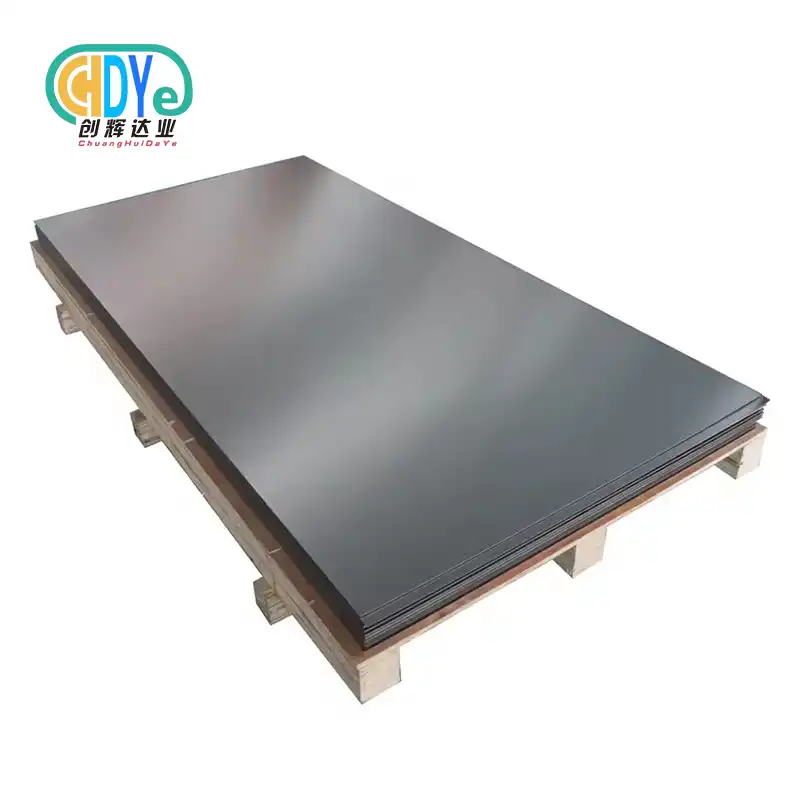
Understanding Grade 5 Titanium Alloy Sheet and Its Fatigue Resistance
The composition of Ti-6Al-4V titanium combination makes a interesting microstructural establishment that straightforwardly contributes to its uncommon weariness execution. This progressed fabric contains roughly 90% titanium, 6% aluminum, and 4% vanadium, coming about in a dual-phase alpha-beta structure that optimizes both quality and ductility.
Microstructural Advantages for Fatigue Performance
The alpha-beta microstructure of Review 5 titanium gives unmistakable focal points in weariness applications. The alpha stage contributes amazing erosion resistance and warm solidness, whereas the beta stage improves quality and formability. This combination makes a fabric that stands up to break start and proliferation beneath cyclic stacking conditions.
Heat treatment forms altogether impact the weariness characteristics of Ti-6Al-4V sheets. Arrangement treatment taken after by maturing makes an ideal adjust between extreme pliable quality and weakness continuance restrain. The coming about microstructure shows fine grain boundaries and uniform stage conveyance, which are fundamental for anticipating push concentration focuses that seem lead to untimely disappointment.
Mechanical Properties Supporting Fatigue Resistance
Review 5 titanium amalgam illustrates surprising mechanical properties that straightforwardly back its weakness resistance capabilities. The fabric ordinarily shows a malleable quality extend of 895-930 MPa and a abdicate quality of 825-869 MPa, giving considerable security edges in requesting applications.
The versatile modulus of roughly 114 GPa permits for controlled distortion beneath push whereas keeping up basic keenness. This characteristic gets to be especially profitable in applications where components must flex more than once without changeless misshapening. The material's fabulous strength-to-weight proportion, about twice that of steel, empowers architects to make lighter structures without compromising weariness execution.
Comparative Analysis - Why Choose Grade 5 Over Other Materials?
When choosing materials for uses that can't handle fatigue, engineering teams often have to make hard choices. Grade 5 titanium metal has clear advantages over other materials, but to fully understand these advantages, you need to carefully look at how well it performs and how much it costs.
Titanium Grade Comparisons
When assessed against other titanium grades, Ti-6Al-4V illustrates prevalent weariness execution characteristics. Review 2 commercially immaculate titanium offers amazing erosion resistance but needs the mechanical quality required for high-stress applications. Review 7 and Review 23 give upgraded erosion resistance for particular chemical situations but may not coordinate the by and large weariness perseverance of Review 5.
The aluminum and vanadium increments in Review 5 make a precipitation-hardened structure that altogether moves forward weariness life compared to commercially unadulterated grades. Research facility testing reliably appears that Ti-6Al-4V shows weakness continuance limits roughly 40-60% higher than Review 2 titanium beneath comparable stacking conditions.
Performance Against Traditional Materials
In applications that are sensitive to fatigue, stainless steel and aluminum alloys are common alternatives. However, Grade 5 titanium has clear benefits in some situations. Even though 316L stainless steel is very good at resisting rust, its low density can be a problem in situations where weight is important. Titanium has a much higher strength-to-weight ratio than steel, so it can be used to make things lighter while keeping or even improving their wear performance.
Aluminum alloys like 7075-T6 are very strong and light, but they don't hold up well against corrosion in saltwater or chemical conditions. Titanium's natural oxide layer protects it very well from external damage, making sure that the part's fatigue performance stays the same over its lifetime.
Procurement Guide for Grade 5 Titanium Alloy Sheet – Practical Tips for B2B Clients
Fruitful acquirement of Ti-6Al-4V titanium sheets requires understanding advertise flow, provider capabilities, and quality confirmation forms. The worldwide titanium advertise presents both openings and challenges for mechanical buyers looking for dependable fabric sources.
Supplier Selection and Qualification
To find qualified suppliers, you have to look at their manufacturing skills, quality certifications, and expert support services. Although ISO 9001:2015 certification is a must, other certifications like AS9100 or NADCAP approval may be needed for aerospace uses.
Leading providers usually provide a lot of information about how to track down materials, such as mill test certificates, chemical composition reports, and verification of mechanical properties. These papers are necessary for uses that need to know the full history of an object and make sure it follows all the rules. Buyers should give more weight to providers who consistently meet quality standards and show they know how to use titanium processing technologies.
Order Planning and Logistics Considerations
Titanium sheets often have minimum order numbers that show how specialized the production process is. Normal MOQs are between 500 and 1000 kilograms, but for special orders, you may need to make bigger promises. Planning buying cycles around these needs helps get the best prices and delivery times.
Lead times are usually between 6 and 12 weeks for normal specifications. If you need custom dimensions or special processing, the lead time will be longer. Changes in market demand can affect supply, so involving suppliers early on in the planning process is very important. Creating framework deals with qualified suppliers gives you options for how to buy things and helps you get good prices.
Applications of Grade 5 Titanium Alloy Sheet with Enhanced Fatigue Resistance
Grade 5 titanium alloy sheets can be used in many fields where dependability and performance are very important because they don't easily wear down. Knowing these uses helps procurement teams understand how valuable the material is in important processes.
Aerospace and Defense Applications
Grade 5 titanium is used a lot by aerospace makers for structural parts that are loaded and unloaded many times during an aircraft's operational life. The material is strong, light, and doesn't wear down easily, which makes it perfect for wing spars, body frames, and landing gear parts.
Titanium's ability to survive high temperatures and wear is also very useful in engine parts, which are very important parts. Compressor blades, disk assemblies, and exhaust system parts all have to work in harsh conditions that have a direct effect on safety and operating efficiency.
Medical Device Manufacturing
Titanium's unique mix of biocompatibility, corrosion resistance, and mechanical properties makes it useful in biomedical uses. Orthopedic devices, like knee joints, hip replacements, and spinal hardware, have to be able to handle millions of loading cycles without breaking.
The Grade 5 titanium used to make surgical instruments is strong, light, and doesn't rust. These instruments stay sharp and the right size even after being sterilized many times. Because the material isn't magnetic, it can also be used in MRI machines, which makes it more useful in medical settings.
Industrial and Chemical Processing
Titanium doesn't rust easily, so it can be used in chemical processing equipment that would otherwise break down quickly in harsh settings. It has been shown that heat exchangers, pressure vessels, and piping systems made from Ti-6Al-4V sheets last longer and need less upkeep.
The environment in marine uses is especially tough because the saltwater and mechanical stresses speed up the breakdown of materials. Titanium doesn't need any protective coatings because it doesn't corrode naturally. It also has great fatigue performance in cyclic loading situations.
Company Introduction and Product & Service Information
Shaanxi Chuanghui Daye Metal Material Co., Ltd. is a top company that makes high-quality titanium alloy goods for businesses around the world. The Baoji High-tech Development Zone is known as China's "Titanium Capital," and our company has been in this business for over 30 years, so we can provide high-quality products and great customer service.
Manufacturing Capabilities and Quality Assurance
Modern machines like electron beam furnaces, precision rolling machines, and complex heat treatment systems are used in our advanced production plants. Each Grade 5 titanium alloy sheet goes through strict quality control steps that make sure the mechanical traits and dimensions stay the same.
Using ISO 9001:2015 quality control systems makes sure that all parts of the production process can be tracked back to their source. Inspection of raw materials, melting and forging, precision rolling, and final inspection processes make sure that international standards and customer requirements are strictly followed.
Customization and Technical Support Services
Because Chuanghui Daye knows that every application has different needs, they offer a wide range of customization options, such as precise cutting, surface cleaning, and optimizing dimensions. Our expert team works closely with customers to come up with solutions that meet specific performance requirements and are the most cost-effective possible.
Custom fabrication services include more than just normal sheet goods; they also make machined parts, shaped parts, and assemblies. This all-around method helps customers streamline their supply chains and make sure that all of the parts are made of the same material.
Conclusion
A grade 5 titanium alloy sheet that is more resistant to stress is the best choice for tough jobs where the dependability of the material affects both performance and safety. Ti-6Al-4V is an important material for aerospace, medicine, and industry because it has special mechanical qualities, doesn't rust, and is lighter than other materials of the same type. To make sure the project is a success and the supply chain works well in the long term, you need to carefully choose your suppliers, check their quality, and understand how the market works.
FAQ
Q: What makes Grade 5 titanium superior in fatigue applications?
A: The alpha-beta microstructure created by the 6% aluminum and 4% vanadium additions provides exceptional resistance to crack initiation and propagation. Heat treatment optimization further enhances these characteristics, resulting in fatigue endurance limits significantly higher than commercially pure titanium grades.
Q: How do lead times compare for standard versus custom specifications?
A: Standard Grade 5 titanium sheet specifications typically require 1 weeks delivery, while custom dimensions or special processing may extend lead times to 2-3 weeks. Early supplier engagement and framework agreements can help minimize procurement delays.
Q: What certifications should buyers verify when sourcing titanium sheets?
A: Essential certifications include ISO 9001:2015 for quality management, with aerospace applications requiring AS9100 or NADCAP approval. Material certifications should include mill test certificates, chemical composition verification, and mechanical property documentation.
Contact Chuanghui Daye for Premium Grade 5 Titanium Alloy Sheet
Shaanxi Chuanghui Daye delivers exceptional Ti-6Al-4V titanium solutions backed by three decades of industry expertise and comprehensive quality assurance. As a trusted grade 5 titanium alloy sheet manufacturer, we provide customized fabrication services, competitive factory-direct pricing, and reliable global delivery. Our ISO 9001:2015 certified facility ensures consistent quality and full traceability for your critical applications. Contact our technical team at info@chdymetal.com to discuss your specific requirements and experience the difference that premium materials and exceptional service make for your projects.
References
1. Boyer, R.R. "Titanium for Aerospace: Rationale and Applications." Advanced Performance Materials, Vol. 2, No. 4, 1995, pp. 349-368.
2. Peters, M. and Leyens, C. "Titanium and Titanium Alloys: Fundamentals and Applications." Wiley-VCH, 2003.
3. Donachie, Matthew J. "Titanium: A Technical Guide, 2nd Edition." ASM International, 2000.
4. Lutjering, G. and Williams, J.C. "Titanium: Engineering Materials and Processes." Springer-Verlag, 2007.
5. ASTM International. "Standard Specification for Titanium and Titanium Alloy Sheet, Strip, and Plate." ASTM B265-20a, 2020.
6. ASM Handbook Committee. "Properties and Selection: Nonferrous Alloys and Special-Purpose Materials." ASM Handbook Volume 2, ASM International, 1990.
Learn about our latest products and discounts through SMS or email