When comparing titanium grades, Grade 5 titanium alloy sheet significantly outperforms Grade 2 in terms of strength. Grade 5 titanium alloy sheet (Ti-6Al-4V) delivers tensile strength of 895-930 MPa, nearly double that of Grade 2's 345-483 MPa. This alpha-beta alloy contains 6% aluminum and 4% vanadium, creating superior mechanical properties that make it the preferred choice for aerospace, defense, and high-performance industrial applications requiring exceptional strength-to-weight ratios.
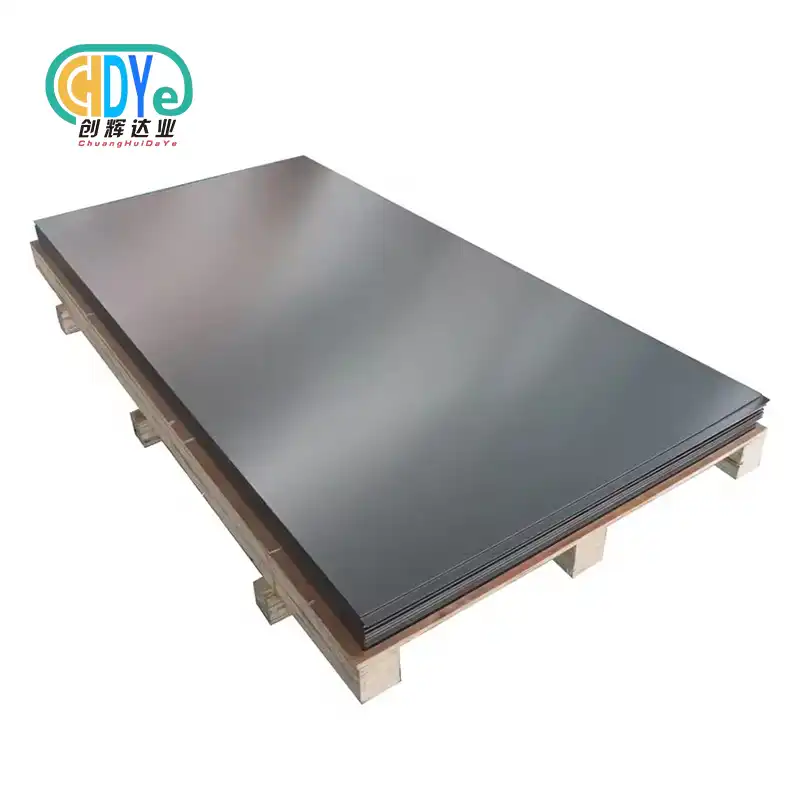
Understanding the Fundamental Differences Between Grade 5 and Grade 2 Titanium
The quality comparison between these titanium grades stems from their particular metallurgical compositions and precious stone structures. Review 2 speaks to commercially unadulterated titanium with great erosion resistance but direct quality. Review 5 titanium changes into a high-performance amalgam through key alloying additions.
Three center contrasts characterize these materials:
- Alloy composition: Review 2 contains 99.2% immaculate titanium, whereas Ti-6Al-4V joins aluminum and vanadium for improved properties
- Crystal structure: Review 5's alpha-beta stage gives predominant mechanical characteristics compared to Review 2's alpha phase
- Heat treatment reaction: Review 5 titanium acknowledges different warm medicines to optimize quality and toughness
If you require the greatest erosion resistance with direct quality necessities, then Review 2 demonstrates more appropriate. Be that as it may, applications requiring high-quality with great erosion resistance advantage essentially from Review 5 titanium amalgam sheet specifications.
Mechanical Properties Comparison: Real Data Analysis
Laboratory testing reveals substantial performance differences between these titanium grades. The following data comes from standardized ASTM testing protocols:
| Property | Grade 2 Titanium | Grade 5 Ti-6Al-4V |
|---|---|---|
| Tensile Strength (MPa) | 345-483 | 895-930 |
| Yield Strength (MPa) | 275-410 | 828-869 |
| Elongation (%) | 20-25 | 10-15 |
| Hardness (HRC) | 70-80 HRB | 36-41 HRC |
These measurements demonstrate Grade 5's remarkable strength advantages. The aerospace materials industry specifically values this performance differential for critical structural components.
If you need lightweight metal solutions for high-stress applications, then Grade 5 titanium alloy sheet delivers superior performance. Applications requiring maximum ductility benefit more from Grade 2's enhanced formability characteristics.
Industry Applications: Where Each Grade Excels?
Different businesses use these materials based on particular execution necessities, taken a toll contemplations, and administrative benchmarks. Titanium combinations are chosen not only for their mechanical quality but also for their erosion resistance, wear resistance, and long-term unwavering quality in unforgiving working situations. Among the accessible alternatives, Review 5 and Review 2 titanium stay the most broadly embraced in mechanical sectors.
Grade 5 titanium rules aviation applications due to its extraordinary strength-to-weight proportion, thermal weariness resistance, and fabulous execution beneath cyclic loading conditions. Its alloyed composition permits it to withstand extraordinary push whereas keeping up basic strength over long service periods.
Aerospace and defense applications include:
- Aircraft auxiliary components requiring tall load-bearing capability
- Engine parts are exposed to high temperatures and vibration
- Landing equipment, gatherings, and wing structures are subjected to rehashed stretch cycles
- Military vehicle armor and ballistic assurance systems
- Spacecraft warm shields and impetus framework components
Grade 2 titanium finds inclination in chemical preparation situations where erosion resistance exceeds mechanical quality requirements. Its commercially immaculate composition gives exceptional resistance to acids, chlorides, and seawater exposure. Biomedical titanium applications also favor Review 2 for implantable gadgets where biocompatibility and long-term tissue compatibility are critical.
Chemical industry applications encompass:
- Heat exchangers working with forceful fluids
- Reaction vessels requiring erosion stability
- Piping frameworks for destructive media transport
- Storage tanks and handling equipment
- Seawater desalination and marine components
If titanium sheet applications include extraordinary mechanical push, Review 5 gives ideal execution. Chemical handling situations with direct stretch levels advantage from Review 2’s predominant erosion resistance and lower in general cost.
Manufacturing and Processing Considerations
Metal sheet fabrication techniques vary significantly between these grades. Grade 5 titanium requires specialized processing knowledge due to its alloy composition and heat treatment requirements.
Processing differences include:
- Forming operations: Grade 2 accepts cold forming more readily, while Grade 5 often requires elevated temperatures
- Titanium welding parameters: Ti-6Al-4V demands precise heat input control to maintain mechanical properties
- Metal cutting titanium techniques: Grade 5's higher strength requires adjusted cutting speeds and tool geometries
- Heat treatment protocols: Grade 5 benefits from solution treating and aging cycles unavailable for Grade 2
Titanium sheet machining operations must account for each grade's unique characteristics. Grade 5's work-hardening tendency requires careful tool selection and cutting parameters.
If you need extensive forming and deep drawing operations, then Grade 2 offers superior workability. Complex machined components requiring high strength benefit from Grade 5 titanium alloy sheet despite increased processing complexity.
Cost Analysis and Value Proposition
Titanium sheet price considerations extend beyond initial material costs. Grade 5 titanium commands premium pricing due to alloy additions and processing complexity, typically costing 40-60% more than Grade 2.
Value factors include:
- Material utilization efficiency due to higher strength
- Reduced section thickness requirements
- Extended service life in demanding applications
- Lower maintenance and replacement costs
Long-term cost analysis often favors Grade 5 for high-performance applications despite higher initial investment. The superior strength allows thinner sections, potentially offsetting material cost premiums.
If you need cost-effective solutions for moderate-duty applications, then Grade 2 provides excellent value. High-performance applications requiring maximum strength justify Grade 5's premium pricing through enhanced capabilities.
Quality Standards and Material Certification
Both grades must meet stringent ASTM specifications, ensuring consistent quality and performance. Grade 2 follows ASTM B348 and B265 standards, while Grade 5 complies with ASTM F136 for medical applications and AMS specifications for aerospace use.
Certification requirements encompass:
- Chemical composition verification through spectroscopic analysis
- Mechanical property testin,g including tensile and impact tests
- Microstructural examination confirming proper heat treatment
- Surface quality inspection ensuring specification compliance
Annealed titanium sheet conditions providean optimal balance between strength and workability for both grades. Mill Test Reports document complete material traceability from raw materials through final inspection.
If you need materials meeting strict aerospace quality standards, then Grade 5 titanium alloy sheet with appropriate certifications ensures compliance. General industrial applications benefit from Grade 2's simplified certification requirements.
Chuanghui Daye Grade 5 Titanium Alloy Sheet Advantages
Shaanxi Chuanghui Daye Metal Material Co., Ltd. delivers exceptional grade 5 titanium alloy sheet solutions backed by three decades of rare metal expertise. Our comprehensive advantages include:
- Superior Material Quality: ISO 9001:2015 certified production ensures consistent Ti-6Al-4V properties with full traceability documentation from melting through final inspection
- Advanced Manufacturing Capabilities: State-of-the-art electron beam furnaces, precision rolling equipment, and controlled annealing processes deliver exceptional surface finish and dimensional accuracy
- Comprehensive Processing Range: Complete titanium sheet thickness options from 0.5mm to 50mm with custom dimensions, surface treatments, and mechanical property specifications
- Rapid Prototype Development: Flexible small-batch production capabilities support R&D projects and urgent prototype requirements with accelerated delivery schedules
- Technical Support Excellence: Expert metallurgical consultation assists with material selection, processing recommendations, and application-specific optimization strategies
- Global Supply Reliability: Established logistics networks ensure consistent delivery worldwide with comprehensive quality documentation and competitive factory-direct pricing
Conclusion
Grade 5 titanium alloy sheet demonstrates clear strength superiority over Grade 2, delivering nearly double the tensile strength through its Ti-6Al-4V composition. This performance advantage makes Grade 5 the preferred choice for aerospace, defense, and high-stress applications requiring exceptional strength-to-weight ratios. While Grade 2 offers excellent corrosion resistance and formability at lower costs, Grade 5's superior mechanical properties justify its premium pricing for demanding applications. Material selection depends on specific performance requirements, with Grade 5 excelling in high-strength applications and Grade 2 optimized for corrosion-critical environments with moderate mechanical demands.
Partner with Chuanghui Daye for Premium Grade 5 Titanium Solutions
Chuanghui Daye stands as your trusted grade 5 titanium alloy sheet manufacturer, combining advanced production capabilities with comprehensive quality assurance systems. Our ISO 9001:2015 certification guarantees consistent material properties and complete traceability documentation. With over 30 years of rare metal expertise and state-of-the-art facilities, including electron beam furnaces and precision rolling equipment, we deliver exceptional Ti-6Al-4V solutions for demanding aerospace, biomedical, and industrial applications. Contact us at info@chdymetal.com for competitive pricing and technical consultation.
References
1. Boyer, R., Welsch, G., & Collings, E.W. (2019). Materials Properties Handbook: Titanium Alloys. ASM International, Materials Park, Ohio.
2. Lutjering, G. & Williams, J.C. (2018). Titanium: Engineering Materials and Processes, 3rd Edition. Springer-Verlag, Berlin.
3. American Society for Testing and Materials (2020). ASTM B348-20: Standard Specification for Titanium and Titanium Alloy Bars and Billets. ASTM International, West Conshohocken, PA.
4. Peters, M., Kumpfert, J., Ward, C.H., & Leyens, C. (2021). Titanium Alloys for Aerospace Applications. Advanced Engineering Materials, Volume 23, Issue 4.
5. Donachie, M.J. (2017). Titanium: A Technical Guide, 2nd Edition. ASM International, Materials Park, Ohio.
6. Rack, H.J. & Qazi, J.I. (2019). Titanium Alloys for Biomedical Applications. Materials Science and Engineering C: Biomimetic and Supramolecular Systems, Volume 26, Issues 8-9.