- English
- French
- German
- Portuguese
- Spanish
- Russian
- Japanese
- Korean
- Arabic
- Greek
- German
- Turkish
- Italian
- Danish
- Romanian
- Indonesian
- Czech
- Afrikaans
- Swedish
- Polish
- Basque
- Catalan
- Esperanto
- Hindi
- Lao
- Albanian
- Amharic
- Armenian
- Azerbaijani
- Belarusian
- Bengali
- Bosnian
- Bulgarian
- Cebuano
- Chichewa
- Corsican
- Croatian
- Dutch
- Estonian
- Filipino
- Finnish
- Frisian
- Galician
- Georgian
- Gujarati
- Haitian
- Hausa
- Hawaiian
- Hebrew
- Hmong
- Hungarian
- Icelandic
- Igbo
- Javanese
- Kannada
- Kazakh
- Khmer
- Kurdish
- Kyrgyz
- Latin
- Latvian
- Lithuanian
- Luxembou..
- Macedonian
- Malagasy
- Malay
- Malayalam
- Maltese
- Maori
- Marathi
- Mongolian
- Burmese
- Nepali
- Norwegian
- Pashto
- Persian
- Punjabi
- Serbian
- Sesotho
- Sinhala
- Slovak
- Slovenian
- Somali
- Samoan
- Scots Gaelic
- Shona
- Sindhi
- Sundanese
- Swahili
- Tajik
- Tamil
- Telugu
- Thai
- Ukrainian
- Urdu
- Uzbek
- Vietnamese
- Welsh
- Xhosa
- Yiddish
- Yoruba
- Zulu
High Purity Niobium Bar Rod Benefits for Chemical Processing
Chemical processing plants run on materials that can survive aggressive acids, fluctuating temperatures, and long service cycles without contaminating the product. High purity niobium bar rod has become a practical answer to these demands. It combines outstanding corrosion resistance with excellent ductility, so engineers can machine it into fittings, fasteners, heating elements, and reactor internals without sacrificing performance. This article explains why high purity niobium bar rod suits chemical processing, how its properties compare with other metals, and what buyers should check before they place an order.
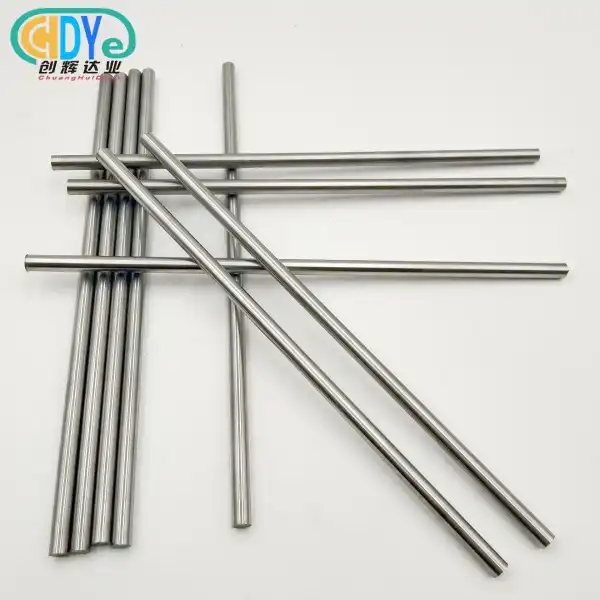
Why High Purity Niobium Bar Rod Excels in Corrosive Chemical Environments?
Exceptional Resistance to Acids and Aggressive Media
Equipment used in the chemical processing industry is frequently exposed to hydrochloric, sulfuric, and nitric acids for extended periods of time, sometimes for months or even years. Niobium bar rod with a high purity generates an oxide film on its surface that is stable and self-healing. This oxide film protects the metal underneath it, even when the process fluid is hostile. Because impurities have the potential to degrade such a film, it is essential to have a purity level of 99.9% or higher in order to achieve consistent results. It is common for plant engineers to see longer service intervals and fewer unplanned shutdowns when they specify high purity niobium bar rod for wetted components. This is in contrast to the situation when they specify standard stainless steels.
Stable Performance at Elevated Process Temperatures
Chemical plants are places where a great number of reactions take place at high temperatures; consequently, the materials that surround these reactions need to keep their strength and structure intact. Niobium bar rod of high purity has a melting point that is greater than 2,400 degrees Celsius, and it is able to keep its mechanical characteristics properly even when subjected to temperatures that cause many common alloys to become softer. Additionally, due to the fact that it is dependable, it is an ideal choice for heating elements, support rods, and fixtures that are situated inside of furnaces and vacuum systems. In addition, the metal is able to resist fatigue because of its strong crystal structure, which enables it to survive frequent temperature variations. This makes it feasible for the metal to resist fatigue. Therefore, when it comes to thermal cycling applications, designers have a bigger margin of safety when they choose a niobium bar rod with high purity. This is because the purity of the substance is higher.
Low Contamination Risk for Sensitive Processes
It is essential to maintain a high level of cleanliness while working with electronic-grade reagents, pharmaceutical intermediates, and specialty compounds. There is a possibility that an entire batch will be wasted if a component releases metal ions into the product. Niobium bar rod of high purity is chemically very silent, and as a result, it emits very few impurities into the medium that it is surrounded by. Because of its biocompatibility, it can also be utilized in situations where products are required to meet stringent safety criteria. Niobium bar rod with a high purity provides a dependable material that maintains the final output clean and the audit trail straightforward, making it an ideal choice for process designers who are tasked with safeguarding product quality.
Key Properties and Specifications of High Purity Niobium Bar Rod
Standards, Grades, and Purity Levels
Obtaining reliable sources starts with adhering to established norms. Our high purity niobium bar rod is manufactured in accordance with ASTM B 392-95. It is additionally offered in grades RO4200 and RO4210, with a purity level that reaches 99.99%. In contrast to RO4210, which provides a regulated oxygen content for applications that require a more stringent mechanical consistency, RO4200 is a commercially available pure niobium. Furthermore, when a process requires a certain composition, custom alloys can be supplied to meet the requirements. It is possible to save costly rework later on by selecting the appropriate grade during the design phase. Additionally, a high purity niobium bar rod that coincides with its specification will operate in a predictable manner when it is put into service.
The table below summarizes the main specification points.
| Item | Specification |
|---|---|
| Standard | ASTM B 392-95 |
| Grades | RO4200, RO4210 |
| Purity | Up to 99.99% |
| Quality Certification | ISO 9001:2015 |
| Typical Forms | Bars, rods, custom-machined parts |
Mechanical and Physical Characteristics
Although many other refractory materials are brittle and difficult to work with, niobium is a metal that is soft and ductile, which distinguishes it from these other materials. Machinists are able to turn, drill, and form high purity niobium bar rod into complicated geometries, including threaded parts and precision pins, thanks to the ductility associated with this material. Additionally, the metal has a low neutron capture cross-section and a density that is relatively low for a refractory metal that is relatively low. As a result of these characteristics, a high purity niobium bar rod is not only simple to manipulate during the production process, but it also provides the necessary strength for use inside demanding chemical equipment.
Quality Control and Traceability
Process control is essential to achieving consistency. To achieve the highest possible level of mechanical qualities, each batch of our high purity niobium bar rod is first fabricated using high-quality raw materials, then subjected to vacuum melting, followed by cold working and heat treatment. It is possible to track a specific rod back to its production lot since each batch is inspected before it is sent, and records are kept in order to accomplish this. To maintain compliance with the ISO 9001:2015 quality system, inspection is incorporated into each and every stage. A high purity niobium bar rod is transformed from a simple commodity into a component that can be audited and verified thanks to this traceability, which is beneficial to customers.
Practical Applications and Selection Guidance
Typical Chemical Processing Uses
High-purity niobium bar rod appears in a variety of forms within chemical plants. Agitator shafts, thermowell components, fasteners for acid service, and support structures inside heated containers are all examples of the forms that it can take after being machined. The fact that the same material is used for components of aerospace engines, superconducting devices, nuclear reactor parts, and medical implants outside of the plant floor is evidence of the widespread faith that is placed across the industry. Having a track record that spans multiple industries provides chemical engineers with additional confidence. In several of these places, a well-specified high purity niobium bar rod can be used as a replacement for materials that are either more expensive or less durable, and this can be done without any compromise in terms of safety.
The following table compares niobium with other common materials used in chemical processing.
| Property | High Purity Niobium | Titanium | Stainless Steel 316L |
|---|---|---|---|
| Acid Resistance | Excellent | Very Good | Moderate |
| High-Temperature Stability | Excellent | Good | Fair |
| Ductility and Machinability | Excellent | Good | Good |
| Contamination Risk | Very Low | Low | Moderate |
| Relative Cost | Higher | Medium | Lower |
Matching the Rod to the Process
To choose the appropriate product, it is necessary to take into consideration the chemical medium, the working temperature, the mechanical load, and the anticipated lifetime. In many cases, RO4200 is sufficient for an acid service application that is considered standard. When there is a requirement for more stringent regulation of oxygen, RO4210 can be the superior choice. The purchase order should also include a clear definition of the diameter, length, and surface finish dimensions. Customers frequently receive assistance from our engineers in reviewing drawings and operating circumstances. This is due to the fact that a high-purity niobium bar rod that is well matched to its job will have a longer lifespan and will cost less over the course of its whole life.
Evaluating Suppliers and Total Cost
The price per kilogram only represents a portion of the picture. Additionally, buyers should consider certification, test paperwork, the capability of machining, and the reliability of delivery. The ability of a supplier to manage quality from raw material to final item, which decreases risk, is facilitated by the presence of in-house equipment for melting, forging, rolling, and machining. Although the initial cost of a high-purity niobium bar rod is higher than that of steel, the combined benefits of its extended service life and reduced maintenance requirements frequently result in a lower total cost of ownership. When considering the entire lifecycle, it is much simpler to determine whether or not the purchase of a high-purity niobium bar rod is justified.
Conclusion
A niobium bar rod with a high purity provides chemical processors with corrosion resistance, stability at high temperatures, ease of machining, and a very low danger of contamination. Shaanxi Chuanghui Daye Metal Material Co., Ltd., located in Baoji, China, known as the "Titanium Capital," brings over thirty years of experience working with rare metals to each order. The examination of raw materials, melting and forging, machining and forming, and final inspection and packing are all included in our process, which has been certified to ISO 9001:2015 since 2015. We sell niobium, tantalum, titanium, tungsten, and molybdenum to customers worldwide. If you are looking for dependable and affordable supplies for your plant, we are ready to assist you with your next project.
FAQ
Q: What purity levels are available for your niobium bars and rods?
A: Our products reach up to 99.99% purity and consistently exceed 99.9%, depending on the grade and order requirements.
Q: Which grades do you supply?
A: We supply RO4200 (commercial pure niobium) and RO4210 (controlled oxygen content), and we can also produce custom alloys.
Q: Which standard do your products follow?
A: They are produced to ASTM B 392-95, and our quality management system is certified to ISO 9001:2015.
Q: Can niobium rods be machined into custom parts?
A: Yes. Niobium’s soft, ductile nature makes it easy to machine, and we can deliver custom-sized bars and finished components.
Q: Why choose niobium over stainless steel for chemical service?
A: Niobium resists a wider range of aggressive acids, tolerates higher temperatures, and releases fewer contaminants, which typically means a longer service life.
Ready to Upgrade Your Chemical Processing Materials? Contact Us Today
Choosing the right material can improve safety, product quality, and plant uptime. Shaanxi Chuanghui Daye Metal Material Co., Ltd. is ready to supply high purity niobium bar rod in the grades, sizes, and finishes your project requires, backed by three decades of rare metal expertise and strict quality control. Send us your drawings, specifications, or questions, and our team will respond with a clear quotation and technical advice. Email us at info@chdymetal.com and let us help you find the right solution for your application.
References
1. ASTM International. (1995). ASTM B392-95: Standard Specification for Niobium and Niobium Alloy Bars, Rods, and Wire. West Conshohocken, PA: ASTM International.
2. Nowak, I., & Ziolek, M. (1999). Niobium compounds: Preparation, characterization, and application in heterogeneous catalysis. Chemical Reviews, 99(12), 3603–3624.
3. Nico, C., Monteiro, T., & Graça, M. P. F. (2016). Niobium oxides and niobates physical properties: Review and prospects. Progress in Materials Science, 80, 1–37.
4. Cardarelli, F. (2008). Materials Handbook: A Concise Desktop Reference (2nd ed.). London: Springer.
5. Schweitzer, P. A. (2010). Fundamentals of Corrosion: Mechanisms, Causes, and Preventative Methods. Boca Raton, FL: CRC Press.
6. Haynes, W. M. (Ed.). (2016). CRC Handbook of Chemistry and Physics (97th ed.). Boca Raton, FL: CRC Press.

Learn about our latest products and discounts through SMS or email