- English
- French
- German
- Portuguese
- Spanish
- Russian
- Japanese
- Korean
- Arabic
- Greek
- German
- Turkish
- Italian
- Danish
- Romanian
- Indonesian
- Czech
- Afrikaans
- Swedish
- Polish
- Basque
- Catalan
- Esperanto
- Hindi
- Lao
- Albanian
- Amharic
- Armenian
- Azerbaijani
- Belarusian
- Bengali
- Bosnian
- Bulgarian
- Cebuano
- Chichewa
- Corsican
- Croatian
- Dutch
- Estonian
- Filipino
- Finnish
- Frisian
- Galician
- Georgian
- Gujarati
- Haitian
- Hausa
- Hawaiian
- Hebrew
- Hmong
- Hungarian
- Icelandic
- Igbo
- Javanese
- Kannada
- Kazakh
- Khmer
- Kurdish
- Kyrgyz
- Latin
- Latvian
- Lithuanian
- Luxembou..
- Macedonian
- Malagasy
- Malay
- Malayalam
- Maltese
- Maori
- Marathi
- Mongolian
- Burmese
- Nepali
- Norwegian
- Pashto
- Persian
- Punjabi
- Serbian
- Sesotho
- Sinhala
- Slovak
- Slovenian
- Somali
- Samoan
- Scots Gaelic
- Shona
- Sindhi
- Sundanese
- Swahili
- Tajik
- Tamil
- Telugu
- Thai
- Ukrainian
- Urdu
- Uzbek
- Vietnamese
- Welsh
- Xhosa
- Yiddish
- Yoruba
- Zulu
How Are Pure Niobium Round Bars Used in High-Tech Industries?
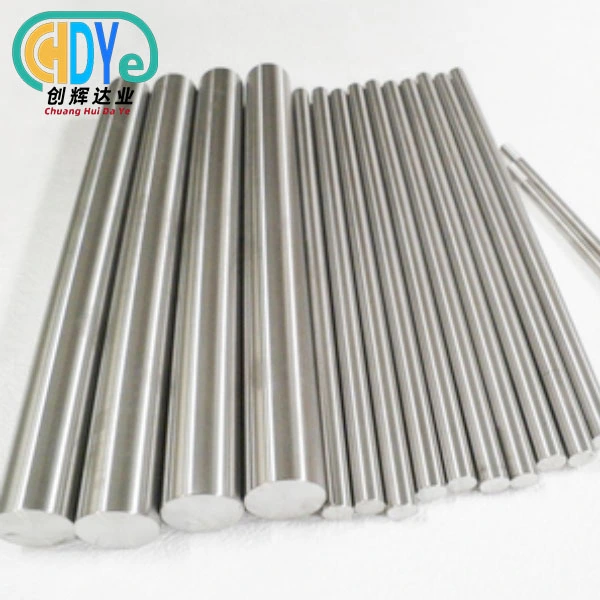
Pure niobium round bars are vital structural and functional components in aerospace, electronics, chemical processing and medical industries. These cylindrical refractory metal rods are characterized by purity levels more than 99.9% (Nb >99.9%) and provide a unique combination of corrosion immunity, thermal stability and biological compatibility. They are dimensionally predictable and mechanically dependable with a density of 8.57 g/cm³ and tensile strength of 200 to 350 MPa. This knowledge of the material properties gives engineers and procurement teams a significant competitive advantage in the specification of components for challenging applications.
Understanding Pure Niobium Round Bars: Properties and Advantages
What Makes Niobium Metallurgically Distinct
Niobium (Atomic Number 41) is a refractory metal like tantalum, tungsten, and molybdenum. It is remarkable among these peers in that it combines relatively low density with outstanding ductility and resistance to attack from nitric, hydrochloric and sulfuric acids. The bar is vacuum melted and controlled forged to a purity level better than 99.9%. The recrystallized grain structure is fine enough to allow severe cold working without the need for intermediate annealing cycles.
Key Performance Characteristics
To understand why niobium is better than alternatives in certain cases, we need to look at its measured features. Here are the key material qualities that procurement engineers depend on:
- Corrosion Resistance Niobium produces a stable anodic oxide film that offers equivalent protection to tantalum in various acid conditions but has a specific gravity of just 8.57 g/cm3 against 16.69 g/cm3 for tantalum.
- Thermal stability: Melting point rises to 2,468°C (4,474°F), maintaining structural integrity in both cryogenic and high-temperature conditions.
- Biocompatibility: Niobium is inert in physiological conditions and so appropriate for implant-grade applications without causing unfavorable tissue reaction.
- Ductility and Machinability . Elongation figures in excess of 20% enable complicated machined geometries without fracture. The softness of the alloy needs careful choice of tools.
These features together make pure niobium round bars the standard of choice when lifespan and accuracy are non-negotiable. All of this is widely understood by procurement teams in areas where material failure has operational or safety ramifications.
Core Applications of Pure Niobium Round Bars in High-Tech Industries
Electronics and Semiconductor Manufacturing
Electronics manufacturers use high-purity niobium to make superconducting radio frequency (SRF) cavities and capacitor-grade material. Niobium , at cryogenic temperatures near absolute zero , becomes a superconductor with no resistance . This means that huge magnetic fields may be generated without worrying about losing heat . This feature is the basis of magnetic resonance imaging systems and particle accelerator facilities. The available polished or as-rolled surfaces of niobium bars (diameter from 1 to 50 mm and length up to 1000 mm) are appropriate for precision electronic component machining.
Chemical and Petrochemical Processing
Niobium bars are used in severe chemical conditions where unique stainless steels and nickel alloys are destroyed in a matter of weeks. Structural integrity of bayonet heaters, valve stems, heat exchanger components and reactor internals made of unalloyed niobium is maintained after years of continuous exposure to strong acids. This prolonged service life immediately decreases plant downtime and overall replacement costs, making niobium a sensible long-term material investment for the chemical process engineer.
Aerospace, Medical, and Emerging Research
In aerospace manufacturing, niobium alloy bars are machined to make thrust chamber components and nozzle extensions where resistance to thermal shock is important. Medical device developers highly value niobium’s inertness in bodily fluid conditions, making it biocompatible for use in orthopedic implants and surgical tools. Development projects for superconductors that need small-batch, high purity material also rely on consistent lot-to-lot quality with complete traceability documentation.
How to Effectively Machine and Process Pure Niobium Round Bars
Practical Machining Guidance
Niobium is soft and may gall against cutting instruments, necessitating cautious process choices. Here, HSS tooling is often better than carbide, and there is less danger of chipping. The water-soluble coolants with high chip load take the heat away from the workpiece and thereby reduce the surface deformation. For vacuum environment components, centerless grinding down to a surface roughness of less than Ra 0.8 µm is common, since polished surfaces reduce outgassing during the semiconductor or PVD coating procedure.
Pure niobium round bars require key quality control steps, including dimension verification to ASTM B392 tolerance, visual examination for surface discontinuities, and mechanical testing to ensure tensile strength is within the specification range of 200–350 MPa. Bars suitable for cryogenic superconducting applications also need to have RRR checked. RRR values >300 are indicative of low levels of interstitial impurities. One significant warning: niobium clearly oxidizes at 200°C and takes up oxygen quickly above 400°C. All high-temperature processing must be done in a vacuum below 10⁻⁴ Torr or in a high-quality inert environment to avoid embrittlement.
Comparing Pure Niobium Round Bars to Alternative Materials for B2B Buyers
In the decision matrix, priorities of the given application determine the choice of niobium over titanium, tantalum, or niobium alloys (e.g., Nb-1Zr). Titanium has better strength-to-weight ratios for structural aerospace components, but does not have niobium's acid corrosion resistance for chemical processing applications. In many settings, tantalum will perform similarly to niobium in terms of resistance to corrosion but it is almost twice as dense and the material cost is much greater. Niobium-based alloys like C-103 raise the temperature ceiling but at the cost of the ductility and machinability of the pure grades.
The best compromise between performance and cost-efficiency for electronics, cryogenics, and chemical processing is offered by unalloyed niobium with Nb >99.9% purity. Also, pure-grade material is valuable for medical applications since biocompatibility data are extensively documented and regulatory paperwork is easier. Procurement teams willing to commit to volume should consider whole life cycle costs rather than just unit pricing and take into account corrosion maintenance intervals and component replacement frequency.
A Practical Guide to Procuring Pure Niobium Round Bars
In sourcing reputable niobium bar stock, vendors may be evaluated from several angles outside catalog pricing. ISO 9001:2015 accreditation means that the whole manufacturing chain, from raw material inspection to final packing, is managed by quality management systems. For aeronautical and medical applications that are subject to regulatory scrutiny, traceability documentation (heat figures, chemical analysis reports, mechanical test certifications) is required.
The power to personalize is just as important. Purchasing teams with non-standard diameter needs or tight delivery windows need suppliers with in-house vacuum melting, forging, rolling, and machining equipment. It’s important to check minimum order quantities, lead time commitments, and the proven capabilities of the supplier for small-batch prototypes before making bulk orders.
Conclusion
Niobium round bars have a small but important niche in high-tech material standards. They combine acid corrosion resistance, cryogenic superconductivity, biocompatibility, and thermal stability, addressing pain areas that no other single alternative material handles so effectively. Whether the application requires precision-machined chemical processing components, SRF cavity feedstock, or biocompatible implant material, specifying pure niobium round bars with validated mechanical qualities and comprehensive traceability documentation is the justifiable engineering option. In the end, sourcing decisions come down to supplier reputation, the rigor of their quality system and their ability to consistently deliver goods from prototype to production quantities.
FAQ
Q: What purity level is standard for aerospace-grade niobium bars?
A: Aerospace applications typically specify unalloyed niobium at a minimum purity of 99.9% (Nb >99.9%), conforming to ASTM B392. Alloys like C-103 or Nb-1Zr are specified where high-temperature creep resistance takes priority over pure-grade ductility.
Q: How does niobium's corrosion resistance benefit electronics longevity?
A: Niobium forms a self-repairing anodic oxide film that resists degradation in acidic and vacuum environments. Components manufactured from high-purity niobium bars demonstrate extended service intervals in semiconductor processing equipment, reducing contamination risk and unplanned maintenance downtime.
Q: Can custom diameter niobium bars be produced on short lead times?
A: Suppliers with integrated vacuum melting, forging, and centerless grinding equipment can produce custom diameters—ranging from 1 mm to 50 mm—on accelerated schedules. Lead time depends on batch size, surface finish specification, and testing requirements. Communicating exact dimensional tolerances and certification needs upfront shortens the quotation and production cycle.
Q: What surface finish options are available for niobium round bars?
A: Standard offerings include polished and as-rolled surface conditions. Polished finishes (Ra < 0.8 µm) suit vacuum and semiconductor applications, while as-rolled surfaces are acceptable for most chemical processing and structural uses.
Source Your Niobium Round Bars from Chuanghui Daye
Shaanxi Chuanghui Daye supplies certified pure niobium round bars manufactured under ISO 9001:2015-controlled processes at our facility in Baoji, China's recognized rare metal production hub. As an experienced pure niobium round bars manufacturer, we deliver Nb >99.9% purity bars in diameters from 1 to 50 mm, lengths up to 1,000 mm, with polished or as-rolled surface options and full material traceability. Reach our technical team directly at info@chdymetal.com or visit www.chdymetal.com to request specifications and pricing.
References
1. ASTM International. ASTM B392: Standard Specification for Niobium and Niobium Alloy Bar, Rod, and Wire. ASTM International, 2020.
2. Cardarelli, François. Materials Handbook: A Concise Desktop Reference. Springer, 2018.
3. Lide, David R. (Ed.). CRC Handbook of Chemistry and Physics. CRC Press, 2023.
4. International Journal of Refractory Metals and Hard Materials. "Processing and Properties of Niobium-Based Refractory Metals." Elsevier, 2021.
5. Smallman, R.E., and Ngan, A.H.W. Modern Physical Metallurgy. Butterworth-Heinemann, 2014.
6. Journal of Nuclear Materials. "Corrosion Behavior of Refractory Metals in Aggressive Chemical Environments." Elsevier, 2022.
Learn about our latest products and discounts through SMS or email