- English
- French
- German
- Portuguese
- Spanish
- Russian
- Japanese
- Korean
- Arabic
- Greek
- German
- Turkish
- Italian
- Danish
- Romanian
- Indonesian
- Czech
- Afrikaans
- Swedish
- Polish
- Basque
- Catalan
- Esperanto
- Hindi
- Lao
- Albanian
- Amharic
- Armenian
- Azerbaijani
- Belarusian
- Bengali
- Bosnian
- Bulgarian
- Cebuano
- Chichewa
- Corsican
- Croatian
- Dutch
- Estonian
- Filipino
- Finnish
- Frisian
- Galician
- Georgian
- Gujarati
- Haitian
- Hausa
- Hawaiian
- Hebrew
- Hmong
- Hungarian
- Icelandic
- Igbo
- Javanese
- Kannada
- Kazakh
- Khmer
- Kurdish
- Kyrgyz
- Latin
- Latvian
- Lithuanian
- Luxembou..
- Macedonian
- Malagasy
- Malay
- Malayalam
- Maltese
- Maori
- Marathi
- Mongolian
- Burmese
- Nepali
- Norwegian
- Pashto
- Persian
- Punjabi
- Serbian
- Sesotho
- Sinhala
- Slovak
- Slovenian
- Somali
- Samoan
- Scots Gaelic
- Shona
- Sindhi
- Sundanese
- Swahili
- Tajik
- Tamil
- Telugu
- Thai
- Ukrainian
- Urdu
- Uzbek
- Vietnamese
- Welsh
- Xhosa
- Yiddish
- Yoruba
- Zulu
How does pure niobium bar perform in vacuum systems?
Because of its low outgassing rates, high thermal stability, and resistance to contamination at high temperatures, pure niobium bar performs admirably in vacuum systems. Its low vapor pressure keeps the ultra-high vacuum intact, and its high thermal conductivity lets it get rid of heat quickly in harsh conditions. The material stays structurally stable over a wide range of temperatures and doesn't rust when residual gases are present. This makes it the best choice for tools used to make semiconductors, particle accelerators, and aircraft vacuum chambers, where dependability is essential.
Introduction
Materials that work regularly in harsh situations are needed for industrial vacuum systems. When building aircraft testing rooms, particle accelerator equipment, or parts for making semiconductors, the choice of material has a direct effect on how well the system works and how long it lasts. We've seen buying managers deal with problems that keep coming up, like outgassing that contaminates sensitive processes, thermal expansion that breaks seals, and premature corrosion that needs expensive repairs.
This guide solves those problems by looking at how niobium bar shapes meet the strict needs of ultra-high vacuum and high vacuum settings. We don't just compare generic materials; we focus on things that engineers and procurement workers care about, like certified purity levels, real-world performance data from working systems, and supplier review factors that make sure quality is always the same. Every suggestion we make is based on our 30 years of experience providing refractory metals to vacuum system manufacturers. This helps you make buying choices that combine performance needs with budget limitations while lowering long-term maintenance costs.
Understanding Pure Niobium Bar and Its Properties in Vacuum Environments
Material Definition and Purity Standards
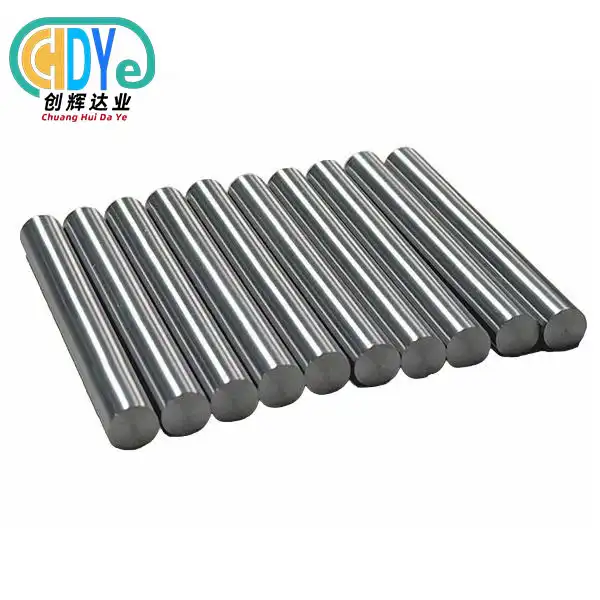
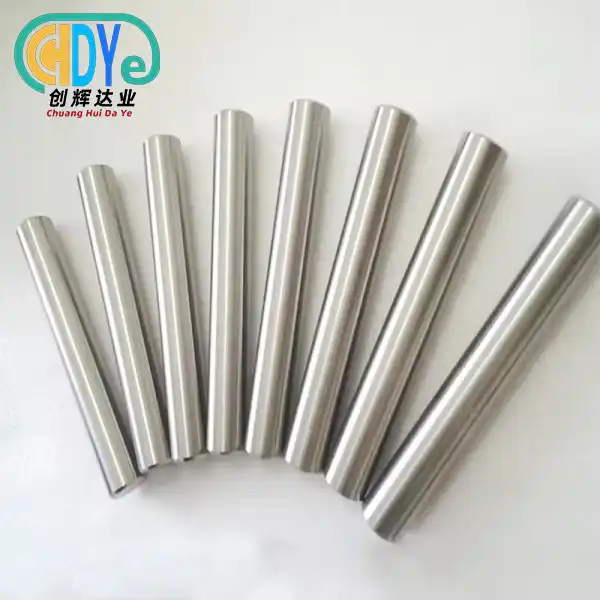
Niobium bars are basically different from round stock in how they can be made and how they can be used to maximize surface area. The shape makes it easier to machine brackets, structural supports, and special vacuum chamber parts, and gives them stable fixing points. At our factory in Baoji, we make these bars by melting them with an electron beam and then controlling the casting and rolling processes. This way, we can get purity levels of 99.95% or higher. This level of cleanliness is very important because small impurities can make outgassing faster and hurt the stability of the vacuum.
In vacuum uses, material guarantees are very important. Production that is ISO 9001:2015 approved makes sure that the metallurgical qualities are the same from batch to batch, and chemical composition records make sure that the standards set by ASTM B392 are met. Every pure niobium bar we make is spectroscopically analyzed to make sure it is elementally pure, and every shipment comes with thorough paperwork that can be used to track it back to its source. During system qualification processes and regulatory checks, this paperwork is very important.
Physical Properties That Matter in Vacuum Systems
Niobium has clear benefits in vacuum settings because it is resistant. Its melting point of 2,468°C gives it a large thermal range for high-temperature vacuum processes, and its thermal conductivity of about 54 W/m·K makes it easier to spread heat evenly. When temperature consistency affects product quality, like in vacuum furnace building and thin-film deposition tools, these qualities become very useful.
In vacuum processes, the mechanical strength stays the same across a wide range of temperatures. The material can be cold-worked and shaped without cracking because it is very flexible. Because it is workable, makers can cut out complicated shapes while keeping the surface finish quality needed for vacuum-tight seals. Because surface roughness has a direct effect on virtual leak rates, it is important to use the right finishing methods when making parts.
Chemical Stability Under Vacuum Conditions
Niobium creates a protective oxide layer that stays steady in a vacuum, which stops the increasing oxidation that happens with some other materials. This passivation happens spontaneously and protects against corrosion caused by residual gases that are typical in industrial vacuum systems. At temperatures below 400°C, hydrogen, nitrogen, and carbon monoxide can't damage the material, and it keeps its structural stability over long periods of time.
But knowing about material limits stops mistakes that cost a lot of money. Oxidation speeds up above 400°C in atmospheres with oxygen and needs controlled conditions. To keep oxide from building up in a vacuum system while it is working, the leftover oxygen partial pressures must stay below critical levels. The low oxygen levels where niobium works best are kept up by using the right getters and pumping methods in the system design.
Performance Analysis of Pure Niobium Bar in Vacuum Systems
Outgassing Characteristics and Vacuum Integrity
How fast systems reach working vacuum levels and how stable those vacuum conditions stay depend on how fast outgassing rates change. Niobium has very low outgassing after the surface is properly prepared. Typical degassing rates are less than 10⁻¹² Torr·L/s·cm² after the right vacuum bake-out steps are taken. This performance is many times better than stainless steel, which cuts down on pump-down times and lets base pressures drop.
Our experience working with companies that make semiconductor tools shows that these benefits are real. In their chemical vapor deposition machine, one client swapped out the stainless steel clamps for pure niobium bar parts. After the change, tests showed that the base pressure went up from 5×10⁻⁸ Torr to 2×10⁻⁹ Torr, and the pump-down time went down by 40%. The better vacuum quality made the thin film more uniform and cut down on the number of defects. This had real benefits for output that made the cost of upgrading the material worth it.
Thermal Performance in Temperature-Cycling Applications
During running and repair, vacuum systems often go through thermal cycles. Niobium's thermal expansion coefficient is a good match for ceramics and glass, which are often used in vacuum tanks. This means that joints and seal surfaces are less likely to be stressed mechanically. This flexibility lowers the chance of leaks happening when temperatures change, which is a common way for systems made of different materials to fail.
When heating something in a specific area, thermal conductivity is very important. This benefit is shown by particle accelerator chambers made from niobium sheet and held by bar structures made of niobium. The material effectively spreads the heat from RF energy, stopping any hot spots that might lead to thermal runaway or structure damage. This temperature control feature lets the system run on less power and makes it more reliable.
Mechanical Strength and Structural Stability
Parts of a vacuum box must stay the same size even when the pressure outside changes. Niobium has a tensile strength of about 140 to 240 MPa, which is strong enough for most vacuum container uses as long as the safety factors are taken into account. The wear strength of the material means that it can be pressurized and depressed many times without cracking. This is important for systems that need to go back to atmospheric pressure for maintenance or process reasons.
Niobium's strength-to-weight ratio is good for aerospace testing centers that use big heated vacuum tanks. One defense contractor used niobium bar units to hold satellite parts during qualification tests inside the structure. The material could withstand temperature changes of -180°C to +150°C and kept its positional accuracy to within micrometers, meeting the strict requirements of rules for space hardware approval.
How to Select and Test Pure Niobium Bar for Vacuum System Procurement
Supplier Evaluation Criteria
Selecting the appropriate niobium provider affects not only the quality of the original material but also the reliability of the supply over time. Make sure that any possible sources you are interested in have full quality management systems that are certified to ISO 9001:2015 standards. This approval shows that the production process is controlled in a planned way, from getting the raw materials to the final inspection. At every step of the manufacturing process, we follow written processes, and we do regular internal checks to make sure we stay in line.
Assessing a supplier's manufacturing capability tells you if they can meet your unique needs. When you can, go to production sites to check out the tools and process controls. At our Baoji plant, we have electron beam ovens for melting, multi-stage rolling mills for cutting down on cross-sectional area, and precision machining centers for finishing with very tight tolerances. This combined ability makes sure that the qualities of the pure niobium bar stay the same and lets you quickly meet specific needs.
Essential Testing and Quality Verification
The rules for checking materials should match the needs of the vacuum system. Using optical emission spectroscopy or X-ray fluorescence to analyze the chemical makeup supports the purity requirements and makes sure that impurity levels stay below the levels that would affect vacuum performance. Each package comes with a verified test report that lists the elements that were used and how they compared to the limits that were set by the customer.
Testing the material's mechanical properties proves that its strength meets the assumptions made during design. ASTM E8 guidelines for tensile tests measure elongation, yield strength, and final tensile strength. During the receiving review, hardness testing is a quick way to check the quality. Because these mechanical qualities have a direct effect on how reliable a part is under operational stresses, it is important for vacuum system users that they are thoroughly tested.
Customization Options and Order Considerations
When designing vacuum systems, non-standard sizes and measurements are often needed. We can make things exactly the way you need them, including cutting them to the right length to avoid waste and finishing the outside in a way that fits the needs of your application. Minimum order amounts are still open, so they can be used for both making prototypes and mass production. This adaptability helps both research schools doing small-batch experiments and OEM manufacturers who need a steady supply of large volumes.
When planning lead times, material handling needs should be taken into account. Standard dimension bars usually ship in two weeks, but based on how complicated they are, special specs may take four to six weeks. When production capacity allows, rush orders are given priority. We keep a planned collection of popular sizes to meet the needs of urgent projects. We do this because we know that the costs of equipment downtime are often much higher than the price premiums for materials.
Packaging and shipping rules keep things in good shape while they're in transit. Each bar is individually wrapped to protect the surface, put in cases that don't absorb moisture to keep them from oxidizing, and fastened so they don't move while they're being shipped. Each shipment comes with paperwork that includes material certifications, test results, and records of how the goods were made. This is the quality proof needed for getting the inspection and system paperwork.
Comparing Pure Niobium Bar with Alternative Materials for Vacuum Applications
Performance Comparison with Stainless Steel
Because it is easy to work with and doesn't cost much, stainless steel is still the standard material for many vacuum uses. Pure niobium bar, on the other hand, has big performance benefits in challenging situations. After being baked, stainless steel usually gives off 10⁻⁹ to 10⁻¹⁰ Torr·L/s·cm² of gas. Niobium, on the other hand, gets 10⁻¹² Torr·L/s·cm², which is a thousand times more. In ultra-high vacuum systems, where every drop in gas load raises base pressure and process quality, this difference is very important.
Another difference is that the magnetic qualities are different. Some types of austenitic stainless steel can be slightly magnetically permeable, which can cause problems with electron beam equipment and particle accelerators. Niobium is not magnetic, so it doesn't cause field changes that can affect beam direction and focusing. Niobium's unique mix of superconductivity and vacuum suitability made it the best material for use in the field of superconducting radio frequency cavities.
Evaluation Against Titanium Alternatives
Niobium and its alloys compete with titanium in vacuum uses that need to be immune to corrosion. Once they are properly prepared, both materials form protective oxide layers and have low outgassing. Niobium, on the other hand, keeps working better at high temperatures. Titanium starts to oxidize a lot above 300°C, even in a vacuum, but niobium stays solid up to 400°C. This thermal margin makes it easier to build hot vacuum tanks and equipment that works at high temperatures.
Titanium is cheaper than niobium and can be used in places that don't need its special qualities. Titanium's lower mass makes structures lighter, which is useful in aircraft. As an independent third party, we help our customers weigh these trade-offs, suggesting titanium when its properties are good enough and niobium when its better performance makes it worth the extra cost. This discussion method makes sure that the materials you choose are based on building needs and not on your personal preference for those materials.
Round Bar Versus Bar Geometry
Which niobium bar shape to use—round or square—depends on the needs of the application. Round bars are great for rotating tasks and make good use of material for parts that are turned. For structure frames, mounting brackets, and parts that need flat mounting areas, square bars are useful. The shape makes it easier to set up fixtures for cutting and makes sure that everything fits together correctly during assembly.
At normal order amounts, there aren't many changes in how much it costs to make different geometries. The rolling and finishing steps for square bars are a little more complicated, but the difference in cost rarely goes above 10%. Geometry choices should be based on your design needs, not on how much they cost. We keep both types in stock, so artists can choose the best shape for each job without having to worry about supply issues affecting their choices.
Best Practices for Using Pure Niobium Bar in Vacuum System Manufacturing
Fabrication and Machining Considerations
To machine niobium, you need to use methods that are specifically designed for it. Because the material is flexible, it chips instead of breaking into pieces, so you need to use sharp tools and cut at the right speed. Cutting speeds for carbide tools are usually 40 to 60 percent of those used for steel, but they work well. Enough flow of coolant keeps the dimensions accurate and stops the work from getting too hard. Our expert team gives you advice on the right cutting parameters for each job, which helps you improve processes and reduce tool wear.
Vacuum efficiency is affected by surface contamination that happens during production. Copper can react with niobium at high temperatures, so stay away from it. Use tools that are only for working with pure niobium bar to keep other materials from getting into the niobium. After grinding, clean the parts well with the right chemicals to get rid of any leftover cutting fluids and particles. These methods for preventing pollution keep the material's ability to work in a vacuum while it is being manufactured.
Storage and Handling Protocols
Surface rust, which makes outgassing worse and makes cleaning harder, can be avoided by storing things correctly. When you can, store niobium bars in places with low humidity (relative humidity below 50%). When storing things for a short time, plastic wrapping acts as a shield, but vacuum-sealed packaging is better for longer amounts of time. It is best not to store things near acidic air or reacting chemicals that could damage the protective oxide layer.
Surface pollution should be kept to a minimum during handling. When working with things that will be vacuumed, wear clean cotton or rubber hands. Skin oils have chemicals in them that make outgassing worse and can be hard to get rid of totally. To avoid touching dirty surfaces, only use clean moving tools and storage racks that are meant for that purpose. These simple rules keep the material clean and cut down on the amount of cleaning that needs to be done before fitting.
Quality Documentation and Traceability
Detailed paperwork helps with quality control and following the rules throughout the life cycle of a component. Certifications for materials should include information about their chemical makeup, mechanical qualities, and the identification of the production lot. We provide batch-specific paperwork that can be traced back to the original melt records. This lets any quality issues that come up during the production of a component or the running of a system be looked into.
Keep records of the receiving inspections that show the proof tests that were done on arriving materials. These records show that proper care was taken and can be used as proof for checks of the quality management system. Connect the material paperwork to the serial numbers of the finished parts. This makes it possible to track the process from the raw materials to the installation of the system. This chain of paperwork is very helpful when looking into failures and helps with efforts to keep getting better.
Conclusion
The choice of materials has a big impact on how well a vacuum system works, how much it costs to run, and how long it lasts. Pure niobium bar profiles have measured benefits in how quickly they release gases, how stable they are at high temperatures, and how well they fight contamination. These benefits directly lead to better process results and lower upkeep needs. This guide gives you performance data and buying strategies to help you decide if niobium can solve your specific application problems and how to find it efficiently. Working with refractory metal makers with a lot of experience makes sure that you can get certified materials, expert help as you work on your design, and on-time deliveries that keep projects on track.
FAQ
Q: What purity levels are required for vacuum applications?
A: Parts of vacuum systems usually need niobium that is at least 99.95% pure. This amount of purity makes sure that there isn't too much outgassing from impurities volatilizing, and that the rust resistance stays high. To get the lowest gas loads possible, 99.99% purity is sometimes needed for ultra-high vacuum uses. Spectroscopic analysis should be used to prove the real purity levels of materials that are certified.
Q: Can you customize niobium bar dimensions?
A: Cross-sectional sizes, lengths, and surface finishes can all be easily changed to fit your needs. We regularly make bars that are 10 mm to 100 mm and come in lengths up to 6 meters. Based on the needs of the product, tighter tolerance machining and specific surface processes can be used. During the quotation process, be sure to give clear specs so that prices and arrival times are correct.
Q: What certifications should I require from suppliers?
A: Getting ISO 9001:2015 approval shows that you handle quality in a systematic way. Chemical composition analysis and mechanical property test data should be part of material approvals. Following the rules in ASTM B392 makes sure that standards for size and clarity are met. When needed by contract terms or internal quality standards, third-party inspection reports add another layer of proof.
Partner with Chuanghui Daye for Reliable Niobium Bar Supply
With 30 years of experience working with hard metals and ISO 9001:2015-certified production methods, Shaanxi Chuanghui Daye can give you pure niobium bar that meets the needs of your vacuum system. We are located in Baoji, which is known as China's titanium capital. We offer combined production, which includes everything from electron beam melting to precise cutting. This makes sure that the quality of the materials is consistent and that we can quickly meet customer needs. During the planning process, our technical team works with engineers to help choose materials, make suggestions for machining, and provide quality paperwork that supports your project from the prototype stage to production. Contact us at info@chdymetal.com to talk about the materials you need for your vacuum system with experts who know both the technical problems and buying factors that come with using refractory metal in industrial settings. We offer certified materials that can be fully tracked and low factory-direct prices, whether you need small samples for study or regular production volumes as a pure niobium bar provider.
References
1. Reed, R.P., and A.F. Clark. Materials at Low Temperatures. American Society for Metals, 1983.
2. American Society for Testing and Materials. ASTM B392-18: Standard Specification for Niobium and Niobium Alloy Ingots. ASTM International, 2018.
3. Roth, A. Vacuum Technology. 3rd edition. North-Holland, 1990.
4. Schultz, H., ed. Electron Beam Welding. Woodhead Publishing, 1993.
5. Langmuir, I. "The Vapor Pressure of Metallic Tungsten." Physical Review 2, no. 5 (1913): 329-342.
6. Padamsee, H., J. Knobloch, and T. Hays. RF Superconductivity for Accelerators. Wiley-VCH, 1998.
Learn about our latest products and discounts through SMS or email