- English
- French
- German
- Portuguese
- Spanish
- Russian
- Japanese
- Korean
- Arabic
- Greek
- German
- Turkish
- Italian
- Danish
- Romanian
- Indonesian
- Czech
- Afrikaans
- Swedish
- Polish
- Basque
- Catalan
- Esperanto
- Hindi
- Lao
- Albanian
- Amharic
- Armenian
- Azerbaijani
- Belarusian
- Bengali
- Bosnian
- Bulgarian
- Cebuano
- Chichewa
- Corsican
- Croatian
- Dutch
- Estonian
- Filipino
- Finnish
- Frisian
- Galician
- Georgian
- Gujarati
- Haitian
- Hausa
- Hawaiian
- Hebrew
- Hmong
- Hungarian
- Icelandic
- Igbo
- Javanese
- Kannada
- Kazakh
- Khmer
- Kurdish
- Kyrgyz
- Latin
- Latvian
- Lithuanian
- Luxembou..
- Macedonian
- Malagasy
- Malay
- Malayalam
- Maltese
- Maori
- Marathi
- Mongolian
- Burmese
- Nepali
- Norwegian
- Pashto
- Persian
- Punjabi
- Serbian
- Sesotho
- Sinhala
- Slovak
- Slovenian
- Somali
- Samoan
- Scots Gaelic
- Shona
- Sindhi
- Sundanese
- Swahili
- Tajik
- Tamil
- Telugu
- Thai
- Ukrainian
- Urdu
- Uzbek
- Vietnamese
- Welsh
- Xhosa
- Yiddish
- Yoruba
- Zulu
How GR5 Titanium Wire Enhances Structural Integrity?
GR5 titanium wire fundamentally transforms structural integrity through its exceptional Ti-6Al-4V alloy composition, delivering unmatched strength-to-weight ratios that exceed 895 MPa tensile strength while maintaining remarkable corrosion resistance. This premium-grade material enhances structural performance by providing superior fatigue resistance, thermal stability up to 400°C, and dimensional precision that ensures consistent mechanical properties across demanding applications. The wire's unique alpha-beta microstructure enables optimal load distribution and stress management, making it indispensable for critical structural components where failure is not an option.
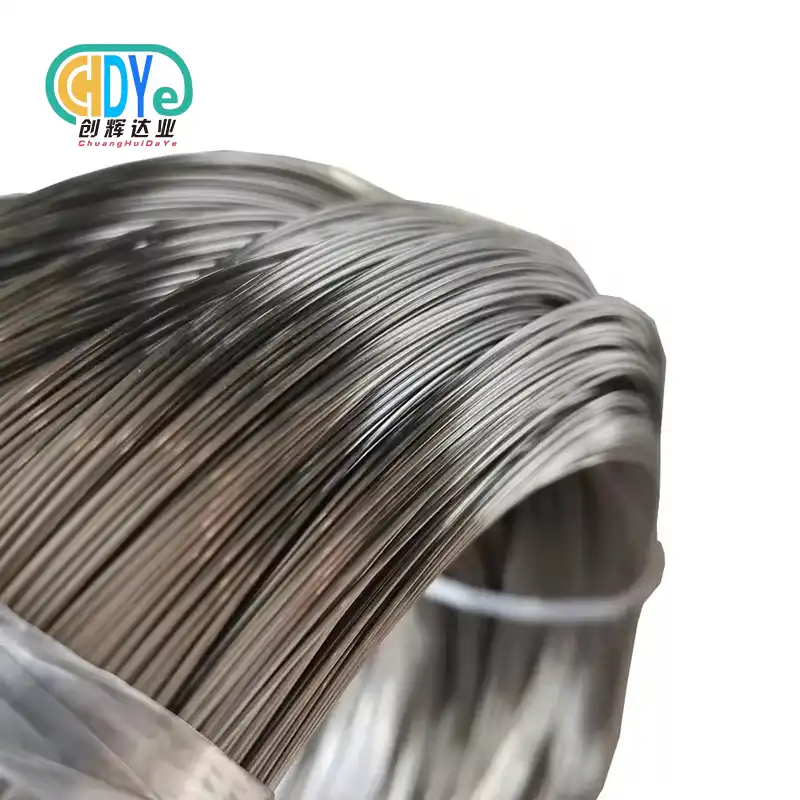
Understanding GR5 Titanium Wire and Its Properties
Chemical Composition and Microstructural Characteristics
In titanium metallurgy, the Ti-6Al-4V alloy is the gold standard. It is made up of pure titanium, about 6% aluminum, and 4% vanadium. This exact chemical balance makes a two-phase microstructure with alpha and beta phases. This gives the material dynamic qualities that are much better than those of pure titanium grades. The aluminum element makes it stronger and lighter, and the vanadium stabilizes the beta phase, which makes it easier to shape and work with.
Exceptional Mechanical Performance Parameters
Rigid testing standards make it clear that this metal is better in terms of how it works. The tensile strength is always higher than 925 MPa, the yield strength is always higher than 870 MPa, and the stretch qualities stay at least 10%. For structural uses that need both strength and flexibility under dynamic loading situations, this material is the best choice because of these qualities.
This titanium alloy is different from other materials because it has the following technical benefits:
- Better strength-to-weight ratio: performs structurally as well as steel while having 45% less density, allowing for lighter designs that don't lose their ability to hold weight.
- Better fatigue resistance: can withstand millions of stress cycles without cracking, which is important for structural parts that are loaded and unloaded over and over again.
- Thermal stability: Holds its mechanical qualities at high temperatures up to 400°C, protecting structures in places where temperatures are high.
- Corrosion immunity: very resistant to chlorides, acids, and marine settings; prevents damage to structures from being exposed to these things.
Together, these mechanical benefits let engineers make buildings that work better while still meeting the safety standards needed in important situations.
Manufacturing Excellence and Quality Control
Modern production methods make sure that the material qualities are the same across all diameters of the wire. Using precise melting methods, controlled casting processes, and multiple drawing passes to make microstructures that are regular is important for making sure that structures work well. To meet the requirements of ASTM B863 and AWS A5.16, quality control methods include full chemical analysis, mechanical tests, and checking the dimensions.
How GR5 Titanium Wire Improves Structural Integrity
Advanced Strength-to-Weight Engineering Solutions
The revolutionary GR5 titanium wire changes the way structures are made because it is as strong as high-grade steel but has a lot less mass. Because of this basic benefit, engineers can build structures that were not possible with traditional materials. The density of 4.43 g/cm³ and tensile strength of 895+ MPa make it possible for new structure solutions where reducing weight directly leads to better performance and economy.
Long-Term Reliability Through Fatigue Resistance
The strength of a structure depends a lot on how the materials behave when they are loaded and unloaded many times. The wear life of Ti-6Al-4V is very long, and cracks don't spread even when the stress levels are very high. This quality is especially useful in aircraft structures, medical implants, and industrial machinery that could break down badly if it fails. The fact that the material can keep its shape after millions of loading cycles means that it will last longer and need less upkeep.
Environmental Durability and Corrosion Protection
Harsh working conditions put structural materials to the test by exposing them to chemicals, rust, and changes in temperature. The natural oxide layer of the titanium metal protects it better from external damage and keeps its structural qualities for longer periods of time. This resistance to rust means that protective coatings or regular repairs are not needed. This makes the structure more reliable and saves money overall. The complete resistance to the environment includes defense against salty, acidic conditions, and alkaline conditions that are common in industrial settings. Because of this, the material can be used for a wide range of construction purposes in many businesses.
Comparing GR5 Titanium Wire With Other Materials for Structural Applications
Performance Analysis Against Conventional Materials
When choosing a material for building uses, it's important to carefully consider how well it performs in relation to the needs of the application. Ti-6Al-4V has clear benefits over other materials and works around some of the problems with other materials. Knowing these comparison benefits helps you make smart purchasing choices that improve the performance and cost-effectiveness of structures.
Stainless Steel Comparison and Advantages
Stainless steel is often used for structural uses that need to be resistant to rust, but Ti-6Al-4V is better in a number of important ways. The corrosion protection of the titanium metal is about the same, but its strength-to-weight ratio is much higher. Because it is about 45% lighter than stainless steel, it can be used in structural designs that are more efficient and don't need as much support.
Pure Titanium and Aluminum Alternatives
To be biocompatible and resistant to rust, pure titanium types are great, but they aren't strong enough for demanding structural uses. GR5 titanium wire gets around this problem by adding alloying elements that make the wire stronger without weakening its resistance to rust. Aluminum is a great way to save weight and money, but it can't provide the strength and weather stability needed for important structural parts.
Procurement Considerations: Sourcing Quality GR5 Titanium Wire
Supplier Qualification and Certification Standards
Finding suppliers with the right quality certifications and manufacturing capabilities is the first step to successful procurement. The ISO 9001:2015 certification makes sure that quality management is uniform throughout the whole production process. The compliance with ASTM and AWS standards makes sure that the features of the materials meet international standards. When evaluating a supplier, you should look at their production tools, quality control methods, and shipping options.
Technical Specifications and Custom Requirements
To buy materials, you need to be very clear about the technical requirements, such as the limits for diameters, the finish on the surface, and the mechanical qualities. GR5 titanium wire comes in sizes from 0.5 mm to 6 mm, and its lengths can be changed to fit the needs of any purpose. Different installation and handling needs can be met by both straight wire and coil designs.
Supply Chain Management and Logistics
Supply chain management that works well makes sure that materials are always available while keeping costs and delivery times as low as possible. Knowing about lead times, minimum order amounts, and shipping processes can help you stay on track with your project's schedule and budget. Working with providers who offer sample access and flexible order sizes helps with the testing and development of prototypes.
Application Case Studies: Real-World Enhancements in Structural Integrity
Aerospace Industry Applications
Applications in aerospace show that the material works very well in harsh situations. GR5 titanium wire is used to make structural parts for lighter airplanes, which saves fuel while still meeting safety standards needed for passenger transportation. The fatigue resistance of the material ensures steady performance throughout the service life of an airplane, which is usually many decades.
Medical Device Structural Components
Biomedical uses need materials that are both strong and safe for living things. Titanium alloy surgery tools and implant parts are strong enough for medical treatments and are safe for patients because they are biocompatible. Because the material doesn't corrode, there are no worries about it breaking down in living settings.
Industrial and Automotive Structural Uses
The strength, resistance to corrosion, and low weight of the material make it useful for industrial tools and car parts. Chemical handling equipment has structural parts that can handle corrosive conditions and still work properly. Automotive uses meet their weight-reduction goals, which leads to better gas mileage without lowering safety standards.
Conclusion
GR5 titanium wire represents the pinnacle of structural material engineering, combining exceptional mechanical properties with environmental durability that ensures long-term structural integrity. Its superior strength-to-weight ratio, corrosion resistance, and fatigue performance make it indispensable for critical applications across aerospace, medical, and industrial sectors. The material's proven track record in demanding environments demonstrates its value proposition for structural applications where performance and reliability are paramount. When you buy this high-quality titanium metal, it improves the performance of structures, lowers upkeep costs, and makes things last longer in a wide range of situations.
FAQ
Q: What makes GR5 different from other titanium grades for structural applications?
A: The strength of Ti-6Al-4V is much higher than that of widely pure titanium types, and it also has great resistance to corrosion. The addition of aluminum and vanadium makes a two-phase microstructure that has a tensile strength of over 925 MPa, which is higher than the 550 MPa strength of Grade 2 titanium.
Q: Can GR5 titanium wire be welded effectively?
A: The substance is a great welding filler metal (ERTi-5) for putting titanium structures together. With the right amount of inert gas shielding and limited heat input, contamination can't happen, and the weld quality will meet the features of the base material.
Q: What diameter tolerances are achievable with precision drawing?
A: Multi-pass drawing and vacuum annealing make it possible to get diameter limits that are usually within ±0.025mm for sizes between 0.5mm and 6.0mm. This makes sure that the parts always work the same way in precision applications.
Q: How does surface finish affect structural performance?
A: Surface treatments that are pickled or polished get rid of oxide layers and other impurities that could hurt the quality of welding or wear performance. For the best dynamic qualities, the surface must be properly prepared.
Q: What storage conditions maintain material quality?
A: Storing things in a climate-controlled space with low humidity stops surface rusting. Sealed package with desiccant protection keeps the surface quality and stops moisture absorption that could change how the next step is processed.
Partner with Chuanghui Daye for Superior GR5 Titanium Wire Solutions
Shaanxi Chuanghui Daye Metal Material Co., Ltd. stands as your trusted Gr5 titanium wire manufacturer, combining over 30 years of rare metal expertise with advanced manufacturing capabilities in China's renowned "Titanium Capital." Our ISO 9001:2015 certified facility delivers precision-drawn titanium wire meeting ASTM B863 and AWS A5.16 specifications, ensuring consistent quality for your critical structural applications. Located in Baoji High-tech Development Zone, we offer competitive factory-direct pricing, flexible order quantities from prototype samples to large-scale production, and comprehensive technical support throughout your procurement process. Contact our experienced team at info@chdymetal.com to discuss your specific requirements and discover how our premium titanium alloy solutions can enhance your structural integrity needs.
References
1. Boyer, R.R. "An Overview on the Use of Titanium in the Aerospace Industry." Materials Science and Engineering A, Vol. 213, 1996, pp. 103-114.
2. Lutjering, G. and Williams, J.C. "Titanium: Engineering Materials and Processes." Springer-Verlag Berlin Heidelberg, 2nd Edition, 2007.
3. American Welding Society. "Specification for Titanium and Titanium Alloy Bare Welding Rods and Electrodes." AWS A5.16/A5.16M, 2013.
4. ASTM International. "Standard Specification for Titanium and Titanium Alloy Wire." ASTM B863-18, 2018.
5. Donachie, Matthew J. "Titanium: A Technical Guide." ASM International, 2nd Edition, 2000.
6. Peters, M., Kumpfert, J., Ward, C.H., and Leyens, C. "Titanium Alloys for Aerospace Applications." Advanced Engineering Materials, Vol. 5, No. 6, 2003, pp. 419-427.
Learn about our latest products and discounts through SMS or email