- English
- French
- German
- Portuguese
- Spanish
- Russian
- Japanese
- Korean
- Arabic
- Greek
- German
- Turkish
- Italian
- Danish
- Romanian
- Indonesian
- Czech
- Afrikaans
- Swedish
- Polish
- Basque
- Catalan
- Esperanto
- Hindi
- Lao
- Albanian
- Amharic
- Armenian
- Azerbaijani
- Belarusian
- Bengali
- Bosnian
- Bulgarian
- Cebuano
- Chichewa
- Corsican
- Croatian
- Dutch
- Estonian
- Filipino
- Finnish
- Frisian
- Galician
- Georgian
- Gujarati
- Haitian
- Hausa
- Hawaiian
- Hebrew
- Hmong
- Hungarian
- Icelandic
- Igbo
- Javanese
- Kannada
- Kazakh
- Khmer
- Kurdish
- Kyrgyz
- Latin
- Latvian
- Lithuanian
- Luxembou..
- Macedonian
- Malagasy
- Malay
- Malayalam
- Maltese
- Maori
- Marathi
- Mongolian
- Burmese
- Nepali
- Norwegian
- Pashto
- Persian
- Punjabi
- Serbian
- Sesotho
- Sinhala
- Slovak
- Slovenian
- Somali
- Samoan
- Scots Gaelic
- Shona
- Sindhi
- Sundanese
- Swahili
- Tajik
- Tamil
- Telugu
- Thai
- Ukrainian
- Urdu
- Uzbek
- Vietnamese
- Welsh
- Xhosa
- Yiddish
- Yoruba
- Zulu
Where to Buy Titanium Wire for Industrial Use?
Industrial buyers who want to buy titanium wire for sale need to find sellers they can trust who can offer consistent quality and meet strict requirements. Partnering with qualified makers who are experts in titanium materials and have a history of working with the aircraft, medical, chemical, and technology industries is the best way to buy things. Direct contact with manufacturers gives you better control over quality, lower prices, and the ability to make changes that are needed for tough industrial uses.
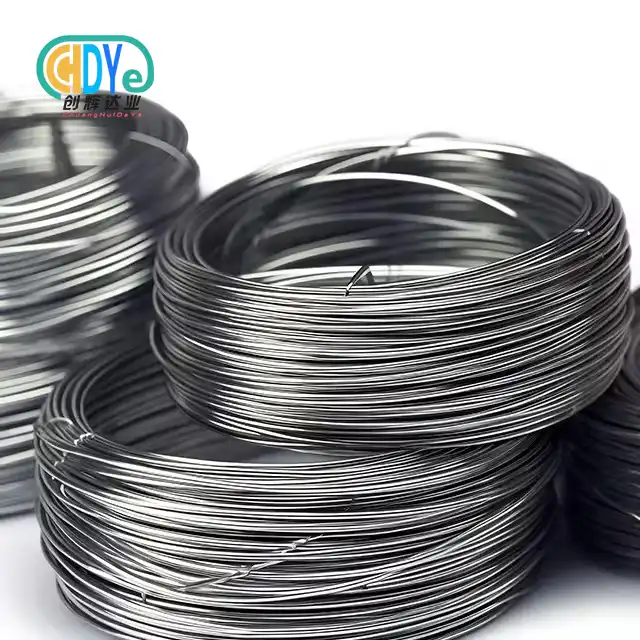
Understanding Titanium Wire and Its Industrial Benefits
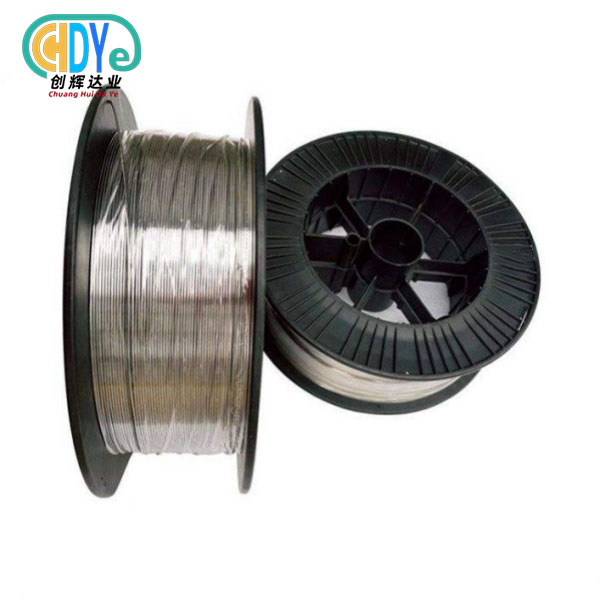
Titanium wire is one of the most advanced materials used in modern industry because it is strong, doesn't rust, and is light. The exact drawing and annealing methods used to make this high-quality material make filamentary goods that can handle the harshest environments.
Key Properties That Set Titanium Wire Apart
Titanium wire's main benefits come from the way it is made. Titanium wire has an amazing strength-to-weight ratio because it is about 45% lighter than steel but still has the same level of strength. This makes it very useful in aircraft and automotive uses. The material is much more resistant to rust than stainless steel, especially in naval settings where saltwater would quickly break down other materials.
Industrial Applications Across Critical Sectors
Titanium wire is used in many high-performance tasks in many different businesses. In aerospace production, it is used as a filler metal for welding titanium parts together to make airplane structures and engine parts. Titanium wire is used in medicine to make Kirschner wires, dental devices, and surgical implants because it is biocompatible and has a modulus of elasticity that is very close to human bone. Chemical processing plants use titanium wire to make equipment that doesn't rust and can handle strong acids and alkaline solutions.
How to Choose the Right Titanium Wire for Your Industrial Needs
To choose the right titanium wire for sale, you need to carefully look at the needs of the product and the skills of the supplier. As part of the decision-making process, technical specs, quality standards, and long-term performance goals are looked at.
Understanding Titanium Wire Grades and Specifications
Different types of titanium have different qualities that make them better for different uses. Grades 1 and 2 are commercially pure titanium that is very resistant to rust and easy to shape. When it comes to structural uses, Grade 5 (Ti-6Al-4V) is stronger, and Grade 7 is better at resisting rust in reducing conditions. Grades 9 and 12 offer levels of strength that are in the middle, making them good for specific uses that need certain mechanical qualities.
Critical Selection Parameters for Industrial Buyers
In some situations, wire thickness, surface finish, and physical tolerances have a big effect on how well it works. Welding uses must strictly follow AWS A5.16 standards, which make sure that the right chemicals are used to ensure the stability of the weld. For medical uses, implant-grade materials must meet the requirements set out in ASTM F136. There are different types of surface finishes, such as pickled, polished, and bright. Each has its own benefits for different processing needs.
Quality Certification and Traceability Requirements
Industrial buyers should give priority to providers who offer a wide range of quality documents and certificates. Getting ISO 9001:2015 approval makes sure that quality management is done in a planned way throughout the whole production process. The material test papers show the chemical makeup, the mechanical qualities, and the measurements that were taken. Full paperwork for traceability lets you keep track of a batch from the time the raw materials are sourced to the time the finished product is delivered.
Comparison of Titanium Wire with Alternative Materials
Knowing how titanium wire stacks up against other materials helps buyers make smart choices based on performance needs and prices over the product's lifetime.
Titanium vs. Stainless Steel Wire
Even though stainless steel is cheaper at first, titanium is a better long-term investment because it lasts longer and needs less upkeep. Titanium doesn't crack when exposed to salt, which makes it perfect for naval uses where stainless steel would fail. Because titanium is so light, it lowers the loads on structures and makes vehicles more fuel-efficient.
Performance Advantages in Corrosive Environments
Titanium wire creates a stable, self-healing metal layer that protects it very well from many harmful substances. In places where other materials break down quickly, this passive layer stays whole. Titanium is good for chemical processing because it doesn't react badly with organic acids, chlorine compounds, or high temperatures that would damage other materials.
Where and How to Buy Titanium Wire for Industrial Use
To successfully buy titanium wire for sale, you need to know about the different ways you can do it and use good strategies for evaluating suppliers.
Direct Manufacturer Partnerships
Building partnerships with specialized titanium wire makers has many benefits, such as ensuring the origin of the product, allowing for personalization, and providing technical support. Manufacturers in places like Baoji, China's "Titanium Valley," that have been making titanium for a long time, profit from linked supply chains and decades of metallurgical knowledge. Direct partnerships allow for particular needs, flexible order sizes, and prices that are affordable.
Evaluating Supplier Capabilities and Certifications
Reliable suppliers show what they can do by having quality control systems and certifications that are known around the world. Advanced tools like vacuum arc furnaces, precise drawing machines, and full testing labs should be available in factories that make things. Suppliers who are certified to ISO 9001:2015 make sure that quality is consistently checked throughout the entire production process.
Strategic Procurement Considerations
Minimum order amounts, lead times, and shipping procedures are all important parts of good procurement strategies. When you buy in bulk, you usually save money and make sure you have enough product. With the right packaging and paperwork, global shipping makes it possible to reliably send packages to foreign places. If samples are available, you can check the quality of the material before placing a big order.
Top Titanium Wire Suppliers and Brands in the Market
Selecting established suppliers with proven track records ensures reliable access to high-quality titanium wire products.
Leading Manufacturers in Global Markets
Shaanxi Chuanghui Daye Metal Material Co., Ltd. is a great example of how to make titanium wire because it has over 30 years of experience in the rare metals business and is located in Baoji, which is a hub for titanium production. Some of the many things they can make are vacuum freezing, precision drawing, and advanced annealing methods that make sure the parts are perfectly sized and strong.
Advanced Manufacturing Capabilities
To make titanium wire today, you need high-tech tools and methods for controlling the process. Vacuum arc furnaces are used by top producers to melt raw materials, which makes sure that the products are pure and regular. With multi-pass cold drawing, you can precisely control the dimensions while keeping the beauty of the surface. The methods of heat treatment and annealing make the mechanical traits better for certain uses.
The company sells different grades of titanium, such as Gr1, Gr2, Gr5, Gr7, Gr9, and Gr12. These grades include both pure titanium and titanium alloys. International standards like ASTM, AMS, ISO, and GB are met or surpassed by all of the products. Laser measurement systems and tensile testing tools are examples of more advanced quality control methods that make sure that wire diameter and mechanical traits stay the same.
Conclusion
It takes a lot of research into the skills of suppliers, product specifications, and quality assurance methods in order to find dependable sources for titanium wire for sale. When you buy high-quality titanium wire, it pays for itself in better performance, longer service life, and lower upkeep costs in tough industrial settings. Procurement strategies that work best focus on direct relationships with manufacturers, detailed quality documentation, and expert help that makes sure materials work at their best in important situations.
FAQ
Q: What are the standard specifications for industrial titanium wire?
A: For general use, industrial titanium wire must meet ASTM B863 standards. Welding electrodes, it must meet AWS A5.16 standards. These guidelines say what the limits are for chemical composition, mechanical qualities, and size differences. For medical uses, ASTM F136 for implant-grade materials needs to be followed even more.
Q: How does surface finish affect titanium wire performance?
A: The surface finish has a big effect on how well something works in some situations. For general use, a pickled finish gets rid of oxide scale, while a polished surface allows for tighter limits for automatic processes. The bright finish makes the material more conductive and looks better for certain uses.
Q: What is the smallest amount of titanium wire that you can usually order?
A: Minimum order amounts depend on the supplier and the type of wire, but for normal grades and sizes, they are usually between 50 and 500 kilograms. Because of the unique processing needs of custom specifications, higher minimum amounts may be needed.
Q: How should you treat and store titanium wire?
A: Titanium wire needs to be kept in a clean, dry place so that it doesn't get contaminated. Stay away from iron bits, grease, or oils that could weaken the material during further processing. Handling things the right way keeps surfaces from getting damaged and keeps measurements accurate.
Q: What quality documentation should suppliers provide?
A: Material test papers that show chemical makeup, mechanical properties, and dimensional inspection reports are all part of complete quality paperwork. Traceability paperwork should keep track of materials from where the raw materials come from to where they are inspected and packed at the end.
Contact Chuanghui Daye for Premium Titanium Wire Solutions
Shaanxi Chuanghui Daye is a reliable company that makes titanium wire for sale. They have state-of-the-art production facilities in China's best titanium area and 30 years of experience in metalworking. Our production methods are ISO 9001:2015 certified, which means that all of our titanium grades, from Gr1 to Gr12, are of the same high quality and the right size. Our full technical support, flexible order amounts, and low factory-direct prices help industrial buyers get the most for their money when they buy things. Contact our experienced team at info@chdymetal.com to talk about your unique needs and get detailed quotes for high-performance titanium wire for sale options that are made to fit your needs.
References
1. American Society for Testing and Materials. "Standard Specification for Titanium and Titanium Alloy Wire." ASTM B863-22, 2022.
2. American Welding Society. "Specification for Titanium and Titanium Alloy Welding Electrodes and Rods." AWS A5.16/A5.16M:2018, 2018.
3. Boyer, R.R., Welsch, G., and Collings, E.W. "Materials Properties Handbook: Titanium Alloys." ASM International, Materials Park, Ohio, 1994.
4. Lütjering, Gerd, and Williams, James C. "Titanium: Engineering Materials and Processes." Springer-Verlag Berlin Heidelberg, 2nd Edition, 2007.
5. Peters, M., Hemptenmacher, J., Kumpfert, J., and Leyens, C. "Structure and Properties of Titanium and Titanium Alloys." Titanium and Titanium Alloys: Fundamentals and Applications, Wiley-VCH, 2003.
6. Schutz, R.W., and Watkins, H.B. "Recent Developments in Titanium Alloy Application in the Energy Industry." Materials Science and Engineering A, Volume 243, Issues 1-2, 1998.
Learn about our latest products and discounts through SMS or email