- English
- French
- German
- Portuguese
- Spanish
- Russian
- Japanese
- Korean
- Arabic
- Greek
- German
- Turkish
- Italian
- Danish
- Romanian
- Indonesian
- Czech
- Afrikaans
- Swedish
- Polish
- Basque
- Catalan
- Esperanto
- Hindi
- Lao
- Albanian
- Amharic
- Armenian
- Azerbaijani
- Belarusian
- Bengali
- Bosnian
- Bulgarian
- Cebuano
- Chichewa
- Corsican
- Croatian
- Dutch
- Estonian
- Filipino
- Finnish
- Frisian
- Galician
- Georgian
- Gujarati
- Haitian
- Hausa
- Hawaiian
- Hebrew
- Hmong
- Hungarian
- Icelandic
- Igbo
- Javanese
- Kannada
- Kazakh
- Khmer
- Kurdish
- Kyrgyz
- Latin
- Latvian
- Lithuanian
- Luxembou..
- Macedonian
- Malagasy
- Malay
- Malayalam
- Maltese
- Maori
- Marathi
- Mongolian
- Burmese
- Nepali
- Norwegian
- Pashto
- Persian
- Punjabi
- Serbian
- Sesotho
- Sinhala
- Slovak
- Slovenian
- Somali
- Samoan
- Scots Gaelic
- Shona
- Sindhi
- Sundanese
- Swahili
- Tajik
- Tamil
- Telugu
- Thai
- Ukrainian
- Urdu
- Uzbek
- Vietnamese
- Welsh
- Xhosa
- Yiddish
- Yoruba
- Zulu
How is pure niobium bar manufactured and refined?
A complex metalworking process is used to make and polish pure niobium bars. It starts with extracting highly pure rock and continues with electron beam melting, vacuum arc remelting, precision casting, and controlled rolling. These bars are more than 99.9% pure, and intermediate elements, especially oxygen, carbon, and nitrogen, are strictly controlled to make sure they work at their best. The last steps, vacuum annealing and surface finishing, make square-profile bars with tight limits on dimensions and excellent corrosion resistance. These bars meet strict standards for use in aircraft, chemical processing, and superconducting uses all over the world.
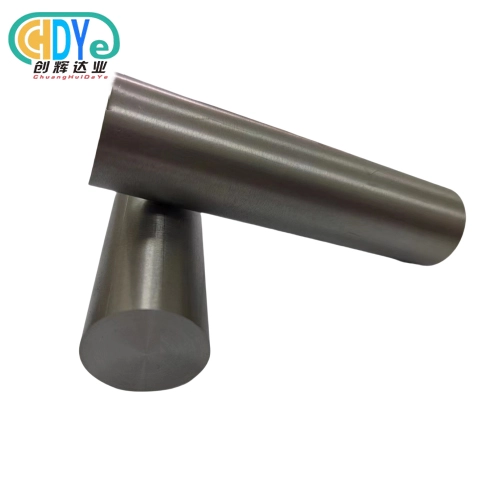
Introduction to Pure Niobium Bar
A Look at the pure niobium bar. A lot of the time, buying managers and engineering teams tell me they are worried about finding materials that can last in harsh conditions and keep their shape. Pure niobium square bars are a smart way to deal with these problems. The melting point of these refractory metals is an amazing 2468°C, and they are very chemically inert, forming a self-healing niobium pentoxide layer on the surface that most mineral acids can't attack.
What Defines a Pure Niobium Bar
Pure niobium bars are solid-section metal products with equal-sided, vertical walls. They are usually made to meet ASTM B393 standards. In contrast to round bars, the square shape has clear benefits when it comes to machining and assembly, where flat sides make it easier to align precisely and prepare for welding. The mass of the material is 8.57 g/cm³, which gives it a great strength-to-weight ratio that aircraft engineers really like.
Critical Applications Driving Market Demand
Aerospace companies use these bars to make structural parts for power systems that are heated to over 1800°C. They are used in chemical processing plants to make heat exchanges and reaction tanks because the material doesn't break down when it comes in contact with hydrofluoric acid and other strong chemicals. Because these bars are superconducting at very low temperatures (transition point of 9.25 K), they are necessary for particle accelerator chambers and quantum computing equipment.
Knowing the whole process of making something helps procurement professionals judge a supplier's skills in more ways than just comparing prices. The way a part is made has a direct effect on its long-term stability, leftover stress levels, and the uniformity of its grains. These are the things that decide how well it works over its intended service life.
Raw Materials and Composition of Pure Niobium Bar
The first step on the way from rock to finished bar is choosing the raw materials. Most of the world's niobium rock comes from Brazil and Canada, mostly in the form of pyrochlore concentrates. Beneficiation methods take these concentrates and raise the niobium content from about 2% to 3% so that they are commercial-grade material that can be used for processing metals.
Purity Standards and Elemental Composition
Commercial-grade bars (designation RO4210) must be at least 99.9% pure, while reactor-grade requirements (designation RO4200) call for 99.95% or higher purity with very little tantalum content. The difference is very important. Tantalum has some of the same chemical qualities as niobium, but it can't be used in nuclear uses where neutron economy is important because it absorbs more neutrons.
Controlling interstitial impurities is the hardest part of makeup management. To keep the flexibility, the oxygen level must stay below 150 ppm. High amounts of oxygen weaken the material and make it harder to shape when it is later processed. Carbon, nitrogen, and hydrogen all need to be kept well below tight limits, usually less than 100 ppm combined for high-grade uses.
Traceability and Supply Chain Transparency
Modern rules for buying things stress that materials must be able to be tracked from the mine to the end product. Suppliers with a good reputation keep records of each production lot at every stage of handling. There are records of analysis in this file that prove the chemical makeup, mechanical qualities, and compliance with international standards. At Chuanghui Daye, we use full traceability methods backed by ISO 9001:2015 certification. This makes sure that every pure niobium square bar we send to a customer comes with verifiable pedigree paperwork that passes the strictest quality audits.
Step-by-Step Manufacturing Process of Pure Niobium Bar
To make pure niobium square bars with uniform features, each step of the production process needs to be carefully managed. Through carefully planned heating and mechanical steps, the manufacturing process turns brittle ore concentrates into ductile, high-purity metal profiles.
Primary Refining: From Ore to Purified Metal
To begin, niobium pentoxide mixes with aluminum powder at temperatures close to 1200°C. This is called aluminothermic reduction. This process gives off heat and makes crude niobium with iron and aluminum impurities. Electric beam melting (EBM) of the raw metal takes place in high-vacuum rooms with a pressure of 10^-4 Torr or higher. Focused electron beam energy specifically vaporizes flammable impurities while keeping the niobium in a molten state, removing a lot of impurities in a single pass.
Vacuum Arc Remelting for Enhanced Purity
After EBM, the material goes through vacuum arc remelting (VAR), which is when an electric arc forms between a copper crucible that is cooled by water and a disposable electrode. This process works in a controlled atmosphere, which further reduces flaws between molecules and makes the chemical makeup more uniform. VAR makes cylinder-shaped bars with a fine grain structure and little segregation, which are necessary before mechanical works can begin.
Forging and Rolling to Square Profile
When hot forging is done at temperatures between 1000°C and 1200°C, the cast structure breaks down and grain polishing starts. By slowly changing cylindrical ingots into rectangular blooms, hydraulic presses use controlled distortion. The square cross-section is made by carefully rolling the metal with grooved rolls that have been measured. When you make square shapes instead of simple flat ones, you have to carefully control the roll gap sizes and material flow to keep the faces straight and the sizes as consistent as possible.
Rolling plans include more than one pass with warming processes in between. Niobium has a modest work-hardening rate that lets it be reduced by a large amount in each pass. However, too much cold work can leave behind stresses that make the material less stable in its dimensions. Before stress-relief annealing, most producers only do cold reduction up to 30 to 40 percent.
Heat Treatment and Surface Finishing
Vacuum annealing at 1000–1200°C recrystallizes the grain that has been worked, making it more flexible and improving its dynamic properties. Oxidation and nitrogen pickup would damage the surface, but the vacuum climate stops them. The length of time needed for annealing varies on the cross-section of the bar; heavy sections need longer exposure times to fully recrystallize the material throughout its volume.
Controlled cutting or chemical pickling are used in surface finishing processes to get rid of scale and other small flaws on the surface. Surface roughness usually falls below 0.8 µm, which is very important for vacuum uses where surface flaws speed up the rate of gas release. The finished item has a shiny metal finish, exact 90-degree corners, and close size specs. It is ready to be shipped or further machined to the customer's requirements.
Quality Control and Testing Standards for Niobium Bars
Suppliers who offer regular pure niobium bars are set apart from those who don't by strict quality control. Before they are shipped, finished bars are put through a series of tests to make sure they meet certain mechanical, chemical, and physical standards.
Chemical Composition Verification
Inert gas fusion (IGF) research can precisely measure interstitial elements at the parts-per-million level. For this method, sample pieces are melted in a neutral gas, and the gases that are released are measured by thermal conductivity or infrared detection. IGF and combustion research work together to find carbon and sulfur. Metallic impurities are checked by optical emission spectroscopy, which shows that tantalum, tungsten, molybdenum, and iron are all within acceptable limits.
Mechanical Property Testing
The yield strength, maximum tensile strength, and elongation numbers are found through tensile tests according to ASTM E8 standards. Niobium is moderately strong but very flexible. Its yield strength is usually between 200 and 240 MPa, and its extension is more than 25%. When you use the Vickers or Rockwell methods to test for hardness, you can quickly check the quality of the material and get results that match the right heating treatment.
Microstructural Examination and Non-Destructive Testing
Metallographic inspection shows the spread of grain sizes and finds possible flaws like spots or incomplete recrystallization. Most of the time, the grain size meets ASTM E112 standards. For deep-forming tasks, it's best to have grain shapes that are No. 6 or smaller. Ultrasonic testing finds internal flaws like holes or laminations that might have formed during casting. Protocols for surface checking find holes, scratches, or folds that could affect how well something works. Using calibrated micrometers and coordinate measuring tools to take measurements of the square cross-sections ensures that they stay within certain limits. For precision-grade bars, these are usually within ±0.2mm.
These thorough quality standards provide written proof of material consistency. When reviewing suppliers, asking for sample test certificates and seeing production checks can give you useful information about the quality, culture, and discipline of manufacturing.
Comparison of Pure NiobiumBar with Alternative Materials
Choices about which materials to use affect the cost of the project, how hard it is to make, and how reliable they will be in the long run. Knowing how pure niobium square bar stacks up against other metals helps engineers make better designs and helps purchasing agents get the best prices.
Niobium versus Tantalum and Molybdenum
Tantalum is better for some chemical processing tasks because it is slightly more resistant to rust and has a higher density (16.65 g/cm³). Tantalum, on the other hand, is about three to four times more expensive than niobium and doesn't perform much better in most situations. Because of the difference in density, niobium parts weigh about half as much as tantalum parts of the same size. This is a big benefit for aircraft weight costs.
Molybdenum is a cheaper metal to work with, but it oxidizes easily above 400°C unless it is covered by coats or inert atmospheres. Molybdenum is weak at room temperature, which makes it harder to work with. Niobium, on the other hand, stays very flexible over a wider temperature range. Which of these materials to use depends on the specifics of the job and whether lower costs make it worth giving up some efficiency.
Square Bar versus Round Bar Configurations
Round bars are the most popular because they are easier to make and cost less to make. However, square shapes have clear benefits when it comes to cutting and putting things together. Fixturing is easier on flat surfaces, which makes setup time shorter and improves the accuracy of measurements during cutting and drilling. Flat surfaces help with welding preparation because they make it easier to match joints precisely and keep fit-up gaps uniform.
When making rectangular parts, square bar stock reduces the amount of waste material compared to machining from round pieces. Most of the time, the extra cost of square profile—usually 10-15% more than round bar—is worth it because it cuts down on cutting time and increases material output when parts are being made.
Procurement Considerations and How to Choose a Reliable Niobium Bar Supplier
Things to think about when buying pure niobium square bars, and how to find a reliable supplier. Quality of the materials, dependability of transportation, expert help, and overall cost of acquisition must all be balanced for procurement to go well. There are several things that separate suppliers who are capable from those who are likely to disrupt production or cause quality problems.
Certification and Manufacturing Capabilities
ISO 9001:2015 certification is a basic way to make sure that sellers keep written quality systems with methods for ongoing growth and tracking. Check if sources have the specific tools needed to work with niobium, like electron beam furnaces and controlled-atmosphere heat treatment facilities. This is in addition to checking if they have general quality standards. Suppliers who don't have this infrastructure usually get their materials from outside sources, which costs more and makes it harder to make sure the quality is always the same.
Experience in manufacturing is very important. Processing niobium is different from processing other metals, so you need to know a lot about it to avoid mistakes. Suppliers who have worked with refractory metal for a long time have shown they can handle the technical challenges that come with making high-purity square bars with tight standards.
Pricing Dynamics and Value Considerations
The price of niobium bars is mostly made up of the cost of the raw materials. Processing adds another 30 to 50 percent, based on the purity grade and the size requirements. When you buy directly from the factory, you don't have to pay the middleman. This cuts down on costs by about 15 to 20 percent and makes it easier to talk to expert staff who know the limits and capabilities of the production.
Buying in bulk gives you more bargaining power, but the minimum order amounts must work with your inventory management plans. To find the best balance between high prices, carrying costs, and the risk of items going out of style, you need to carefully look at how people use things and how long projects take. Suppliers with flexible minimum amounts help with research and testing without making customers commit to too much inventory.
Custom Processing and Technical Support
Standard bar sizes work well for many uses, but custom sizes, special surface finishes, or made blanks that are only partially finished can greatly lower the costs of further processing. Suppliers who can do both welding and milling can provide one-stop options that make buying easier and share responsibility for quality. Technical consulting services help choose the best materials and set the best processing settings. This is especially helpful when coming up with new uses or fixing problems with manufacturing.
The success of delivery should be carefully evaluated. Niobium goods usually have lead times between 4 and 8 weeks, but this depends on how easy the material is to get and how complicated the process is. Suppliers who keep popular sizes in stock can help with fast delivery for urgent needs. Clear communication about production plans and early warning of possible delays helps with project planning and keeps costly production breaks to a minimum.
Conclusion
Pure niobium bars can only be made by people with a lot of experience in the metalworking industry, special tools, and strict quality control throughout the whole production process. Each step in the processing, from electron beam melting, which makes the material very pure, to precise rolling, which makes square profiles that are exactly right, affects the final traits and dependability of the material's performance. By understanding these basic principles of manufacturing, procurement professionals can judge sellers based on their technical skills instead of just price, making sure that the materials they buy meet the strict needs of the application. Choosing the right purity grades, dimensional requirements, and skilled sources has a direct effect on the success of a project in areas like aircraft, chemical processing, and advanced technology, where failure of a material has serious effects.
FAQ
Q: What purity levels are available for niobium square bars?
A: What amounts of clarity are there for pure niobium square bars? Most commercial-grade bars are at least 99.9% pure (they have the RO4210 label), which means they can be used for basic chemical processing and structural purposes. Reactor-grade standards (RO4200) guarantee purity of 99.95% or higher and a tantalum level below 500 ppm, which is necessary for nuclear applications and superconducting devices. Ultra-high pure types that reach 99.99% are used in semiconductors and research, where even small amounts of impurities can affect how well they work.
Q: Can niobium square bars be welded?
A: Niobium is very reactive with oxygen and nitrogen at high temperatures, so it needs to be welded using special techniques. To keep things clean, electron beam welding in high-vacuum rooms or TIG welding in controlled-atmosphere glove boxes filled with very pure argon are used. Welding in the open air weakens metal very quickly and should never be done. When you bond correctly, the joints you make are as strong as the base material.
Q: How should I judge possible suppliers?
A: Ask for test papers that show the chemical makeup and mechanical qualities of the material. Check to see if they are ISO 9001:2015 certified and ask if they can do electron beam melting and vacuum heating in-house. Find out about their normal lead times, minimum order amounts, and whether they keep standard-sized items in stock. Before committing to large purchases, sample orders let you check the accuracy of the measurements, the quality of the finish on the surface, and the thoroughness of the paperwork.
Partner with Chuanghui Daye for Certified Niobium Square Bar Supply
Work with Shaanxi Chuanghui Daye to get Certified Pure Niobium Bars. Shaanxi Chuanghui Daye is based in Baoji, Shaanxi Province, which is known as China's Titanium Capital. With more than 30 years of experience working with refractory metals, they help companies around the world that make electronics, chemicals, and military products. Our ISO 9001:2015-certified building has electron beam ovens, vacuum annealing equipment, and high-precision machining tools that allow us to make niobium square bars that meet ASTM B393 standards and come with full proof of their origin. Our technical team can help you match the right material standards with your performance needs, whether you need reactor-grade material for superconducting uses or commercial-grade bars for corrosion-resistant fabrications. We keep popular sizes in stock so that we can send them quickly, and we also offer special sizes and semi-finished machining to help you save money on processing. As a direct producer of pure niobium square bars dedicated to quality and dependable supply partnerships, please contact our team at info@chdymetal.com to talk about your specific needs and receive competitive quotes with clear pricing.
References
1. ASTM International. (2020). ASTM B393-20: Standard Specification for Niobium and Niobium Alloy Ingots. West Conshohocken, PA: ASTM International.
2. Davis, J.R. (Ed.). (1998). Metals Handbook: Desk Edition, Second Edition. Materials Park, OH: ASM International.
3. Shields, J.A. (1996). Applications of Molybdenum Metal and Its Alloys. London: International Molybdenum Association.
4. Loria, E.A. (2001). "Niobium-Base Superalloys Via Powder Metallurgy Technology." JOM Journal of the Minerals, Metals and Materials Society, 53(10), 34-36.
5. Cardonne, S.M., Kumar, P., Michaluk, C.A., & Schwartz, H.D. (1995). "Tantalum and Its Alloys." International Journal of Refractory Metals and Hard Materials, 13(4), 187-194.
6. Schultz, L. (Ed.). (2013). Handbook of Superconducting Materials: Volume II: Characterization, Applications and Cryogenics. Bristol: Institute of Physics Publishing.
Learn about our latest products and discounts through SMS or email