- English
- French
- German
- Portuguese
- Spanish
- Russian
- Japanese
- Korean
- Arabic
- Greek
- German
- Turkish
- Italian
- Danish
- Romanian
- Indonesian
- Czech
- Afrikaans
- Swedish
- Polish
- Basque
- Catalan
- Esperanto
- Hindi
- Lao
- Albanian
- Amharic
- Armenian
- Azerbaijani
- Belarusian
- Bengali
- Bosnian
- Bulgarian
- Cebuano
- Chichewa
- Corsican
- Croatian
- Dutch
- Estonian
- Filipino
- Finnish
- Frisian
- Galician
- Georgian
- Gujarati
- Haitian
- Hausa
- Hawaiian
- Hebrew
- Hmong
- Hungarian
- Icelandic
- Igbo
- Javanese
- Kannada
- Kazakh
- Khmer
- Kurdish
- Kyrgyz
- Latin
- Latvian
- Lithuanian
- Luxembou..
- Macedonian
- Malagasy
- Malay
- Malayalam
- Maltese
- Maori
- Marathi
- Mongolian
- Burmese
- Nepali
- Norwegian
- Pashto
- Persian
- Punjabi
- Serbian
- Sesotho
- Sinhala
- Slovak
- Slovenian
- Somali
- Samoan
- Scots Gaelic
- Shona
- Sindhi
- Sundanese
- Swahili
- Tajik
- Tamil
- Telugu
- Thai
- Ukrainian
- Urdu
- Uzbek
- Vietnamese
- Welsh
- Xhosa
- Yiddish
- Yoruba
- Zulu
How Titanium Alloy Plates Improve Durability and Strength?
Titanium alloy plates enhance durability and strength through their unique metallurgical composition, combining pure titanium with elements like aluminum and vanadium to create superior mechanical properties. These engineered materials deliver exceptional strength-to-weight ratios, outstanding corrosion resistance, and remarkable thermal stability that significantly outperform conventional metals in demanding applications. The precise alloying process creates a crystalline structure that maintains structural integrity under extreme conditions while offering extended service life across aerospace, chemical processing, and medical manufacturing sectors.
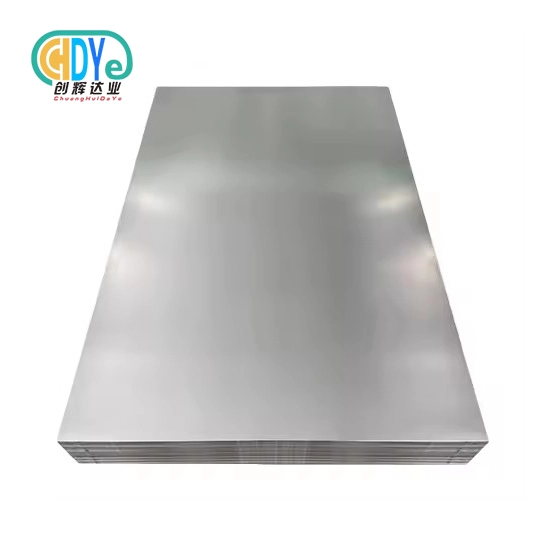
Understanding Titanium Alloy Plates and Their Key Properties
Modern industrial applications demand materials that can withstand extreme conditions while maintaining consistent performance over extended periods. Titanium alloy plates represent the pinnacle of metallurgical engineering, offering a unique combination of properties that make them indispensable across multiple high-performance sectors.
Fundamental Composition and Grades
The designing brilliance of titanium plates stems from cautious alloying with particular components to accomplish desired characteristics. Review 2 titanium gives amazing erosion resistance and formability, making it perfect for chemical handling gear where unadulterated quality takes auxiliary significance to chemical compatibility. Review 5 (Ti-6Al-4V) speaks to the most broadly utilized aerospace-grade fabric, joining 6% aluminum and 4% vanadium to accomplish uncommon quality while keeping up workability.
Grade 7 titanium joins palladium, which increases the upgrade erosion resistance in diminishing situations, especially profitable in chemical applications. In the meantime, Review 12 combines molybdenum and nickel to make upgraded quality characteristics reasonable for high-temperature applications. The TC20 review offers specialized properties for particular mechanical applications requiring one-of-a-kind execution parameters.
Mechanical Properties and Performance Metrics
The ductile quality of titanium amalgam materials shifts essentially over grades, with Review 2 accomplishing least surrender qualities of 275 MPa, whereas Review attains abdicate qualities surpassing 830 MPa. This variety permits engineers to select materials absolutely coordinated to applicationrequirements without over-engineering or compromising execution margins.
Titanium alloy plates have another basic advantage, with these materials keeping up mechanical properties over temperature ranges from cryogenic conditions to elevated benefit temperatures surpassing 400°C. The moo warm extension coefficient decreases push concentrations amid warm cycling, contributing to extended component life in applications encountering temperature variations.
Comparing Titanium Alloy Plates with Other Metals for Strength and Durability
Understanding the competitive landscape helps procurement professionals make informed material selection decisions based on comprehensive performance analysis rather than initial cost considerations alone. The following comparison reveals why titanium alloys command premium pricing while delivering superior long-term value.
Strength-to-Weight Performance Analysis
When assessing auxiliary materials, the strength-to-weight proportion becomes vital in applications where mass diminishment specifically impacts system performance. Titanium amalgams accomplish particular quality values roughly 40% higher than high-strength steel, whereas weighing about 45% less. This execution advantage translates into noteworthy savings in aviation applications and decreased auxiliary loading in chemical preparation equipment.
Aluminum amalgams, although lighter than titanium, accomplish,h as it were, re 60% of the particular quality execution. Stainless steel grades commonly utilized in destructive situations give great chemical resistance but carry weight penalties that restrain application feasibility in weight-sensitive plans. The prevalent particular quality of titanium materials empowers creators to decrease segment thickness while maintaining basic integrity.
Corrosion Resistance and Environmental Durability
The erosion resistance of titanium-based materials outperforms most elective materials through the arrangement of a steady, self-healing oxide layer that gives extraordinary assurance against chemical assault. This detached layer changes right away when harmed, guaranteeing persistent security without requiring defensive coatings or progressing support interventions.
Comparative testing illustrates that titanium amalgams maintain basic corrosion resistance in chloride situations where stainless steel grades experience severe corrosion and erosion. The material's resistance to galvanic erosion, when coupled with divergent metals,s diminishes system-level erosion dangers, contributing to amplified benefit life and decreased support necessities throughout the operational lifecycle.
Lifecycle Cost Analysis and Total Ownership Value
While titanium materials command higher starting acquisition costs, lifecycle investigation uncovers compelling financial benefits through diminished maintenance, extended benefit intervals, and end of defensive coating frameworks. The material's resistance to weariness,s split sta, rt and proliferation expands assessment interims whereas lessening impromptu upkeep occasions that disrupt production schedules.
Energy investment funds from weight decrease compound over the operational life in portable applications, whereas the disposal of coating reestablishment cycles decreases lifecycle support costs. These variables combine to convey and add up to take a toll on proprietorship focal points that legitimize the beginning fabric venture over numerous application categories.
How to Select the Best Titanium Alloy Plate for Your Application?
Material selection requires careful evaluation of application-specific requirements balanced against material capabilities and economic considerations. The following decision framework guides procurement teams through systematic material evaluation to ensure optimal performance and cost-effectiveness.
Industry-Specific Selection Criteria
Aerospace applications prioritize strength-to-weight optimization while keeping up break strength and wear resistance. Review 5 titanium gives the ideal adjustment of properties for auxiliary components, whereas Review 2 serves non-structural applications where erosion resistance takes priority over extreme quality. The capacity to keep up properties at raised temperatures makes these materials appropriate for motor components and warm exchanger applications.
Chemical preparation hardware requires materials that stand up to particular chemical situations, while giving satisfactory mechanical properties. Review 7 exceeds expectations in lessening corrosive situations, whereas Review 12 gives upgraded quality for weight vessel applications. Understanding the particular erosion instruments susedin each application guides a suitable review choice to guarantee long-term reliability.
Titanium alloy plates require biocompatible materials that stand up to body lfluiderosion w, whileiving mechanical properties suitable for load-bearing applications. Review 2 and Review 5 titanium meet FDA biocompatibility necessities while advertising the mechanical properties fundamental for orthopedic inserts and surgical instruments.
Technical Specifications and Quality Standards
Material obtainment requires confirmation of compliance with pertinent measures counting ASTM B265/ASME SB265 for common applications, ASTM F67 for surgical inserts, and ASTM F136 for surgical embed materials. These benchmarks indicate chemical composition limits, mechanical property necessities, and testing strategies that guarantee fabric consistency and reliability.
Dimensional contemplations incorporate thickness ranges from 0.5mm to 50mm with widths ranging from 1000mm to 3000mm, giving adaptability for assorted application requirements. Custom measuring capabilities empower optimization of fabric utilization, whilelessening machining wastage-related costs. Understanding lead times for standard versus custom measurements makes a difference for venture supervisors who adjust fabric conveyance with production schedules.
Advanced Processing and Handling Techniques for Optimal Performance
Realizing the full potential of titanium alloy materials requires specialized processing techniques that preserve material properties while achieving dimensional accuracy and surface finish requirements. The following processing considerations ensure optimal performance throughout the component lifecycle.
Specialized Machining and Fabrication Methods
Titanium materials require adjusted machining parameters compared to ordinary metals due to their moo warm conductivity and chemical reactivity at elevated temperatures. Sharp cutting instruments, decreased cutting speeds, and improved cooling frameworks avoid work hardening and device wear that can compromise surface judgment and dimensional accuracy.
Welding methods must account for titanium's reactivity with barometric gases at high temperatures. Idle gas protection ensures the weld zone from defilement, whereas controlled warm input anticipates intemperate grain development that might diminish mechanical properties. Legitimate joint plan and filler metal choice guarantee weld properties coordinate or surpass base fabric characteristics.
Heat Treatment and Property Optimization
Strategic warm treatment forms optimize fabric properties for a particular application, while calming remaining stresses from shaping operations. Tempering cycles reestablish ductility after cold working, whereas stretch help medications diminish mutilation dangers amid consequent machining operations. Understanding the relationship between temperature, time, and coming about properties empowers optimization of fabric characteristics for particular benefit requirements.
Mill toughening gives the ideal balance of quality and ductility for most applications, whereas arrangement treating and maturing cycles can upgrade quality properties whermaximum performanceon is required. The exact control of warming and cooling rates guarantees reliable properties throughout the fabric segment thickness.
Quality Control and Inspection Protocols
Comprehensive quality control programs confirm fabric properties and dimensional exactness, whereas archiving traceability all thwhile ensuringting prepare. Chemical investigation affirms combination composition compliance with details, whereas mechanical testing approves quality, ductility, and durability properties. Ultrasonic assessment identifies inner discontinuities that might compromisethe benefit performance.
Surface review recognizes surface absconds that seem serve as push concentration locales or erosion start points. Dimensional review guarantepointsnents meet drawing necessities, whereas surface harshness estimations confirm wrap uroughness that affects weariness execution and erosion resistance.
Company Introduction and Product & Service Information
Shaanxi Chuanghui Daye Metal Fabric Co., Ltd. leverages over three decades of specialized expertise in uncommon metal processing to deliver premium titaniualloy solutionsts for demanding mechanical applications. Found in Baoji High-tech Advancement Zone, known as China's "Titanium Capital," our office benefits from set up supply chains and specialized mastery that guarantee reliable fabric quality and competitive pricing.
Our comprehensive item run envelops titanium grades counting Gr1, Gr2, Gr5, Gr7, Gr5 ELI, Gr12, and TC20, fabricated to comply with ASTM B265/ASME SB265, ASTM F67, ASTM F136, and ISO-5832-2(3) benchmarks. Progressed fabricating capabilities incorporate vacuum dissolving, electron bar heaters, manufacturing presses, rolling machines, and CNC machining centers that empower total handling from crude materials to finished components.
Titanium alloy plate framework keeps up ISO 9001:2015 certification while executing thorough control methods counting crude material confirmation, mechanical and chemical testing, ultrasonic assessment, and dimensional confirmation. Total Process Test Reports go with each shipment, giving full traceability documentation that underpins client quality requirements and administrative compliance.
Technical bolster administrations incorporate fabric choice help, application ddesign and custom preparation arrangements that address particular client requirements. Our building group collaborates with clients to optimize fabric details and handling parameters that accomplish execution goals while minimizing costs and conveyance times.
Conclusion
Titanium alloy plates deliver unmatched combinations of strength, durability, and corrosion resistance that justify their selection for demanding industrial applications across aerospace, chemical processing, and medical manufacturing sectors. The superior strength-to-weight ratios, exceptional environmental resistance, and extended service life characteristics provide compelling lifecycle value that exceeds initial material investment costs. Proper material selection, processing techniques, and quality control procedures ensure optimal performance, while specialized supplier partnerships enable access to technical expertise and reliable supply chains essential for successful project execution.
FAQ
Q: What titanium alloy grades are most commonly used in aerospace applications?
A: Grade 5 (Ti-6Al-4V) represents the most widely specified aerospace material, providing optimal strength-to-weight characteristics for structural components. Grade 2 titanium serves non-structural applications requiring corrosion resistance without maximum strength requirements. Grade 7 finds application in specialized environments requiring enhanced corrosion resistance, while custom grades address specific performance requirements in advanced aerospace systems.
Q:How does the corrosion resistance of titanium compare to stainless steel?
A: Titanium alloys demonstrate superior corrosion resistance throughthe formation of stable oxide layers that provide protection across broader chemical environments than stainless steel grades. While stainless steel may experience pitting, crevice corrosion, and stress corrosion cracking in chloride environments, titanium maintains structural integrity without protective coatings. The passive layer regenerates instantly when damaged, ensuring continuous protection throughout the service life.
Q: What considerations are important when ordering custom-sized plates?
A: Custom plate specifications require evaluation of dimensional tolerances, surface finish requirements, and mechanical property needs specific to the application. Lead times for custom dimensions typically extend beyond standard stock items, requiring coordination with project schedules. Minimum order quantities may apply for custom sizes, while material certifications and testing requirements should be specified during the quotation process to ensure compliance with application standards.
Partner with Chuanghui Daye for Premium Titanium Alloy Solutions
Shaanxi Chuanghui Daye stands ready to support your titanium material requirements with comprehensive technical expertise and reliable supply capabilities. Our extensive inventory of titanium alloy plate grades, combined with custom processing services, ensures optimal solutions for your specific applications. Contact our technical team at info@chdymetal.com to discuss your requirements and discover why leading manufacturers trust Chuanghui Daye as their preferred titanium alloy plate supplier for critical applications worldwide.
References
1. Boyer, R.R. "An overview on the use of titanium in the aerospace industry." Materials Science and Engineering A, Vol. 213, 1996, pp. 103-114.
2. Donachie, Matthew J. "Titanium: A Technical Guide, 2nd Edition." ASM International, 2000.
3. Lutjering, Gerd and Williams, James C. "Titanium, 2nd Edition: Engineering Materials and Processes." Springer, 2007.
4. Peters, M., Kumpfert, J., Ward, C.H., and Leyens, C. "Titanium Alloys for Aerospace Applications." Advanced Engineering Materials, Vol. 5, No. 6, 2003.
5. Rack, H.J. and Qazi, J.I. "Titanium alloys for biomedical applications." Materials Science and Engineering C, Vol. 26, No. 8, 2006, pp. 1269-1277.
6. Schutz, R.W. and Thomas, D.E. "Corrosion of titanium and titanium alloys." ASM Handbook Volume 13B: Corrosion of Materials, ASM International, 2005, pp. 252-299.
Learn about our latest products and discounts through SMS or email