- English
- French
- German
- Portuguese
- Spanish
- Russian
- Japanese
- Korean
- Arabic
- Greek
- German
- Turkish
- Italian
- Danish
- Romanian
- Indonesian
- Czech
- Afrikaans
- Swedish
- Polish
- Basque
- Catalan
- Esperanto
- Hindi
- Lao
- Albanian
- Amharic
- Armenian
- Azerbaijani
- Belarusian
- Bengali
- Bosnian
- Bulgarian
- Cebuano
- Chichewa
- Corsican
- Croatian
- Dutch
- Estonian
- Filipino
- Finnish
- Frisian
- Galician
- Georgian
- Gujarati
- Haitian
- Hausa
- Hawaiian
- Hebrew
- Hmong
- Hungarian
- Icelandic
- Igbo
- Javanese
- Kannada
- Kazakh
- Khmer
- Kurdish
- Kyrgyz
- Latin
- Latvian
- Lithuanian
- Luxembou..
- Macedonian
- Malagasy
- Malay
- Malayalam
- Maltese
- Maori
- Marathi
- Mongolian
- Burmese
- Nepali
- Norwegian
- Pashto
- Persian
- Punjabi
- Serbian
- Sesotho
- Sinhala
- Slovak
- Slovenian
- Somali
- Samoan
- Scots Gaelic
- Shona
- Sindhi
- Sundanese
- Swahili
- Tajik
- Tamil
- Telugu
- Thai
- Ukrainian
- Urdu
- Uzbek
- Vietnamese
- Welsh
- Xhosa
- Yiddish
- Yoruba
- Zulu
How to cut and machine titanium sheets safely?
To safely cut and machine titanium sheets, you need to know how the material behaves, choose the right tools, and use the right cooling methods. To keep the heat from building up, the process needs lower cutting speeds, better carbide or coated tools, and a lot of cooling flow. Safety rules say to wear safety gear, keep chip fire risks low, and make sure there is enough air flow. When very little thermal distortion is needed, mechanical means like waterjet cutting or precise sawing work best on titanium sheets. For milling and drilling, for example, strict setups, constant coolant application, and close tracking of tool wear are needed to avoid galling and keep the accuracy of the dimensions throughout production.
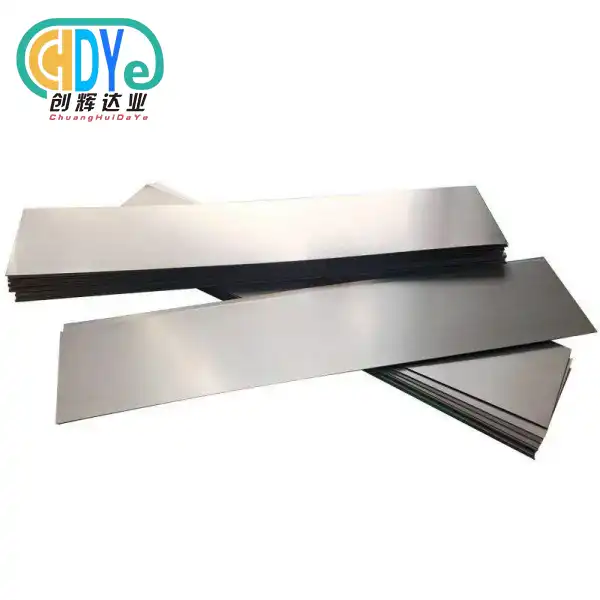
Understanding the Challenges of Cutting and Machining Titanium Sheets
Titanium is different from other metals because it has special problems that make it hard to work with. The material doesn't carry heat well—about a quarter as well as steel—so heat builds up at the cutting edge instead of spreading out through the item. This focused heat energy speeds up tool wear by a huge amount and, at high temperatures, can cause chemical reactions between the titanium surface and the tool's surface.
Heat Accumulation and Tool Wear
When grinding, the cutting edge can get hotter than 1000°C in a matter of seconds. Titanium, unlike steel or aluminum, keeps this heat in a small area, which puts a lot of stress on cutting tools. Titanium's hexagonal close-packed crystal structure also helps with work hardening, which means that the material gets harder as it is bent. This means that with each cut, the material gets harder, which shortens the life of the tools and could affect the quality of the finish.
Chemical Reactivity Concerns
The fact that titanium likes oxygen, nitrogen, and hydrogen at high temperatures adds to the complexity. When cutting without enough cooling, the material can make hard alpha-case layers on newly cut surfaces, which weakens its mechanical qualities. Tool materials can stick to titanium through diffusion processes, which can cause edges to build up and the tool to break in a very bad way. In some precision uses, these processes require constant flow of coolant and tight control of the atmosphere.
Cost Implications for Procurement
These technological problems have direct effects on how things are bought. The cost of tools for cutting titanium is usually three to five times higher than for cutting stainless steel. Cutting speeds slow down, and tools need to be changed more often, which makes production cycles longer. By knowing these things, buyers can correctly judge the skills of suppliers, negotiate reasonable wait times, and set the right budget for projects that require a lot of machining with titanium materials.
Best Practices for Safe and Efficient Cutting of Titanium Sheets
The best way to cut relies on the thickness of the sheet, the level of accuracy needed, the amount of output, and the tools that are available. When used in the right situations, each method has its own unique benefits.
Mechanical Cutting Methods
For titanium sheets that are between 0.5 mm and 50 mm thick, waterjet cutting is the best method. High-pressure water mixed with rough garnet particles is used in this process to wear away at materials without generating heat. This stops thermal warping and keeps the features of the materials. This method works especially well for 2mm sheets that are very thin and could twist easily. For straight cuts in sheets up to 6 mm thick, shearing works well, but you need to pay attention to the quality of the edges. Bandsaw cutting with bimetal or carbide-tipped blades is a cheap way to do rough size work as long as the cutting speed stays low, usually between 15 and 30 meters per minute, with flood coolant used.
Thermal Cutting Considerations
Laser cutting is a precise way to make complex shapes out of titanium sheets that are up to 12 mm thick. Nitrogen helps gas stops oxidation and clears the kerf of melting material. Plasma cutting can go faster for bigger pieces, but it leaves wider heat-affected areas that need to be machined out before the final measurements can be reached. To keep dross formation and alpha-case growth to a minimum, both heating methods need to have their parameters carefully optimized. Based on our experience, aircraft makers like to use mechanical methods for important parts that don't need to be exposed to a lot of heat for certification purposes.
Tooling Selection and Maintenance
When working with titanium, carbide tools with sharp cutting edges work better than high-speed steel. Titanium aluminum nitride (TiAlN) coatings cut down on friction and make tools last 40 to 60 percent longer than carbide that isn't covered. The shape of the tool is very important. Positive rake angles (5–10 degrees) lower cutting forces, and good clearance angles keep things from touching. It is important to keep the edges of tools sharp because dull edges produce too much heat and speed up the hardening of work. Setting plans for replacing tools based on real cutting time instead of part count helps make sure that quality stays the same from one production run to the next.
Machining Titanium Sheets: Techniques and Safety Measures
To turn titanium sheets into final parts, you need to use different machining techniques for each type of process. The methods below cover common industrial processes while putting the focus on safety rules that are important for protecting workers and making sure the quality of the final product.
Milling Operations
The most common processes done on titanium sheet stock are face milling and peripheral milling. For Grade 2 commercially pure titanium, cutting speeds should be between 30 and 60 meters per minute. For Grade 5 (Ti-6Al-4V) metal, cutting speeds should be between 20 and 40 meters per minute. Feed rates of 0.05-0.15 mm per tooth are the best way to combine tool life with output. Climb milling is better than regular milling because it improves surface finish and lowers work hardening. It's important to have rigid workholding because any shaking speeds up tool wear and lowers the accuracy of measurements. High-pressure coolant systems that send 70 to 100 bar pressure move chips out of the cutting zone and keep temperatures at a level that can be handled.
Drilling and Boring
To make holes in titanium, you need to be patient and accurate. Peck drilling cycles with a lot of pullback let the chips fall away and the coolant reach the cutting edges. With web thinning, drill point angles between 118 and 135 degrees are used to lower push forces. For twist drills, cutting speeds shouldn't go over 15 to 25 meters per minute. For bigger sizes, speeds should be slowed down. Through-tool water supply makes chip removal much better and increases the life of the drill. When precise tolerances are important, reamer operations should come after drilling. Titanium-specific reamers with enough chip gullet volume should be used.
Safety Protocols and Chip Management
Titanium chips can catch fire if they are left to pile up in a dry place or are near sparks. Keeping wet chip collection systems in good shape lowers the risk of fire. Operators must wear safety glasses with side shields, face shields when grinding, and the right breathing protection when dry cutting is not an option. Titanium dust from grinding or sanding can explode in certain amounts, so it's important to have good airflow and dust collection systems. Metal chips should never be kept in steel cases or mixed with other metal scrap, since the pressure between them can start a fire. To properly get rid of chips, you need to keep them wet and separate them so that they can be recycled in the right way.
Titanium Sheet Grades and Thickness: How They Affect Machining
Choosing the right material has a big effect on the cutting strategy, the life of the tools, and the performance of the end part. Knowing the differences between grades helps buying teams choose the best things for each job.
Grade 2 Characteristics
Grade 2 commercially pure titanium is very resistant to rust and has a modest yield strength of about 345 MPa. The material is easier to shape and machine than alloy types, which makes it perfect for use in chemical processing equipment, heat exchanges, and buildings. Grade 2 titanium sheets come in widths ranging from 500mm to 2000mm and lengths ranging from 1000mm to 3000mm. They are a cost-effective choice for projects that value rust protection over ultimate strength. The material can be machined faster than metal grades and causes less tool wear, which means that manufacturers can make things for less money.
Grade 5 Performance
Because it is so strong for how light it is, Ti-6Al-4V (Grade 5) is used a lot in aircraft and high-performance uses. This alpha-beta metal has a yield strength of more than 828 MPa, which means it can hold structural loads and prevent corrosion. The addition of aluminum and vanadium makes the mechanical qualities better, but it makes grinding harder—cutting speeds have to be slowed down by 30–40% compared to Grade 2, and tool wear happens much faster. When making a purchase choice about Grade 5, you should weigh the benefits of better performance in harsh work settings against the longer machining times and higher prices of the tools you'll need. Both types meet ASTM B265 standards, which means that materials can be tracked and the quality is always the same when they come from certified sources.
Thickness Considerations for 2mm Sheets
When working with 2mm titanium sheets, you need to pay extra attention to how you hold the work and how you cut it. When cutting, thin pieces bend easily, which causes chatter and changes in size. Secure clamping can be done with vacuum clamps or magnetic chucks that have safety layers. A shallow depth of cut, usually between 0.5 and 1 mm, keeps the sheet from deflecting during milling. Because they are strong and light, 2mm sheets are often used for internal walls in airplanes, drone parts, and medical device housings, where reducing weight directly improves performance.
Procuring Titanium Sheets: Ensuring Quality and Reliability for Machining Projects
Successful buying includes more than just comparing prices. It also includes evaluating the skills of suppliers, checking the quality of goods, and making sure the supply line is reliable. The following factors help people make smart choices about what to buy.
Material verification is what quality security is built on. Reliable providers give Mill Test Certificates for each production lot that show the chemical makeup, mechanical qualities, and heat treatment parameters. For aerospace uses, you need to show that you follow AMS standards and can trace back to the original ingot sources with extra paperwork. Check that providers have ISO 9001:2015 certification and licenses for quality systems relevant to their business when you are assessing them. With over 30 years of experience making rare metals, Shaanxi Chuanghui Daye Metal Material Co., Ltd., which is based in Baoji, China's Titanium Capital, makes sure that quality is checked at every stage of production, from inspecting the raw materials to packing the finished goods.
Geographic Sourcing Strategy
About 60% of the world's titanium mill products are made in the Baoji area of China, which has reasonable prices and a lot of processing options. This industry center has a lot of melting, forging, rolling, and machining plants close together. This cuts down on wait times and shipping costs. Western manufacturers with a history in flight, such as Allegheny Technologies and TIMET, offer alternatives, but they usually charge more. The best way to choose a seller for a project is to weigh cost against certification standards and delivery reliability.
Customization and Processing Services
For most uses, standard sheet sizes are fine, but for many jobs, special sizes are needed to cut down on waste and extra work. Suppliers who can do precise cutting, like waterjet, laser, or shear cutting, send titanium sheets that are cut to exact measurements. This cuts down on the time it takes to make things and the cost of scrap. Working with providers who offer flexible small-batch production is helpful when specs call for non-standard widths between 500 and 2000 mm or specific lengths from 1000 to 3000 mm. For complicated projects, modern facilities like Chuanghui Daye keep sawing tools, shearing equipment, and CNC machining centers that can make custom-sized and precisely machined parts from titanium plate stock. This makes the buying process easier.
Conclusion
To safely and quickly machine titanium sheets, you need to know a lot about how the material works, choose the right tools, and follow strict safety rules. Titanium's unique qualities—its high resistance to corrosion, high strength-to-weight ratio, and low thermal conductivity—bring producers both possibilities and challenges. Successful businesses find the right mix between cutting parameters, coolant supply, and tool care to get the most work done for the least amount of money. When making purchasing choices, you should look at price, but you should also look at things like source approval, material tracking, and handling capabilities. This guide explains techniques that help engineering and procurement teams confidently state requirements, correctly assess suppliers' abilities, and get better results in medical, chemical processing, industrial, and aircraft settings.
FAQ
Q: What cutting method works best for thin 2mm titanium sheets?
A: Waterjet cutting is the best way to work with thin titanium sheets because it gets rid of the heat-affected areas that cause them to bend. The cold cutting method keeps the sheet's qualities the same all the way through while keeping tolerances to within ±0.1mm. Shearing is good for straight cuts, but it can cause the edges to warp a little, which needs to be fixed by deburring. Laser cutting is faster for complicated shapes, but it needs to be carefully controlled to keep the amount of heat input to a minimum and keep the cut edges from forming alpha-case.
Q: How often should the cutting tools be changed when machining titanium?
A: Tool life depends a lot on the type of material, the cutting settings, and how well the cooling works. Under ideal conditions, Grade 2 titanium usually lets each carbide piece cut for 30 to 60 minutes. Because it is harder and reacts more with chemicals, Grade 5 metal cuts this time down to 15 to 30 minutes. Regular inspections of tools to check for wear stop major failures and keep the quality of the surface finish. Setting a baseline for tool life during the first production runs lets you make replacement plans that combine the cost of tools with their ability to produce consistent quality.
Q: Is it possible to make titanium sheets without special tools?
A: Basic cutting and drilling tasks can be done with standard tools as long as the workers set the settings correctly and keep the coolant flowing freely. Titanium can be worked on by standard milling machines and lathes as long as the cutting speeds are kept within the suggested ranges and the sets are rigid to reduce vibration. Specially made machines with high-pressure cooling systems, spindle power enough for low-speed/high-torque cutting, and vibration-damped construction make production much more efficient and tool life much longer. Buying specialized tools and equipment is worth it when titanium machining is used for normal production instead of just making prototypes from time to time.
Partner With Chuanghui Daye for Reliable Titanium Sheet Solutions
For cutting projects to go well, they need to start with good materials from reputable titanium sheet providers. Shaanxi Chuanghui Daye Metal Material Co., Ltd. sells approved Grade 2 and Grade 5 titanium sheets that are 2 mm thick and come in widths ranging from 500 mm to 2000 mm and lengths ranging from 1000 mm to 3000 mm. These sheets are designed for use in flight and industry. Our manufacturing methods are ISO 9001:2015-certified, which means that the material properties are always the same, there is full paperwork for tracking, and our factory-direct prices are low. We offer custom cutting services that cut down on the time and materials needed for production by using state-of-the-art tools like annealing furnaces, electron beam furnaces, and precision machine centers. You can email our expert team at info@chdymetal.com to talk about the details of your project, get material certifications, or get full quotes for the titanium sheets you need.
References
1. Donachie, Matthew J. "Titanium: A Technical Guide, 2nd Edition." ASM International, Materials Park, Ohio, 2000.
2. Boyer, Rodney, Gerhard Welsch, and E.W. Collings. "Materials Properties Handbook: Titanium Alloys." ASM International, 1994.
3. Ezugwu, E.O. and Z.M. Wang. "Titanium Alloys and Their Machinability: A Review." Journal of Materials Processing Technology, Volume 68, Issue 3, 1997.
4. American Society for Testing and Materials. "ASTM B265-20: Standard Specification for Titanium and Titanium Alloy Strip, Sheet, and Plate." ASTM International, West Conshohocken, Pennsylvania, 2020.
5. Machining Data Handbook, 3rd Edition. "Titanium and Titanium Alloys Machining Recommendations." Machinability Data Center, Cincinnati, Ohio, 1980.
6. Veiga, C., J.P. Davim, and A.J.R. Loureiro. "Properties and Applications of Titanium Alloys: A Brief Review." Reviews on Advanced Materials Science, Volume 32, 2012.

Learn about our latest products and discounts through SMS or email