- English
- French
- German
- Portuguese
- Spanish
- Russian
- Japanese
- Korean
- Arabic
- Greek
- German
- Turkish
- Italian
- Danish
- Romanian
- Indonesian
- Czech
- Afrikaans
- Swedish
- Polish
- Basque
- Catalan
- Esperanto
- Hindi
- Lao
- Albanian
- Amharic
- Armenian
- Azerbaijani
- Belarusian
- Bengali
- Bosnian
- Bulgarian
- Cebuano
- Chichewa
- Corsican
- Croatian
- Dutch
- Estonian
- Filipino
- Finnish
- Frisian
- Galician
- Georgian
- Gujarati
- Haitian
- Hausa
- Hawaiian
- Hebrew
- Hmong
- Hungarian
- Icelandic
- Igbo
- Javanese
- Kannada
- Kazakh
- Khmer
- Kurdish
- Kyrgyz
- Latin
- Latvian
- Lithuanian
- Luxembou..
- Macedonian
- Malagasy
- Malay
- Malayalam
- Maltese
- Maori
- Marathi
- Mongolian
- Burmese
- Nepali
- Norwegian
- Pashto
- Persian
- Punjabi
- Serbian
- Sesotho
- Sinhala
- Slovak
- Slovenian
- Somali
- Samoan
- Scots Gaelic
- Shona
- Sindhi
- Sundanese
- Swahili
- Tajik
- Tamil
- Telugu
- Thai
- Ukrainian
- Urdu
- Uzbek
- Vietnamese
- Welsh
- Xhosa
- Yiddish
- Yoruba
- Zulu
What Makes Titanium Welding Wire Ideal for Corrosion Resistance?
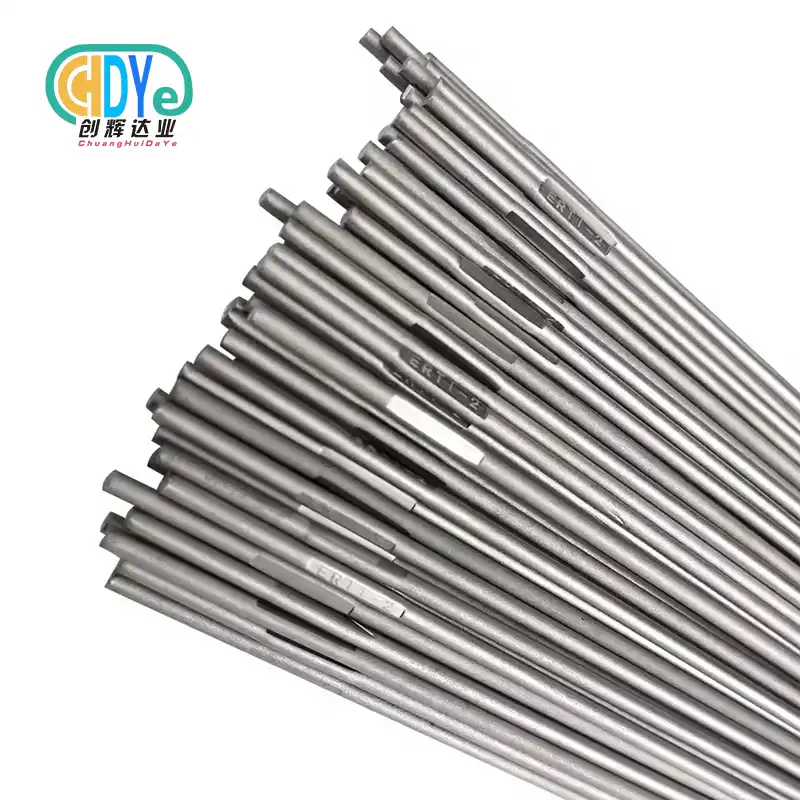
Titanium welding wire stands out as the premier choice for corrosion-resistant applications due to its exceptional chemical composition, superior oxide layer formation, and unmatched performance in harsh environments. Unlike conventional welding materials, titanium filler wire maintains its structural integrity while providing outstanding resistance to chemical attack, making it indispensable for aerospace, marine, and chemical processing industries where corrosion protection is critical.
Understanding Titanium Welding Wire and Its Corrosion Resistance Properties
The unique metallurgical qualities and carefully controlled makeup of titanium welding wire make it very resistant to rust. These special filler metals are made to work the same way in a wide range of industrial settings, all while upholding the best quality and dependability standards.
Fundamental Properties of Titanium Welding Materials
Titanium welding materials have a unique set of properties that make them better for uses that need to prevent corrosion. The material has a mass of about 4.43 g/cm³, which makes it very strong for its weight. Its melting point of 1668°C also makes it stable in very hot or cold situations. When a solid titanium dioxide (TiO₂) inactive layer forms on the surface, it blocks corrosive elements from getting through. This stops further oxidation and chemical attack. Controlling the chemicals in high-quality titanium filler wire is very important for keeping these defensive qualities. Strict limits on intermediate elements like hydrogen (usually less than 0.015%), oxygen, nitrogen, and carbon keep welding parts from becoming weak and make sure they can bend easily. By using vacuum arc remelting and electron beam polishing to precisely control the makeup, impurities that could weaken corrosion protection are removed.
Available Grades and Their Specific Applications
Knowing the different types of titanium welding wire helps procurement professionals choose the best material for each corrosive climate. The commercial grades are ERTi-1 through ERTi-12, and each one is made for a specific job and set of performance needs.The ERTi-1 and ERTi-2 types are commercially pure titanium that doesn't rust and is very flexible, which makes them perfect for chemical processing equipment and naval uses. Tensile strengths for these grades range from 240 MPa to 400 MPa, which is good enough for most structural uses while still offering excellent rust resistance.ERTi-5 (Ti-6Al-4V) is the standard in the aerospace business because it has better strength qualities and can withstand tensile strengths of more than 895 MPa. This grade keeps its high level of resistance to corrosion while still meeting the technical needs of important aircraft parts. A form called ERTi-23 is very pure and has less oxygen and iron in it. It was made for medical and cold uses where maximum fracture toughness is important.ERTi-7 has palladium added to it to make it much more resistant to crevice corrosion in reducing acid environments. This makes it very useful for chemical processing tasks that use harsh media. This special grade is made to deal with certain rust problems that regular sold pure grades can't.
Comparative Analysis: Titanium Welding Wire vs. Other Welding Wires
Understanding the differences in performance between titanium and other materials is important for making smart purchasing decisions when looking at welding materials for corrosion-resistant uses. This study shows why titanium always does better than other choices in tough conditions.
Performance Against Stainless Steel Welding Wire
When it comes to rust protection, titanium welding wire is better than even the best stainless steel options. While 316L stainless steel welding wire is resistant to corrosion in many settings, it can still be damaged by pitting corrosion, crevice corrosion, and stress corrosion cracking in chloride-containing settings. The protective oxide layer on titanium welding wire stays on even in seawater, strong chloride solutions, and wet chlorine gas conditions, where stainless steel would break quickly. The way titanium and stainless steel passivate is very different from one another. Titanium's oxide layer heals itself instantly when it gets broken, which is something that stainless steel can't do. Titanium welding wire is especially useful in marine settings, chemical processing plants, and offshore uses where servicing entry is difficult. Titanium welding wire has a better strength-to-weight ratio than other metals, which makes it possible to create smaller structures without sacrificing performance. While stainless steel welding wire may be cheaper at first, titanium welds often offer better long-term value due to their longer service life and lower maintenance needs. This is especially true in important uses where failure costs are high.
Advantages Over Aluminum Welding Wire
While aluminum welding wire is very resistant to corrosion in normal situations, titanium welding wire is more versatile and performs better in harsh settings. Titanium welding wire keeps its mechanical qualities and ability to fight corrosion over a much wider temperature range, from very cold temperatures below 0°C to high temperatures above 400°C. Because titanium welding wire is galvanically compatible, it can be used in structures made of more than one material without causing rust cells that could weaken the joint. When aluminum welding wire is used with different metals, it often needs to be carefully separated to avoid galvanic rusting. This makes the design more complicated and increases the number of places where it could fail.
How to Use Titanium Welding Wire for Optimal Corrosion Resistance
To get the best rust protection from titanium welding materials, you have to follow certain steps and best practices during the whole welding process. If these methods are used correctly, the soldered joint will have the same corrosion protection as the base material.
Essential Welding Techniques and Procedures
Gas Tungsten Arc Welding (GTAW/TIG) is still the best way to join titanium materials together because it lets you precisely control the heat and protects the neutral atmosphere. During the heating and cooling cycles, the welding process must keep the atmosphere completely safe so that pollution doesn't happen, which could weaken the resistance to rust. The right choice of shielding gas and flow rates is very important for keeping the quality of the weld. Argon gas must be more than 99.99% pure, with less than 10 parts per million of oxygen and water. Maintaining both primary and backup gas safety is important. Backing gas flow rates should be between 15 and 25 CFH to keep air out of the weld root area completely. Pre-welding preparation includes cleaning the base material and titanium welding wire very well to get rid of any impurities that might affect the quality of the weld. Cleaning surfaces with nitric-hydrofluoric acid solutions or mechanical methods like wire brushing with stainless steel brushes makes sure they are in the best shape for welding.
Storage and Handling Best Practices
Careful attention must be paid to how titanium welding materials are stored and handled in order to keep their integrity. The wire needs to be kept in a clean, dry place with a relative humidity below 50% so that hydrogen doesn't soak in and cause the finished weld to become porous or weak. Temperature control during storage stops mist from forming on the wire surface, which could damage it. Temperatures in storage should stay steady. Temperature changes that happen quickly could cause mist to form. Containers that are sealed and contain desiccant materials offer extra defense against water damage. The way the wire is handled must keep the surface from being mechanically damaged, which could cause stress concentrations or contamination. To keep oil or wetness from getting on the wire, people who handle it should wear clean cotton gloves. Before it is used, you should carefully check any line that has been dropped or damaged manually.
Procurement Considerations for Titanium Welding Wire
To get high-quality titanium welding tools, you need to know the main things that affect performance, cost, and the stability of the supply chain. These things to think about help people who work in buying make choices that balance business goals with technical needs.
Critical Specification Parameters
Chemical composition uniformity is the most important specification feature to look at when comparing titanium welding wire sources. To make sure that the weld performs as expected, the source must show that the amounts of titanium, aluminum, vanadium, and intermediate elements are consistent from one lot to the next. Material test papers should have a full chemical analysis along with statistical process control data that shows how the makeup stays the same over time. Checking the wire's mechanical properties by tension testing, bend testing, and crack toughness evaluation makes sure it will work as it should in service. These qualities must meet or go beyond what is required by AWS A5.16 and ASTM B863 standards. For specific uses, more testing is possible. Specifications for surface quality are especially important for uses that don't need to prevent rust. Pickled surface finishes and bright surface finishes are two surface processes that can be used. Each has its own benefits for different welding tasks. Pickled surfaces are the cleanest option for important tasks, while bright surfaces are better for automatic welding processes because they feed better.
Supply Chain and Quality Assurance
When working with specialized titanium welding materials, it's important to have a reliable supply chain management system. Leading sellers keep enough stock on hand to meet both regular and emergency needs, and they offer a range of flexible packaging choices, such as straight wire, natural coil, and wound coils in D100 and D300 designs. Quality management systems that are approved to ISO 9001:2015 standards make sure that goods always meet the requirements. Traceability paperwork that connects produced goods to the sources of their raw materials allows for thorough quality control and helps meet approval needs for medical and aerospace uses. Specifications for straightness and diameter limits have a direct effect on how well automatic welding systems feed. Standard diameter sizes from 0.4mm to 6.0mm can be used for a variety of welding tasks, and tight standards make sure that the arc qualities and penetration patterns are always the same.
Why Leading Brands Choose Titanium Welding Wire for Corrosion Resistance
Titanium welding wire is always chosen by leaders in the industry for important jobs because of its dependability and track record of excellent performance. Procurement experts can find the best sources for their needs by understanding the factors that affect these choices.
Manufacturer Reputation and Technical Support
The best companies that make titanium welding wire set themselves apart by offering full technical support services that go beyond just delivering the product. These companies hire steel engineers and welding experts who can give advice on the best ways to use their products for different purposes, help with fixing problems, and advise on how to make the whole process run more smoothly. Locating factories in well-known titanium production hubs, like Baoji, China's "Titanium Capital," gives companies access to specialized infrastructure, a skilled workforce, and reliable sources of raw materials that guarantee high-quality products. Because there is a lot of titanium knowledge in these areas, manufacturing methods and new products are always getting better. Compliance with certification is another important way that makers can be distinguished. Leading suppliers keep their certifications up to date with international standards like AWS A5.16, EN ISO 18274, and different aircraft standards. This full certification support makes it easier for end users to get qualified and makes sure that it works with current quality control systems.
Innovation in Manufacturing Processes
Leading makers use advanced manufacturing methods to make sure that their products are consistent and work well. The vacuum arc remelting (VAR) and electron beam melting (EBM) methods get rid of impurities and make the chemical makeup of the wire cross-section the same all the way through. Multiple passes of drawing with intermediate heating make sure that the width is always controlled evenly and the mechanical properties stay the same. When these steps are paired with real-time quality control, they make a wire that is very straight and has a smooth surface, which leads to better feeds and weld quality.
Conclusion
The formation of a steady protective oxide layer and carefully controlled chemical makeup are just two of the metallurgical characteristics that give titanium welding wire its exceptional corrosion resistance. Stainless steel and aluminum are two other materials that can be used instead of titanium. Titanium consistently performs better in harsh settings and has more strength per weight. When welding methods are followed correctly, materials are chosen carefully, and suppliers are checked out, they make sure that important uses in the aircraft, chemical processing, and marine industries are protected from corrosion to the highest standard.
FAQ
Q: What makes titanium welding wire more corrosion-resistant than stainless steel?
A: Titanium welding wire creates a steady, self-healing layer of titanium dioxide (TiO₂) that is better than stainless steel at resisting chemical attack. When this oxide layer gets broken, it heals itself right away, and it stays steady in chloride environments, acidic conditions, and high temperatures—all of which would cause stainless steel to pit or crack from stress corrosion.
Q: Which titanium grade should I choose for seawater applications?
A: For marine and saltwater uses, ERTi-1 or ERTi-2 types (which are commercially pure titanium) offer great corrosion protection and good mechanical qualities for most building needs. ERTi-5 (Ti-6Al-4V) has better mechanical qualities and is very resistant to corrosion in sea settings, making it ideal for uses that need more strength.
Q: How should titanium welding wire be stored to maintain its properties?
A: To keep hydrogen from absorbing, titanium welding wire should be kept in a clean, dry place where the relative humidity is less than 50%. Keep the temperature stable to avoid condensation and use sealed containers with dry materials. Always wear clean cotton gloves when handling to avoid pollution that could affect the quality of the weld.
Q: What welding process works best with titanium welding wire?
A: Due to exact heat control and full atmospheric protection, Gas Tungsten Arc Welding (GTAW/TIG) yields the best results with titanium welding wire. To keep things clean during the welding and cooling processes, use high-purity argon shielding gas (>99.99%) as both the main and backing gas protection.
Q: Is titanium welding wire cost-effective compared to alternatives?
A: Titanium welding wire has higher initial costs than alternatives made of stainless steel or aluminum, but it often ends up being more valuable in the long run because it lasts longer, needs less maintenance, and performs better in corrosive environments.
Partner with Chuanghui Daye for Premium Titanium Welding Solutions
Shaanxi Chuanghui Daye delivers industry-leading titanium welding wire manufactured to the highest standards in Baoji, China's renowned "Titanium Capital." Our comprehensive product range includes grades Gr1 through Gr23 and ERTi-1 through ERTi-12, all complying with AWS A5.16 and ASTM B863 standards. With our ISO 9001:2015 certified manufacturing processes, advanced vacuum arc remelting technology, and over 30 years of rare metal expertise, we provide reliable, high-purity titanium welding wire solutions for aerospace, chemical processing, and marine applications. Contact our titanium welding wire supplier team at info@chdymetal.com to discuss your specific corrosion resistance requirements and receive customized quotations for bulk orders.
References
1. American Welding Society. "Specification for Titanium and Titanium Alloy Welding Electrodes and Rods." AWS A5.16/A5.16M:2018.
2. Boyer, R., Welsch, G., & Collings, E.W. "Materials Properties Handbook: Titanium Alloys." ASM International, Materials Park, OH, 1994.
3. Donachie, Matthew J. "Titanium: A Technical Guide, 2nd Edition." ASM International, Materials Park, OH, 2000.
4. Schutz, R.W. & Thomas, D.E. "Corrosion of Titanium and Titanium Alloys." ASM Handbook Volume 13: Corrosion, ASM International, 1987.
5. ASTM International. "Standard Specification for Titanium and Titanium Alloy Wire." ASTM B863-22.
6. Lutjering, G. & Williams, J.C. "Titanium: Engineering Materials and Processes, 2nd Edition." Springer-Verlag, Berlin, 2007.
Learn about our latest products and discounts through SMS or email