- English
- French
- German
- Portuguese
- Spanish
- Russian
- Japanese
- Korean
- Arabic
- Greek
- German
- Turkish
- Italian
- Danish
- Romanian
- Indonesian
- Czech
- Afrikaans
- Swedish
- Polish
- Basque
- Catalan
- Esperanto
- Hindi
- Lao
- Albanian
- Amharic
- Armenian
- Azerbaijani
- Belarusian
- Bengali
- Bosnian
- Bulgarian
- Cebuano
- Chichewa
- Corsican
- Croatian
- Dutch
- Estonian
- Filipino
- Finnish
- Frisian
- Galician
- Georgian
- Gujarati
- Haitian
- Hausa
- Hawaiian
- Hebrew
- Hmong
- Hungarian
- Icelandic
- Igbo
- Javanese
- Kannada
- Kazakh
- Khmer
- Kurdish
- Kyrgyz
- Latin
- Latvian
- Lithuanian
- Luxembou..
- Macedonian
- Malagasy
- Malay
- Malayalam
- Maltese
- Maori
- Marathi
- Mongolian
- Burmese
- Nepali
- Norwegian
- Pashto
- Persian
- Punjabi
- Serbian
- Sesotho
- Sinhala
- Slovak
- Slovenian
- Somali
- Samoan
- Scots Gaelic
- Shona
- Sindhi
- Sundanese
- Swahili
- Tajik
- Tamil
- Telugu
- Thai
- Ukrainian
- Urdu
- Uzbek
- Vietnamese
- Welsh
- Xhosa
- Yiddish
- Yoruba
- Zulu
How to Ensure Quality in Titanium Welding Wire Supply?
To make sure that the quality of titanium welding wire is always the same, you need a method that includes carefully reviewing suppliers, following international rules, and using detailed testing procedures. To make sure the quality is good, choose makers that are certified by ISO 9001:2015, follow AWS A5.16 and ASTM B863 standards, and have a history of making ultra-pure metal compositions. Procurement teams that are good at what they do set clear standards for chemical composition, tolerances for size and finish, and incoming inspection procedures that make sure materials can be tracked, measurements are taken, and contamination is checked to make sure the best welding performance in medical, industrial, and aerospace settings.
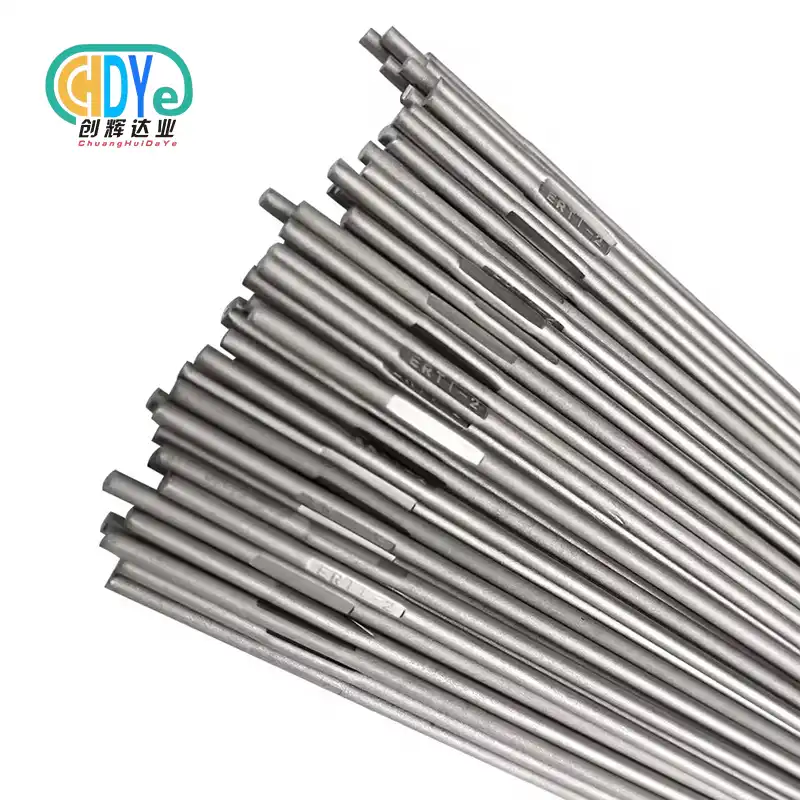
Understanding the Quality Challenges in Titanium Welding Wire Supply
Titanium filler materials often have poor quality because of contamination, alloy inconsistencies, or physical deviations. This can cause weld parts that aren't up to par and problems later in the manufacturing process. These problems have many reasons that buying teams need to know about and take action on.
Common Contamination Sources
Contamination is the biggest threat to the purity of wires. During production, oxygen can pick up and cause alpha-case formation, which makes weld zones that are weak and break when stressed. Impurities of hydrogen weaken things, while impurities of nitrogen and carbon change how strong things are. To keep the makeup of ultra-pure alloys, good providers use vacuum arc remelting and electron beam refining.
Manufacturing Inconsistencies
Dimensional and mechanical differences happen because of different drawing methods, cooling cycles, and quality control measures. These changes show up as changes in width, rough surfaces, and mechanical property changes that have a direct effect on the safety of the arc and the quality of the weld. To solve these problems, we need to carefully look at the manufacturing skills and quality control methods of our suppliers.
Supply Chain Vulnerabilities
Transportation, storage, and handling methods for global B2B clients add to the problems they already have. Poor packing, exposure to wetness, and contamination during shipping can all lower the quality of titanium welding wire before it gets to the end user. When procurement teams know about these weaknesses, they can set up safety steps and guidelines for seller accountability.
Key Quality Criteria and Standards for Titanium Welding Wire
Compliance with well-known industry standards, such as AWS, ASTM, and ISO certifications, must be a top priority for procurement teams. These standards list important things that have a direct effect on the results and long-term success of welding.
Essential Standards and Specifications
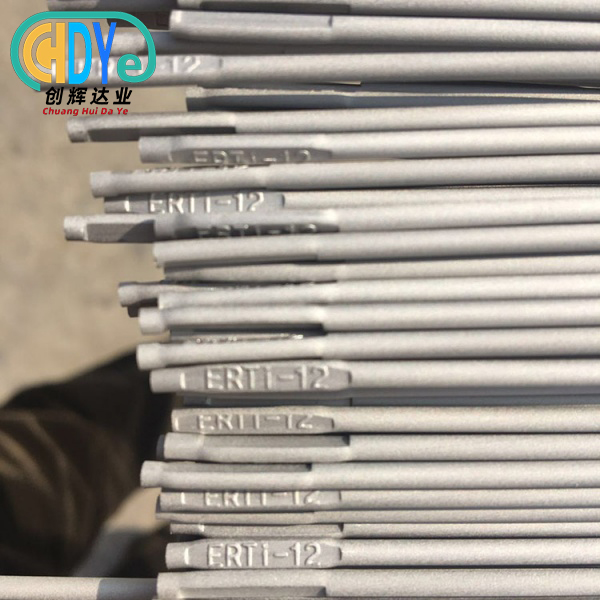
The AWS A5.16 standard sets the rules for grades ERTi-1 through ERTi-12 for the chemical makeup and mechanical qualities of titanium welding wire. For more information on wire drawing, surface finish, and measurement limits, see ASTM B863. These standards ensure that different welding methods and applications can use the same titanium welding wire reliably.
Grade Selection Criteria
Because they have different qualities, each type is best for a certain job. Commercially pure types (ERTi-1 and ERTi-2) are very resistant to corrosion and can be used in chemical processes. For aircraft parts, alloy grades like ERTi-5 (Ti-6Al-4V) offer better strength, and for medical implants, ERTi-23 offers better fracture toughness.
Physical Property Verification
Consistent feeding and arc features are guaranteed by wire width accuracy within ±0.025mm. The quality of the surface finish affects how easily contaminants can get in and how stable the arc is. The purity of the oxide layer keeps the atmosphere from getting dirty during welding. To make sure they work reliably, these physical qualities must be checked during the incoming inspection process.
Best Practices for Sourcing High-Quality Titanium Welding Wire
To choose the right provider, you need to use strict evaluation factors that go beyond just comparing prices. Long-term relationship building and a full review of capabilities are key parts of successful procurement strategies.
Supplier Qualification Framework
Verification of certification is the first step in a good seller review. Getting ISO 9001:2015 approval shows that you care about quality management systems. AS9100 certification shows that an aircraft business meets certain standards. Extra approvals, such as NADCAP for certain methods, give even more confidence in the ability to manufacture.
Audits of manufacturing facilities show what the real production skills and quality control measures are. The tools for melting, drawing, testing, and quality control should all be looked at in these checks. Seeing the manufacturing process firsthand gives you information that paper certificates can't give you.
Technical Capability Assessment
The specialized skills of the supplier must match the needs of the product. Advanced melting methods, such as vacuum arc remelting and electron beam polishing, make sure that the alloys are made of very pure materials. Accurate measurements and the ability to draw in more than one pass ensure accurate measurements. Pickled and bright finishes are two surface treatments that can be used to make surfaces clean.
Having the ability to test and certify materials lets you fully describe them. Chemical research tools, mechanical testing facilities, and methods for measuring dimensions should all be kept up to date by suppliers. Full traceability paperwork from raw materials to finished goods makes sure that everyone is responsible and that the standard is high.
Supply Chain Optimization
Understanding how the supply chain works is necessary for good buying planning. Lead times depend on the grade's difficulty, the diameter that's needed, and the amount that's needed. Planning supplies and lowering costs are affected by minimum order numbers. The way prices are set should take into account the cost of raw materials, the difficulty of handling, and the need for approval.
Framework deals that balance lowering costs with ensuring supply security are made by procurement teams that are good at their job, especially when it comes to titanium welding wire. There should be quality standards, delivery requirements, and performance measures in these deals that are in line with business goals.
How to Verify and Maintain Quality on Receiving Titanium Welding Wire Shipments
When materials are received, they are carefully inspected to make sure they are of good quality and can be used for their original purpose. Comprehensive verification procedures should check the purity of the package, the accuracy of the measurements, and the approval of the materials.
Incoming Inspection Procedures
Visual inspection finds clear flaws like surface contamination, mechanical damage, and problems with the packing. The sides of wires should look smooth and even, with no dents, scratches, or other damage. Inspection of the packaging protects against wetness and contamination during shipping.
Verification of dimensions proves the standards for diameter accuracy and straightness. Statistical sample methods give you trust in the quality of the package as a whole while keeping checking costs low. Calibration standards for measuring tools should be higher than the rules for wire error.
Documentation Verification
Each shipment must have a material test record that includes a chemical analysis, a list of the material's mechanical qualities, and measures of its size. Certificate of compliance papers show that certain standards and customer requirements have been met. Traceability paperwork makes it possible to look into quality problems and take appropriate action.
Storage and Handling Protocols
When wire is stored correctly, it stays intact until it is used. Controlled humidity settings keep wetness from absorbing and spreading germs. Keeping storage areas clean and organized makes it easier to keep track of goods and keeps machines from breaking.
Handling methods for titanium welding wire should keep dimensions accurate while reducing the risk of contamination. Wearing clean gloves keeps skin oil from getting on them, and using the right pulling methods keeps machines from deforming. Training programs make sure that everyone who works with wires handles them the same way.
Case Studies: Successful Titanium Welding Wire Procurement in B2B Industry
Examples from real life show how strategic partnerships with suppliers and standardizing purchases can lead to measured operational gains in a wide range of industry settings.
Aerospace Manufacturing Excellence
A major aerospace company had problems with soldering on important engine parts because the wire makeup wasn't always the same. Working together with their titanium welding wire provider to do a root cause analysis showed that the melting controls were not good enough, which led to changes in the makeup. Better process controls and real-time tracking tools got rid of mistakes and raised production outputs by 15%.
As part of the agreement, the two companies worked together to create special kinds of wire that are best for certain types of welding. This partnership cut down on the time needed to qualify new parts and made sure that they would work the same way in all production sites.
Chemical Processing Optimization
An industrial OEM that specializes in chemical processing equipment streamlined the buying of wire across various sites to save money and improve quality. Standardization on ERTi-2 and ERTi-7 grades simplified inventory management while maintaining performance requirements across diverse applications.
The consolidated method led to better technical help, stronger ties with suppliers, and a 12% drop in the total cost of procurement. Consistent supplier methods and better contact between the engineering and procurement teams led to better quality.
Conclusion
Quality control in the supply of titanium welding wire filler metal needs big plans that cover choosing suppliers, making specifications, and inspecting materials as they come in. Cost optimization and performance standards must be balanced in procurement programs that work well. This is done through smart partnerships with suppliers and systematic methods of quality management. Implementing strong verification methods and following the right ways to store and handle materials will ensure consistent material quality, which in turn leads to reliable welding performance in a wide range of demanding industrial settings.
FAQ
Q: What factors most affect the quality of titanium filler metals?
A: The most important thing that affects quality is how pure the raw materials are. When metal is melted and processed, oxygen, nitrogen, hydrogen, and carbon can get into it and cause metallurgical flaws that weaken the bond. Controls in the manufacturing process, such as vacuum melting and controlled gas processing, have a direct effect on the quality of the end product.
Q: How do I differentiate between various titanium welding consumables?
A: Wire products are supplied in spool form for automated feeding systems, while rod products have to be fed by hand. Depending on the welding process that will be used, the diameter ranges, surface finishes, and packing arrangements change. The mechanical qualities and corrosion protection of different grades are based on their different chemical compositions.
Q: What certifications should I request from suppliers?
A: AWS A5.16 compliance makes sure that chemistry and mechanical standards are followed. Certification to ASTM B863 covers requirements for the production process. ISO 9001:2015 shows how to set up a quality control system. Material test reports and certificates of compliance give detailed batch information that can be used to track down materials.
Partner with Chuanghui Daye for Superior Titanium Welding Wire Quality
Shaanxi Chuanghui Daye delivers exceptional titanium welding wire solutions engineered for demanding aerospace, medical, and industrial applications. Our comprehensive grade selection includes ERTi-1 through ERTi-12 variants manufactured in compliance with AWS A5.16 and ASTM B863 standards. Located in Baoji, China's "Titanium Capital," we leverage advanced vacuum arc remelting and electron beam refining technologies to ensure ultra-pure alloy compositions. Contact our technical team at info@chdymetal.com to discuss your specific requirements and experience the reliability that makes us a trusted titanium welding wire manufacturer for global B2B procurement professionals.
References
1. American Welding Society. "Specification for Titanium and Titanium-Alloy Bare Welding Rods and Electrodes." AWS A5.16/A5.16M, 2018.
2. ASTM International. "Standard Specification for Titanium and Titanium Alloy Wire." ASTM B863-17, 2017.
3. Donachie, Matthew J. "Titanium: A Technical Guide, Second Edition." ASM International Materials Park, 2000.
4. Boyer, Rodney, Gerhard Welsch, and E.W. Collings. "Materials Properties Handbook: Titanium Alloys." ASM International, 1994.
5. Peters, Manfred, Joachim Kumpfert, Christoph Leyens und Klaus Hemptenmacher. "Titanium and Titanium Alloys: Fundamentals and Applications." Wiley-VCH, 2003.
6. Schutz, Russell W., and Henry B. Bomberger. "Corrosion of Titanium and Titanium Alloys in Industrial Applications." Corrosion Engineering Handbook, Second Edition, 2012.
Learn about our latest products and discounts through SMS or email