- English
- French
- German
- Portuguese
- Spanish
- Russian
- Japanese
- Korean
- Arabic
- Greek
- German
- Turkish
- Italian
- Danish
- Romanian
- Indonesian
- Czech
- Afrikaans
- Swedish
- Polish
- Basque
- Catalan
- Esperanto
- Hindi
- Lao
- Albanian
- Amharic
- Armenian
- Azerbaijani
- Belarusian
- Bengali
- Bosnian
- Bulgarian
- Cebuano
- Chichewa
- Corsican
- Croatian
- Dutch
- Estonian
- Filipino
- Finnish
- Frisian
- Galician
- Georgian
- Gujarati
- Haitian
- Hausa
- Hawaiian
- Hebrew
- Hmong
- Hungarian
- Icelandic
- Igbo
- Javanese
- Kannada
- Kazakh
- Khmer
- Kurdish
- Kyrgyz
- Latin
- Latvian
- Lithuanian
- Luxembou..
- Macedonian
- Malagasy
- Malay
- Malayalam
- Maltese
- Maori
- Marathi
- Mongolian
- Burmese
- Nepali
- Norwegian
- Pashto
- Persian
- Punjabi
- Serbian
- Sesotho
- Sinhala
- Slovak
- Slovenian
- Somali
- Samoan
- Scots Gaelic
- Shona
- Sindhi
- Sundanese
- Swahili
- Tajik
- Tamil
- Telugu
- Thai
- Ukrainian
- Urdu
- Uzbek
- Vietnamese
- Welsh
- Xhosa
- Yiddish
- Yoruba
- Zulu
Can Ti-6Al-4V Titanium Sheets Replace Steel in Heavy-Duty Applications?
Yes, Ti-6Al-4V Titanium Sheet can effectively replace steel in many heavy-duty applications where weight reduction, corrosion resistance, and thermal stability are critical performance factors. This α+β titanium alloy delivers exceptional strength-to-weight ratios, maintains structural integrity at temperatures up to 400°C, and offers superior resistance to chemical degradation compared to conventional steel grades. While initial material costs are higher, the long-term operational benefits, reduced maintenance requirements, and extended service life make titanium sheets increasingly viable for aerospace, marine, chemical processing, and high-performance industrial applications where traditional steel limitations impact overall system efficiency.
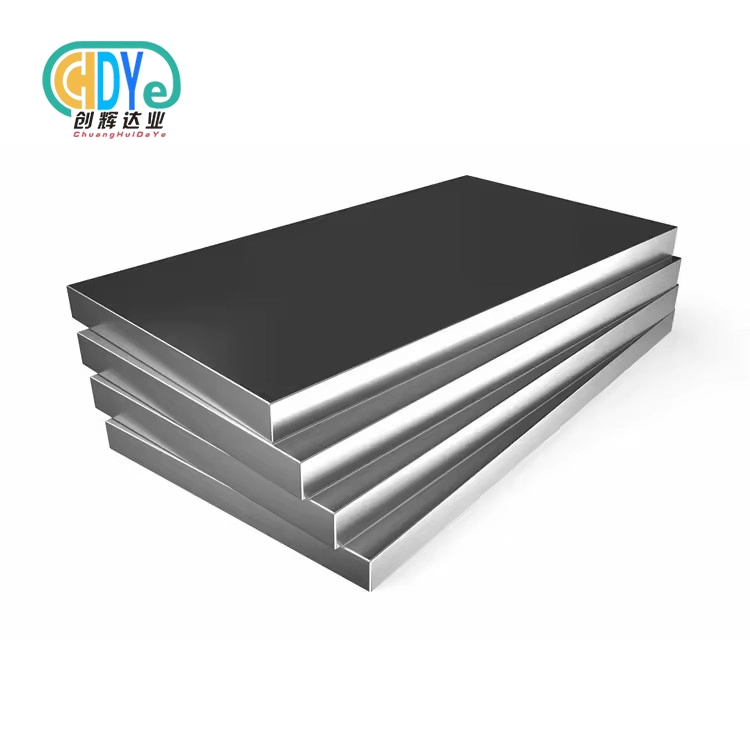
Understanding Ti-6Al-4V Titanium Sheets: Specifications and Properties
Ti-6Al-4V represents the most commercially successful titanium alloy, accounting for approximately 50% of global titanium consumption across industrial applications. The alloy's chemical composition includes 6% aluminum for enhanced strength and reduced density, 4% vanadium for improved heat resistance and workability, with controlled interstitial elements including a maximum 0.25% iron and 0.20% oxygen content.
Mechanical Performance Characteristics
The mechanical properties of Grade 5 titanium demonstrate remarkable performance metrics that surpass many steel grades. Tensile strength reaches minimum values of 895 MPa (130 ksi), while yield strength achieves 828 MPa (120 ksi) with elongation capabilities of at least 10%. The material's density of 4.43 g/cm³ provides approximately 40% weight savings compared to equivalent steel components.
Fatigue resistance represents another critical advantage, with titanium sheets exhibiting superior crack propagation resistance under cyclic loading conditions. The elastic modulus of 114 GPa offers excellent stiffness characteristics, while the beta transus temperature of approximately 996°C enables various heat treatment options to optimize mechanical properties for specific applications.
Thermal and Chemical Stability
Heat resistance capabilities distinguish Ti-6Al-4V Titanium Sheet from conventional materials, maintaining structural integrity and mechanical properties at temperatures up to 400°C (750°F). This thermal stability makes the alloy particularly valuable for automotive exhaust systems, aerospace engine components, and industrial heat exchangers, where steel would experience significant strength degradation.
Corrosion resistance stems from titanium's natural oxide layer formation, which provides exceptional protection against chloride environments, acidic conditions, and oxidizing atmospheres. Unlike steel, which requires protective coatings or cathodic protection systems, titanium sheets maintain their integrity in marine environments, chemical processing equipment, and aggressive industrial atmospheres without additional surface treatments.
Comparative Analysis: Ti-6Al-4V Titanium Sheets vs Steel Sheets
Weight reduction represents the most immediately recognizable advantage when comparing titanium alloys to steel alternatives. The 40% weight reduction that comes from using Ti-6Al-4V Titanium Sheet directly leads to better fuel economy in transportation, less structural loading in aircraft parts, and better handling qualities in industrial machines. These weight advantages add up over the course of the system's design, making it possible for support structures to be lighter and the base needs to be lower.
Strength and Performance Metrics
Strength-to-weight rates show that titanium performs better than other metals under a variety of loading situations. Even though high-strength steels may have similar exact strengths, their low density makes them much less useful in situations where weight is important. Titanium Grade 5 has specific strengths that are higher than those of most steel grades. This lets structure designs be smaller and more efficient.
Titanium has a very high resistance to wear, which is especially important for spinning machinery, equipment that vibrates, and cyclic loading applications. Due to wear cracks, steel parts need to be inspected and replaced more often, while titanium sheets keep their structural integrity over longer service cycles.
Cost Analysis and Economic Considerations
The biggest problem with using titanium is the cost of the raw materials. The prices of these materials are usually 10 to 15 times higher than those of the same types of steel. Lifecycle cost analysis, on the other hand, shows that there are big economic benefits from less upkeep, longer repair times, and not having to use protective coatings. The transportation industry benefits the most from fuel savings, which make up for the higher costs of buying materials at first.
Specialized cutting needs and welding processes used to add a lot to the cost of manufacturing, but new production methods have cut these costs down a lot. As industrial processes get better at making titanium work with its unique properties, more and more volume production uses show better economics.
Procurement Insights: Sourcing Ti-6Al-4V Titanium Sheets for Heavy-Duty Use
Quality approval standards are the basis of effective tactics for getting titanium. For aerospace uses, you need to follow AMS 4911, and to make medical devices, you need to follow ASTM F136 for biocompatible types. ASTM B265 standards are usually used in industrial settings to make sure that all production lots have the same chemical makeup and mechanical qualities.
Supply Chain Considerations
Global titanium supply chains involve sophisticated manufacturing networks spanning primary production facilities in North America, Europe, and Asia, where high-quality products such as Ti-6Al-4V Titanium Sheet are sourced. The best providers have complete quality control systems that include ISO 9001:2015 approval, full material traceability, and a variety of testing methods that examine chemical composition, mechanical properties, and microstructural characteristics.
Procurement managers have to look at what a seller can do, such as offer special processing services, keep stock on hand, and offer expert help. Suppliers you can trust give extra services like precise cutting, surface finishing, and faster shipping that help you meet project deadlines and cut down on the need for extra work.
Specification and Ordering Guidelines
To successfully buy something, you need to be very clear about the size tolerances, surface finish needs, and approval standards. Ordering Ti-6Al-4V Titanium Sheet usually involves choosing a thickness between 0.5mm and 50mm, as well as the width and length, edge conditions, and surface processes like pickling, polishing, or "as-rolled" finishes.
Mill test certificates are important pieces of paper that show things like chemical analysis, mechanical test results, ultrasonic inspection data, and measurement proof. During the whole production process, these papers make sure that materials can be tracked and that they meet the needs of the specific application.
Advantages and Limitations of Replacing Steel with Ti-6Al-4V Titanium Sheets
When titanium sheets are used in heavy-duty situations, they have changing effects that go beyond just replacing materials. Getting rid of extra weight makes system-level design optimization possible, which helps engineers cut down on the need for supporting structures, lower base loads, and make shipping more efficient. Corrosion resistance gets rid of the need for expensive repair processes, protection coatings, and replacing parts too soon.
Performance Benefits and Applications
Real-world applications show gains that can be measured in a wide range of industries. Offshore oil platforms utilize Ti-6Al-4V Titanium Sheet for parts that are exposed to seawater. These parts can last for 25 years without any protective upkeep. Manufacturers of aerospace parts say that structural parts can carry the same or more weight while saving 30 to 40 percent of it.
Titanium is resistant to harsh environments, which means that chemical processing companies don't need to use special steel types or protective liner systems. The greater strength of titanium makes it possible for thinner wall sections in heat exchanger uses, which improves thermal efficiency.
Implementation Challenges and Solutions
When materials are more expensive, they need to be carefully economically justified by lifecycle cost analysis and figuring out how much better performance will cost. Design engineers have to change the way things are made to fit the special properties of titanium. For example, they have to use inert gas shielding during certain welding processes and change the parameters of cutting to keep the work from hardening.
Because of longer lead times and less global production capacity than steel, planning the supply chain becomes very important. To make sure the project stays on schedule, it's important to involve suppliers early on, handle supplies strategically, and come up with other ways to get the things you need.
Making the Decision: Is Ti-6Al-4V Right for Your Heavy-Duty Project?
The use of titanium in heavy-duty uses is decided by evaluation factors that are unique to each project. Conditions in the environment, the amount of load that needs to be handled, the expected service life, and the ease of upkeep all affect the choice of material. Titanium's higher cost is usually justified by practical savings in situations where it is used in corrosive conditions, designs that need to be light, or long service intervals.
Technical Assessment Framework
To choose the best material, engineering research must take into account working temperatures, stress levels, chemical exposure, and fatigue loading. Titanium Grade 5 excels in applications requiring strength-to-weight optimization, corrosion resistance, and thermal stability up to 400°C. For some uses that need different levels of performance, other materials like Grade 2 titanium, super duplex stainless steels, or aluminum alloys may be better choices.
Titanium's special qualities make it possible to find better ways to design things, which leads to new ways of solving structural problems. Higher material prices are often balanced out by gains in manufacturing efficiency, such as thinner sections, fewer fasteners, and easier assembly steps.
Conclusion
Ti-6Al-4V Titanium Sheet has strong benefits for heavy-duty uses where performance needs go beyond what steel can handle. The alloy's high strength-to-weight ratio, excellent resistance to corrosion, and thermal stability make it possible for new ideas to be used in the naval, chemical processing, aircraft, and industrial gear industries. Even though the original cost of the materials is higher than that of steel, the long-term benefits, such as less maintenance, longer service life, and better operating efficiency, often make the investment worth it. To fully utilize titanium's performance potential in tough industrial settings, adoption must include careful technical assessment, partnerships with qualified suppliers, and the improvement of design methods.
FAQ
Q: Can Ti-6Al-4V titanium sheets be formed using conventional equipment?
A: Because it is very strong and not very flexible at room temperature, Ti-6Al-4V needs special ways to be shaped. When temperatures are between 600°C and 900°C, hot forming gives the best shapeability, and superplastic forming lets you make complex shapes. For easy bends, cold forming is possible, but it needs stronger forces and careful springback correction.
Q: What welding procedures are required for Grade 5 titanium sheets?
A: To keep the atmosphere from getting contaminated while welding Ti-6Al-4V, you need to use argon or helium as a full inert gas shield. The most popular method is TIG welding, which needs backup gas protection and a heat treatment after the weld to get the best qualities. Electron beam welding is the best way to join thick pieces and perform important jobs.
Q: How does Ti-6Al-4V compare to other titanium grades for industrial applications?
A: When it comes to titanium metals, Grade 5 has the best mix of strength, workability, and affordability. Grade 2 is easier to shape but not as strong as Grade 23 (ELI), which is better for medical uses because it is less likely to break. Choices are made based on unique processing and efficiency needs.
Partner with Chuanghui Daye for Premium Ti-6Al-4V Titanium Sheet Solutions
Shaanxi Chuanghui Daye Metal Material Co., Ltd. delivers exceptional Ti-6Al-4V Titanium Sheet solutions backed by over 30 years of rare metal expertise. Located in China's Titanium Capital, our ISO 9001:2015-certified plant is in China's Titanium Capital and can do a wide range of processing, such as precise cutting, custom machining, and strict quality control. Our experienced engineering team helps clients around the world with technical questions, dependable supply chain solutions, and low factory-direct prices. Get in touch with info@chdymetal.com right away to talk about your heavy-duty application needs and find out how our top Ti-6Al-4V Titanium Sheet supply services can help your project run more smoothly and save you money.
References
1. American Society for Testing and Materials. "Standard Specification for Titanium and Titanium Alloy Strip, Sheet, and Plate." ASTM B265-20. West Conshohocken, PA: ASTM International, 2020.
2. Boyer, Rodney, Gerhard Welsch, and E.W. Collings. "Materials Properties Handbook: Titanium Alloys." Materials Park, OH: ASM International, 1994.
3. Donachie, Matthew J. "Titanium: A Technical Guide, 2nd Edition." Materials Park, OH: ASM International, 2000.
4. Lutjering, Gerd and James C. Williams. "Titanium: Engineering Materials and Processes, 2nd Edition." Berlin: Springer-Verlag, 2007.
5. Peters, Manfred, Joachim Kumpfert, Colin Ward und Christoph Leyens. "Titanium Alloys for Aerospace Applications." Advanced Engineering Materials 5, no. 6 (2003): 419-427.
6. Welsch, Gerhard, Rodney Boyer, and E.W. Collings. "Materials Properties Handbook: Titanium Alloys." Materials Park, OH: ASM International, 1993.
Learn about our latest products and discounts through SMS or email