- English
- French
- German
- Portuguese
- Spanish
- Russian
- Japanese
- Korean
- Arabic
- Greek
- German
- Turkish
- Italian
- Danish
- Romanian
- Indonesian
- Czech
- Afrikaans
- Swedish
- Polish
- Basque
- Catalan
- Esperanto
- Hindi
- Lao
- Albanian
- Amharic
- Armenian
- Azerbaijani
- Belarusian
- Bengali
- Bosnian
- Bulgarian
- Cebuano
- Chichewa
- Corsican
- Croatian
- Dutch
- Estonian
- Filipino
- Finnish
- Frisian
- Galician
- Georgian
- Gujarati
- Haitian
- Hausa
- Hawaiian
- Hebrew
- Hmong
- Hungarian
- Icelandic
- Igbo
- Javanese
- Kannada
- Kazakh
- Khmer
- Kurdish
- Kyrgyz
- Latin
- Latvian
- Lithuanian
- Luxembou..
- Macedonian
- Malagasy
- Malay
- Malayalam
- Maltese
- Maori
- Marathi
- Mongolian
- Burmese
- Nepali
- Norwegian
- Pashto
- Persian
- Punjabi
- Serbian
- Sesotho
- Sinhala
- Slovak
- Slovenian
- Somali
- Samoan
- Scots Gaelic
- Shona
- Sindhi
- Sundanese
- Swahili
- Tajik
- Tamil
- Telugu
- Thai
- Ukrainian
- Urdu
- Uzbek
- Vietnamese
- Welsh
- Xhosa
- Yiddish
- Yoruba
- Zulu
How to Store and Handle Titanium Alloy Tube Safely?
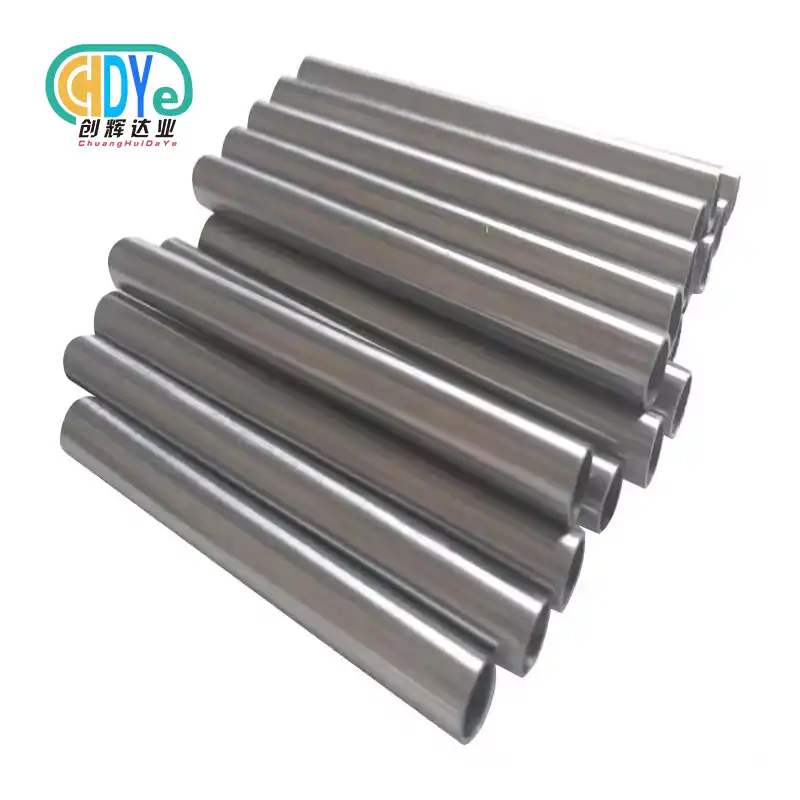
Safely storing and handling titanium alloy tubes has a direct effect on how well the materials work, how long projects take, and how much they cost to buy in the chemical processing, aerospace, and medical device-making industries. We at Shaanxi Chuanghui Daye Metal Material Co., Ltd. know that to keep the exceptional qualities of these high-performance materials, like their strength-to-weight ratio, resistance to corrosion, and structural integrity, they need to be handled in a certain way from the time they arrive at the warehouse until they are put together. Purchasing managers, quality engineers, and transportation planners who are responsible for global supply chains can use the information in this guide to protect their investments in high-quality titanium alloy tube goods and make sure they meet international standards. The right way to store things keeps them from getting mechanical damage, surface contamination, and environmental degradation that could make them not meet the standards set by ASTM B338, B337, B861, and B862. Knowing about these practices can help lower the risks that lead to project delays, high rates of material rejection, and substitute costs that were not expected. Using proven methods for handling materials will ensure they are production-ready and work reliably throughout their service life, whether you're looking for seamless titanium alloy tubes for aircraft hydraulic systems or welded configurations for chemical heat exchangers.
Understanding the Challenges in Storing and Handling Titanium Alloy Tubes
Titanium is renowned for its rust resistance, but improper storage or handling can weaken it and cause it to fail material requirements. Grades ranging from commercially pure Gr1 and Gr2 to high-strength Gr9 and Gr12 need special care during the transport and storage steps because of how they are made.
Common Material Vulnerabilities
Unfortunately, mechanical damage is the most common problem we see when sellers send us goods back. Dents and scratches go through the inactive oxide layer that protects titanium alloy tubes from rust. This makes stress concentration points that, when loaded and unloaded again and again, turn into cracks. Galvanic rusting can happen when surfaces of tubes are contaminated with iron particles, oils, or chloride deposits. This can happen when the tubes are put into work settings. In the presence of wetness, even small amounts of contamination can cause localized attack. This phenomenon is especially true for thin-walled structures with outer sizes between 10 and 50 mm and wall thicknesses below 2 mm.
Environmental Risk Factors
Changes in temperature and humidity have a direct effect on how well storage works. Titanium alloy tubes are better at resisting rust than stainless steel, but chlorides in the air and high relative humidity for a long time make the surface oxidize faster. Salt spray and acidic particles pose a higher risk of corrosion for storage sites near the coast or chemical processing plants. Materials stored in warehouses that aren't climate-controlled have a much higher rate of being rejected during incoming review than materials kept in climate-controlled facilities that keep the temperature and humidity between 15°C and 40°C.
Supply Chain Protocol Gaps
Quality varies because handling methods aren't always the same across foreign transport networks. Different freight workers treat materials with different levels of care. For example, titanium alloy tubes are sometimes stored next to carbon steel goods that shed iron particles. When packages break down during long-distance shipping, secure wrapping can let water in. We have records of instances where ASTM B861-compliant seamless tubes came with surface stains because the polyethylene film was damaged during multi-modal transport that included ocean freight and inland trucks.
Best Practices for Safe Storage of Titanium Alloy Tubes
Setting strict rules for keeping them saves the money you've spent on materials and keeps the records needed for medical and aerospace uses. Our 30 years of experience in China's titanium capital have helped us improve methods that lower the risk of degradation.
Environmental Control Strategies
Managing the climate is the basis of storage systems that work. Keeping temperature ranges stable stops condensation from forming, which speeds up oxidation, especially on areas that have just been cut. Controlling humidity below 50% relative humidity stops damage caused by wetness without the need for expensive dehumidification systems in most commercial settings. Places where titanium alloy tube goods are stored should be kept away from chloride sources, such as deicing salts, cleaning chemicals, and the ocean. Ventilation systems must keep toxic gases from building up around stacked materials in places where air spaces don't move. In the Baoji High-tech Development Zone, Shaanxi Chuanghui Daye's warehouses use climate zones that are monitored and are built to store reactive metals. Our temperature-controlled areas keep the best conditions for different grades, knowing that Gr7 titanium alloy tubes with palladium additions can handle a wider range of temperatures and conditions than Gr12 molybdenum-nickel alloys, which need tighter humidity limits.
Packaging and Protection Methods
Using the right packing is the best way to protect against mechanical and environmental dangers. Each titanium alloy tube is wrapped in its own clean polypropylene film that doesn't contain any plasticizers that could combine with the titanium surfaces. For tubes with polished or pickled finishes, you need to add extra padding by using foam inserts or folded cardboard dividers that keep pieces from touching each other. Bundle setups set stacking height limits based on tube diameter and wall thickness. For example, lighter Gr2 tubes with 0.5mm walls need more gentle stacking rules than strong Gr9 seamless tubes with 5mm walls made for pressure tanks. Wooden boxes and steel pallets are used to support structures while containers are being stored and shipped. We cover all of our wood packing to stop it from absorbing water, which creates humid microclimates inside sealed shipping containers. When desiccant packets are put inside sealed bundles, they soak up any remaining moisture during long times of storage or ocean travel that lasts for weeks. Labelling correctly shows material grades, heat lot numbers, and handling instructions, making sure that storage workers are careful enough based on the alloy's properties.
Inspection and Maintenance Protocols
Regular inspections find early signs of wear and tear on materials before they are used in production. Visual inspections find surface discolouration, damaged packing, or external contamination that needs to be fixed. How often something is inspected relies on how long it has been stored. Items that have been stored for more than 90 days are checked every month, while items that were just received are checked every three months. Documentation keeps track of what was found during inspections, making records that can be tracked and meeting ISO 9001:2015 quality control standards. When slight oxidation happens on the surface during storage, cleaning methods bring it back to its original state. Rinsing with deionized water after cleaning with alkaline solutions removes top films without harming the base metal. Nitric acid solutions are used in passivation processes to put back the protective oxide layer on titanium alloy tubes that are showing early signs of rusting. Materials with visible damage or a lot of contamination are metallurgically tested to see if they are fit for their intended use. Lots that aren't sure are put in a cage until they can be reviewed by engineers.
Handling Procedures to Preserve Titanium Alloy Tube Integrity
Using the right handling methods during the receiving, internal movement, and preparation stages stops damage from building up, which can cause the product to fail early or not meet specifications. Standardized processes and training programmes ensure that care is the same for all operators, regardless of their experience.
Transportation and Lifting Techniques
Choosing the right lifting tools is the first step to moving things safely. When steel wires or chains touch the outside of titanium alloy tubes, they can damage the surface. Nylon slings and polyester ties protect against this. Lifting points spread loads evenly along the lengths of the bundle, so stress doesn't build up at the ends of the tubes, where wall changes make them weak. Forklift drivers are trained to handle titanium alloy tubes carefully, knowing that quick hits or rough placement can cause internal stresses that can't be seen but can be found through ultrasonic testing. For moves within the same building, special carts with cushioned touch surfaces and safe retention systems keep the titanium alloy tubes from moving or shifting while they are being moved. Long tubes longer than 6000 mm need two-point support systems to keep them from deforming due to bending. At our factory, we keep separate processing equipment just for titanium alloy tube materials. This way, there are no cross-contamination risks from equipment that has previously been used on steel or aluminum products.
Contamination Prevention Measures
Surface cleaning has a direct effect on the quality of the welding, the resistance to corrosion, and the life of the part. People who work with titanium alloy tubes wear clean nitrile gloves that don't have any oils, lotions, or other contaminants that could be transferred from skin to the glove. Regular cleaning of work surfaces with alkaline cleansers and deionized water gets rid of the dirt that gets stuck in commercially pure grades. Cutting and shaping tools are cleaned in special ways before they are used on titanium alloy tubes. This keeps iron particles from steel cutting processes from moving to the titanium. During multi-stage manufacturing, titanium alloy tubes that have only been partially handled need to be stored safely so that they don't get contaminated between steps. Tubes that are going through a series of steps, such as cutting, bending, and end-making, are wrapped in clean plastic film in between. Materials that are still being worked on should never be left directly on concrete floors or bare steel racks, where water and metal bits can collect.
Grade-Specific Handling Considerations
Handling different types of titanium alloy tubes requires different methods that are based on their unique mechanical features and application needs. Commercially pure Gr1 and Gr2 tubes are very easy to shape but not very strong. This means that they can be bent and shaped more forcefully without breaking. Because they are lighter, they scratch more easily than age-hardened metals, so they need to be handled more carefully during the inspection and preparation stages. Compared to pure types, higher-strength Gr9 titanium alloy tubes that contain 3% aluminum and 2.5% vanadium are harder and less flexible. To keep things from cracking, forming processes need bigger bend angles and controlled heating. Their higher strength lets thinner wall parts achieve the same pressure ratings, but the thinner walls are easier to break when handling them. Adding molybdenum and nickel to Gr12 tubes makes them more resistant to rusting in less acidic settings. They can be handled similarly to Gr9 tubes, but extra care needs to be taken to keep them from hardening during cold forming.
Handling practices are also affected by things like dimensions. Large titanium alloy tubes with an outer diameter of more than 200 mm and lengths longer than 12,000 mm need overhead cranes and special fittings to keep them from ovalizing while they are being lifted. Configurations with walls thinner than 1 mm need padded supports along their full lengths to avoid point loads that cause lasting deformation.
Leading Supplier Approaches to Storage and Handling Excellence
Industry benchmarking shows how well-known makers and dealers keep the quality of their materials high by integrating quality control in a planned way. These tried-and-true methods can be used as models to evaluate possible providers and improve internal procedures.
Tier-one aircraft suppliers keep storage areas separate and use special tools to keep different types of materials from getting mixed up. As part of their receiving checking procedures, they use eddy current tools to find surface irregularities that can't be seen with the naked eye. Traceability systems keep track of each heat lot from the time it is received until it is shipped out. This makes it easy to find the right product when a customer has a problem. Environmental tracking systems keep track of temperature and humidity all the time and send out alerts when conditions change outside of certain ranges. Suppliers in the chemical processing business focus on new package designs that can handle the longer storage times that come with project-based procurement processes. A vacuum-sealed package with inert gas purging keeps oxygen out during storage for years between placing an order and starting a job. First-in, first-out rotation is used by computerized inventory management systems to keep titanium alloy tube materials from going bad before they should. Some more modern facilities have automatic retrieval systems that reduce the risk of damage that comes with handling things by hand.
Chuanghui Daye's method blends traditional craftsmanship from the 30 years our founder has worked in the field with current quality systems that are approved to ISO 9001:2015 standards. Our electron beam melting and precision cold-working methods make titanium alloy tubes with very smooth surfaces that make them less sensitive to handling. Before going into inventory, each output lot goes through a lot of tests, such as flare tests, flattening tests, and hydraulic pressure checks. Because we are in Baoji's titanium industrial centre, we have access to specialized handling tools and skilled workers who know how to meet the needs of reactive metals.
Conclusion
Protecting the purity of titanium alloy tubes through proper storage and handling methods has real benefits, such as lowering the number of rejected materials, reducing project delays, and increasing the service life of components. Environmental factors that keep the temperature and humidity in the right areas stop oxidation and the buildup of contamination. Using protective films, padded dividers, and moisture barriers in packaging methods keeps things safe while they are being stored and shipped. Grade-specific handling methods take into account the differences between commercially pure and alloyed forms and change the way they are handled to match.
B2B buyers should check that suppliers can keep these standards up to date by doing facility surveys, looking over quality paperwork, and calling current customers for references. Asking for specific information on how to handle items and where they will be stored during the seller qualification process shows that the company cares about preserving materials. Buying high-quality titanium alloy tubes from companies like Chuanghui Daye loses value when they are handled in a way that damages or contaminates them in a way that could have been avoided.
FAQ
Q: How long can titanium alloy tubes remain in storage without quality degradation?
A: When kept in the right way and under controlled conditions, titanium alloy tubes stay in good shape for 12 to 24 months without showing any signs of wear. Materials that have been stored for more than 18 months should be re-inspected every so often to make sure they are still meeting mechanical and surface quality standards before they are put into production.
Q: Do different titanium grades require unique storage conditions?
A: All grades work better in climate-controlled spaces, but economically pure Gr1 and Gr2 can handle wider ranges of humidity than alloyed grades. When compared to Gr12 molybdenum-nickel alloys, which need tighter chloride restriction, Gr7 titanium alloy tubes with palladium additions are better at resisting polluted environments. When setting up facility processes, storage methods should consider unique grade vulnerabilities.
Q: What inspection steps are critical upon receiving titanium alloy tube shipments?
A: The first thing that should be checked when you get something is that the packaging is still intact. Look for signs of moisture damage or physical breaks that could let external contamination in. You can see surface discolouration, mechanical damage, or alien material layers with the naked eye. Reviewing the paperwork makes sure that the material test results, certificates, and heat lot traceability match the requirements of the buy order. Non-conforming titanium alloy tube materials need to be put in a cage right away until decisions are made about how to dispose of them.
Partner with a Trusted Titanium Alloy Tube Manufacturer
Shaanxi Chuanghui Daye combines advanced manufacturing skills with strict quality control methods to make sure that your titanium alloy tube materials come in perfect shape and work reliably in tough business environments. We sell a wide range of tubes, both seamless and welded, in grades 1, 2, 7, 9, and 12 that meet ASTM B338, B337, B861, and B862 standards. The tubes' outside diameters range from 10 to 300 mm, their wall thicknesses from 0.5 to 10 mm, and their lengths can go up to 18000 mm.
We are located in China's titanium capital and have been in the business for over 30 years. We offer custom processing, fast development, open small-batch production, and low factory-direct prices. Our ISO 9001:2015 approval ensures full traceability paperwork for chemical processing, medical devices, and aerospace uses that need strict material verification.
Get in touch with our expert team at info@chdymetal.com to talk about your unique needs and find out how our storage and handling services can improve the reliability of your supply chain. Visit www.chdymetal.com to see our full catalogue of products and get quotes from a titanium alloy tube manufacturer that is dedicated to providing consistent quality and expert technical support.
References
1. ASTM International. (2021). Standard Specification for Seamless and Welded Titanium and Titanium Alloy Tubes for Condensers and Heat Exchangers. ASTM B338-21.
2. Boyer, R., Welsch, G., & Collings, E.W. (2020). Materials Properties Handbook: Titanium Alloys. ASM International, Materials Park, Ohio.
3. Donachie, M.J. (2019). Titanium: A Technical Guide, 3rd Edition. ASM International.
4. Lutjering, G. & Williams, J.C. (2018). Titanium Engineering Materials and Processes. Springer-Verlag Berlin Heidelberg.
5. Schutz, R.W. & Watkins, H.B. (2017). "Recent Developments in Titanium Alloy Application in the Chemical Process Industry." Materials Performance and Characterization, Vol. 6, Issue 4.
6. Veiga, C., Davim, J.P., & Loureiro, A.J.R. (2019). "Properties and Applications of Titanium Alloys: A Brief Review." Reviews on Advanced Materials Science, Vol. 58, pp. 133-148.
Learn about our latest products and discounts through SMS or email