- English
- French
- German
- Portuguese
- Spanish
- Russian
- Japanese
- Korean
- Arabic
- Greek
- German
- Turkish
- Italian
- Danish
- Romanian
- Indonesian
- Czech
- Afrikaans
- Swedish
- Polish
- Basque
- Catalan
- Esperanto
- Hindi
- Lao
- Albanian
- Amharic
- Armenian
- Azerbaijani
- Belarusian
- Bengali
- Bosnian
- Bulgarian
- Cebuano
- Chichewa
- Corsican
- Croatian
- Dutch
- Estonian
- Filipino
- Finnish
- Frisian
- Galician
- Georgian
- Gujarati
- Haitian
- Hausa
- Hawaiian
- Hebrew
- Hmong
- Hungarian
- Icelandic
- Igbo
- Javanese
- Kannada
- Kazakh
- Khmer
- Kurdish
- Kyrgyz
- Latin
- Latvian
- Lithuanian
- Luxembou..
- Macedonian
- Malagasy
- Malay
- Malayalam
- Maltese
- Maori
- Marathi
- Mongolian
- Burmese
- Nepali
- Norwegian
- Pashto
- Persian
- Punjabi
- Serbian
- Sesotho
- Sinhala
- Slovak
- Slovenian
- Somali
- Samoan
- Scots Gaelic
- Shona
- Sindhi
- Sundanese
- Swahili
- Tajik
- Tamil
- Telugu
- Thai
- Ukrainian
- Urdu
- Uzbek
- Vietnamese
- Welsh
- Xhosa
- Yiddish
- Yoruba
- Zulu
Titanium Sheets for Industrial Fabrication and CNC Machining
Titanium sheets are the best option when makers must choose between structural integrity and operational economy for high-performance uses. The width of these flat-rolled mill goods is usually between 0.5 mm and 4.75 mm. They have a strength-to-weight ratio, resistance to corrosion, and thermal stability that no other metal can match. Fabricators and CNC machinists in the aerospace, chemical processing, and medical device industries are relying increasingly on titanium sheet materials to solve difficult engineering problems. For example, they use titanium to stop chloride-induced stress corrosion cracking in marine environments and to make aircraft structures lighter without sacrificing safety. This complete guide tells you about the important titanium qualities, real-world uses, and buying options that will help you make smart choices when adding titanium to your manufacturing processes.
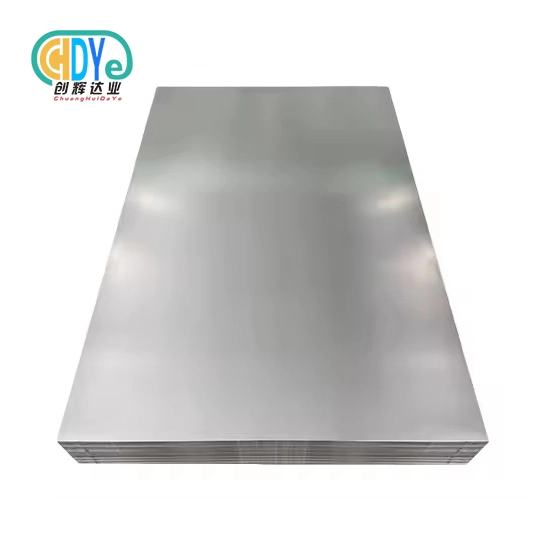
Understanding Titanium Sheets: Composition, Properties, and Grades
The hexagonal close-packed (HCP) crystal structure of titanium sheets is the key to their excellent performance in harsh industrial settings.
Core Material Composition
Titanium sheet materials are made up of titanium as the main metal and carefully controlled alloying elements that give them their industry classification. Titanium that is commercially pure (CP) has very few alloying additions. Interstitial elements like oxygen, nitrogen, and iron are tightly limited to keep the metal from becoming too weak. Ti-6Al-4V, the most common titanium alloy, has 6% aluminium and 4% vanadium in it. This combination greatly increases the metal's mechanical strength while keeping its excellent rust resistance. As a result, these differences in makeup have a direct effect on how the material reacts to forming, welding, and cutting in your factory.
Critical Performance Parameters
Titanium sheets are unique in industrial uses due to their physical characteristics. With a density of 4.51 g/cm³, which is about 60% that of steel, these materials save a lot of weight without lowering the strength of structures. A steady titanium dioxide (TiO₂) passive film forms on the surface on its own, protecting it from rust in the air, attack by chlorides, and oxidising acids. Titanium can withstand temperatures from freezing to about 400°C without losing its shape. This makes it useful in situations where aluminium alloys would soften and break. The low thermal conductivity of the material—about a quarter of that of iron—can be both a problem and a benefit when welding and heat treating it.
Industrial Grade Classifications
Knowing the differences between grades lets you match materials exactly to the needs of an application. Grade 2 titanium is the workhorse of industrial manufacturing. It is effortless to shape and has a yield strength of about 345 MPa. It also works exceptionally well for deep drawing and bending when it is cold-worked. This commercially pure grade meets ASTM B265 standards and is used in chemical processing equipment, marine gear, and building projects where resistance to corrosion is more important than strength. Grade 5 (Ti-6Al-4V) has much better mechanical performance, with yield strengths reaching 828 MPa. This makes it the best choice for structural parts in aerospace, high-performance car parts, and medical implants that need to be able to hold weight. Choosing between these types greatly affects how the parts are made, what tools are needed, and how well the finished parts work in service.
Titanium Sheets vs Other Metal Sheets: Making the Right Material Choice
Choosing the right materials has a big effect on the cost of a project, how long it lasts, and how difficult it is to make in industrial production processes.
Comparative Analysis with Alternative Metals
Comparing titanium sheets to aluminium alloys, they show better strength retention at high temperatures and greater corrosion protection in chemical and marine settings where aluminium breaks down quickly. Even though aluminium is cheaper and easier to work with, titanium has a lower lifecycle cost benefit in situations where it needs to be serviced less often and with less upkeep. Stainless steel is particularly effective at resisting corrosion in many situations, but it has a much higher density than titanium, making it about 75% heavier. This extra weight is not acceptable in aerospace or high-performance car uses. Even though carbon steel is cheap and easy to work with, it needs special coatings to protect it in places where it will rust and isn't biocompatible, which is necessary for making medical devices.
Performance Trade-offs in CNC Machining
Because titanium sheets are difficult to machine, they need to be planned for production specially. Titanium has a low modulus of elasticity—about half that of steel—which makes springback problems during forming operations that need to be fixed by changing the shape of the die and the process settings. Because the material doesn't transfer heat very well, CNC operations build up heat at the cutting edges. To keep the accuracy of the dimensions and the finish of the surface, cutting speeds must be slowed down, cooling flow must be increased, and carbide or polycrystalline diamond tools must be used. Even with these processing problems, the lack of need for secondary coating steps and better resistance to rust often make the extra machine complexity worth it for high-value uses.
Economic Considerations in Material Selection
Titanium sheets have a significantly higher original procurement cost than other metals, which makes procurement workers who are trying to save money hesitant. When someone properly looks at total lifetime costs, this point of view changes. Titanium parts don't need protective coatings, upkeep for corrosion, or repair before their time in harsh work settings, so they're cheaper. Aerospace companies say that titanium replacement reduces the weight of aeroplanes, which saves a lot of fuel over the life of the plane. When titanium is used instead of stainless steel in highly acidic situations, chemical processing plants report longer periods of time between equipment maintenance and less downtime.
Titanium Sheets in Industrial Fabrication and CNC Machining: Techniques and Benefits
To successfully use titanium materials in production, you need to know about specific working methods and benefits that are specific to the application.
Optimal Cutting and Forming Methods
When working with titanium sheets, laser cutting gives you exact edges and few heat-affected areas, especially when you need to make complex shapes for things like aircraft brackets and electronic enclosures. Waterjet cutting completely removes thermal effects, keeping the material's qualities along the cut edge and making it perfect for uses that can't handle heat. When CNC machining titanium, you need to pay close attention to the tools you use, the cutting settings, and how you use water. Machines that are set up rigidly don't shake as much, and cutting edges that are sharp and have positive rake angles lower the cutting forces. Feed rates need to be optimised to keep output high and keep workers from getting too tired. Titanium is very flexible, which is beneficial for shaping. However, because it springs back, overbending needs to be compensated for by using the bend radius, sheet thickness, and grain direction from the rolling process.
Surface Finishing Techniques
Titanium's natural oxide layer protects against rust well enough for many industrial uses, and it doesn't need to be finished as much as metal materials do. Anodising creates artistic colour effects while thickening the protective oxide layer to make it more resistant to wear when better surface qualities are needed. Chemical etching gets rid of surface contamination and gets materials ready for sealing with adhesives. With mechanical polishing, you can achieve mirror-like finishes that some medical device standards and aesthetically pleasing building uses require. Shot peening adds useful compressive stresses, making aircraft parts that are loaded and unloaded many times more resistant to wear.
Industry-Specific Application Examples
Aerospace companies use Grade 5 titanium sheets to make parts for aeroplane frames, engine nacelles, and landing gear. The strength-to-weight ratio directly affects how much fuel an aeroplane can carry and how much cargo it can hold. Chemical processing plants use Grade 2 material to make heat exchangers, reactor tanks, and pipe systems because it doesn't break down when exposed to hydrochloric acid, chlorine, and other harsh chemicals. Companies that make medical devices cut biocompatible titanium sheets into surgical tools and permanent parts that can be inserted into the body without the body rejecting them. Titanium is completely resistant to corrosion by seawater, which is used in marine applications for offshore platform parts, propeller shafts, and purification equipment that are constantly exposed to saltwater.
Procurement Guide: How to Buy Titanium Sheets for Industrial Fabrication?
To make sure a project is a success, strategic purchase of titanium materials needs to take into account technical requirements, provider capabilities, and quality assurance procedures.
Specification Definition and Grade Selection
Application research is the first step in determining exactly what materials are needed. Thickness requirements usually run from 0.5mm for lightweight enclosures to 4.75mm for structural uses. 2mm is a good medium ground that can be used for various construction jobs. Standard sheet sizes range from 500mm to 2000mm wide and from 1000mm to 3000mm long. These sizes make it convenient to use materials efficiently and fit into most CNC machine cases. Choosing the right grade depends on how strong it needs to be and how easy it needs to be shaped. Grade 2 is great for chemical resistance and cold working, while Grade 5 is best for high-stress structural needs in the aerospace and defence sectors.
Quality Certification and Traceability Requirements
Material certifications from reputable sources show that the product meets the standards for ASTM B265 (industrial applications), AMS 4902/4911 (aerospace specs), or ISO 5832 (medical device applications). These documents prove the chemical make-up, the mechanical qualities, and the ability to track the production process from the ingot to the final inspection. Procurement requirements should require full material tracking paperwork, such as heat numbers, mill test results, and dimensional inspection records. If a provider has ISO 9001:2015 approval, it means they follow a set of procedures for managing quality that include checking raw materials, monitoring the production process, and inspecting the finished product.
Supplier Evaluation Criteria
Comparing prices is only one part of evaluating possible titanium sheet providers. Technical skill and service dependability are also important. The facilities for manufacturing should include precise rolling mills, vacuum melting equipment, and annealing ovens that can control the microstructure and mechanical qualities of the material. Suppliers who can do machining can offer value-added services like precise cutting, edge preparation, and surface finishing that make your own processing easier. Order freedom lets both research institutions make small batches of prototypes and industrial makers make large batches of products. Lead times affect project schedules. Depending on grade, amount, and customisation needs, production processes usually last between four and eight weeks.
Pricing Structures and Order Optimisation
The cost of raw materials, the difficulty of handling, and the number of orders all affect the price of titanium sheets. Rates per kilogram go down a lot as the amount goes up, which encourages bulk purchases when store space allows. Custom sizes cost more than standard sizes, but they may save you money in some situations by cutting down on waste. By working with factory-direct suppliers, you can avoid the markups that distributors add on top of the prices, and you can also get expert help and make changes. Long-term supply deals often get producers with predictable usage habits better prices and guaranteed availability.
Conclusion
Industrial makers and CNC machinists should consider titanium sheets as a smart material choice to meet tough application requirements that regular metals cannot fulfil. Because they don't rust, are strong for their weight, and don't change shape when heated or cooled, these materials are the best choice for use in aircraft, chemical processing, medical devices, and the marine industry. For integration to work, grades must be carefully chosen, processing methods must be used, and source ties must be formed to guarantee material quality and on-time delivery. Even though the starting costs are higher than other options, the long-term benefits of longer service intervals, less upkeep, and better performance make the investment worth it for mission-critical tasks where failure would have unacceptable results.
FAQ
Q: What thickness options work best for CNC machining applications?
A: For most CNC processes, the 2mm thickness is the best compromise between structural strength and machining speed. Thinner gauges (less than 1mm) are harder to fix in place and have a higher chance of warping during cutting. On the other hand, bigger parts (more than 3mm) take longer to cycle and wear out tools faster. The most common sizes of materials are between 0.5mm and 4.75mm, with 2mm stock being easy to find at most industry sources.
Q: How does titanium corrosion resistance compare to stainless steel in industrial environments?
A: Titanium is completely resistant to stress corrosion cracks caused by chloride, which happens to stainless steel in chemical processing and naval uses. The inactive titanium dioxide film remains stable in oxidising and reducing conditions across a range of pH levels. In these conditions, stainless steel pits and cracks and corrodes. This performance edge gets rid of the need for expensive maintenance cycles and early equipment replacement in tough working circumstances.
Q: What lead times should procurement teams expect for bulk titanium sheet orders?
A: Standard grade cloth in popular sizes usually ships four to six weeks after the order is placed. Lead times may be extended to eight or ten weeks for custom specs that need special rolling campaigns or a lot of cutting. Suppliers who keep a smart stockpile of popular configurations can meet urgent needs with faster processing, but they will charge more for rush production plans.
Partner with Chuanghui Daye for Premium Titanium Sheet Solutions
Shaanxi Chuanghui Daye gives you factory-direct access to approved titanium sheets that are made to the highest standards in China's Titanium Capital. Our large collection includes Grade 2 and Grade 5 materials that are 2mm thick and come in widths from 500 mm to 2000 mm and lengths from 1000 mm to 3000 mm. These materials are ready to be used right away in your manufacturing processes. With ISO 9001:2015 approval and more than 30 years of experience making rare metals, we offer full tracking documents, custom processing services, and technical advice that takes the guesswork out of buying. Contact our engineering team at info@chdymetal.com to talk about your specific application needs and find out why top aerospace, chemical processing, and medical device companies choose Chuanghui Daye as their trusted supplier of titanium sheets for mission-critical projects that need unwavering quality and on-time delivery.
References
1. ASM International. (2015). Titanium: Physical Metallurgy, Processing, and Applications. Materials Park, Ohio: ASM International Handbook Committee.
2. Boyer, R., Welsch, G., & Collings, E.W. (2019). Materials Properties Handbook: Titanium Alloys. Materials Park, Ohio: ASM International.
3. Donachie, M.J. (2018). Titanium: A Technical Guide, 3rd Edition. Materials Park, Ohio: ASM International Technical Books.
4. Leyens, C., & Peters, M. (2016). Titanium and Titanium Alloys: Fundamentals and Applications. Weinheim, Germany: Wiley-VCH Verlag GmbH.
5. Lütjering, G., & Williams, J.C. (2017). Engineering Materials and Processes: Titanium, 2nd Edition. Berlin: Springer-Verlag.
6. Schutz, R.W., & Watkins, H.B. (2014). "Recent developments in titanium alloy application in the energy industry." Materials Science and Engineering: A, Volume 243, Issue 1-2, Pages 305-315.

Learn about our latest products and discounts through SMS or email