- English
- French
- German
- Portuguese
- Spanish
- Russian
- Japanese
- Korean
- Arabic
- Greek
- German
- Turkish
- Italian
- Danish
- Romanian
- Indonesian
- Czech
- Afrikaans
- Swedish
- Polish
- Basque
- Catalan
- Esperanto
- Hindi
- Lao
- Albanian
- Amharic
- Armenian
- Azerbaijani
- Belarusian
- Bengali
- Bosnian
- Bulgarian
- Cebuano
- Chichewa
- Corsican
- Croatian
- Dutch
- Estonian
- Filipino
- Finnish
- Frisian
- Galician
- Georgian
- Gujarati
- Haitian
- Hausa
- Hawaiian
- Hebrew
- Hmong
- Hungarian
- Icelandic
- Igbo
- Javanese
- Kannada
- Kazakh
- Khmer
- Kurdish
- Kyrgyz
- Latin
- Latvian
- Lithuanian
- Luxembou..
- Macedonian
- Malagasy
- Malay
- Malayalam
- Maltese
- Maori
- Marathi
- Mongolian
- Burmese
- Nepali
- Norwegian
- Pashto
- Persian
- Punjabi
- Serbian
- Sesotho
- Sinhala
- Slovak
- Slovenian
- Somali
- Samoan
- Scots Gaelic
- Shona
- Sindhi
- Sundanese
- Swahili
- Tajik
- Tamil
- Telugu
- Thai
- Ukrainian
- Urdu
- Uzbek
- Vietnamese
- Welsh
- Xhosa
- Yiddish
- Yoruba
- Zulu
How to Verify Titanium Alloy Tube Material Quality?
A methodical technique involving chemical analysis, mechanical tests, and non-destructive inspection methods is needed to assess the quality of titanium alloy tubes. First, spectroscopic analysis is used to ensure that the metal grade (whether it's Gr1, Gr2, Gr7, Gr9, or Gr12) matches the norms set by ASTM B338, B337, B861, or B862. Certain limits must be met for mechanical qualities like tensile strength and elongation. Ultrasonic and eddy current tests identify flaws inside the material. Accurate measurements of the wall's length, width, and thickness ensure compatibility with fabrication. The verification chain is finished with the right certification paperwork, such as mill test results and third-party inspection papers. This multi-layered quality assurance keeps mission-critical applications safe from mistakes that are critical.
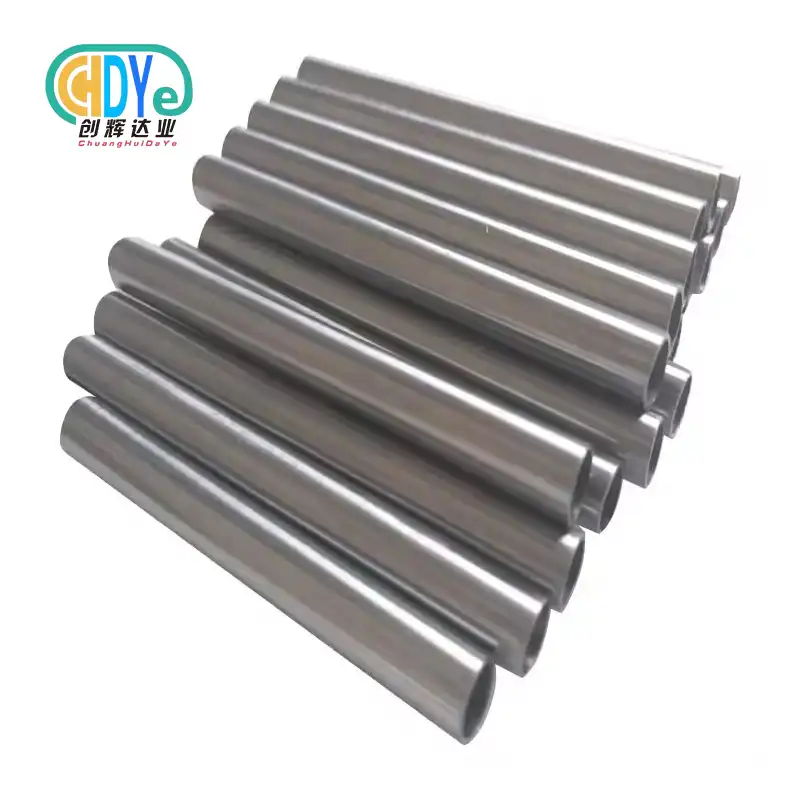
Understanding the Importance of Titanium Alloy Tube Material Quality
Industries that depend on titanium alloy tubes can't risk compromising the material. One broken tube in an aerospace hydraulic system or a heat exchanger for chemical processes can cause terrible problems like equipment failure, production shutdowns, or safety issues. The quality of the materials has a direct effect on how reliable they are and how much they cost in the long run.
Why Does Material Consistency Matter in Critical Applications?
Titanium alloy tubes can be used in places where other materials wouldn't work. Manufacturers of aerospace parts need components with stable mechanical qualities that can handle changing pressures at 30,000 feet. Chemical plants need to be able to predict how well they will fight rusting in acidic and chlorinated chemicals. Companies that make medical devices need biocompatible materials that are free of dangerous impurities. For each use, tubes must be made to exact specifications—differences of as little as 0.1 mm in wall thickness or 50 ppm in oxygen content can hurt performance. Strict proof rules are necessary because of the importance of the matter.
Key Quality Characteristics Defining Performance
Material quality is made up of many factors that all affect one another. Load-bearing ability under stress is based on tensile strength. Titanium naturally resists corrosion by forming an inactive oxide layer, but this process only works if the metal is properly mixed and the surface is in good shape. Ductility during fabrication affects formability. Tolerances in dimensions ensure that parts fit together correctly. Microstructure consistency stops weak spots from forming in specific places. All of these factors affect whether tubing works regularly throughout its working life or breaks down early.
The Cost of Inadequate Quality Control
Purchasing teams are under a lot of pressure to keep prices as low as possible, but taking low-quality materials costs a lot more. Rejected packages stall projects and force people to rush to reorder at higher prices. Installed faulty tubing found during testing needs expensive repairs. In-service breakdowns cause the most damage to tools, injuries, and reputational loss. A big aircraft contractor once found that hydraulic system problems were caused by tubes that had too much hydrogen in them, which made them weak and cracked and cost millions of dollars to fix. Such situations can't happen because thorough open proof prevents them.
Core Methods to Verify Titanium Alloy Tube Material Quality
Verification of materials needs specialised testing tools and trained staff. Reliable sellers follow these rules before shipping, but it's also important for buying teams or third-party labs to do their checks. Understanding basic testing methods helps people make smart choices.
Chemical Composition Analysis Techniques
Chemical research is the first step in making sure that a metal grade is real. X-ray fluorescence spectroscopy is a quick and painless way to examine the makeup of major alloying elements. Optical emission spectrometry can precisely measure the amount of aluminium, vanadium, palladium, and other elements. We need special tools, like inert gas fusion, to do interstitial element analysis, which measures the amount of oxygen, nitrogen, hydrogen, and carbon in a material. This requirement is because these elements have a big impact on how flexible and weldable the material is. Titanium alloy tubes that are called Gr9 must have between 2.5% and 3.5% aluminium and between 2% and 3.0% vanadium, according to ASTM standards. Deviation is a sign of possible contamination or wrong labelling.
Mechanical Property Testing Protocols
Tensile testing is still the most common way to assess the mechanical integrity of something. Controlled stretching is done on samples cut from tube lots until they break. The yield strength, final tensile strength, and elongation percentage are then measured. ASTM B338 sets minimum requirements. For example, Gr2 economically pure titanium requires a minimum yield strength of 40 ksi and an expansion of 20%. Gr9 alloy needs a minimum yield strength of 70 ksi. Testing for hardness provides you with extra information that is related to strength traits. Flattening tests assess how flexible something is—tubes must be able to be compressed between two parallel plates without breaking, which means they are suitable for bending during installation.
Non-Destructive Testing for Defect Detection
Internal flaws that can't be seen threaten the structure's stability. Ultrasonic testing sends high-frequency sound waves through the walls of a tube. By looking at the returned signals, it can find laminations, inclusions, and cavities. This method is very important for making smooth tubes that are used in high-pressure situations. Eddy current tests can find flaws on the surface or very close to the surface of both smooth and welded materials. X-ray or gamma-ray radiographic screening can find internal cracks, but because it is more expensive, it can only be used on important aircraft parts. Through the capillary action of coloured fluid, dye penetrant tests show up cracks in the surface.
Dimensional and Surface Quality Inspection
Tight control over dimensions is needed for precision manufacturing. Laser micrometres check that the tube meets specs like OD 25mm × WT 2mm with ±0.2mm error by measuring its outer diameter and wall thickness along its length. Length tests show that the ordered sizes are between 100 mm and 18,000 mm. Surface finish checking finds flaws like scratches, pits, or contamination that weaken the material's ability to fight corrosion or wear over time. Welded tube longitudinal seam stability is closely looked at using eddy current testing and eye inspection. Measuring the surface roughness makes sure that it meets the closing needs of fluid transport systems.
Comparing Verification Standards and Material Certification
Quality demands are the same across businesses and countries thanks to global standards. Knowing how to deal with all of these rules and regulations sets skilled procurement workers apart from those who might not follow the rules.
Understanding ASTM, ISO, and AMS Standards
ASTM International puts out standards for titanium alloy tubes that are widely used. For condensers and heat exchangers, ASTM B338 covers tubes that are either smooth or welded. ASTM B337 talks about smooth tubes that can be used in a wide range of situations without rusting. The ASTM B861 standard covers smooth titanium pipe, and the B862 standard covers welded pipe. These papers list the necessary chemical compositions, mechanical properties, testing methods, and marking standards for grades such as Gr1, Gr2, Gr7, Gr9, and Gr12. For aircraft use, Aerospace Material Specifications (AMS) set tighter rules. AMS 4943 sets the rules for welded Gr9 tubing used in hydraulic systems that need to be easier to track. With ISO 9001:2015 approval, you can be sure that producers keep up with their quality management systems, which keep the whole process under control.
Interpreting Mill Test Reports and Certificates
Mill test records with heat-specific test results should be sent with every tube shipment. Certificates show the chemical make-up from spectroscopic analysis, the mechanical qualities from tensile tests, and the readings of the object's size and shape. With heat numbers, you can find your way back to production records. Procurement teams have to make sure that the stated values are correct and match the grades that were bought. Differences, like naming Gr2 chemistry as Gr9, are very bad signs of poor quality control. Third-party inspection certificates from separate testing labs give you extra peace of mind, especially for important or high-value orders where you're worried about the supplier's impartiality.
The Role of ISO Certification in Supplier Selection
Companies that have ISO 9001:2015 approval show that they are dedicated to organised quality systems. For certification, there must be written methods for getting materials, making things, making sure equipment is calibrated, teaching workers, and dealing with problems that don't meet standards. Accredited registrars do regular checks to make sure that rules are still being followed. Shaanxi Chuanghui Daye Metal Material Co., Ltd. is still certified with ISO 9001:2015, which shows that we take a structured approach to quality control while making titanium tubes. This system lowers the chance of buying things compared to suppliers who aren't certified and don't have official quality controls. Before deciding on a seller, buyers should check to see if the certification is still valid and review the topic of work.
Case Study: Real-World Verification in Titanium Alloy Tube Procurement
Real-world experience shows how verification methods work in real-life buying situations. Learning from examples in the field speeds up the growth of skills.
Aerospace Hydraulic System Tube Inspection
A large aeroplane maker used staged verification when they bought Gr9 titanium alloy tubes for hydraulic lines. At the start of the incoming check, the certification review confirmed that the documents were in line with ASTM B338 and could be tracked. Random samples were checked using spectroscopy, and one package had aluminium levels that were below the required levels. The tubes were thrown away before they could be added to the inventory. Ultrasonic tests found laminations in three tubes from a different lot, which stopped them from failing in flight. Dimensional checking found differences in wall thickness that were too big for tolerance in welded tubes, which made the supplier take action to fix the problem. This organised method kept bad materials from getting to the assembly lines, saving money on repairs and keeping production on schedule.
Chemical Processing Plant Heat Exchanger Replacement
A petrochemical plant replaced rusty stainless steel heat exchanger tubes with Gr2 titanium alloy tubes by working with qualified sources who provided full test reports. Chemical makeup and mechanical qualities were proven by a third-party lab. Every tube was checked for flaws with eddy current tests. Leak-proof construction was confirmed by checking the hydrostatic pressure at 1.5 times the working pressure. The initial investment of $8,000 in verification was well worth it when spot checks showed that rival bids' tubes had surface flaws and inconsistent dimensions. The checked tubes worked well for 15 years in harsh brine conditions, showing that quality assurance is valuable.
Lessons from Inadequate Verification
On the other hand, a medical device maker that only accepted tubes based on seller certificates paid a high price for it. After being machined, tests showed that there was too much oxygen in the material, which made it weak. The parts failed biocompatibility tests. The problem was found to be caused by poor provider process controls. The maker required entering chemical analysis, which stopped the problem from happening again but cost $45,000 in wasted materials and caused product launches to be pushed back. This situation shows how important it is to check, even with well-known sources, because process changes happen when quality systems aren't strong.
Best Practices and Checklist for Procurement Managers
Systematic methods change quality control from fixing problems after they happen to managing risks before they happen. Using structured rules improves the results of buying.
Comprehensive Quality Verification Checklist
Clear requirements are the first step in effective buying. Purchase orders should list the relevant ASTM standards, list the metal grades, list the size requirements, such as the outer diameter, wall thickness, and length limits, and describe the expected surface finish. When the shipment arrives, check the integrity of the packing and the correctness of the labels. Check mill test results to make sure they are complete and meet the requirements. Check visually for flaws on the surface, pollution, or damage to the mechanics. Set up sampling plans that are right for the size and importance of the order. For example, military uses need more thorough sampling than general industrial use. Set up spectroscopy to check the chemical makeup. Test the mechanical strength of typical samples. Do non-destructive testing that fits the needs of the product. Use precise measuring tools to make sure the dimensions are correct. Write down everything you find and keep records so you can find them again.
Supplier Qualification and Partnership Strategies
Long-term success in buying depends on how well suppliers can do their jobs. Check to see if industrial sites have the right tools, like vacuum arc melting furnaces, extrusion presses, cold-working equipment, and the ability to heat treat things. Check the quality control systems—ISO 9001:2015 approval gives you basic peace of mind. Look at customer references and the image of the business. Think about the technical help that providers offer to meet the needs of specific applications. Shaanxi Chuanghui Daye Metal Material Co., Ltd. is in Baoji, which is known as China's Titanium Capital. They have been working with rare metals for 30 years and have state-of-the-art production tools, such as electron beam ovens and precision machining centres, as well as full quality systems. Building ties with qualified manufacturers lowers the work of quality control while keeping trust in the product's quality while making titanium alloy tubes.
Communication and Continuous Improvement
Misunderstandings can be avoided by communicating clearly about specifications. Give thorough drawings, tolerances for dimensions, standards for surface finish, and testing goals. Talk about the needs of the application so that providers can suggest the best alloy types and production methods. Set up quality agreements that spell out accepted standards, who is responsible for testing, and how to handle nonconformances. Do regular audits of your suppliers to check the efficiency of process controls and corrective actions. Share performance comments, including both praise and ways to improve, to build relationships that help people work together. Suppliers who think about continuous growth make quality more consistent over time.
Conclusion
Checking the quality of titanium alloy tubing saves purchases and operations in industries like aircraft, chemical processing, medical devices, and more. Comprehensive verification includes chemical makeup analysis to confirm the metal grade's authenticity, mechanical testing to confirm the grade's strength and ductility, non-destructive inspection to find hidden flaws, and measurement of dimensions to ensure compatibility with manufacturing. Knowing the rules for ASTM, ISO, and AMS helps you understand specifications and certificates correctly. To achieve buying success, you need to set up structured verification processes, ensure sellers are qualified, and keep communication open. The money spent up front on quality assurance pays off in a big way: fewer fails, longer service life, and sticking to production plans. Companies that put a high priority on thorough material verification have better supply lines and better products, which gives them a competitive edge.
FAQ
Q: How Can I Confirm Aerospace-Grade Titanium Tubing Compliance?
A: In addition to ASTM standards, AMS specs must also be checked on aerospace-grade tubes. Check mill test results to make sure that the chemical makeup, mechanical qualities, and paperwork for tracking meet AMS standards, like AMS 4943 for welded Gr9 hydraulic tubing. Do a separate chemistry study to make sure the levels of aluminium and vanadium are within the acceptable ranges. Tensile tests should be done to make sure that the minimum yield strength is 70 ksi and that the stretch is more than 10%. Use 100% ultrasound tests to find problems inside the body. Check to see if the source has certifications like AS9100 from the aircraft industry. Third-party inspection by accredited labs adds another layer of safety for important uses where failure of a material would have serious effects.
Q: What Non-Destructive Testing Methods Detect Internal Tube Defects?
A: The best way to find internal laminations, inclusions, and porosity in titanium alloy tubes is to use ultrasonic tests. This method sends high-frequency sound waves through a substance and then looks at the returned signals to find breaks. Through electromagnetic induction, eddy current testing finds flaws on the surface or close to the surface. Radiographic analysis with X-rays shows internal holes and changes in density, but it's not often used because of the high cost. The right method to use relies on the width of the tube wall, the type of flaw that needs to be fixed, and how important the application is. For example, pressure tank applications need more thorough testing than low-stress decorative uses.
Q: How Does Titanium Compare to Stainless Steel for Corrosion Resistance?
A: Titanium alloy tubes work much better than stainless steel tubes in settings with salt and oxidising substances. Titanium's inactive oxide layer heals itself right away after being damaged, making it more resistant to pitting and crevice corrosion in acidic, bleach-based, and seawater environments. Stress corrosion cracking happens in salt conditions at high temperatures in stainless steel, but not in titanium. However, stainless steel is less expensive and works well in mildly acidic conditions. Instead of always choosing one material, choosing the right material should take into account things like corrosion severity, working temperature, mechanical needs, and lifecycle costs.
Partner with Chuanghui Daye for Certified Titanium Alloy Tube Solutions
To find checked, high-performance titanium alloy tubes, you need to work with makers who can show they have a lot of experience and a thorough quality system. The company Shaanxi Chuanghui Daye Metal Material Co., Ltd. makes seamless and welded titanium tubes in grades Gr1, Gr2, Gr7, Gr9, and Gr12 that meet ASTM B338, B337, B861, and B862 standards. They are ISO 9001:2015 approved. Our factory in Baoji, China's titanium capital, uses modern manufacturing equipment, 30 years of experience with rare metals, and strict checking processes to ensure the quality of the materials. We offer custom sizes ranging from OD 10 to 300 mm, wall thickness 0.5 to 10 mm, and lengths up to 18,000 mm. These sizes are used in aircraft, chemical processing, medical devices, and other industry settings. Email our technical team at info@chdymetal.com to talk about your particular needs and ask for mill test documents. As a reliable source for titanium alloy tubes, we offer quick responses, low factory-direct prices, and the quality guarantee that your important uses need.
References
1. Boyer, R., Welsch, G., & Collings, E.W. (1994). Materials Properties Handbook: Titanium Alloys. ASM International, Materials Park, Ohio.
2. ASTM International (2021). ASTM B338-21: Standard Specification for Seamless and Welded Titanium and Titanium Alloy Tubes for Condensers and Heat Exchangers. West Conshohocken, Pennsylvania.
3. Donachie, M.J. (2000). Titanium: A Technical Guide, 2nd Edition. ASM International, Materials Park, Ohio.
4. SAE International (2019). AMS 4943G: Titanium Alloy Tubing 3Al-2.5V Welded Hydraulic. Warrendale, Pennsylvania.
5. Schutz, R.W. & Watkins, H.B. (1998). Recent Developments in Titanium Alloy Application in the Energy Industry. Materials Science and Engineering A, Volume 243, Issues 1-2, Pages 305-315.
6. Veiga, C., Davim, J.P., & Loureiro, A.J.R. (2012). Properties and Applications of Titanium Alloys: A Brief Review. Reviews on Advanced Materials Science, Volume 32, Pages 133-148.
Learn about our latest products and discounts through SMS or email