- English
- French
- German
- Portuguese
- Spanish
- Russian
- Japanese
- Korean
- Arabic
- Greek
- German
- Turkish
- Italian
- Danish
- Romanian
- Indonesian
- Czech
- Afrikaans
- Swedish
- Polish
- Basque
- Catalan
- Esperanto
- Hindi
- Lao
- Albanian
- Amharic
- Armenian
- Azerbaijani
- Belarusian
- Bengali
- Bosnian
- Bulgarian
- Cebuano
- Chichewa
- Corsican
- Croatian
- Dutch
- Estonian
- Filipino
- Finnish
- Frisian
- Galician
- Georgian
- Gujarati
- Haitian
- Hausa
- Hawaiian
- Hebrew
- Hmong
- Hungarian
- Icelandic
- Igbo
- Javanese
- Kannada
- Kazakh
- Khmer
- Kurdish
- Kyrgyz
- Latin
- Latvian
- Lithuanian
- Luxembou..
- Macedonian
- Malagasy
- Malay
- Malayalam
- Maltese
- Maori
- Marathi
- Mongolian
- Burmese
- Nepali
- Norwegian
- Pashto
- Persian
- Punjabi
- Serbian
- Sesotho
- Sinhala
- Slovak
- Slovenian
- Somali
- Samoan
- Scots Gaelic
- Shona
- Sindhi
- Sundanese
- Swahili
- Tajik
- Tamil
- Telugu
- Thai
- Ukrainian
- Urdu
- Uzbek
- Vietnamese
- Welsh
- Xhosa
- Yiddish
- Yoruba
- Zulu
Is ASTM B 265 titanium sheet the Best Choice for Corrosion Resistance?
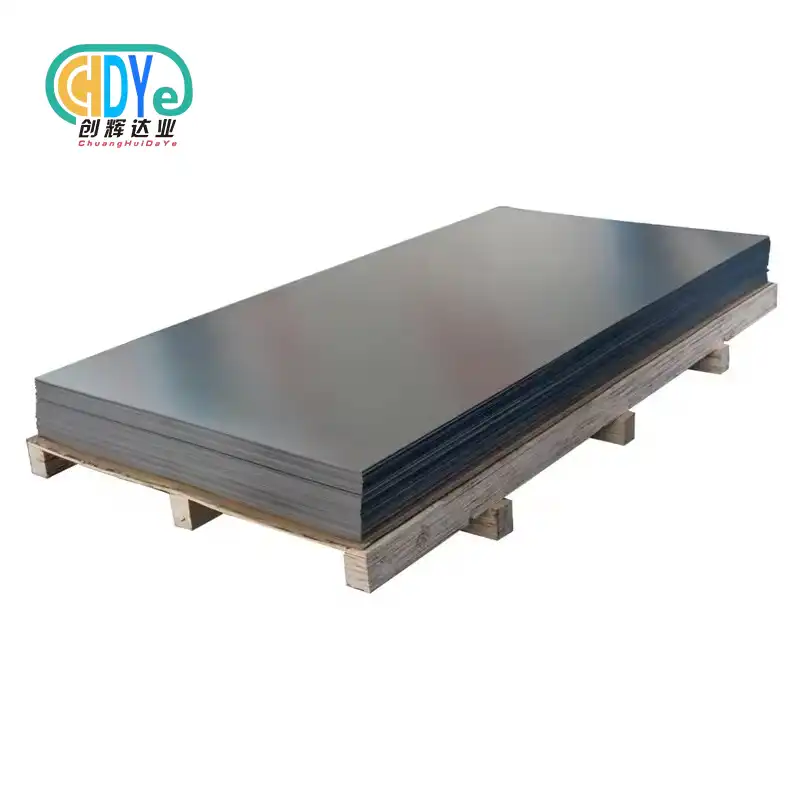
When selecting materials for environments with aggressive chemical exposure or marine conditions, ASTM B 265 titanium sheet consistently emerges as a top contender. Titanium naturally forms an oxide layer that protects the base material from rust even when it is scratched or worn down. This layer is what makes the standard so stable. Not all of these sheets are the same. Grades 1 and 2 are commercially pure, while Grade 5 (Ti-6Al-4V) is very hard. They are used for many things in business, from making tanks for chemicals to spaceship parts. It can handle oxidising acids, salt solutions, and seawater, which makes it great for buying teams that need something that will last a long time.
Understanding ASTM B 265 Titanium Sheet: Overview and Core Properties
ASTM B 265 is the official American standard for sheets made of titanium and titanium alloys. These sheets are used in the chemical processing, medical device, defence, and aeroplane industries. It has very strict rules for the chemical make-up, mechanical properties, size variations, and surface quality. It was made by the American Society for Testing and Materials. Global supply lines are all made the same by the standard. This way, buying workers can find products that work the same way no matter where they are made.
Grade Variations and Selection Criteria
There are nine main types in the standard, and each one is made to meet the needs of a different purpose. Grade 1 titanium is the purest and has the fewest alloying elements. Because of this, it doesn't rust and isn't very strong. Grade 2 titanium is often called the "workhorse" of the market because it is strong and doesn't rust. It can be used in heat exchangers and pressure tanks because of these qualities. If you add aluminium and vanadium to Grade 5, the tensile strength goes up to 130 ksi from 50 ksi in Grade 2. It still protects well against rust in most situations. Some acids, like weak sulphuric and hydrochloric acids, can damage regular grades. Palladium is added to Grade 7 to make it stronger against these acids.
Chemical Composition and Performance Impact
Interstitial elements, such as oxygen, nitrogen, and carbon, are very important for figuring out the mechanical features and how rust will act. Oxygen level directly affects strength. Grade 1 has a limit of 0.18% oxygen, which makes it less strong but easier to shape, while Grade 4 lets up to 0.40% oxygen in, which makes it stronger but less flexible. The amount of iron in the material is closely monitored—usually less than 0.20% for commercially pure grades—because too much iron can make galvanic cells that weaken the resistance to rust. Hydrogen limits are strictly enforced below 0.015% to stop delayed hydride cracking, which is a very important thing to think about for parts that will be loaded for a long time in corrosive media.
Dimensional Standards and Availability
Tight thickness limits are possible with cold-rolled materials, usually within ±0.005 inches for materials less than 0.125 inches thick. Standard sheet widths are between 24 and 48 inches, but custom sizes can be made to cut down on waste during production. At Chuanghui Daye, we keep a stock of materials with thicknesses ranging from 0.5 mm to 6 mm. We can precisely cut to the measurements given by the customer at no extra cost, which is a big cost savings for small-batch production or prototype development.
Corrosion Resistance of ASTM B 265 Titanium Sheet: Technical Analysis
The amazing resistance to corrosion of ASTM B 265 titanium sheet comes from a solid, stick-together titanium dioxide (TiO₂) layer that forms right away when air or water comes in contact with it. This passive film is only 10 to 20 nanometres thick, but if it gets damaged, it heals itself right away, so it keeps protecting you. Unlike chromium oxide layers on stainless steel, which need enough oxygen to reform, titanium's oxide layer can form even when there isn't enough oxygen, which is why it works better in reducing conditions.
Comparative Performance Against Alternative Materials
Under water tests, Grade 2 titanium rusts at a rate of less than 0.001 inches per year, which is about 100 times slower than 316 stainless steel in the same conditions. When oxidising acids like nitric acid are present in amounts of up to 70%, titanium doesn't rust very much, but stainless steels lose their structure very quickly. Aluminium metals are lighter than titanium, but they don't work well in places with a lot of salt, where titanium is perfectly stable. While ASTM B 348 covers titanium bars and billets with similar grade names, B 265 describes a cold-rolling process that makes the materials more resistant to stress corrosion cracking by making the grain structures finer. It is very helpful for thin-section parts that are being pulled apart in this way.
Grade-Specific Corrosion Characteristics
Grade 7 and Grade 12 forms have palladium added to them in small amounts (0.12 to 0.25%) to make them less likely to rust in places with less acid. 10% sulphuric acid at 80°C does a lot of damage to Standard Grade 2, but Grade 7 doesn't rust as much when it's in plain water. When working with petrochemicals, where the process streams are always switching from oxidising to reducing conditions, this better chemical protection comes in very handy. Grade 5 was picked because it is strong but doesn't rust too much for many industry uses. Strong alkaline solutions above pH 12 can hurt it a little, though, because it has aluminium in it.
Real-World Application Evidence
People who work in places that make strong chlorine can use titanium heat exchangers that last more than 20 years. This means that old things need to be thrown away every 18 to 24 months. Oil sites in the ocean have shown that titanium pipe systems that have been in salt water all the time for 15 years have not broken down due to rust. Level 23 is the very lowest level of intermediate for Level 5. People who make medical tools use it because it is strong and doesn't hurt living things. There are no known cases of things breaking down in living things after being used for decades.
Evaluating ASTM B 265 Titanium Sheet for Procurement Decisions
To do good buying, you need to know not only the features of the materials, but also how the supply chain works, how to check the quality of the products, and the total cost of ownership. Prices for commercially pure grades usually range from $25 to $40 per kilogram, but this depends on the market, the size of the order, and the certifications that are needed. Grade 5 is more expensive—often 30–50% more than Grade 2—because it requires more complicated processing and costs more to make.
Supplier Qualification and Certification
Verification of material authenticity starts with ASTM certification, which is confirmed by testing labs that are accredited to ISO/IEC 17025 standards. Chemical testing using optical emission spectroscopy shows that the composition meets the standards, and mechanical testing according to ASTM E8 proves that the material can be stretched. We keep our ISO 9001:2015 certification up to date at Chuanghui Daye and give full traceability documentation for each sheet that connects it to its own production heats, melting records, and inspection data. This batch-level tracking helps customers show they are following the rules and finds the root cause of problems in the rare event of material nonconformance.
Customization Options and Lead Times
Standard ASTM B 265 titanium sheet sizes usually ship within two to three weeks from reputable sources who keep stock on hand. Depending on production schedules and minimum order numbers, it may take 6 to 8 weeks for custom thicknesses, widths, or surface finishes. We can cold-roll materials to thickness tolerances that are tighter than the minimum requirements set by ASTM B 265 (achieving ±0.003 inches when required), which supports precise uses in electronics and semiconductor equipment. Surface finishes range from a standard mill finish (Ra 32–63 microinches) to electropolished surfaces (Ra <10 microinches) for very clean pharmaceutical processing equipment.
Grade Selection Strategy
Teams in charge of buying things should make sure that the grades they choose are right for the job and the environment. Grade 2 is the most cost-effective choice for water settings with pH levels between 2 and 12 at normal room temperature. Grade 5 has better creep resistance than Grade 4 and is useful in situations where temperatures stay above 300°C for a long time. Chemical hazards, such as weak reducing acids, require at least a Grade 7 or Grade 12 certificate. Aerospace structural parts that need the highest strength-to-weight ratios can be supported using Grade 5 or Grade 23 materials, even though they cost more, because they save weight that lowers fuel consumption over the life of the part.
Advantages of ASTM B 265 Titanium Sheet over Other Standards and Products
In addition to being naturally resistant to corrosion, ASTM B 265 titanium sheets offer strong cost savings over the course of their lifetime through longer service gaps and less upkeep. The parts usually last three times as long as stainless steel equivalents, which makes up for the higher initial material costs. Titanium has a great strength-to-weight ratio—it has the same strength as many steels but only 45% of the weight. This lets structural weight reductions happen that affect whole system designs, lowering the need for foundations, making handling tools easier, and lowering the cost of shipping.
ASTM B 265 versus ASTM B 265M
The ASTM B 265M standard, which is the metric counterpart, has the same technical requirements but talks about sizes and properties in SI units. When sourcing from around the world, procurement teams should carefully check the dimensions given, since mixing imperial and metric tolerances can lead to costly mistakes in the manufacturing process. Our expert team can help with conversions and provide material that is approved to either standard. This way, your engineering requirements will be met no matter what unit system is used.
Fabrication and Joining Advantages
Because commercially pure grades are very flexible, they can be cold-formed in ways like bending, deep drawing, and spinning without having to be heated first. Welding can be done with either gas tungsten arc welding (GTAW) or a laser. When the right shielding is used to keep contaminants out, the joints can be as strong as the base metal. Titanium doesn't need to be heated after welding like stainless steel does to restore its corrosion resistance. This makes the fabrication process easier and lowers the cost of making welded assemblies.
How to Optimize Use of ASTM B 265 Titanium Sheet in Your Projects
Handling and storing ASTM B 265 titanium sheet materials correctly is the first step to getting the most out of them. Titanium is very reactive when it is liquid or in powder form, but it is very stable when it is solid. However, surface contamination during manufacturing can make it less resistant to corrosion. To keep work from hardening, cutting tools should always be sharp. Dull tools produce too much heat, which can bring oxygen into the top layers and make them more likely to crack.
Fabrication Best Practices
Keep things very clean while you are making and welding. Surface contaminants, especially iron particles from the steel work next to it, can create localised galvanic cells that start pitting corrosion. For processing titanium, use special tools and work areas, or make sure that shared equipment is very clean before it comes in contact with titanium parts. Inert gas shields must protect not only the weld pool but also the nearby heat-affected zone and the root side of the joint. Pollution in the air during welding makes microstructures that are weak and easy to corrode.
Surface Treatment Options
Titanium's natural oxide does a great job of protecting it, but for some uses, extra surface treatments are helpful. Anodising makes oxide layers that are thicker and more uniform, and it can add decorative colour for building uses. Chemical pickling gets rid of surface contamination that was introduced during forming or welding, making the metal's rust protection as good as it was before. To get the best performance in tough conditions, thermal oxidation at controlled temperatures creates thick oxide scales that make the material even more resistant to reducing acids.
Value-Added Services at Chuanghui Daye
We can do more than just supply sheets. We can also precisely cut with waterjets, machine parts with CNCs, and finish the edges. We can make custom packaging solutions that keep surfaces from getting damaged during shipping, which is important for keeping surfaces in perfect condition for pharmaceutical and semiconductor uses. Technical advice services help customers choose the best materials and methods for production. They do this by using their more than 30 years of experience with rare metals to solve difficult application problems.
Conclusion
ASTM B 265 titanium sheet is the best choice for corrosion-critical uses because it is resistant to a wide range of chemicals, has high strength-to-weight ratios, and has been proven to last for a long time. The standard covers a wide range of commercially pure and alloyed types, which lets you choose the exact material you need based on your performance needs and price. When procurement teams work with qualified suppliers who offer full traceability, ISO certification, and technical support, they can confidently specify titanium knowing that they're investing in materials that will last for decades without needing any repairs in places where other materials would fail quickly.
FAQ
Q: Why does ASTM B 265 titanium sheet outperform stainless steel in corrosion resistance?
A: The passive oxide layer of ASTM B 265 titanium sheet forms right away and can renew even in places with little oxygen. Stainless steel, on the other hand, needs enough oxygen for its chromium oxide layer to reform. Titanium behaves passively and steadily in chloride-containing and reducing acid environments, while stainless steels pit, crack, or stress rust in these conditions.
Q: Is Grade 2 suitable for use in saltwater?
A: Of course. Grade 2 doesn't rust when submerged in saltwater for a year at a time, which makes it perfect for marine heat exchangers, purification equipment, and parts of offshore platforms. It is the standard choice for seawater service because it doesn't rust, isn't too strong, and doesn't cost too much.
Q: How can I be sure that the ASTM B 265 material my suppliers send me is real?
A: Ask for full material test reports (MTRs) that can be linked to specific output heats. These should include ASTM E1409 chemical analysis and ASTM E8 mechanical testing. Check that the supplier has ISO 9001 certification and ask for inspection reports from third-party, accredited laboratories. This paperwork is standard practice for reputable sellers.
Partner with Chuanghui Daye for Certified ASTM B 265 Titanium Sheet Supply
Shaanxi Chuanghui Daye gives you direct access to certified titanium sheets in all ASTM B265 grades. These sheets are made in China's Titanium Capital and come with full ISO 9001:2015 quality assurance. Our cold-rolling facilities make materials that meet the strictest industry standards, and our vast machining skills allow us to cut to your exact specs without charging extra. As a manufacturer of ASTM B 265 titanium sheets with more than 30 years of experience working with rare metals, we offer competitive prices, reliable global shipping, and full technical support. Get in touch with our team at info@chdymetal.com to talk about your needs for corrosion-resistant materials and get unique solutions that improve both performance and purchase value.
References
1. American Society for Testing and Materials. (2021). ASTM B265-20a: Standard Specification for Titanium and Titanium Alloy Strip, Sheet, and Plate. West Conshohocken, PA: ASTM International.
2. Schutz, R.W., & Thomas, D.E. (2019). Corrosion of Titanium and Titanium Alloys in Chemical Process Industries. In Corrosion Engineering Handbook (3rd ed., pp. 789-856). Materials Park, OH: ASM International.
3. Boyer, R., Welsch, G., & Collings, E.W. (2018). Materials Properties Handbook: Titanium Alloys (2nd ed.). Materials Park, OH: ASM International.
4. Cotton, J.D., Briggs, R.D., Boyer, R.R., Tamirisakandala, S., Russo, P., Shchetnikov, N., & Fanning, J.C. (2020). State of the Art in Beta Titanium Alloys for Airframe Applications. Journal of Materials, 67(6), 1281-1303.
5. Donachie, M.J. (2017). Titanium: A Technical Guide (3rd ed.). Materials Park, OH: ASM International.
6. Peters, M., Kumpfert, J., Ward, C.H., & Leyens, C. (2016). Titanium Alloys for Aerospace Applications: Current Status and Future Perspectives. Advanced Engineering Materials, 18(4), 483-501.
Learn about our latest products and discounts through SMS or email