- English
- French
- German
- Portuguese
- Spanish
- Russian
- Japanese
- Korean
- Arabic
- Greek
- German
- Turkish
- Italian
- Danish
- Romanian
- Indonesian
- Czech
- Afrikaans
- Swedish
- Polish
- Basque
- Catalan
- Esperanto
- Hindi
- Lao
- Albanian
- Amharic
- Armenian
- Azerbaijani
- Belarusian
- Bengali
- Bosnian
- Bulgarian
- Cebuano
- Chichewa
- Corsican
- Croatian
- Dutch
- Estonian
- Filipino
- Finnish
- Frisian
- Galician
- Georgian
- Gujarati
- Haitian
- Hausa
- Hawaiian
- Hebrew
- Hmong
- Hungarian
- Icelandic
- Igbo
- Javanese
- Kannada
- Kazakh
- Khmer
- Kurdish
- Kyrgyz
- Latin
- Latvian
- Lithuanian
- Luxembou..
- Macedonian
- Malagasy
- Malay
- Malayalam
- Maltese
- Maori
- Marathi
- Mongolian
- Burmese
- Nepali
- Norwegian
- Pashto
- Persian
- Punjabi
- Serbian
- Sesotho
- Sinhala
- Slovak
- Slovenian
- Somali
- Samoan
- Scots Gaelic
- Shona
- Sindhi
- Sundanese
- Swahili
- Tajik
- Tamil
- Telugu
- Thai
- Ukrainian
- Urdu
- Uzbek
- Vietnamese
- Welsh
- Xhosa
- Yiddish
- Yoruba
- Zulu
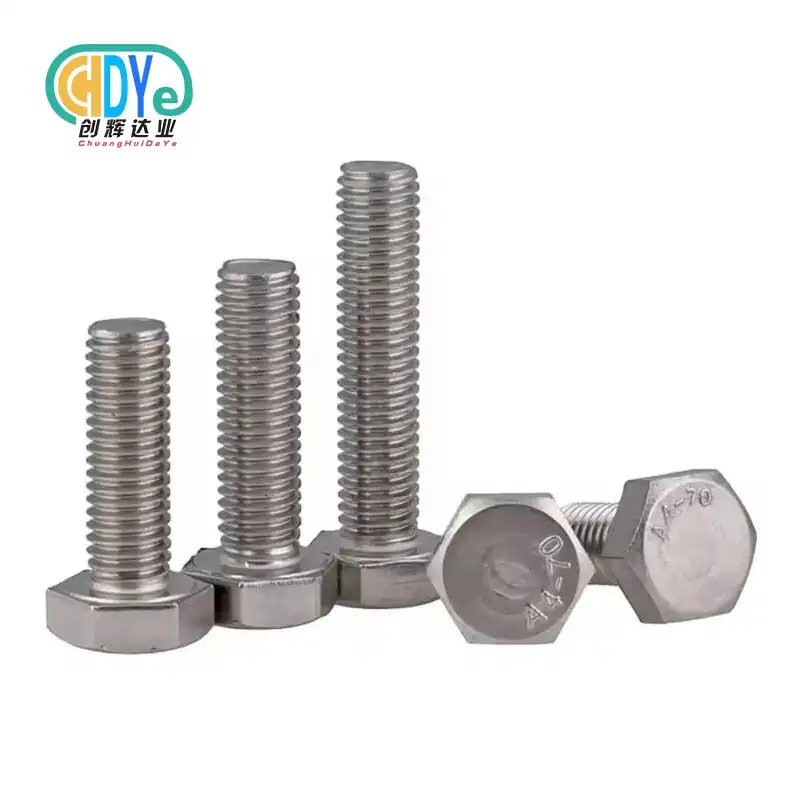
What Standards Should Hexagonal titanium screws Meet Before Buying?
When procuring fasteners for mission-critical applications, understanding compliance standards isn't optional—it's fundamental. Hexagonal titanium screws must meet rigorous international specifications covering material composition, dimensional accuracy, mechanical performance, and surface integrity. These rules make sure that fasteners always work, even when they are under a lot of stress, when the temperature changes, or when they are exposed to chemicals that break down metal. People who want to buy something should make sure that it meets ASTM F468, ISO 3506-4, DIN 912, and any industry-specific standards, like AMS for aeroplanes or FDA for medical devices. You can escape early failure, big theft, and business loss if you follow these rules properly.
Understanding Hexagonal Titanium Screws and Their Core Requirements
Hexagonal titanium screws are the most advanced fastening technology ever made. Because they are precisely made, these parts use titanium's amazing qualities to provide performance that regular materials just can't match in harsh conditions.
What Makes Titanium Hex Screws Unique
The six sides of the head make it easy to pass power during installation and lower the chance that the tool will slip. You can see that this shape is great for holding things together strongly or putting pieces together in small areas. Based on how much it weighs, it is about 40% stronger than steel. This is true for very pure grades, like Grade 2, as well as grades that are very strong, like Grade 5 (Ti-6Al-4V). For space applications, this quick drop in weight means less fuel use, and it's easier to move medical tools around.
It is good for motors, and when it comes in touch with air, an oxide layer forms on its own that is not active. This layer is too thick for the chlorides, acids, and alkalis to pass through. This makes these screws very useful in places where other materials would break down quickly, like operating rooms, chemical plants, and platforms that are far away.
Material Grade Selection and Certification
To choose between titanium types, you need to know what each application needs. Grade 2 titanium is good at resisting rust and not too strong, so it can be used in acidic environments for non-load-bearing tasks. It can be cold-formed and welds well because it is flexible. Grade 5 titanium alloy, which has about 6% aluminium and 4% vanadium, has almost twice as much tensile strength (up to 900 MPa), which is needed for structural uses in aircraft frames, automobile suspension systems, and high-performance sports equipment.
Documentation for material certification is what quality assurance is built on. Reliable suppliers give mill test reports (MTRs) that describe spectrometry-based chemical composition analysis and confirm that elemental percentages match the grades that were requested. ASTM B348 sets the standards for titanium bar stock that is used to make screws, and ASTM F468 talks about the requirements for titanium fasteners. These papers make it possible to track where the raw materials come from all the way through to the final inspection. This keeps buyers safe from fake materials that could fail catastrophically under load.
Mechanical Performance Benchmarks
Tensile strength testing makes sure that screws can hold up under certain loads without breaking. Most Grade 5 screws have a final tensile strength of more than 895 MPa and a yield strength of about 828 MPa. Proof load testing, which uses 80 to 90% of the yield strength, makes sure that fasteners won't permanently change shape while they're in use. Destructive tests on sample batches must be used to confirm these mechanical qualities. The results must be written down in compliance papers.
Standards like ASTM G48 are used to test for corrosion protection and check for pitting and crevice corrosion, which is very important for naval or chemical processing uses. As per ASTM B117, salt spray testing simulates long-term exposure to corrosive atmospheres. This makes sure that the surface treatments and base material composition are strong enough to protect. Fatigue testing checks how well something works when it is loaded and unloaded many times. This is very important for parts that are vibrating or going through repeated stress cycles in transportation or machinery that turns.
Key Technical Standards Governing Hexagonal Titanium Screws
Hexagonal titanium screws are subject to strict technical regulations. By following the size and performance rules, you can be sure that the parts will work together properly and behave in a reliable way when they are under a lot of stress. International organisations that set standards have made detailed rules that cover every part of designing and making fasteners.
Dimensional and Threading Standards
As a result of ISO 4762 and DIN 912, socket head cap screws must meet certain size requirements. These include tolerances for head height, socket depth, and shank diameter. These requirements make sure that the product can be used with common building tools and parts that fit together. For metric threads, ISO 68-1 sets the pitch, major diameter, and deviation classes for thread standards. Class 6g threads have a medium tolerance and can be used in most manufacturing settings. Tighter tolerances, like 4h, can be requested for precision setups.
Joint strength is directly affected by the length of the thread connection. As a general rule, the engagement length should be at least the diameter of the screw for steel assemblies and 1.5 times the diameter for aluminium or other soft materials. The right thread standard stops stripping during fitting and makes sure that the clamping force is spread out evenly. During receiving review, buyers should use go/no-go gauges to check thread measurements. This way, out-of-tolerance parts can be caught before they go into production.
Surface Treatment Requirements
Surface treatments make things less likely to rust and lessen galling, which is when titanium surfaces cold-weld under a lot of pressure. Anodising makes an oxide layer that is thicker and has a controlled colour for easy identification. It also makes the metal more resistant to wear. Type II anodising makes layers 5–25 microns thick that can be used for decoration. Type III hard anodising, on the other hand, makes coats 50 microns or thicker that make the surface much harder.
Chemically improving the natural oxide layer through passivation treatments according to AMS 2700 or ASTM B600 gets rid of free iron contamination from machining operations that could start corrosion. Physical Vapour Deposition (PVD) coatings, such as titanium nitride, make surfaces very hard and low-friction, making them perfect for uses where parts need to be put together and taken apart many times. For defence purposes, military standards like MIL-DTL-5541 control the thickness, adhesion, and rust protection of coatings. Salt spray tests must last for 500 hours or more without any noticeable corrosion.
Load Capacity and Torque Specifications
By understanding the link between torque and tension, you can avoid both under-tightening (which can loosen joints) and over-tightening (which can damage threads or break fasteners). While ASTM F468 is usually used for titanium screws, ISO 898-1 gives strength grades and mechanical property standards. Specifications for torque take into account how surface treatments and lubricants can change friction coefficients.
When titanium contacts titanium, there is a lot of friction (0.4 to 0.6), which makes the binding force much lower for a given torque value than when the surfaces are oiled. Nickel or copper-based anti-seize additives can lower friction coefficients to 0.15-0.25, which makes it easier to turn rotational force into bolt strain. Too much lubricant, on the other hand, can cause over-torquing and fastener failure. Manufacturers should give assembly technicians torque charts that take into account different surface treatments and lubrication conditions. This way, they can consistently reach their target preload forces.
Comparing Hexagonal Titanium Screws with Other Materials to Inform Procurement Decisions
Hexagonal titanium screws are compared to screws made of other materials to help with purchasing decisions. Finding the right material means weighing a lot of things, like its strength, how well it works in different environments, how much it weighs, and how much it will cost over its whole life. Knowing how titanium stacks up against other options helps procurement teams make decisions based on facts that meet operational needs.
Performance Comparison with Steel and Stainless Steel
It is easy to find cheap carbon steel fasteners that are very strong. Grade 8.8 metric bolts can withstand 800 MPa of tension. But carbon steel rusts quickly without coats to protect it, so it can't be used in chemical or marine settings. Zinc plating protects for a short time, but it breaks down quickly in tough conditions and needs to be replaced within months if it is exposed to saltwater.
Different types of stainless steel, like 316, are commonly used in food processing and architecture because they are strong and don't rust. The tensile strength of Grade 316 is about 515 MPa, which is good enough for many binding tasks but much lower than Grade 5 titanium. The density of stainless steel is 8.0 g/cm³, which is almost twice that of titanium (4.5 g/cm³). This means that stainless steel is much heavier than titanium in situations where weight reduction is important. Another thing to think about is galvanic compatibility. Stainless steel can speed up the corrosion of aluminium parts in linked systems, but titanium doesn't react to most material combinations.
Weight and Lifecycle Value Analysis
Manufacturers of aerospace equipment figure out how much it costs to carry weight over the course of an airplane's life. According to figures from the industry, every kilogram of weight lost saves between $2,000 and $3,000 in fuel costs over the life of a normal commercial aeroplane. If switching from 100 steel fasteners to titanium ones saves just 1-2 kg of fuel, the extra cost of the material will be paid for in the first few years of use.
Titanium is used to make medical devices because it is biocompatible and not magnetic, which means it doesn't affect MRI images and there are no risks of tissue rejection. The osseointegration properties of titanium are used in surgical implants and external support devices. This means that bone cells naturally attach to the titanium surface. Even though they cost more at first than stainless steel options, not having to have revision surgeries because of failure or corrosion is a huge benefit for patients and lowers long-term healthcare costs.
Chemical processing plants look at the total cost of ownership, which includes the time it takes to build, maintain, and repair equipment. Titanium fasteners can last for decades in reactor tanks and piping systems that are exposed to acids, chlorides, or high-temperature conditions that oxidise things. Stainless steel fasteners, on the other hand, need to be replaced every couple of years. Titanium is initially 5–10 times more expensive than stainless steel, but it has a longer useful life and no unexpected breaks, which makes it a strong economic case.
Procurement Standards and Best Practices for Purchasing Hexagonal Titanium Screws
Purchase of Hexagonal titanium screws: Procurement Standards and Best Practices includes more than just negotiating the price. It also includes qualifying the supplier, making sure the specifications are clear, and checking the quality all the way through. Setting up strong processes protects against failures that cost a lot of money and problems in the supply chain.
Supplier Certification and Qualification
Suppliers who have ISO 9001:2015 certification have quality management systems in place that cover the design, production, and inspection processes. This basic certification makes sure that there are written processes, calibrated measuring tools, and methods for keeping track of things. Aerospace producers need extra AS9100 approval, which includes aerospace-specific rules for managing configurations, evaluating risks, and stopping the production of fake parts.
Medical device makers have to get their materials from sites that are listed with the FDA and follow the rules set out in 21 CFR Part 820 for quality systems. These suppliers are regularly checked to make sure that the documentation for biocompatibility testing, sterilisation, and keeping the device master record up to date is correct. Asking for copies of current certifications and audit reports helps buyers figure out how capable and compliant a provider is before they place an order.
We at Chuanghui Daye keep our ISO 9001:2015 certification up to date and run our advanced production facilities in Baoji, which is known as China's Titanium Capital. Our precision machining centers and electron beam furnaces make sure that the materials we use are pure. Our team has worked in the rare metals industry for more than 30 years and knows how important it is for aerospace, medical, and chemical processing applications. We offer technical support that goes beyond just supplying products.
Detailed Order Specification Requirements
Clear purchase orders for Hexagonal titanium screws keep things from getting confusing and make sure that the goods supplied meet the needs of the application. In the specifications, you should list the material grade (for example, ASTM B348 Grade 5), the dimensions (ISO 4762 M6x20), the thread class (6g), the surface treatment needs (anodised Type II per MIL-A-8625, blue colour), and the amount that you need. For some alloy types, the mechanical qualities that are wanted may need to be reached through certain heat treatment requirements.
It's important to be clear about what kind of quality documentation is needed right away. Usually, this includes certificates of conformance, material test reports with chemical composition analysis, mechanical test results, and dimensional inspection reports. More proof is often needed for medical and military uses, such as being able to track back to particular melt lots, non-destructive testing results, or biocompatibility certifications.
Lead times must take into account how complicated the production process is. Standard sizes in popular grades like Grade 2 or Grade 5 with simple surface finishes can usually be shipped within a few days if the items are in stock. For custom sizes, speciality metals, or special surface treatments, production could take 4 to 8 weeks, especially for first-time orders that need to set up the tools. We keep a lot of different sizes and grades in stock, so we can deliver quickly for urgent projects and offer custom machining services for unique needs.
Incoming Inspection and Quality Verification
Receiving inspection finds flaws in parts before they are put into production. This keeps expensive assembly delays and mistakes in the field from happening. A visual inspection looks for problems that are easy to see, like broken threads, dirty surfaces, or the wrong head styles. Using callipers and thread gauges to check the sizes makes sure they are within the allowed ranges. This is especially important for automated assembly processes that use tight-tolerance fixtures.
Portable X-ray fluorescence (XRF) analysers can quickly confirm the grade of a material by checking its chemical composition. They can also find substitutes for higher-quality materials that might look fine to the naked eye. Because of the price difference between grades and the high number of fake materials in global supply lines, this testing is very helpful. Tensile strength, hardness, and other traits are checked mechanically on small samples to make sure they meet the standards.
Reviewing the paperwork makes sure that the certificates given match the parts that were received, with the same lot numbers and material grades. Differences between the physical parts and the paperwork could mean that there are problems with tracking or that the wrong materials were used. Setting clear acceptance standards before shipping, such as the maximum number of defects that can be present and the certificates that are needed, stops disputes and speeds up the receiving process.
Conclusion
Getting Hexagonal titanium screws that meet strict international standards will keep your business from having major breakdowns and having to pay for expensive downtime. Checking the material grade, making sure the dimensions are correct, making sure the mechanical performance is good, and making sure the surface treatment rules are followed are the basics for building reliable fastening systems that are used in medical, aerospace, and chemical processing. By comparing lifecycle costs instead of just buying price, you can see that titanium is more cost-effective because it is lighter, lasts longer, and needs less upkeep. Working with certified suppliers who offer full documentation and technical support will make sure that the specifications of your fasteners meet the needs of your operations. Putting money into good specifications, qualifying suppliers, and incoming inspections pays off in huge ways by ensuring consistent performance and lowering risk.
FAQ
Q: What certifications must medical-grade titanium hex screws carry?
A: Titanium screws made from ASTM F136 or F1472 materials in FDA-registered plants are needed for medical uses. According to ISO 10993 standards, suppliers must show proof of biocompatibility testing that the material doesn't have any cytotoxic, sensitising, or systemic toxic effects. Reports on the confirmation of sterilisation methods (autoclave, gamma radiation, or ethylene oxide) show that they successfully get rid of microbial contamination without changing the properties of the material. Traceability is shown by device master records and design history files that keep track of everything that happens during the manufacturing process.
Q: How do I interpret thread specifications for metric titanium screws?
A: The format for naming metric threads is M[diameter] x [pitch]. For example, M6 x 1.0 means that the threads are 6 mm apart and have a 1.0 mm pitch. The tolerance class is given after the thread name. For example, 6g means an external thread tolerance with a middle fit. For precision uses, tighter tolerances (4h) mean less space between parts, while lower classes (8g) make assembly easier when the parts are painted or plated. When screwing into titanium or aluminium, the thread engagement length should be 1.5 times the screw diameter to keep the thread from stripping under full load.
Q: What delivery timelines should I expect for custom titanium screw orders?
A: Standard configurations in common grades are shipped within 3 to 7 business days from the time they are ordered. Custom sizes that need special cutting usually take 3–4 weeks to set up, machine, and check for quality. Extra surface processes, like hard anodising or PVD coating, add one to two weeks to the wait time. Orders of more than 10,000 pieces may take 6 to 8 weeks, depending on how much production capacity there is and how readily available the raw materials are. With extra fees, rush services can cut down on wait times by 30 to 40 percent.
Partner with Chuanghui Daye: Your Trusted Hexagonal Titanium Screws Supplier
Your Reliable Supplier of Hexagonal titanium screws: Partner with Shaanxi Chuanghui Daye. Combining thirty years of experience working with rare metals and ISO 9001:2015-certified manufacturing, we can make titanium fasteners that meet your exact needs. We keep a large inventory of different grades and sizes of titanium in Baoji, China, which is known as the "Titanium Capital." This lets us quickly fulfil urgent aerospace, medical, and chemical processing projects. Our high-tech electron beam ovens and precision machining centers make parts whose material makeup has been checked and whose dimensions are very close to the exact values we specify. Our experienced team makes sure you get certified, traceable goods that work consistently in important applications, from the first meeting to discuss your needs to the final delivery and technical support. Please email us at info@chdymetal.com to talk about your titanium hex screw needs and find out how our factory-direct prices, flexible small-batch options, and technical support can help you get the best deal possible.
References
1. American Society for Testing and Materials. (2020). ASTM F468-18: Standard Specification for Nonferrous Bolts, Hex Cap Screws, and Studs for General Use. West Conshohocken, PA: ASTM International.
2. International Organization for Standardization. (2018). ISO 3506-4: Mechanical Properties of Corrosion-Resistant Stainless Steel Fasteners—Part 4: Tapping Screws. Geneva, Switzerland: ISO.
3. Deutsches Institut für Normung. (2017). DIN 912: Socket Head Cap Screws with Hexagon Socket. Berlin, Germany: DIN Standards Committee.
4. SAE International. (2019). AMS 4967: Titanium Alloy Bars, Wire, Forgings, Rings, and Drawn Shapes 6Al-4V Annealed. Warrendale, PA: SAE International.
5. Donachie, Matthew J. (2000). Titanium: A Technical Guide, 2nd Edition. Materials Park, OH: ASM International.
6. Boyer, Rodney, Welsch, Gerhard, and Collings, E.W. (1994). Materials Properties Handbook: Titanium Alloys. Materials Park, OH: ASM International.
Learn about our latest products and discounts through SMS or email