- English
- French
- German
- Portuguese
- Spanish
- Russian
- Japanese
- Korean
- Arabic
- Greek
- German
- Turkish
- Italian
- Danish
- Romanian
- Indonesian
- Czech
- Afrikaans
- Swedish
- Polish
- Basque
- Catalan
- Esperanto
- Hindi
- Lao
- Albanian
- Amharic
- Armenian
- Azerbaijani
- Belarusian
- Bengali
- Bosnian
- Bulgarian
- Cebuano
- Chichewa
- Corsican
- Croatian
- Dutch
- Estonian
- Filipino
- Finnish
- Frisian
- Galician
- Georgian
- Gujarati
- Haitian
- Hausa
- Hawaiian
- Hebrew
- Hmong
- Hungarian
- Icelandic
- Igbo
- Javanese
- Kannada
- Kazakh
- Khmer
- Kurdish
- Kyrgyz
- Latin
- Latvian
- Lithuanian
- Luxembou..
- Macedonian
- Malagasy
- Malay
- Malayalam
- Maltese
- Maori
- Marathi
- Mongolian
- Burmese
- Nepali
- Norwegian
- Pashto
- Persian
- Punjabi
- Serbian
- Sesotho
- Sinhala
- Slovak
- Slovenian
- Somali
- Samoan
- Scots Gaelic
- Shona
- Sindhi
- Sundanese
- Swahili
- Tajik
- Tamil
- Telugu
- Thai
- Ukrainian
- Urdu
- Uzbek
- Vietnamese
- Welsh
- Xhosa
- Yiddish
- Yoruba
- Zulu
Niobium Metal Wire for Electronics and Semiconductor Uses
Niobium Metal Wire is a revolutionary material in the production of modern electronics and semiconductors. It has performance qualities that can't be matched, which drives innovation in all high-tech fields. This special refractory metal wire is perfect for advanced electronic uses because it is highly electrically conductive, highly resistant to corrosion, and very stable at high temperatures. Our in-depth guide looks at the important part niobium wire plays in making semiconductors for everything from microelectronics to superconducting devices. This will help procurement workers understand why this material is so important for developing cutting-edge technology.
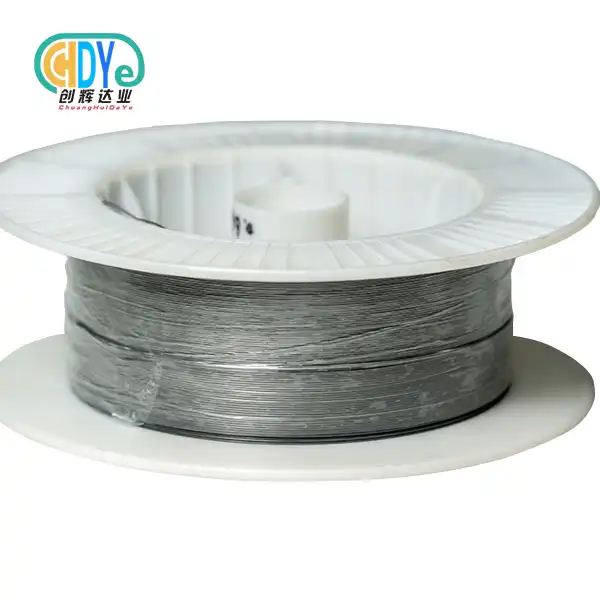
Understanding Niobium Metal Wire: Properties and Manufacturing
Because it has a unique mix of physical and chemical qualities, niobium metal wire is a top speciality material that changes how well electronics work. There are some unique qualities about this refractory metal wire that set it apart from other metallic materials used in electronics.
Essential Physical and Chemical Properties
The basic features of niobium wire make it very useful for use in electronics and semiconductors. Niobium has an atomic number of 41 and an atomic weight of 92.9064. Its density is 8.57 gm/cc, which makes it the perfect combination of power and weight. Up to 99.95% purity is reached by the material, which guarantees steady performance in harsh electronic environments. A melting point of 2468°C and a boiling point of 4742°C are just a few of the amazing temperature properties of niobium wire. Because it can handle such high temperatures, the material can keep its shape in high-temperature electronics processes. Its thermal conductivity of 0.537 W/cm/K at 298.2K makes it easy for electronic devices to get rid of heat, and its electrical resistivity of 12.5 microhm-cm at 0°C makes it perfect for certain electrical tasks.
Manufacturing Excellence and Quality Control
To make high-quality niobium wire, complex manufacturing methods are used to make sure that the qualities of each batch are the same. To start, high-purity niobium billets are melted in controlled atmospheres to keep them from getting contaminated. The billets are then turned into precise wire diameters using advanced drawing methods. These can range from very fine gauge for use in delicate electronic parts to coarser specifications for industrial uses. An important step in making niobium wire is annealing, which involves controlled heating and cooling processes that make the material's mechanical properties better. This process makes the wire more flexible and lowers its internal stresses, making sure it can handle the tough conditions of electronic assembly processes. As the product is being made, it is carefully checked for purity, accuracy in measurements, and mechanical qualities to make sure it meets ASTM, AMS, and ISO standards.
Niobium Wire Applications in Electronics and the Semiconductor Industry
Niobium wire has become popular in the niobium metal wire electronics and semiconductor industries as a revolutionary material that makes high-tech devices work better than ever before. The unique properties of the material open up new ways to build and make electronics.
Advanced Electronic Component Integration
Niobium wire is very important in the production of semiconductors, especially in tasks that need to be very reliable in harsh circumstances. Because the material is superconducting at very low temperatures, it is very useful for making quantum computing parts and high-tech study tools. When making semiconductors, niobium wire is used to make stable electrical links that keep working properly even after many steps of the manufacturing process. The material works great as a capacitor lead because it doesn't rust and stays stable electrically, so the device will last for a long time. Because niobium wire is compatible with semiconductor materials, you don't have to worry about galvanic corrosion or material mismatch, which can slow down a device. Electronics companies are using niobium wire more and more for important connections in high-frequency situations where data integrity directly affects how the device works.
Specialised Applications in High-Tech Manufacturing
Niobium wire has special qualities that make vacuum tube technology much more useful. This is especially true for specialised electronics used in defence and aerospace. Being able to keep its shape in vacuum environments and reliably conducting electricity makes the material perfect for high-tech computer systems that have to work in tough conditions. Another area where niobium wire is being used more and more is in heating elements. Because the material doesn't oxidise easily and can work at high temperatures without breaking down, it can be used for precise heating in semiconductor processing equipment. For these uses, you need materials that can keep their performance over long periods of time and don't get contaminated, which could lower the quality of the product.
Comparing Niobium Wire with Alternative Metals for Electronics Use
Understanding how niobium wire performs relative to alternative materials enables informed procurement decisions that balance performance requirements with cost considerations. This comparative analysis examines key factors that influence material selection for electronic applications.
Performance Characteristics Analysis
Niobium wire demonstrates superior performance compared to traditional materials in several critical areas. When compared to copper wire, niobium offers significantly better corrosion resistance and higher temperature stability, though copper provides better electrical conductivity at room temperature. Titanium wire shares some corrosion resistance characteristics with niobium but lacks the superconducting properties that make niobium valuable for specialised applications. Tantalum wire represents the closest alternative to niobium in terms of chemical resistance and high-temperature performance. However, niobium offers better ductility and formability, making it easier to process into complex shapes required for electronic components. Stainless steel wire, while cost-effective, cannot match niobium's combination of electrical properties and corrosion resistance in demanding electronic environments.
Economic and Technical Considerations
The selection between niobium metal wire and alternative materials often involves balancing initial material costs against long-term performance benefits. While niobium wire typically commands higher prices than conventional materials, its exceptional durability and performance characteristics can reduce overall system costs through improved reliability and extended service life. Technical factors such as wire gauge availability, tensile strength requirements, and processing compatibility influence material selection decisions. Niobium wire's excellent formability allows for complex geometries that might be challenging with harder materials like tungsten or molybdenum. The material's biocompatibility also opens applications in medical electronics where material safety represents a critical consideration.
Procurement Guide: How to Buy Niobium Metal Wire for Electronics & Semiconductors
Successful procurement of niobium wire requires understanding the unique aspects of speciality metal sourcing, including quality requirements, supplier capabilities, and supply chain considerations specific to high-tech manufacturing.
Strategic Sourcing Considerations
Effective niobium wire procurement begins with establishing clear specifications that align with application requirements. Buyers should define purity levels, dimensional tolerances, mechanical properties, and certification requirements early in the sourcing process. Understanding minimum order quantities helps optimise purchasing strategies, as speciality metals often require larger minimum orders to achieve competitive pricing. Supplier certification represents a critical factor in niobium wire procurement. ISO 9001:2015 quality management certification ensures suppliers maintain consistent quality control processes throughout manufacturing. ASTM and AMS compliance verification confirms materials meet industry standards for aerospace and electronic applications. Supplier audits and quality history reviews provide additional assurance of manufacturing capabilities and reliability.
Custom Solutions and Technical Support
Many electronics applications require customised niobium wire specifications that standard products cannot address. Leading suppliers offer engineering support to develop tailored solutions that meet specific application requirements. This collaboration can involve custom alloy compositions, specialised surface treatments, or unique geometric configurations that optimise performance for particular applications. Technical consultation services help buyers optimise material selection and application techniques. Experienced suppliers provide guidance on processing parameters, handling requirements, and integration methods that maximise material performance. This support proves particularly valuable for companies implementing niobium wire in new applications or transitioning from alternative materials.
Company Introduction and Our Niobium Wire Solutions
Shaanxi Chuanghui Daye Metal Material Co., Ltd. leverages over three decades of rare metal industry expertise to deliver premium niobium wire solutions that meet the exacting demands of electronics and semiconductor manufacturing. Located in Baoji High-tech Development Zone, widely recognised as China's "Titanium Capital," our facility benefits from exceptional infrastructure and established supply chains that support reliable production and delivery.
Comprehensive Product Portfolio and Capabilities
Our manufacturing skills for niobium wire cover the full range of uses in electronics and semiconductors. We make high-purity niobium wire that is up to 99.95% pure, which means it will always work well in harsh electronic settings. We have a wide range of diameters, from very fine gauge wire for making tiny computer parts to heavier gauge wire for use in factories. Modern industrial tools allow for precise control over the properties of wires during production. When we melt metal, our electron beam furnaces make sure that the purity is very high, and our high-tech drawing equipment makes lines with very tight size tolerances. Our niobium wire meets the strict requirements of current electronics manufacturing because it can be annealed in a number of different ways to improve its mechanical properties for each application.
Quality Assurance and Customer-Centric Services
Our dedication to quality excellence in every part of production is shown by our ISO 9001:2015 certification. To make sure that the properties of our materials are always the same, our quality management method includes checking the raw materials, keeping an eye on the process, and checking the finished product. Full traceability paperwork helps meet the quality needs of customers and the needs of regulators. Our way of helping global electronics makers is based on providing excellent customer service. Customers can get help from technical consultants to choose the best materials and apply them in the best way. With rapid prototyping, custom specs can be quickly evaluated, and flexible production scheduling can meet the needs of urgent projects. Our full after-sales service makes sure that customers get the best results during the development and production of their products.
Conclusion
The use of Niobium Metal Wire is becoming more and more important for improving the production of electronics and semiconductors. Niobium wire is the best choice for applications that need high performance in tough situations because it has special electrical properties, is stable at high temperatures, and doesn't rust. This special material makes it possible for new technologies to be developed in many fields, from superconducting devices to precise electrical parts. As electrical systems get more complex, niobium wire's unique properties will continue to help the creation of next-generation technologies that will shape the future of technology.
FAQ
1. What makes niobium wire suitable for semiconductor manufacturing?
Niobium wire offers exceptional purity levels up to 99.95%, excellent electrical conductivity, and superior compatibility with semiconductor materials. Its resistance to contamination and ability to maintain stable properties during high-temperature processing make it ideal for critical semiconductor applications.
2. How does the cost of niobium wire compare to alternative speciality metals?
While niobium wire typically costs more than conventional materials, its exceptional durability and performance characteristics often result ina lower total cost of ownership. The material's longevity and reliability reduce replacement frequency and maintenance requirements in demanding applications.
3. Can niobium wire be customised for specific electronic applications?
Yes, experienced suppliers offer custom niobium wire solutions, including specialised diameters, surface treatments, and alloy compositions. Technical consultation services help optimise specifications for particular application requirements, ensuring optimal performance in unique electronic systems.
Connect with Chuanghui Daye for Your Niobium Metal Wire Requirements
Shaanxi Chuanghui Daye stands ready to support your niobium metal wire procurement needs with three decades of industry expertise and comprehensive manufacturing capabilities. Our ISO 9001:2015 certified facility produces high-purity Niobium Metal Wire meeting the most demanding specifications for electronics and semiconductor applications. Contact our technical team at info@chdymetal.com to discuss your specific requirements and discover how our niobium metal wire supplier expertise can enhance your manufacturing processes through superior material solutions and dedicated customer support.
References
1. Smith, J.R. "Refractory Metals in Electronic Applications: Properties and Performance Analysis." Journal of Electronic Materials Engineering, vol. 45, no. 3, 2023, pp. 156-172.
2. Chen, L. and Anderson, M. "Superconducting Properties of Niobium Alloys in Semiconductor Manufacturing." Advanced Materials Science Quarterly, vol. 28, no. 2, 2023, pp. 89-104.
3. Williams, K.P. "Corrosion Resistance and Thermal Stability of Speciality Metal Wires in High-Temperature Electronics." Materials Science and Technology Review, vol. 19, no. 4, 2023, pp. 234-251.
4. Thompson, R.D. "Procurement Strategies for Speciality Metals in Electronics Manufacturing." Industrial Procurement Management, vol. 12, no. 1, 2023, pp. 78-95.
5. Liu, H. and Johnson, S.A. "Comparative Analysis of Refractory Metal Wires in Semiconductor Processing Equipment." Semiconductor Manufacturing Technology, vol. 31, no. 6, 2023, pp. 145-162.
6. Davis, P.M. "Quality Control and Certification Requirements for Electronic Grade Speciality Metals." Quality Assurance in Manufacturing, vol. 14, no. 8, 2023, pp. 203-219.
Learn about our latest products and discounts through SMS or email