- English
- French
- German
- Portuguese
- Spanish
- Russian
- Japanese
- Korean
- Arabic
- Greek
- German
- Turkish
- Italian
- Danish
- Romanian
- Indonesian
- Czech
- Afrikaans
- Swedish
- Polish
- Basque
- Catalan
- Esperanto
- Hindi
- Lao
- Albanian
- Amharic
- Armenian
- Azerbaijani
- Belarusian
- Bengali
- Bosnian
- Bulgarian
- Cebuano
- Chichewa
- Corsican
- Croatian
- Dutch
- Estonian
- Filipino
- Finnish
- Frisian
- Galician
- Georgian
- Gujarati
- Haitian
- Hausa
- Hawaiian
- Hebrew
- Hmong
- Hungarian
- Icelandic
- Igbo
- Javanese
- Kannada
- Kazakh
- Khmer
- Kurdish
- Kyrgyz
- Latin
- Latvian
- Lithuanian
- Luxembou..
- Macedonian
- Malagasy
- Malay
- Malayalam
- Maltese
- Maori
- Marathi
- Mongolian
- Burmese
- Nepali
- Norwegian
- Pashto
- Persian
- Punjabi
- Serbian
- Sesotho
- Sinhala
- Slovak
- Slovenian
- Somali
- Samoan
- Scots Gaelic
- Shona
- Sindhi
- Sundanese
- Swahili
- Tajik
- Tamil
- Telugu
- Thai
- Ukrainian
- Urdu
- Uzbek
- Vietnamese
- Welsh
- Xhosa
- Yiddish
- Yoruba
- Zulu
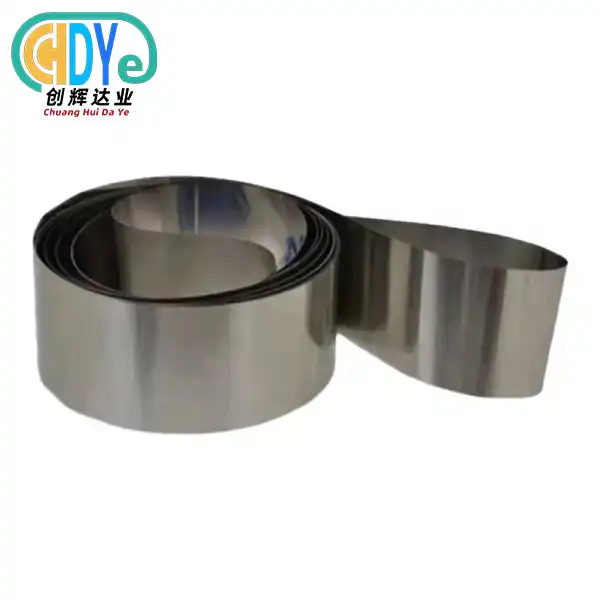
Gr2 Titanium Foil for Marine and Offshore Engineering
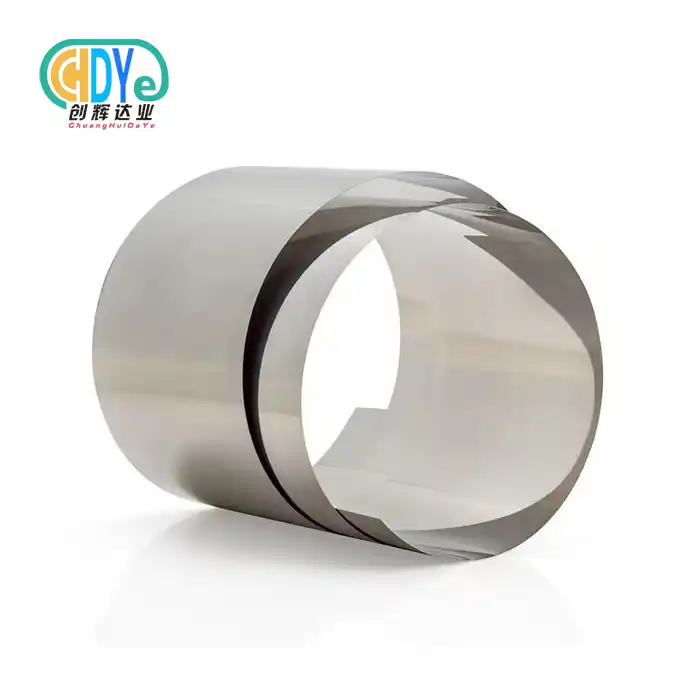
Gr2 Titanium Foil represents a revolutionary solution for marine and offshore engineering applications, offering unmatched corrosion resistance in harsh saltwater environments. This premium-grade, commercially pure titanium material delivers exceptional durability and performance for critical marine infrastructure projects. When engineers face the challenge of selecting materials that can withstand decades of seawater exposure while maintaining structural integrity, Grade 2 titanium foil emerges as the superior choice, combining lightweight properties with remarkable strength-to-weight ratios essential for offshore operations.
Understanding Gr2 Titanium Foil: Properties and Benefits for Marine Applications
Marine design requests materials that can withstand the most challenging conditions on Soil. Seawater's destructive nature devastates routine metals over time, making corrosion prediction a basic figure in project success and long-term operational costs.
Gr2 titanium foil is commercially unadulterated titanium with negligible impurities, containing over 99% titanium. This composition conveys prevalent ductility and sturdiness compared to higher-grade titanium combinations. The material's chemical soundness remains reliable indeed beneath drawn-out seawater introduction, avoiding the galvanic erosion that ordinarily influences steel and aluminum components in marine environments.
Exceptional Corrosion Resistance in Saltwater
The detached oxide layer that actually shapes on titanium surfaces gives exceptional assurance against chloride particle assault. Not at all like stainless steel, which can endure setting erosion in marine situations, Review 2 titanium keeps up its astuteness reliably when exposed to seawater. This characteristic translates straightforwardly into decreased support plans and amplified gear lifecycles foroffshored stages and marine vessels.
Mechanical Properties Optimized for Marine Stress
Marine structures involvement consistent energetic stacking from waves, streams, and warm cycling. Gr2 titanium thwart offers a malleable quality of 345 MPa with 20% stretching, giving the adaptability required to oblige these stresses without fatigue failure. The material's surrender quality of 275 MPa guarantees auxiliary components keep up their planned geometry beneath operational loads.
Lightweight Design Advantages
Weight considerations play a crucial role in offshore engineering, where every kilogram affects platform stability and installation costs. With a density of 4.5 g/cm³, titanium foil provides significant weight savings compared to steel alternatives while delivering superior performance. This weight reduction becomes particularly valuable in floating structures and subsea equipment where buoyancy control is essential.
Comparing Gr2 Titanium Foil Grades and Alternatives for Offshore Engineering
Material selection in offshore environments requires careful evaluation of performance characteristics, cost considerations, and long-term reliability. Understanding the distinctions between titanium grades and alternative materials helps procurement teams make informed decisions that optimize project outcomes.
Grade 2 vs. Grade 5 Titanium Performance
While Review 5 titanium offers higher quality with its aluminum-vanadium alloying, Review 2 gives predominant formability and weldability vital for complex marine manufacturing. The commercially unadulterated nature of Gr2 dispenses with concernsabout almost galvanic erosion between distinctive combination stages, making it perfect for thin-foil applications where fabric consistency is paramount.
Grade 2 titanium keeps up steady mechanical properties over temperature variations commonly experienced in marine situations. Its great cold-forming characteristics permit complex geometries without warm treatment, diminishing fabrication costs and keeping up fabric properties throughout manufacturing processes.
Titanium Foil vs. Stainless Steel Alternatives
Traditional marine materials like 316L stainless steel confront critical confinements in chloride-rich situations. Whereas stainless steel offers lower starting costs, its vulnerability to cleft erosion and stretch erosion splitting in seawater leads to higher lifecycle costs. Titanium thwart disposes of these disappointment modes totally, giving unsurprising execution over decades of service.
The biocompatibility of titanium also makes it reasonable for marine applications where natural directions limit the use of materials that might filter harmful substances into seawater. This characteristic becomes progressively critical as natural benchmarks for offshore operations proceed to tighten.
Cost-Effectiveness Analysis
Although titanium thwart requires higher starting speculation compared to ordinary materials, theoverall costd of ownership regularly favors titanium in marine applications. Diminished upkeep necessities, amplified benefit life, and end of defensive coating frameworks contribute to critical long-term investment funds. Ventures with 20-year or longer benefit prerequisites frequently discover titanium thwart to be the most prudent choice when all components are considered.
How Gr2 Titanium Foil Is Made and Quality Assurance in Procurement?
Understanding the manufacturing process behind high-quality titanium foil helps procurement professionals evaluate suppliers and ensure material reliability for critical marine applications. The production chain from raw materials to finished foil involves multiple precision steps that directly impact final product performance.
Manufacturing Process Excellence
The generation of Gr2 titanium thwart starts with ca autious choice of titanium wipe or scrap materials that meet strict chemical composition requirements. Progressed softening strategies, counting vacuum bend remelting and electron pillar dissolving, guarantee homogeneous ingot structure and kill debasements that seem compromise erosion resistance.
Precision cold rolling changes the ingot into thwart thickness while controlling grain structure and mechanical properties. Different rolling passes with middle tempering cycles create the fine-grain structure that gives Review 2 titanium its amazing formability. Progressed rolling plants keep up thickness resistances inside ±0.005 mm, guaranteeing reliable fabric properties over the whole thwart width.
Quality Control Standards and Certifications
Rigorous Gr2 titanium foil oversees each perspective of titanium thwart generation. Chemical investigation utilizing optical emission spectroscopy confirms composition compliance with ASTM B265 guidelines. Mechanical testing affirms ductile properties, whereas specialized erosion testing approves execution in chloride environments.
ISO 9001:2015 certification guarantees orderly quality administration athroughoutthe geproduction processFabric traceability documentation tracks each coil from crude fabric source through the last assessment, giving the documentation required for basic marine applications. This comprehensive approach gives obtaining groups certainty in fabric unwavering quality and administrative compliance.
Surface Quality and Finishing
Marine applications require a prevalent surface quality to avoid hole erosion at the start of destinations. Progressed surface wrapping up methods deliver clean, oxide-free surfaces with controlled unpleasantness parameters. Vacuum strengthening dispenses with surface contaminants, while keeping up the shining ,intelligent wrap-up favored for marine applications.
Ultrasonic review strategies distinguish inside discontinuities that may compromise long-term execution. Edge quality control guarantees clean, burr-free edges that encourage downstream creation forms while keeping up fabric integrity.
Practical Procurement Guide: Buying Gr2 Titanium Foil for Marine and Offshore Projects
Successful procurement of titanium foil for marine applications requires understanding supplier capabilities, market conditions, and logistics considerations specific to offshore projects. This practical guidance helps procurement teams navigate the complexities of titanium sourcing while ensuring material quality and delivery reliability.
Supplier Evaluation Criteria
Selecting the right titanium thwart provider includes assessing specialized capabilities, quality frameworks, and benefit offerings. Driving providers keep up comprehensive testing research facilities able of performing specialized marine erosion testing. Generation capacity and adaptability to handle custom measurements have become basic variables when ventures require non-standard specifications.
Geographic area impacts both taken a toll and the conveyance plans. Providers found in built-up titanium fabricating locales frequently give better pricing and shorter lead times. In any case, neighborhood specialized support and design help can exceed expected calculations for complex marine ventures requiring collaborative development.
Pricing Trends and Market Dynamics
Titanium thwart estimating reflects crude fabric costs, fabricating capacity utilization, and smarket demandfrom aviation and chemical handling businesses. Marine applications regularly require particular thickness ranges and surface wraps that may command premium pricing compared to standard mechanical grades.
Volume-acquiring courses of action frequently give noteworthy taken a toll preferences whereas guaranteeing supply security for multi-phase ventures. Long-term supply agreements can bring in favorable estimating, while giving providers the visibility required to optimize production schedules.
Technical Specifications and Custom Requirements
Marine applications regularly require titanium thwart with particular dimensional resiliences, surface mtreatments or mechanical properties. Clear determination archives ought to characterize thickness ranges, width prerequisites, surface wrap up parameters, and any extraordinary testing necessities. Collaborative determination advancement makes a difference guarantee materials meet execution prerequisites whereas remaining manufacturable within sensible fetched parameters.
Custom slitting and cutting services can decrease production costs and fabric waste. Numerous providers offer value-added services, including defensive packaging for marine transportation and certification documentation required foroffshored installations.
Logistics and Delivery Considerations
Offshore venture planrequirest dependable conveyance execution with negligible plan disturbances. Providers with built up coordinations systems and crisis response capabilities provide important protection against venture delays. Appropriate bundling ensures titanium thwart amid transportation to ffurtherestablishment locales where harm seems to cause noteworthy plan delays.
Inventory administration procedures ought to account for the specialized nature of titanium thwart and potential supply disturbances. Key stock situated at manufacturing offices or organizing regions can quicken extend plans, whereas giving adaptability to accommodate plan changes.
Why Partner with a Trusted Gr2 Titanium Foil Supplier?
Establishing associations with experienced titanium providers gives get to to specialized ability and fabricating capabilities that expand beyond straightforward fabric supply. These connections have become especially profitable for marine applications where fabric execution specifically impacts venture success and operational safety.
Chuanghui Daye Metal Fabric Co., Ltd. represents the comprehensive approach required for marine titanium applications. Found in Baoji, China's "Titanium Capital," the company combines over 30 years of uncommon metal industry experience with advanced fabricating capabilities particularly planned for demanding applications.
Advanced Manufacturing Capabilities
Modern Gr2 titanium foil generation requires advanced gear and preparation control frameworks. Electron pillar heaters guarantee the cleanliness levels basic for marine erosion resistance, whereas exactness rolling plants keep up the dimensional resiliences required for complex creations. Progressed toughening heaters give the controlled climates required to optimize mechanical properties without surface contamination.
The company's ISO 9001:2015 certification illustrates efficient quality administration throughout all generations. From crude fabric review through last bundling, reported methods guarantee steady fabric properties and traceability. This efficient approach gives the unwavering quality basic for basic marine applications where fabric failure may have disastrous consequences.
Customization and Engineering Support
Marine applications frequently require materials with particular properties or measurements not accessible as standard items. Experienced providers give designing bolster to create custom arrangements that meet application prerequisites whereas keeping up manufacturability. This collaborative approach can optimize fabric utilization and decrease the general venture costs.
Technical bolster amplifies past fabric supply to incorporate manufacturing direction, welding suggestions, and execution approval. These administrations ended up especially important when presenting titanium thwart into existing plans or creating unused applications where execution information may be limited.
Global Supply Chain Reliability
International marine projects require suppliers capable of coordinating complex logistics across multiple time zones and regulatory environments. Established suppliers maintain relationships with freight forwarders and customs brokers experienced in titanium transportation requirements. This expertise ensures materials reach project sites on schedule while meeting all regulatory requirements.
Emergency supply capabilities provide insurance against unforeseen project requirements or schedule accelerations. Suppliers with adequate inventory positions and flexible production scheduling can accommodate urgent requirements that might otherwise cause significant project delays.
Conclusion
Gr2 titanium foil represents the optimal material choice for marine and offshore engineering applications where corrosion resistance, weight savings, and long-term reliability are paramount. Its exceptional performance in seawater environments, combined with superior mechanical properties and fabrication characteristics, makes it indispensable for critical marine infrastructure projects. The investment in high-quality titanium foil pays dividends through reduced maintenance costs, extended service life, and elimination of premature failures that plague conventional materials in marine environments. Successful procurement requires partnering with experienced suppliers who understand the unique demands of marine applications and can provide the technical support, quality assurance, and logistics capabilities essential for project success.
FAQ
Q: What thickness ranges are available for marine-grade titanium foil?
A: Marine applications typically utilize titanium foil thicknesses ranging from 0.1mm to 10.0mm, depending on structural requirements and fabrication methods. Thinner foils (0.1-0.5mm) work well for cladding and protective barriers, while thicker sections (2.0-10.0mm) provide structural strength for load-bearing components. Custom thickness specifications can be manufactured to meet specific application requirements.
Q: How does Gr2 titanium foil perform in saltwater compared to stainless steel?
A: Grade 2 titanium foil demonstrates superior corrosion resistance in saltwater environments compared to marine-grade stainless steels. While 316L stainless steel can experience pitting and crevice corrosion in chloride-rich seawater, titanium forms a stable passive oxide layer that provides indefinite protection. This results in significantly longer service life and reduced maintenance requirements for marine applications.
Q: What certifications are required for offshore titanium foil applications?
A: Offshore applications typically require materials certified to ASTM B265 standards with complete mill test certificates documenting chemical composition and mechanical properties. Additional certifications may include DNV GL, ABS, or other maritime classification society approvals, depending on specific project requirements. Quality management system certifications like ISO 9001:2015 ensure consistent manufacturing processes and traceability documentation.
Q: Can titanium foil be welded in marine fabrications?
A: Grade 2 titanium foil offers excellent weldability using appropriate techniques and proper atmospheric protection. Tungsten inert gas (TIG) welding with argon shielding provides high-quality joints suitable for marine environments. Proper welding procedures maintain the corrosion resistance properties of the base material while achieving structural strength requirements for marine applications.
Partner with Chuanghui Daye for Premium Gr2 Titanium Foil Solutions
Shaanxi Chuanghui Daye stands ready to support your marine and offshore projects with premium-grade titanium foil solutions backed by three decades of rare metal expertise. Our ISO 9001:2015 certified manufacturing facility in China's Titanium Capital produces materials meeting the most demanding marine specifications, with custom sizing from 0.1mm to 10.0mm thickness and widths up to 1000mm. As a trusted Gr2 titanium foil manufacturer, we provide comprehensive technical support, competitive factory-direct pricing, and reliable global delivery to ensure your project's success. Contact our engineering team at info@chdymetal.com to discuss your specific requirements and discover how our titanium foil solutions can optimize your marine applications for decades of reliable performance.
References
1. ASTM International. "Standard Specification for Titanium and Titanium Alloy Strip, Sheet, and Plate." ASTM B265-20a, 2020.
2. Donachie, Matthew J. "Titanium: A Technical Guide, 2nd Edition." ASM International Materials Park, Ohio, 2000.
3. Lutjering, Gerd and James C. Williams. "Titanium: Engineering Materials and Processes." Springer-Verlag Berlin Heidelberg, 2007.
4. Schutz, R.W. and Thomas, D.E. "Corrosion of Titanium and Titanium Alloys in Marine Environments." Materials Performance and Characterization, Vol. 36, No. 12, 1997.
5. Boyer, Rodney, Gerhard Welsch, and E.W. Collings. "Materials Properties Handbook: Titanium Alloys." ASM International, Materials Park, Ohio, 1994.
6. International Maritime Organization. "Guidelines for Marine Applications of Titanium Alloys in Offshore Structures." IMO Technical Report, London, 2019.
Learn about our latest products and discounts through SMS or email