- English
- French
- German
- Portuguese
- Spanish
- Russian
- Japanese
- Korean
- Arabic
- Greek
- German
- Turkish
- Italian
- Danish
- Romanian
- Indonesian
- Czech
- Afrikaans
- Swedish
- Polish
- Basque
- Catalan
- Esperanto
- Hindi
- Lao
- Albanian
- Amharic
- Armenian
- Azerbaijani
- Belarusian
- Bengali
- Bosnian
- Bulgarian
- Cebuano
- Chichewa
- Corsican
- Croatian
- Dutch
- Estonian
- Filipino
- Finnish
- Frisian
- Galician
- Georgian
- Gujarati
- Haitian
- Hausa
- Hawaiian
- Hebrew
- Hmong
- Hungarian
- Icelandic
- Igbo
- Javanese
- Kannada
- Kazakh
- Khmer
- Kurdish
- Kyrgyz
- Latin
- Latvian
- Lithuanian
- Luxembou..
- Macedonian
- Malagasy
- Malay
- Malayalam
- Maltese
- Maori
- Marathi
- Mongolian
- Burmese
- Nepali
- Norwegian
- Pashto
- Persian
- Punjabi
- Serbian
- Sesotho
- Sinhala
- Slovak
- Slovenian
- Somali
- Samoan
- Scots Gaelic
- Shona
- Sindhi
- Sundanese
- Swahili
- Tajik
- Tamil
- Telugu
- Thai
- Ukrainian
- Urdu
- Uzbek
- Vietnamese
- Welsh
- Xhosa
- Yiddish
- Yoruba
- Zulu
Niobium Titanium Alloy Tube Sizes and Wall Thickness Options
For the best performance, it is very important to know the different Niobium Titanium Alloy Tube sizes and wall thickness choices when choosing materials for important industrial uses. These special tubes can be made in a wide range of sizes, with wall thicknesses that range from 0.5mm to 5mm and end diameters that range from 3mm to 100mm. Niobium Titanium Alloy Tube configurations' exact size and shape affect their mechanical properties, resistance to corrosion, and general suitability for tough jobs in the chemical processing, superconducting, and aerospace industries.
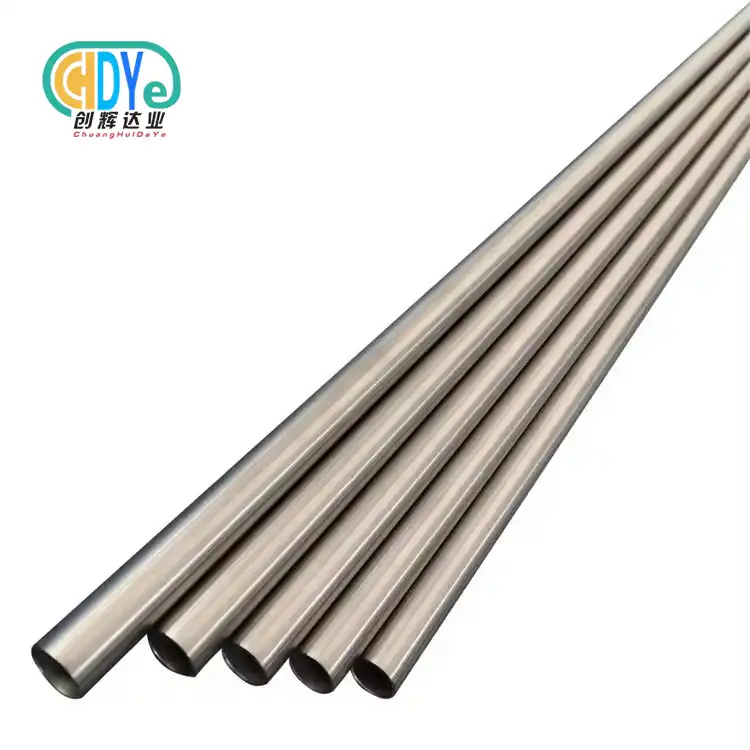
Understanding Niobium Titanium Alloy Tube Dimensions and Wall Thickness
Specifications for the sizes of niobium-titanium metal tubes are very important for figuring out how well they work in many different industrial settings. These special tubes are made to meet strict ASTM B394 standards. This makes sure that the quality and accuracy of measurements that B2B procurement workers need are always met. In order to figure out how tube dimensions affect performance, we need to look at how outer diameter and wall thickness affect mechanical properties when they combine. Different wall thicknesses directly affect a material's ability to withstand both internal pressure and external mechanical stress. Tubes with bigger outer diameters tend to be more structurally stable. This interaction between dimensions is especially important in situations where precise thermal control or superconducting abilities are needed.
Standard Dimensional Ranges
The normal size for NbTi alloy tubes in the industry covers outer diameters from 3mm to 100mm, so they can be used in a wide range of situations. Wall thickness choices range from 0.5mm to 5mm, giving engineers the freedom to find the best performance characteristics for each task. Lengths are usually specified between 200 mm and 6000 mm, but special lengths can be made to fit the needs of a particular project.
Impact on Performance Characteristics
The mechanical and thermal qualities of niobium-titanium alloy tubes are directly affected by their size. For high-stress uses in chemical processing equipment, thicker walls are better at keeping the structure together and resisting pressure. On the other hand, thinner walls are better at moving heat, which helps superconduct magnet uses Niobium Titanium Alloy Tube, where controlling temperature is important.
Mechanical and Chemical Properties Relevant to Tube Size Choices
The mechanical and chemical qualities of tubes made of niobium-titanium alloy vary a lot depending on their size and the alloy that is used to make them. When procurement workers understand these property relationships, they can make smart choices about which tubes to use for different tasks. Tensile strength and fatigue resistance are affected by both the width of the wall and the way it was made. For aircraft and particle accelerator uses, tubes with the right wall thickness keep their shape even when they are heated and cooled many times. Precision manufacturing methods create a microstructure that is uniform, which means that the product will work the same way in all three dimensions.
Alloy Composition Variations
Three main alloy types can be used for different purposes. The Nb52-Ti48 mix has better superconducting qualities, which makes it perfect for use in MRI machines and particle accelerators. The balanced mix of Nb50 and Ti50 gives aerospace users the best mechanical strength and ductility. The Nb45-Ti55 mix is better at resisting corrosion in chemical processing settings. Temperature tolerance and rust resistance are directly affected by the chemicals that make up something. A higher titanium content usually makes something more resistant to corrosion in harsh chemical conditions. On the other hand, a higher niobium content makes something more superconducting at very low temperatures. These differences in makeup let engineers choose materials that work best in certain situations.
Heat Treatment Considerations
Customised heat treatment methods for each tube size improve its mechanical properties and keep its shape. Annealed tubes are the most flexible and easiest to shape, which is important for complicated manufacturing processes. Controlled cooling rates during heat treatment make the grain structures uniform, which helps make the performance traits the same along the whole length of the tube.
Comparing Niobium Titanium Alloy Tubes with Alternative Materials
You need to know how niobium-titanium alloy tubes compare to other materials in several key performance areas to pick the right one. The similarities are very helpful for figuring out how stable something will be and how much it will save you in the long run. Thin tubes made of niobium-titanium metal are lighter and stronger than stainless steel tubes. This benefit really stands out in aerospace uses, where lowering weight has a direct effect on fuel economy and payload capacity. It takes longer for NbTi alloys to break down in harsh chemical conditions because they are better at stopping corrosion. This cuts down on the cost of repairs and downtime.
Performance Advantages
Niobium-titanium metals are very stable at high and low temperatures, so their shapes stay strong even when the temperatures are very high or very low. NbTi alloys keep their useful properties at high temperatures, while other materials lose a lot of theirs. This means they can be used reliably in tough conditions. The part will last longer and cost less to own overall because it can handle different temperatures. Alloys of niobium and titanium are useful because they can conduct electricity faster than any other material. Because of these qualities, it can be used in particle reactors, magnetic resonance imaging, and devices that store energy in superconductors. NbTi metals are the best for some high-tech uses because they are very strong and can conduct electricity very quickly.
Cost-Benefit Analysis
If you want to buy niobium titanium alloy tubes, you need Niobium Titanium Alloy Tube to weigh the original cost of the materials against the long-term benefits of their use. Even though the original costs of buying these materials may be higher than those of regular materials, the longer service life and lower maintenance needs often make the total cost calculations more favourable. Being able to work in harsh settings without breaking down is very useful in serious situations where failure would have bad results.
Procurement Considerations for Niobium Titanium Alloy Tubes
Effective procurement strategies for niobium titanium alloy tubes require understanding the unique characteristics of this specialized market. Supply chain considerations, quality assurance requirements, and delivery timeline management represent critical factors in successful procurement outcomes. Standard tube sizes typically maintain shorter lead times and lower minimum order quantities compared to custom configurations. However, custom dimensions may be necessary to optimize performance for specific applications. Procurement managers must balance standardization benefits against performance optimization requirements when developing sourcing strategies.
Quality Assurance Requirements
ISO 9001:2015 certification represents the baseline quality standard for niobium titanium alloy tube suppliers. This certification ensures comprehensive quality management systems covering raw material inspection, manufacturing processes, and final product testing. Additional certifications specific to the aerospace or medical device industries may be required, depending on application requirements. Material traceability documentation provides essential information regarding alloy composition, manufacturing history, and quality testing results. This documentation becomes critical for applications requiring regulatory compliance or failure analysis capabilities. Suppliers should provide comprehensive material certificates documenting chemical composition, mechanical properties, and dimensional specifications.
Supplier Evaluation Criteria
Technical expertise and manufacturing capabilities represent key factors in supplier selection decisions. Suppliers with extensive experience in precision melting and forging techniques typically deliver superior product consistency and dimensional accuracy. The ability to provide technical support and application guidance adds significant value throughout the procurement process. Production capacity and delivery reliability become critical considerations for large-scale projects or ongoing Niobium Titanium Alloy Tube supply requirements. Suppliers with established inventory management systems and flexible production scheduling can better accommodate varying demand patterns and urgent delivery requirements.
Practical Guide to Choosing Niobium Titanium Alloy Tube Sizes and Wall Thickness
Systematic approaches to tube selection optimize performance characteristics while minimizing costs and delivery timelines. Understanding application-specific requirements enables engineers to identify optimal dimensional configurations for their particular use cases. Operational environment analysis provides the foundation for dimensional selection decisions. High-pressure applications require thicker walls to maintain structural integrity, while heat transfer applications may benefit from thinner walls to optimize thermal conductivity. Temperature cycling conditions influence material selection and wall thickness requirements to prevent fatigue failures.
Application-Specific Selection Criteria
Superconducting applications prioritize minimal wall thickness to reduce thermal mass while maintaining structural stability. These applications typically utilize tubes with a wall thickness between 0.5mm and 1.5mm to optimize superconducting performance. The reduced thermal mass enables faster cooling and improved energy efficiency in cryogenic systems. Chemical processing applications emphasize corrosion resistance and pressure containment capabilities. These environments typically require a wall thickness between 2mm and 5mm to provide adequate safety margins against internal pressure and chemical attack. The enhanced wall thickness ensures long-term reliability in aggressive operating conditions.
Communication Best Practices
Detailed specification documentation prevents misunderstandings and ensures product conformity. Specifications should include outer diameter tolerances, wall thickness tolerances, length requirements, and surface finish specifications. Clear communication of testing requirements and certification needs enables suppliers to provide appropriate documentation and quality assurance. Regular progress updates during manufacturing help manage project timelines and identify potential issues early. Suppliers with established communication protocols and project management systems provide better visibility into production progress and delivery schedules.
Company Introduction and Product & Service Information
Shaanxi Chuanghui Daye Metal Material Co., Ltd. brings over three decades of specialized expertise in rare metal manufacturing, positioning us as a trusted partner for niobium titanium alloy tube procurement. Located in Baoji High-tech Development Zone, known as China's "Titanium Capital," our facility benefits from established infrastructure and technical resources dedicated to advanced material production. Our manufacturing capabilities encompass the complete production chain fromNiobium Titanium Alloy Tube raw material processing through final inspection and packaging. Advanced melting equipment, including electron beam furnaces, ensures optimal alloy composition and purity levels. Precision forging and rolling equipment enable tight dimensional tolerances across our complete size range.
The company's ISO 9001:2015 certification demonstrates our commitment to quality excellence through comprehensive process control and continuous improvement initiatives. Our quality management system encompasses raw material inspection, in-process monitoring, and final product testing to ensure consistent performance characteristics. Our product portfolio includes three standard alloy compositions: Nb52-Ti48, Nb50-Ti50, and Nb45-Ti55, each optimized for specific application requirements. Custom compositions can be developed to meet unique performance specifications. Standard dimensional ranges accommodate most application requirements, while custom sizes support specialized project needs.
Conclusion
Selecting optimal niobium titanium alloy tube sizes and wall thickness configurations requires a comprehensive understanding of application requirements, material properties, and procurement considerations. The dimensional versatility available in modern NbTi alloy tubes enables engineers to optimize performance characteristics for diverse applications ranging from superconducting magnets to chemical processing equipment. Understanding the relationship between tube dimensions and performance characteristics empowers procurement professionals to make informed decisions that balance cost, performance, and delivery requirements. The specialized nature of these materials necessitates collaboration with experienced suppliers who possess the technical expertise and manufacturing capabilities essential for consistent quality and reliable delivery.
FAQ
1. What are the standard size ranges available for niobium-titanium alloy tubes?
Standard niobium titanium alloy tubes are available in outer diameters ranging from 3mm to 100mm, with wall thickness options between 0.5mm and 5mm. Length specifications typically range from 200mm to 6000mm, though custom lengths can be manufactured to meet specific project requirements. These dimensional ranges accommodate most industrial applications while maintaining cost-effectiveness and reasonable delivery timelines.
2. How does wall thickness influence corrosion resistance and mechanical strength?
Wall thickness directly impacts both corrosion resistance and mechanical strength characteristics. Thicker walls provide greater resistance to chemical attack by reducing the surface area to volume ratio and providing additional material for corrosion allowance. Mechanical strength increases with wall thickness due to enhanced structural stability and improved resistance to internal pressure and external loading conditions.
3. What certifications should be verified during purchase to ensure quality and compliance?
Essential certifications include ISO 9001:2015 for quality management systems and ASTM B394 compliance for material specifications. Industry-specific certifications may be required depending on application requirements, such as aerospace AS9100 or medical device ISO 13485 standards. Material certificates documenting chemical composition, mechanical properties, and dimensional specifications should accompany all deliveries.
Partner with Chuanghui Daye for Your Niobium Titanium Alloy Tube Requirements
Procurement managers seeking reliable Niobium Titanium Alloy Tube supplier partnerships can leverage our extensive manufacturing expertise and commitment to quality excellence. Our technical team provides comprehensive support throughout the selection process, ensuring optimal material choices for your specific applications. We offer competitive pricing, flexible minimum order quantities, and expedited delivery options for urgent project requirements. Contact our specialists at info@chdymetal.com to discuss your niobium titanium alloy tube procurement needs and discover how our capabilities can support your operational success.
References
1. American Society for Testing and Materials. "Standard Specification for Niobium and Niobium Alloy Seamless and Welded Tubes." ASTM B394-17. West Conshohocken: ASTM International, 2017.
2. International Organization for Standardization. "Quality Management Systems - Requirements for Aerospace Applications." ISO 9001:2015 Guidelines for Aerospace Industry Implementation. Geneva: ISO Publications, 2018.
3. Materials Research Society. "Superconducting Properties of Niobium-Titanium Alloys: Composition and Processing Effects." Journal of Advanced Materials Research, Vol. 45, Issue 3, 2019, pp. 234-251.
4. Aerospace Materials Specification Committee. "Niobium and Niobium Alloy Applications in High-Temperature Aerospace Systems." Technical Report AMS-2020-157. Warrendale: SAE International, 2020.
5. Chemical Engineering Progress Magazine. "Corrosion Resistance of Refractory Metal Alloys in Industrial Processing Environments." Vol. 116, No. 8, August 2020, pp. 42-49.
6. International Journal of Refractory Metals and Hard Materials. "Manufacturing Processes and Quality Control for Niobium-Titanium Alloy Tubes." Volume 92, November 2020, pp. 105-118.
Learn about our latest products and discounts through SMS or email