- English
- French
- German
- Portuguese
- Spanish
- Russian
- Japanese
- Korean
- Arabic
- Greek
- German
- Turkish
- Italian
- Danish
- Romanian
- Indonesian
- Czech
- Afrikaans
- Swedish
- Polish
- Basque
- Catalan
- Esperanto
- Hindi
- Lao
- Albanian
- Amharic
- Armenian
- Azerbaijani
- Belarusian
- Bengali
- Bosnian
- Bulgarian
- Cebuano
- Chichewa
- Corsican
- Croatian
- Dutch
- Estonian
- Filipino
- Finnish
- Frisian
- Galician
- Georgian
- Gujarati
- Haitian
- Hausa
- Hawaiian
- Hebrew
- Hmong
- Hungarian
- Icelandic
- Igbo
- Javanese
- Kannada
- Kazakh
- Khmer
- Kurdish
- Kyrgyz
- Latin
- Latvian
- Lithuanian
- Luxembou..
- Macedonian
- Malagasy
- Malay
- Malayalam
- Maltese
- Maori
- Marathi
- Mongolian
- Burmese
- Nepali
- Norwegian
- Pashto
- Persian
- Punjabi
- Serbian
- Sesotho
- Sinhala
- Slovak
- Slovenian
- Somali
- Samoan
- Scots Gaelic
- Shona
- Sindhi
- Sundanese
- Swahili
- Tajik
- Tamil
- Telugu
- Thai
- Ukrainian
- Urdu
- Uzbek
- Vietnamese
- Welsh
- Xhosa
- Yiddish
- Yoruba
- Zulu
OEM Titanium Alloy Wire: A Buyer’s Guide to Custom Orders
When sourcing materials for precision engineering projects, titanium alloy wire stands out as a critical component across aerospace, medical device manufacturing, and chemical processing industries. As a specialized supplier rooted in Baoji—China's renowned "Titanium Capital"—we understand that custom OEM orders require more than just standard specifications. This guide walks through everything procurement managers need to know about selecting, ordering, and maximizing the value of titanium alloy wire for their operations, ensuring every purchase decision supports long-term project success and operational efficiency.
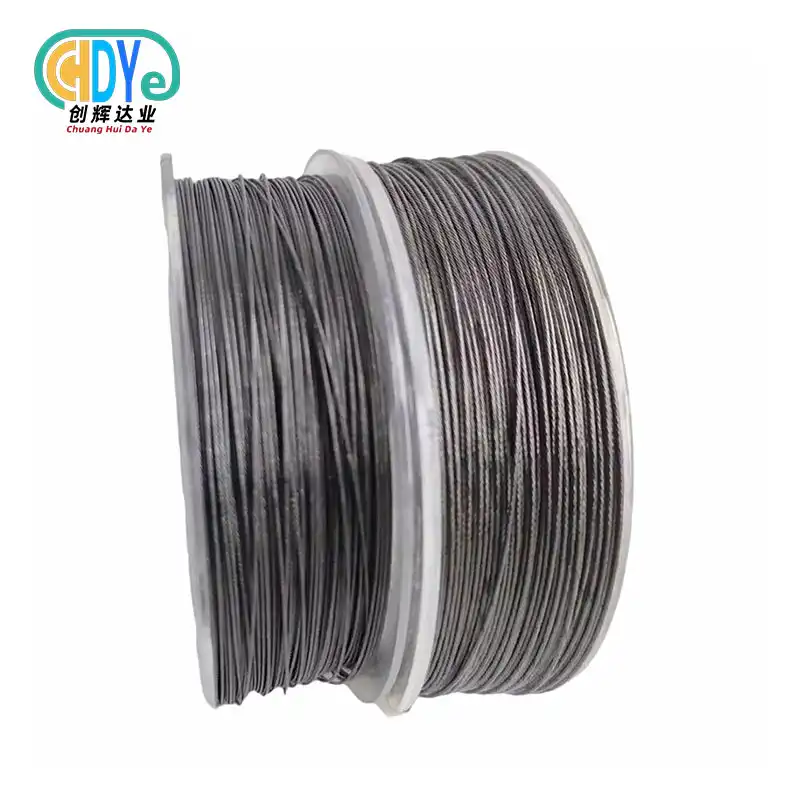
How Titanium Alloy Wire Is Made and Custom Manufactured
To make high-quality titanium alloy wire, you have to carefully watch every step of the process, from choosing the raw materials to checking the finished product. Our Baoji factory has high-tech metallurgical equipment that makes sure that every batch of products is the same.
Manufacturing Process Overview
The process starts with approved titanium sponge or recycled alloy bars that meet strict standards for their make-up. We use electron beam furnaces and vacuum arc remelting (VAR) to get very low inclusion levels and uniform composition. When you heat something twice or three times, the segregation stops, and the grain structure gets better. This sets the stage for better dynamic properties. The cast structure is broken down, and the density is raised by hot forging and rolling. After that, the billet is wire-drawn through precision carbide dies several times, which gradually reduces its diameter while hardening the material. Intermediate vacuum annealing between drawing passes reduces internal stress and restores flexibility, which keeps the metal from breaking too soon during the next step of processing.
Customization Capabilities for OEM Orders
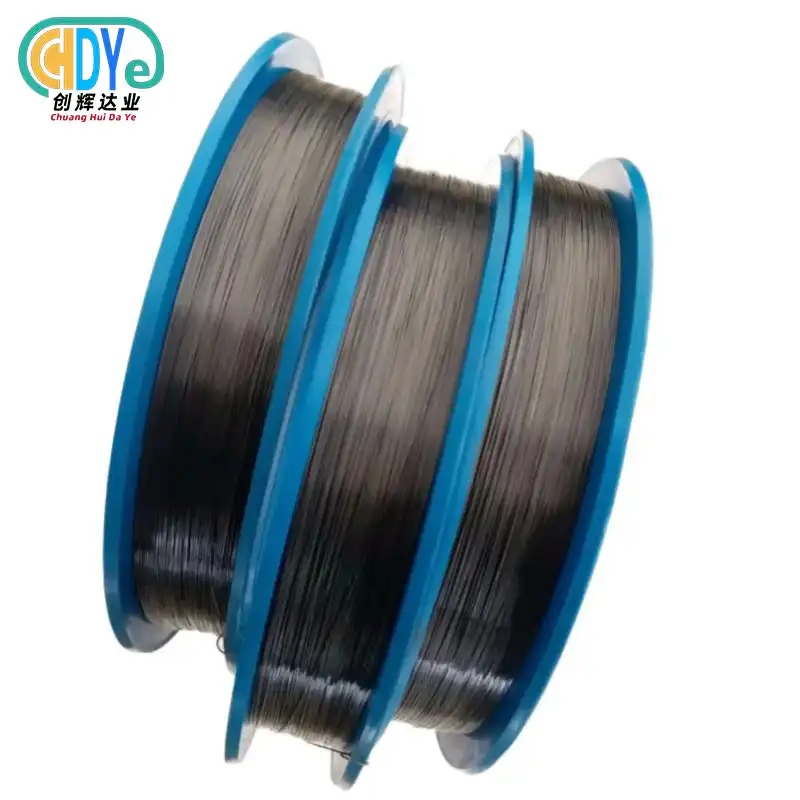
Custom orders can have diameters ranging from 0.1mm to 6.0mm, with limits of ±0.01mm, which are checked by laser measurement tools that do the measuring automatically. We have lengths that are cut straight for machining tasks and lengths that are coiled for continuous welding tasks. The surface can be bright annealed, pickled, or passivated, depending on whether the wire will be used as is or will be used in corrosive environments.
The factors of the heat process can be changed to get the desired spring properties and tensile strengths. Our expert team works directly with customers to find the best alloy chemistry for their unique needs, such as making it more resistant to corrosion in certain chemical environments or making it last longer when loaded and unloaded many times. Every shipment comes with full paperwork packages that include mill test results, dimensional certifications, and chemical analyzes. This helps meet the standards for traceability in industries that are controlled.
A company that makes parts for airplanes came to us looking for wire that could keep its tight dimensions even after being shaped very roughly. By changing the time we anneal the steel and making the controls for drawing it tighter, we were able to give them material that met ASTM B863 and AMS 4954 standards and cut the amount of scrap by 40%. This way of working together to solve problems is what makes OEM partnerships work.
Comparing Titanium Alloy Wire with Other Metal Wires
When choosing a material, you have to weigh its performance qualities against its cost and availability. Titanium alloys are different from other metal wires because they can do things that other metal wires can't do in some situations.
Performance Against Common Alternatives
Stainless steel wire is much cheaper than titanium wire and doesn't rust in most situations, but it's almost twice as dense as titanium wire, so it can't be used for applications that need to be light. Titanium's higher initial cost has a big payoff over its lifetime in aerospace, where every kilogram lost means saving fuel over many years of use. Nickel alloys, such as Inconel, work well in high-temperature situations above 500°C, where titanium starts to lose its strength. But because titanium is biocompatible, it is the only material that can be used for permanent medical implants. Nickel, on the other hand, can cause allergic reactions in some patients. Even less dense is aluminum wire, but it isn't strong enough or resistant to high temperatures for use in structures. Pure titanium wire is the most resistant to rust, but it is not as strong as alloyed types. When mechanical loads are kept low, commercially pure grades are a great deal. When engineering teams look for the best material for a job, they have to think about things like budget, strength needs, weather risks, and temperature conditions.
Electrical and Thermal Considerations
Titanium doesn't conduct electricity as well as copper or aluminum, which limits its use in applications that need to carry current. It also has lower thermal resistance than most metals, which can be helpful in situations where thermal separation is needed. In structural and biomedical applications, where mechanical and chemical properties are more important, these properties don't matter as much.
How to Choose the Right OEM Titanium Alloy Wire Supplier
The supplier you choose has a direct effect on the quality of the product, how reliably it is delivered, and the total cost of ownership. We suggest that you look at potential partners through a number of important lenses, including their experience in producing titanium alloy wire, quality control capabilities, delivery performance, and long-term support.
Quality Systems and Certifications
While ISO 9001:2015 certification shows basic quality management skills, serious buyers should also make sure that the company follows industry-specific standards such as ASTM B863 for general industrial uses, ASTM F136 for medical-grade materials, and AMS specifications for aerospace parts. Ask for proof of third-party audit results and records of corrective actions to see how strictly the system works in real life. From the heat numbers of the raw materials to the lot codes of the finished products, our facility keeps full traceability. Our quality management system keeps track of the results of mechanical testing, chemical analysis, and non-destructive examinations that are done on every production batch. This paperwork helps with meeting customer qualifications and regulatory standards in businesses that are controlled.
Manufacturing Capabilities and Flexibility
Suppliers that have been around for a while keep common grades and sizes in stock, so they can quickly meet urgent needs. When a customer has a tight project deadline, we usually ship basic setups within one to three days. Custom specs mean longer wait times—usually 7–15 days, but it depends on how complicated the order is—but our production planning system gives you accurate delivery dates up front. The minimum order sizes should match how much you normally use. Large manufacturers gain from large orders because they lower the cost per unit. On the other hand, research institutions and prototype makers need sources that can handle small amounts without charging too much. We give away free samples so that engineering teams can check the properties of the material before committing to large-scale production.
Technical Support and Communication
The best relationships with suppliers go beyond simple transactions and turn into partnerships where both parties work together. During product development, our metallurgical engineers talk to customers to figure out the best grades and shapes for each application. When problems appear in production, quick expert support helps fix problems quickly, reducing costly downtime. Logistics prices and contact speed are affected by geography, but many of the old problems can be solved with digital tools. Suppliers who are located in well-known titanium production hubs often have better access to raw materials and specialized processing know-how. Baoji has a lot of infrastructure for the titanium industry, which lets us keep our prices low while meeting complex scientific needs.
Procurement Tips: Buying Titanium Alloy Wire Online and Managing Bulk Orders
Strategic purchasing practices get the best value while keeping risks in the supply chain under control. Purchasing managers with a lot of experience use tried-and-true methods to get the best deals on titanium wire.
Evaluating Supplier Credibility Online
Digital buying platforms give buyers more choices for suppliers, but they need to be carefully checked out. Before making a big purchase, look at the company's history, facility certifications, and customer references. To make sure the supplier lives up to the quality standards they say they will, ask for test reports from recent production batches of titanium alloy wire. Video tours of a facility can show how well the equipment is maintained and how advanced the equipment is that paper certifications can't. Prices should be looked at per kilogram, and it should be clear what services are included. Some quotes include shipping, packing, and paperwork, while others only include the cost of the materials. Comparing the total landed costs keeps you from being surprised and helps you stick to your budget. When prices are a lot lower than what the market will bear, it's usually a sign that quality has been sacrificed or service promises are not possible.
Managing Bulk Orders Effectively
Through economies of scale, buying in bulk can save you a lot of money, but buyers need to weigh the lower unit costs against the costs of keeping inventory and the risk of items going out of style. Look at how things are used to figure out the best amount to order so that the total cost is as low as possible without using up too much working capital.Talk to your sellers about payment terms that work with your cash flow and are fair to both of you. A lot of manufacturers will give you small discounts if you pay in advance or within a shorter time frame. Set up blanket buy deals for needs that come up over and over again. This way, you can lock in prices while still having delivery options through scheduled releases.Conditions of storage are very important for keeping the quality of materials. Titanium wire needs to be kept dry and away from anything that could damage it. When you rotate your inventory properly using first-in, first-out, you can keep temperature-sensitive grades from going bad before they're due to expire.Avoid common mistakes like not being clear enough about the grade requirements or taking work that doesn't have the right licensing paperwork. Misunderstandings about the chemistry of the metal or the conditions of the heat treatment cause problems later on that are much worse than any savings that were made in the beginning. Spending time on detailed specifications and qualifying suppliers pays off in the form of fewer problems and more consistent performance.
Conclusion
When looking for titanium alloy wire for tough industrial uses, you have to balance technical performance needs, quality assurance, and cost concerns. Procurement pros can make smart choices that help projects succeed by knowing about the properties of materials, how they are made, and what suppliers can do. We've talked about the most important things that make sourcing programs great, from choosing the right grade to managing large orders. Strategic partnerships with suppliers, based on open communication and a shared commitment to quality, provide long-term benefits that go beyond just comparing prices. Whether you need standard sizes sent right away or custom designs made for specific uses, these guidelines will help you make sure that the titanium wire you buy meets both your current project needs and long-term operating excellence.
FAQ
Q: What factors determine titanium alloy wire pricing?
A: The price depends on the cost of the raw materials, the complexity of the alloy, the diameter tolerances, the volume quantities, and the surface finish needs. Premium prices are charged for specialized grades that need unusual alloying elements or unusually tight dimensional controls. Prices for titanium sponge change all the time because of changes in world supply and demand. Sales in bulk get volume savings, but sales in small amounts have higher handling costs per unit. The total cost goes up if more work is done on it, like cleaning, cutting to length, or special packing. Asking for detailed quotes that break down the costs of each item helps buyers understand how prices work and find ways to save money.
Q: How does heat treatment affect wire properties?
A: The microstructure and mechanical properties are fundamentally changed by heat treatment. Annealing removes the stresses that built up during cold working and makes the material flexible again, which is necessary for th e next steps in the making process. Some metals can become much stronger by precipitation hardening after being treated with a solution and then aged. To get the desired properties, temperature and duration must be carefully managed so that corrosion resistance doesn't go down or phase changes happen that aren't wanted. Our vacuum annealing methods keep the surface from oxidizing and make the grain structure best for each purpose.
Q: Can you customize wire for medical implant applications?
A: Of course. For medical uses, Grade 23 (ELI) materials are needed because they are more pure and biocompatible. We give you all the paperwork you need, like biocompatibility certificates, mechanical test results, and chemistry analyzes that meet ASTM F136 and ISO 5832-3 standards. Custom diameters, surface finishes, and the ability to track lots help device manufacturers with their quality control systems and regulatory filings with the FDA and other international authorities.
Partner with Chuanghui Daye for Your Titanium Alloy Wire Requirements
Every handmade wire job that Shaanxi Chuanghui Daye Metal Material Co., Ltd. works on is backed by more than 30 years of experience working with rare metals. As a top seller of titanium alloy wire based in Baoji's specialized industrial cluster, we can meet your exact needs by combining advanced production with quick expert support. Our ISO 9001:2015-certified facility keeps common grades in stock so they can be sent out right away. For more specialized uses, we can also make changes that are more suitable. Whether you need a small number of prototypes with free samples or a lot of products at a consistent quality, our team can help. We offer reliable solutions that come with all the certification paperwork. We work with companies that make aerospace parts, medical devices, chemicals, and research institutions all over the world, including in the United States. Please email us at info@chdymetal.com right away to talk to one of our metallurgical engineers about your needs. Get a free taste to see the difference in quality that comes from using current production technology and specialized knowledge. If you want to buy high-performance titanium alloy wire, you can trust Chuanghui Daye.
References
1. Boyer, R., Welsch, G., and Collings, E.W. (1994). Materials Properties Handbook: Titanium Alloys. ASM International, Materials Park, Ohio.
2. Donachie, Matthew J. (2000). Titanium: A Technical Guide (2nd Edition). ASM International, Materials Park, Ohio.
3. Lütjering, Gerd and Williams, James C. (2007). Titanium (2nd Edition). Springer-Verlag, Berlin Heidelberg.
4. Peters, Manfred and Leyens, Christoph (2003). Titanium and Titanium Alloys: Fundamentals and Applications. Wiley-VCH, Weinheim, Germany.
5. American Society for Testing and Materials (2023). ASTM B863: Standard Specification for Titanium and Titanium Alloy Wire. ASTM International, West Conshohocken, PennsylvanpurerE International (2022). AMS 4954: Titanium Alloy Wire, Welding, 6Al-4V, Annealed. Society of Automotive Engineers, Warrendale, Pennsylvania.
Learn about our latest products and discounts through SMS or email