- English
- French
- German
- Portuguese
- Spanish
- Russian
- Japanese
- Korean
- Arabic
- Greek
- German
- Turkish
- Italian
- Danish
- Romanian
- Indonesian
- Czech
- Afrikaans
- Swedish
- Polish
- Basque
- Catalan
- Esperanto
- Hindi
- Lao
- Albanian
- Amharic
- Armenian
- Azerbaijani
- Belarusian
- Bengali
- Bosnian
- Bulgarian
- Cebuano
- Chichewa
- Corsican
- Croatian
- Dutch
- Estonian
- Filipino
- Finnish
- Frisian
- Galician
- Georgian
- Gujarati
- Haitian
- Hausa
- Hawaiian
- Hebrew
- Hmong
- Hungarian
- Icelandic
- Igbo
- Javanese
- Kannada
- Kazakh
- Khmer
- Kurdish
- Kyrgyz
- Latin
- Latvian
- Lithuanian
- Luxembou..
- Macedonian
- Malagasy
- Malay
- Malayalam
- Maltese
- Maori
- Marathi
- Mongolian
- Burmese
- Nepali
- Norwegian
- Pashto
- Persian
- Punjabi
- Serbian
- Sesotho
- Sinhala
- Slovak
- Slovenian
- Somali
- Samoan
- Scots Gaelic
- Shona
- Sindhi
- Sundanese
- Swahili
- Tajik
- Tamil
- Telugu
- Thai
- Ukrainian
- Urdu
- Uzbek
- Vietnamese
- Welsh
- Xhosa
- Yiddish
- Yoruba
- Zulu
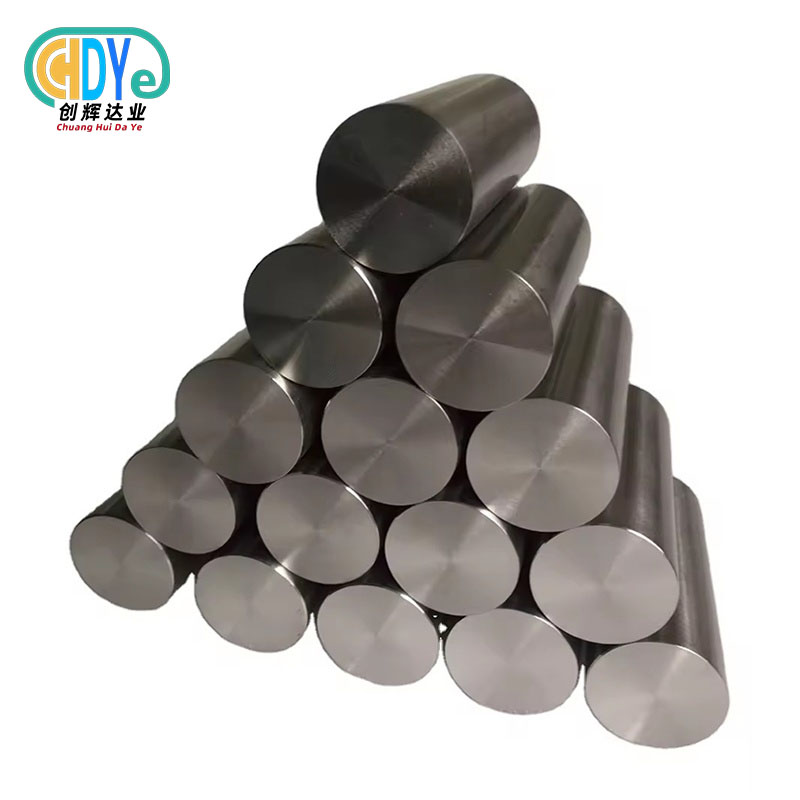
pure tantalum bar with Precision Machining and OEM Services
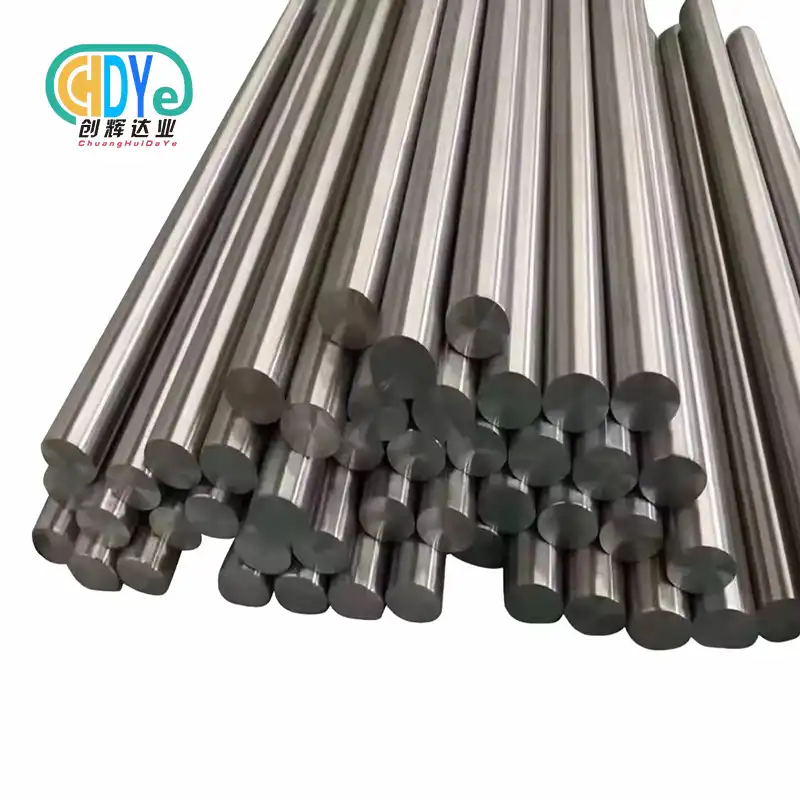
When sourcing materials for extreme industrial environments, pure tantalum bar stands as a premier solution combining exceptional corrosion resistance, high-temperature stability, and biocompatibility. Tantalum bars that are ≥99.5% pure and meet ASTM B365 standards are made by Shaanxi Chuanghui Daye Metal Material Co., Ltd. Precision cutting and full OEM services are what we provide to businesses that make things for medical devices, aircraft, and chemical processing. We know how to turn raw tantalum into mission-critical parts that meet the strict needs of B2B clients around the world who want quality, dependability, and fast lead times.
Understanding Pure Tantalum Bar: Properties and Applications
What Defines Pure Tantalum Bar?
A pure tantalum bar is a refractory metal product that is 99.95% to 99.99% pure and is not fully finished. UNS R05200 means it was melted by a vacuum arc or an electron beam, and UNS R05400 means it was sintered using powder metallurgy. In the business world, this cylinder-shaped material solves two big problems: it stops catastrophic rust failure in tough chemical conditions, and it makes medical devices compatible with living cells. This stuff works because it creates a solid layer of Ta₂O₉ oxide on its own. This layer stops the metal below from breaking down, even in hot acids like hydrochloric, sulphuric, and nitric.
Key Physical and Chemical Properties
Pure tantalum bar is stable at room temperature, but it oxidizes quickly above 500°C, turning into Ta₂O₅. It has a melting point of 2996°C, a low vapor pressure, great cold working properties, and a higher resistance to liquid metal corrosion than other metals. Pure tantalum bar is very important in many fields, including electronics, mining, chemical processing, superconducting technology, and car electronics, because the surface oxide film has a high dielectric constant. Pure tantalum bars can be shaped into round or square shapes to meet a variety of manufacturing needs. They have a density of 16.6 g/cm³ and are very flexible.
Industrial Applications Across Sectors
Pure tantalum bar's special qualities make it useful in many fields. When making electronics, pure tantalum bar is used as an electrode material for electrolytic capacitors and semiconductor parts that need to have a high capacitance in a small space. Pure tantalum bar is used by aerospace engineers in engine parts, heat exchangers, and gas turbine parts that are put under a lot of heat stress. Pure tantalum bar reactor tanks, piping systems, and valve parts are used in chemical processing plants to deal with corrosive media that would quickly wear down titanium or stainless steel metals. Pure tantalum bar is biocompatible, which is used by medical device makers to make artificial joints, bone implants, and surgical tools. Precision pure tantalum bar crucibles are used in research labs to make high-purity materials.
Precision Machining and OEM Services for Pure Tantalum Bar: Enhancing Value
Overcoming Machining Challenges
Pure tantalum bar is hard to machine because it is sticky and tends to gall, which is similar to soft copper but causes it to harden quickly after being worked on. Pure tantalum bar is different from other metals because it needs high-speed steel tools instead of carbide tools, which often break when cutting this dense material. Tool seizure and material warping can be avoided by using a lot of water and cutting at sharp angles. Our advanced CNC lathes and specialized fixtures keep tolerances as low as h7, h8, or h9, which is important for making sure that parts fit together correctly in complex systems.
Customized OEM Solutions
Through extensive customization, our OEM services turn standard pure tantalum bars into parts that are perfect for a specific purpose. We can change the thickness of rods from 3 mm to over 200 mm, make complicated shapes like threaded connections and flanged assemblies, and treat the surface in a variety of ways, from bright-rolled finishes to acid-etched profiles. In a recent project with a semiconductor equipment maker, we had to make unique evaporation boats with complicated internal channels. To do this, our engineering team created special toolpaths that cut down on material waste while still meeting the surface roughness requirements of less than 0.8µm Ra.
Quality Assurance Protocols
As part of ISO 9001:2015 approval, every machined part goes through strict testing procedures. Glow Discharge Mass Spectrometry (GDMS) checks the quality of the chemicals and makes sure that the interstitial oxygen content stays below 150ppm to keep the materials from breaking down. Ultrasonic testing that follows AWS guidelines can find holes or gaps inside a material that was melted. Tensile testing according to ASTM E8 confirms the mechanical qualities, and microstructure analysis confirms the grain size, which is usually ASTM 4 or smaller to avoid orange peel effects during the making process. Laser diameter gauging checks that the dimensions are correct, and full traceability documentation is sent with every shipment.
How to Select the Best Pure Tantalum Bar for Your Business Needs
Comparing Alternative Materials
When buying things, people often compare pure tantalum bar to titanium, niobium, tungsten, and molybdenum. Titanium has a high strength-to-weight ratio and better rust protection than pure tantalum bar, but it doesn't work well in hydrofluoric acid. Niobium has similar refractory properties to pure tantalum bar but is less expensive. However, it is not as chemically inert in hot acids as pure tantalum bar. While tungsten has a higher melting point and density, it is also very brittle and hard to machine compared to pure tantalum bar, which is more flexible. Molybdenum works well in high-temperature vacuums, but it oxidizes quickly in air above 600°C, which limits how many uses it can have.
Critical Selection Criteria
To rate pure tantalum bar grades, you need to know what the mechanical property needs are, how the product will be used, and how easy it is to machine. R05200 cast pure tantalum bar is best for general chemical hardware applications that need the purest metal, while R05400 sintered pure tantalum bar is better for deep drawing or complex forming operations because it has a finer grain structure. The operating temperature curves show whether the oxide layer will provide enough protection. Pure tantalum bar works very well below 300°C in air, but above this point, it needs protection from a vacuum or a neutral atmosphere. When making budget decisions, it's important to weigh the higher prices of pure tantalum bar against the longer service life and fewer repair shutdowns.
Understanding Pricing Dynamics
Pure tantalum bar prices depend on a lot of things, like the pure grade, the size requirements, and changes in world supply and demand. Prices are higher for diameters smaller than 3 mm because they take longer to process, lose more yield during swaging and drawing, and are harder to move around. Demand for capacitor-grade pure tantalum bar from electronics makers affects the market, which in turn affects the supply of base materials. For purity levels above 99.95%, more steps of processing are needed, which gradually raises the cost. Strategic buyers build long-term relationships with suppliers to keep prices stable and make sure they always have access to materials.
Procuring Pure Tantalum Bar: Best Practices for Global B2B Purchasing
Selecting Certified Suppliers
To buy pure tantalum bar successfully, you must first qualify suppliers by checking their quality certifications, output skills, and technical know-how. Getting ISO 9001:2015 certification shows that you have a method for controlling quality throughout the whole production process. Compliance with ASTM B365 makes sure that international standards for dimensions and composition are met. Ask for detailed mill test reports that include chemical analysis, mechanical properties, and the results of an ultrasonic inspection. When suppliers inspect factories, they check to see what kinds of production equipment they have. For example, electron beam ovens, vacuum annealing systems, and precise machining centers are all signs of a well-developed processing infrastructure.
Managing Orders Effectively
Clear conversation about requirements stops mistakes that cost a lot of money. Custom machined parts usually have a minimum order quantity of 10 to 50 pieces, but this can vary depending on how complicated the part is. Standard pure tantalum bar stock, on the other hand, may ship in smaller quantities. Lead times range from four weeks for sizes that are in stock to twelve weeks for custom forgings that need special tools. Give thorough technical models with GD&T callouts, any heat treatment requirements, and surface finish needs. Talk about your packing needs. Vacuum wrapping keeps things from going bad while they're being stored, and custom crating keeps precision-machined surfaces safe while they're being shipped internationally.
Logistics and Compliance Considerations
When sending pure tantalum bar across international borders, it's important to follow export rules, customs classification, and keep the right paperwork. Pure tantalum bar products with the HS Code 8103.20 have different import taxes in different parts of the world. Shipping methods combine cost and travel time. For example, air freight is good for pressing prototype orders, while ocean freight is more cost-effective for large production runs. Damage can be avoided by using foam inserts, moisture barriers, and strong outer containers when packaging. Documents like Certificates of Origin, commercial invoices with correct values, and Material Safety Data Sheets (MSDS) make it easier to clear customs, which cuts down on wait times at international borders.
Future Trends and Innovations in Pure Tantalum Bar and Precision Machining
Emerging Application Frontiers
The use of pure tantalum bars keeps growing into new, cutting-edge technologies. Ultra-high-purity pure tantalum bar is needed for superconducting parts in advanced electronics like 5G infrastructure and quantum computer systems. New medical gadgets use pure tantalum bar's radiopacity to make it easier for surgeons to see what they're doing during minimally invasive treatments. More and more, aerospace companies are using pure tantalum bar for parts of hypersonic vehicles, which need materials that can handle high thermal cycles better than most superalloys can. Tighter tolerances and better material tracking throughout the supply chain are in high demand because of these uses.
Advanced Manufacturing Technologies
Precision cutting technologies change over time to meet needs that are getting more specific. CNC micromachining can make features smaller than 100μm with repeatability that wasn't possible before. This makes it possible to make sensor housings and microfluidic components that are much smaller. Additive manufacturing methods, such as selective laser melting, are being used to study how to process pure tantalum bar powder, but problems with picking up air during melting mean that these methods need to be improved over time. When you combine additive near-net-shape production with subtractive finishing, you get the most out of your materials. This is especially helpful since pure tantalum bar is a very expensive raw material. Acoustic emission sensors in real-time monitoring systems pick up on tool wear, which stops dimensional drift during long production runs.
Sustainability and making the best use of resources
When people care about the world, they change how they find and work on pure tantalum bars. Mines that follow the rules are the only ones that can get minerals that don't come from conflict zones. Pure tantalum bar doesn't have to be mined because it can be recycled from old electronics and factory waste. Pure tantalum bar can be brought back to a level of purity that lets it be used in tough situations with the tools we have now. Process optimisation and advanced CAM code that makes the best use of blanks help cut down on waste. Water-based coolants are used instead of oil-based ones because they are better for the environment. It's better for the earth and for OEMs to work together to make parts that are easy to make. This is because they waste less material and make parts that work better.
Conclusion
For businesses that need top-notch performance in biological, acidic, and high-temperature settings, pure tantalum bars are a smart investment in materials. Procurement professionals can make smart decisions that balance technical needs with budget limits when they know about the properties of materials, how they can be machined, and the qualifications of suppliers. As manufacturing technologies improve and concerns about the environment grow, working with experienced pure tantalum bar suppliers becomes more valuable. When you combine high-quality materials, precision machining skills, and quick OEM services, you gain a competitive edge throughout the entire product development cycle, from fast testing to full-scale production. Choosing the right pure tantalum bar supplier is the first step toward long-term operational success and being a leader in innovation.
FAQ
Q: What makes tantalum ideal for chemical processing equipment?
A: The self-healing Ta₂O₅ oxide layer in pure tantalum bar makes it very resistant to rust. It protects against hot hydrochloric, sulfuric, and nitric acids, which quickly eat away at stainless steel and titanium. This stability greatly increases the useful life of equipment, which lowers the cost of unplanned shutdowns. But pure tantalum bar should never come in contact with hydrofluoric acid or free fluoride ions, because they break it down quickly.
Q: How does precision machining improve tantalum component reliability?
A: Precision cutting makes sure that the dimensions are correct and the surface is smooth, which is very important for putting together and closing high-integrity systems correctly. Tight tolerances keep stress levels low so that cracks don't start, and controlled surface finishes keep semiconductor and medical applications from getting contaminated. Work-hardening and microcracking are problems that can happen over time and can be avoided by using the right pure tantalum bar machining parameters.
Q: What should I evaluate when selecting a tantalum bar supplier for OEM projects?
A: Choose providers that have ISO 9001:2015 certification, can test materials in a variety of ways, such as using GDMS and ultrasonic inspection, and have a history of successfully cutting refractory metals. Ask for sample parts and mill test reports that show your ability. Check how responsive the technical support is, how easy it is to make changes, and how consistent the lead times are. Long-term ties with pure tantalum bar suppliers ensure that materials will be available and allow teamwork in fixing problems during product development.
Partner with Chuanghui Daye for Premium Tantalum Solutions
Shaanxi Chuanghui Daye has worked with rare metals for more than 30 years and can handle even the most difficult tasks. Our factory is in Baoji, which is known as China's Titanium Capital. We use modern electron beam furnaces and precise CNC machining centers to make sure our quality systems are ISO 9001:2015 approved. Our engineering team works closely with clients to provide custom pure tantalum bar parts from prototypes to large-scale production runs, all while maintaining high quality and short lead times. Our wide range of skills makes sure that your exact needs are met, whether you need standard ASTM B365 bar stock or complex machined parts. Please email our team at info@chdymetal.com to talk about your pure tantalum bar needs and find out how our experience as a pure tantalum bar seller can help you improve your purchasing strategy and speed up the time it takes to come up with new ideas.
References
1. Davis, J.R. (Ed.). (2000). Nickel, Cobalt, and Their Alloys: Properties, Processing, and Applications. ASM International, Materials Park.
2. Cardonne, S.M., Kumar, P., Michaluk, C.A., & Schwartz, H.D. (1995). Tantalum and Its Alloys. International Journal of Refractory Metals and Hard Materials, 13(4), 187-194.
3. American Society for Testing and Materials. (2017). ASTM B365-12: Standard Specification for Tantalum and Tantalum Alloy Rod and Wire. ASTM International.
4. Gupta, C.K. (1992). Extractive Metallurgy of Niobium. CRC Press, Boca Raton, Florida.
5. Schwarzkopf, P., & Kieffer, R. (1953). Refractory Hard Metals: Borides, Carbides, Nitrides and Silicides. Macmillan Company, New York.
6. Bose, D.K., & Banerji, A. (2004). Processing and Properties of Tantalum. Bulletin of Materials Science, 27(6), 481-486.
Learn about our latest products and discounts through SMS or email