- English
- French
- German
- Portuguese
- Spanish
- Russian
- Japanese
- Korean
- Arabic
- Greek
- German
- Turkish
- Italian
- Danish
- Romanian
- Indonesian
- Czech
- Afrikaans
- Swedish
- Polish
- Basque
- Catalan
- Esperanto
- Hindi
- Lao
- Albanian
- Amharic
- Armenian
- Azerbaijani
- Belarusian
- Bengali
- Bosnian
- Bulgarian
- Cebuano
- Chichewa
- Corsican
- Croatian
- Dutch
- Estonian
- Filipino
- Finnish
- Frisian
- Galician
- Georgian
- Gujarati
- Haitian
- Hausa
- Hawaiian
- Hebrew
- Hmong
- Hungarian
- Icelandic
- Igbo
- Javanese
- Kannada
- Kazakh
- Khmer
- Kurdish
- Kyrgyz
- Latin
- Latvian
- Lithuanian
- Luxembou..
- Macedonian
- Malagasy
- Malay
- Malayalam
- Maltese
- Maori
- Marathi
- Mongolian
- Burmese
- Nepali
- Norwegian
- Pashto
- Persian
- Punjabi
- Serbian
- Sesotho
- Sinhala
- Slovak
- Slovenian
- Somali
- Samoan
- Scots Gaelic
- Shona
- Sindhi
- Sundanese
- Swahili
- Tajik
- Tamil
- Telugu
- Thai
- Ukrainian
- Urdu
- Uzbek
- Vietnamese
- Welsh
- Xhosa
- Yiddish
- Yoruba
- Zulu
Top niobium round bar Factory for Bulk and Custom Orders
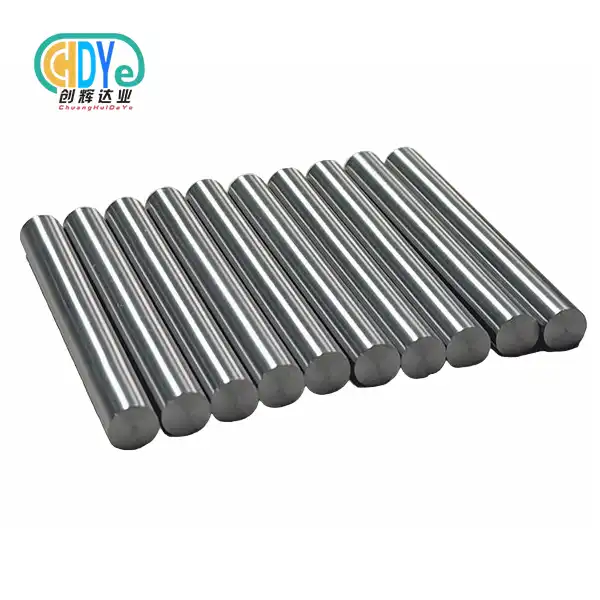
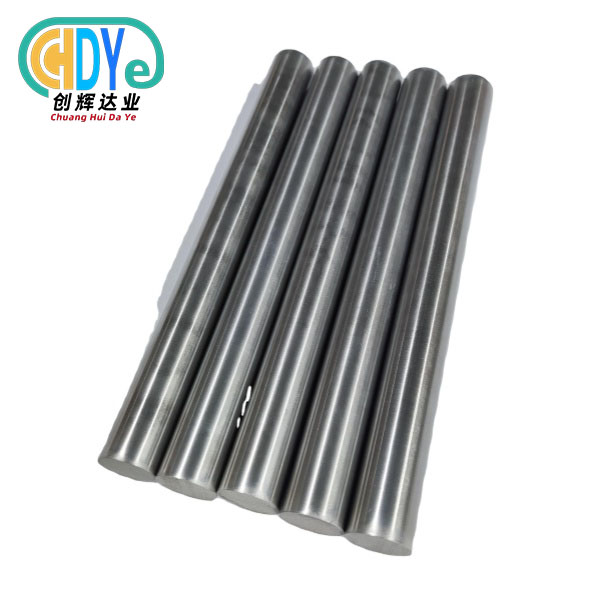
When sourcing high-purity refractory metals, finding a reliable niobium round bar manufacturer makes all the difference. In China's "Titanium Capital," Shaanxi Chuanghui Daye Metal Material Co., Ltd. is one of the best places to make bars that are precisely engineered and meet ASTM B 392-95 standards. Our plant has been making 99.95% pure rods in grades RO4200 and RO4210 for over 30 years and has quality systems that are ISO 9001:2015 approved. All over the world, this makes sure that every rod meets the strict needs of the chemical processing, medical device, aeroplane, and technology businesses.
Understanding Niobium Round Bars: Properties and Applications
What Makes Niobium a High-Performance Material?
That makes Niobium different from other metals is that it has a unique set of physical features. This gray-silver metal is 8.57 g/cm³ dense, which means it is much lighter than tantalum or tungsten but still very strong. The thing melts at 2477°C and boils at 4744°C. It can be used in places that are very hot where other metals would break.
Core Mechanical and Chemical Characteristics
We make sure that our precision-forged bars are very flexible and strong, so they can be machined in complicated ways without breaking. The metal's inactive oxide layer makes it very resistant to most acids, alkalis, and boiling salts. This makes it perfect for places where corrosion is a problem. Another important property is superconductivity. Niobium alloys have no electrical resistance at cryogenic temperatures, which is used to power particle accelerators and magnetic resonance imaging systems around the world.
Industry Applications Across Critical Sectors
Aerospace companies use these bars for structural parts that are put under a lot of stress and go through temperature changes. Biocompatibility is important for surgical instruments and implant frameworks because it affects tissue compatibility as well as mechanical performance. The ability to resist corrosion is used by chemical processors in reactor vessels, heat exchangers, and piping systems that deal with aggressive substances. High-purity bars are used in the semiconductor business for blasting targets, electrodes, and vacuum chamber parts where keeping contamination to a minimum is very important.
When procurement teams understand these basic qualities, they can better understand why Niobium is so highly valued in certain uses. The material is reliable in situations where failure would have major safety, financial, or operational effects.
Niobium Round Bar vs. Alternative Materials: Making the Right Choice
Performance Comparison with Common Alternatives
Titanium has a great strength-to-weight ratio and is biocompatible, but it doesn't work well in applications that are very hot, above 600°C. Although tantalum is better at resisting corrosion in some acids, it is much more expensive and has a higher density. Stainless steel alloys are a cheap option, but they don't have the superconducting properties or thermal stability that are needed for high-tech scientific gear. Molybdenum is very strong at high temperatures, but it quickly oxidizes when it doesn't have a safe atmosphere around it. Niobium round bar offers a unique combination of superconducting properties and corrosion resistance that makes it suitable for specialized high-tech applications.
Niobium fills in these gaps by having a moderate density, great thermal stability, a price that is comparable to tantalum, and special superconducting properties that aren't found in other engineering metals. While being easier to work with than tungsten, the material keeps its shape over a wider range of temperatures than titanium.
Evaluating Grades and Standards
ASTM B392-95 sets standards for materials that make sure the quality is the same from one seller to the next. Grade RO4200 is commercial-purity material that isn't alloyed and can be used in most industrial settings. Grade RO4210 is made up of slightly different formulas that are best for certain processing needs. Global producers, especially those that follow the rules set by big mining companies in Brazil and Canada, keep tight controls on composition, which makes sure that performance is predictable.
When choosing the grades of materials, you should think about the temperature range, chemical exposure, electrical needs, and mechanical loading conditions of the environment where they will be used. Higher levels of purity are better for tasks that need very little contamination, like making semiconductors or medical implants. On the other hand, market grades are fine for building parts that won't be used in as critical settings.
Balancing Advantages Against Limitations
The metal's main qualities—its corrosion resistance, its ability to carry electricity, and its temperature stability—make it a good choice for certain uses. But buying teams should know that raw materials are mostly available in a few places, which could make it harder to plan for breakdowns in the global supply chain. Because the material doesn't have as much yield strength as hardened steel alloys, designers have to think about making cross-sections that are bigger for high-stress uses.
Cost factors change a lot depending on the size of the order, the purity standards, and how complicated the customization is. When you buy in bulk from well-known factories that have direct relationships with miners, you usually get better prices than when you buy in small amounts through distributors.
Procuring Niobium Round Bars: Bulk and Custom Orders from Top Factories
Identifying Reliable Manufacturing Partners
The first step in successful sourcing of niobium round bar is to look at a manufacturer's technical skills and quality certifications. Look for places that have vacuum melting systems, which get rid of impurities that make materials less effective. Advanced forging and rolling equipment makes sure that the bar's cross-section has a regular grain structure, and precise cutting makes it possible to get the tight dimensions that are needed for important parts.
ISO 9001:2015 approval means that quality is managed in a planned way from the time the raw materials are received until the final inspection. Suppliers who keep full traceability records give test results for each batch that include measures of the chemical makeup, mechanical qualities, and surface finish. This paperwork is very important when legal requirements need to check the material's history.
Customization Capabilities and Order Flexibility
Leading factories use flexible production methods to meet the needs of a wide range of projects. Different types of applications can benefit from custom diameter specs that range from small-diameter wire stock to large-format bars. Length cutting gets rid of trash and lowers the cost of additional machining. Different types of surface finishes, such as as-rolled, precision-ground, and finished, can be used to meet specific assembly or aesthetic needs.
Minimum order quantities depend on the manufacturer, but for standard sizes that are kept in stock, they usually go down. For custom compositions or odd sizes, bigger commitments may be needed to justify setting up tools and making production runs. Well-known companies usually keep common types and sizes in stock, which lets urgent needs be met more quickly.
Our site in Baoji's High-tech Development Zone is close to places in the region that sell raw materials and specialized equipment. Because of its location, this business has shorter wait times and can offer affordable factory-direct prices to customers around the world. Production capacity that can handle both small amounts of prototypes for research institutions and large orders for industrial manufacturers makes sure that materials are always available, no matter what the project is.
Logistics and Export Readiness
When you buy something from another country, you need suppliers who know how to handle export paperwork, package items for long-distance shipping, and work with goods forwarders. Proper wrapping keeps surfaces from getting damaged during shipping and keeps materials from getting wet, which could lower their quality. Clear markings and paperwork make clearing customs faster, which cuts down on wait times at foreign borders.
Different suppliers have different payment terms, currency options, and quality guarantee rules. Reputable makers have clear price systems that take into account the current cost of raw materials, the difficulty of the process, and discounts for large orders. When you build long-term ties with suppliers, you can often get better terms and faster scheduling during times of high demand.
Technical Guidance for Niobium Round Bar Handling and Applications
Machining and Fabrication Best Practices
Because niobium round bar is flexible, it can be machined normally with carbide or high-speed steel tools. Cutting at moderate speeds and letting the metal cool enough stops work hardening, which makes tools wear out faster. Because the material tends to gall, it needs to be properly oiled when threading or working with tight tolerances. After machining, deburring and finishing the surface bring back the passive oxide layer, which keeps the corrosion resistance.
Inert gas shielding, usually argon or helium, is needed for welding to keep the atmosphere from getting dirty at high temperatures. TIG (tungsten inert gas) and electron beam welding make strong joints that can work in vacuums and places that are corrosive. The weld zones will match the properties of the base material if the joint design and filler metal choice are correct.
Heat Treatment and Annealing Processes
Annealing makes the material more flexible and relieves stresses that were put on it during the forming process. During heating processes, vacuum or inert atmosphere burners stop oxidation. Controlling the temperature within certain ranges makes sure that the grain structure is just right and that the grains don't grow too much, which would weaken the mechanical properties. Temperature shock and shape warping can be avoided by controlling the rate of cooling.
Stress-relief treatments help parts that have been machined or welded a lot. These processes that happen at lower temperatures lower internal pressures without changing the mechanical features much. This makes the dimensions more stable during service.
Quality Assurance and Testing Protocols
Thorough testing of the material makes sure it meets the requirements before it is used in production. Chemical research proves the purity levels and chemical make-up. Tensile strength, yield strength, elongation, and hardness values are all measured by machines. Non-destructive examination finds flaws inside or on the outside of something that could affect how well it works.
Keeping full records along the supply chain makes it possible to track a finished part all the way back to the production of the original ingot. That is very important for fields that have to follow strict rules, like medical devices and nuclear applications that need to keep track of their materials' provenance.
Conclusion
Choosing the right Niobium round bar supplier can affect the success of projects in the chemical processing, semiconductor, aerospace, and medical fields. Pure materials, precise manufacturing, quality certifications, and the ability to provide technical support are what set capable factories apart from basic distributors. Shaanxi Chuanghui Daye Metal Material Co., Ltd. is located in a great spot in China's refractory metal hub. They also have decades of experience, high-tech production tools, and quality systems that are ISO-certified. We are a reliable partner for demanding applications that need consistent material performance and full traceability documentation because we can handle both bulk orders and custom specifications.
FAQ
Q: What are typical lead times for bulk and custom orders?
A: Standard sizes that are kept in stock usually ship 7–14 days after an order is confirmed. Custom specs that need special handling, like odd diameters, long lengths, or non-standard purity levels, usually take 4 to 6 weeks from the time the order is placed until it is shipped. The schedule for production depends on how much space is available in the facility and what raw materials are available. For important project deadlines, rush orders may get priority handling, but there are times when this comes with extra fees. For production plans to match your project goals, we suggest getting in touch with our expert team early on in the planning process.
Q: How does niobium compare to titanium for aerospace applications?
A: Both metals are used in aircraft, but they are better at certain tasks. Titanium is stronger than steel at normal temperatures (up to 600°C), and it costs less per kilogram. Niobium keeps its shape at higher temperatures and has special superconducting properties that are useful for certain kinds of equipment. Corrosion resistance is about the same, but some chemical environments may make one material better than the other. In the end, the choice of material relies on the performance needs, the working conditions, and the budget.
Q: Are certifications available for medical-grade material?
A: For medical device uses, we offer full material certifications that list the chemical make-up, mechanical qualities, and processing background of the material. From getting the raw materials to the final inspection, our quality management system keeps track of everything. It also makes sure that all the paperwork needed to meet FDA and international medical device regulations is kept. Material purity levels and surface finish requirements can be changed to meet implant-grade standards if asked for when the order is placed.
Partner with a Trusted Niobium Round Bar Supplier
The Niobium round bars that Shaanxi Chuanghui Daye sells are precisely designed and made to meet ASTM B 392-95 standards. They come in grades RO4200 and RO4210 and are 99.95% pure. Our Baoji facility is ISO 9001:2015 certified and can do vacuum melting, precision forging, and advanced machining to make bars that meet the strictest requirements for size and surface finish. Our technical team is available to help you from the time you review the specifications until the product is delivered, whether you need a few prototypes for research purposes or a lot of them for production.
We work with companies that process metals, make aircraft equipment, chemical equipment, semiconductors, medical devices, and research institutions all over the world and in the United States. With factory-direct prices, there are no markups for distributors, and the quality assurance paperwork that is needed for important uses is still kept. Full traceability and thorough testing methods make sure that every package exactly meets your needs.
Email our team at info@chdymetal.com to talk about your specific needs. We'll give you technical advice, suggestions for materials, and cheap quotes that are made to fit the needs of your job. Visit www.chdymetal.com to see our full catalogue of goods and learn how our Niobium products can help with your toughest projects. Get your high-purity Niobium bars from a company that cares about quality, dependability, and customer satisfaction.
References
1. Davis, J.R. (Ed.). (2000). ASM Specialty Handbook: Nickel, Cobalt, and Their Alloys. ASM International, Materials Park, Ohio.
2. Gupta, C.K. (1992). Extractive Metallurgy of Niobium. CRC Press, Boca Raton, Florida.
3. Miller, G.L., et al. (2018). "Properties and Applications of Refractory Metals in Aerospace Engineering." Journal of Materials Engineering and Performance, Volume 27, Issue 8.
4. Schultz, R.W. and Watkins, H.B. (2015). "Biocompatibility of Refractory Metals for Medical Implants." Biomaterials Science, Volume 3, Issue 6.
5. ASTM International. (2019). ASTM B392-95: Standard Specification for Niobium and Niobium Alloy Ingots. West Conshohocken, Pennsylvania.
6. International Organization for Standardization. (2015). ISO 9001:2015 Quality Management Systems—Requirements. Geneva, Switzerland.
Learn about our latest products and discounts through SMS or email