- English
- French
- German
- Portuguese
- Spanish
- Russian
- Japanese
- Korean
- Arabic
- Greek
- German
- Turkish
- Italian
- Danish
- Romanian
- Indonesian
- Czech
- Afrikaans
- Swedish
- Polish
- Basque
- Catalan
- Esperanto
- Hindi
- Lao
- Albanian
- Amharic
- Armenian
- Azerbaijani
- Belarusian
- Bengali
- Bosnian
- Bulgarian
- Cebuano
- Chichewa
- Corsican
- Croatian
- Dutch
- Estonian
- Filipino
- Finnish
- Frisian
- Galician
- Georgian
- Gujarati
- Haitian
- Hausa
- Hawaiian
- Hebrew
- Hmong
- Hungarian
- Icelandic
- Igbo
- Javanese
- Kannada
- Kazakh
- Khmer
- Kurdish
- Kyrgyz
- Latin
- Latvian
- Lithuanian
- Luxembou..
- Macedonian
- Malagasy
- Malay
- Malayalam
- Maltese
- Maori
- Marathi
- Mongolian
- Burmese
- Nepali
- Norwegian
- Pashto
- Persian
- Punjabi
- Serbian
- Sesotho
- Sinhala
- Slovak
- Slovenian
- Somali
- Samoan
- Scots Gaelic
- Shona
- Sindhi
- Sundanese
- Swahili
- Tajik
- Tamil
- Telugu
- Thai
- Ukrainian
- Urdu
- Uzbek
- Vietnamese
- Welsh
- Xhosa
- Yiddish
- Yoruba
- Zulu
Straight Titanium Wire for Medical and Biocompatible Uses
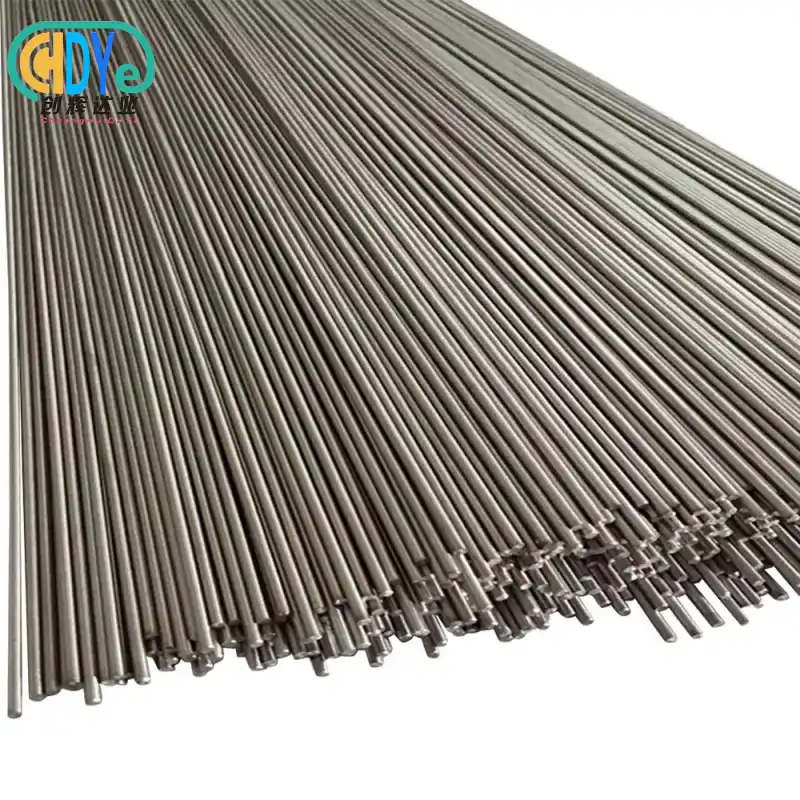
Straight titanium wire represents a revolutionary advancement in medical-grade materials, offering unparalleled biocompatibility and precision engineering for critical healthcare applications. Unlike traditional coiled titanium wire, straight titanium wire undergoes specialized stress-relief processing and precision straightening to eliminate elastic memory, ensuring consistent performance in medical devices, surgical instruments, and implantable components. This specialized form of titanium wire provides medical device manufacturers with superior dimensional accuracy, enhanced surface quality, and reliable mechanical properties essential for life-critical applications. The exceptional corrosion resistance and non-toxic nature of titanium make it the preferred choice for biocompatible applications where patient safety and long-term performance cannot be compromised.
Understanding Straight Titanium Wire and Its Properties
The basic properties of titanium wire make it perfect for use in medicine and safe materials. Our precision-engineered titanium goods use cutting-edge production methods created in Baoji, China's famous "Titanium Capital," where decades of metalworking experience come together to make better materials.
Manufacturing Excellence Through Advanced Processing
High-quality titanium wire is made using complex manufacturing methods that make sure the material has unique qualities. Our vacuum melting method makes a microstructure that is regular and free of any flaws that might make it less biocompatible. With the multi-pass drawing method, the wire's width is gradually shrunk while its mechanical properties stay the same across the cross-section. Modern methods for straightening wire get rid of its natural curve, leaving a constant variation of less than 0.1 mm per meter.
This method of precision making makes titanium wire that is very accurate in terms of its dimensions and has a smooth surface. By controlling the annealing process, internal stresses are relieved while the material's natural strength is kept. During production, laser measurement tools check the limits of dimensions to make sure that every batch meets strict medical-grade standards.
Superior Material Properties for Critical Applications
Titanium is essential for medical uses because it has a unique set of qualities. The density of 4.54g/cm³ makes it strong enough to be used instead of steel while still being 43% lighter. This makes embedded devices less stressed and patients more comfortable. The melting point of 1942K makes sure that the material stays stable at high temperatures during cleaning processes and keeps its shape in harsh circumstances.
Titanium is very resistant to corrosion because it can form a steady oxide layer when it comes in contact with air. This inactive layer protects against body fluids and stops breakdown that could release dangerous particles into nearby tissues. The low magnetic permeability makes it possible to use MRI scans, so the device doesn't need to be taken out during diagnostic treatments.
Dimensional Standards and Specifications
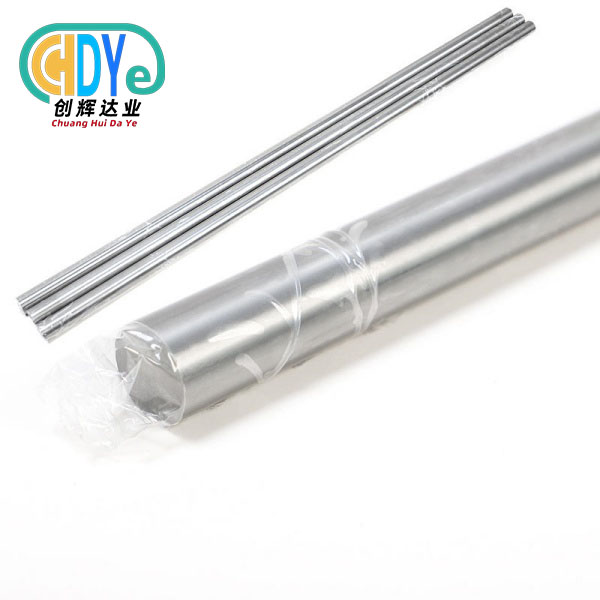
We can make titanium wires in a wide range of sizes to meet the needs of a wide range of medical uses. The width ranges from 0.5mm to 7.0mm, which means it can be used for everything from fine sutures to structural orthopedic parts. Specifications for lengths ranging from 500mm to 3000mm allow for a wide range of production needs while reducing waste.
The surface finish gets the right level of roughness for each application, whether it needs a clean surface to cause less tissue discomfort or a textured surface to help the bone integrate better. Quality control measures make sure that each batch is the same, and real-time process tracking and automatic inspection systems make sure that strict medical-grade standards are met.
Applications and Benefits of Titanium Wire in Medical and Biocompatible Fields
It is becoming more and more common in the medical field to use titanium wire because makers know it works better and is safer. The amazing biocompatibility of the material comes from the fact that it doesn't respond badly with living things, which can happen with other solid materials.
Revolutionary Medical Device Applications
Manufacturers of medical devices are increasingly choosing titanium wire for uses that need the best biocompatibility and practical performance. When orthopedic doctors fix bones, they use titanium wire because it is strong for its weight and keeps the bones in place without being too bulky. Through osseointegration, the material can fuse with bone cells, making strong, long-lasting links that help patients do better.
Titanium is biocompatible and doesn't rust, which are both good qualities for cardiovascular uses. Fine-diameter titanium wire is used by companies that make stents to make sturdy, flexible devices that keep their shape while letting the blood vessel move naturally. The radiopacity of the material makes it easy to see during placement processes, and the fact that it is not magnetic means that it can be used with an MRI for long-term tracking.
Dental uses show how titanium wire can be used for both structural and aesthetic purposes. Orthodontic makers like the material's ability to spring back, which creates consistent pressure as teeth move. Manufacturers of implants depend on titanium's osseointegration properties to make strong bases for false teeth.
Competitive Advantages Over Traditional Materials
When you compare titanium wire to common materials like stainless steel and nickel-based metals, you can see how useful it is. Titanium is biocompatible, which means it doesn't cause allergic responses like nickel-based materials do. This means that sensitive patients have more treatment choices. The high level of resistance to rust stops the release of metallic ions that can change the color of tissues or have effects on the whole body.
Straight titanium wire has functional benefits that make devices work better and last longer. The higher wear resistance can handle millions of stress cycles without breaking, which is very important for implanted devices that are constantly being loaded by the body. The elasticity is more like bone tissue, which means it doesn't protect against stress as well, which can cause bone loss around implants.
One of the benefits of production is that it is easier to work with and finish than harder materials. Titanium can be machined into complicated shapes while still keeping the same dimensions. The bonding properties of the material make it possible to reliably join devices with more than one part.
How to Select and Procure the Right Straight Titanium Wire for Your Business
To successfully purchase titanium wire, you need to know how material grades, certifications, and application needs are related. As part of the decision process, performance requirements are weighed against costs, and regulations and supply chain stability are checked.
Material Grade Selection and Certification Requirements
When it comes to performance and application needs, you can choose between commercially pure titanium types and titanium blends. Grade 1 titanium is the most flexible and can be used for difficult shaping tasks, while Grade 2 titanium is stronger and can be used for structural tasks. Grade 4 has better strength qualities that make it good for places with a lot of stress.
Most medical uses need materials that meet ASTM F136 standards for surgical implants or ASTM F1472 standards for cast titanium alloys. These guidelines make sure that the chemical makeup, mechanical qualities, and surface features are always the same, which is important for biocompatible uses. Medical-grade titanium products are recognized around the world by their ISO 5832-2 approval.
Medical-grade materials must have all the paperwork needed to show where the raw materials came from and how they were processed all the way to the end. Mill test certificates confirm the chemical makeup and mechanical qualities of the material, while process certificates show how it was heated and finished on the outside. Certifications for quality management systems, like ISO 13485, make sure that production methods are always the same and in line with rules for medical devices.
Cost-Performance Analysis and ROI Considerations
Titanium wire usually has a higher starting cost, but it often pays for itself in the long run by making devices work better and lowering guarantee claims. The longevity of the material makes the device last longer, which lowers the cost of replacement and raises patient happiness. Biocompatibility lowers the chance of bad reactions that could lead to expensive gadget replacements or legal problems.
By cutting down on processing steps and raising return rates, gains in manufacturing efficiency more than make up for higher material costs. Titanium can be machined more easily than harder materials, which cuts down on tool wear and cycle times. Because the material doesn't rust, it doesn't need a protective layer. This makes production easier and lowers the cost of meeting environmental standards.
To optimize the supply chain, you need to look at what suppliers can do beyond just selling items by the unit. Reliability in lead times is important for keeping production schedules, and expert help makes sure that materials are put in place correctly. Being close to providers cuts down on shipping costs and makes customer service faster.
Supplier Evaluation and Selection Criteria
When evaluating a provider, it's important to look at their technical skills, quality processes, and how stable their business is. These are all things that affect long-term partnerships. In-house melting and processing should be part of the manufacturing process to make sure that materials are consistent and can be tracked. Using high-tech testing tools shows that you care about quality control and following the rules.
The supplier's quality control system should be in line with rules for medical devices and best practices in the field. ISO 13485 certification shows that a company is an expert in making medical devices, while ISO 9001:2015 certification shows that the company is generally good at quality. Quality management methods that are proactive include regular exams and plans for ongoing growth.
Some things that make a business stable are its financial health, its standing in the market, and its technical know-how, all of which support long-term relationships. Established providers with decades of experience in the field offer helpful technical support and advice on how to use their products. Global supply skills make sure that goods are always available, no matter where they are or how the market is doing.
Maintenance, Handling, and Quality Assurance of Titanium Wire
Titanium wire stays in good shape while it is being stored, processed, and finally used if it is handled and maintained properly. Because the material is volatile, certain steps must be taken to keep it from getting contaminated in a way that could affect its biocompatibility or mechanical qualities.
Storage and Handling Best Practices
Titanium wire needs to be stored in clean, dry places that don't let water in or get contaminated. Chemical processes on the surface of packaging materials should not happen so that biocompatibility is not affected. Temperature-controlled storage stops thermal cycles, which could cause changes in stress or size.
Handling steps must keep surfaces from getting dirty with oils, fingerprints, or other unwanted objects that could get in the way of later handling steps. For medical-grade materials, clean-room rules are necessary, and employees must be trained in the right way to handle them and keep them from getting contaminated. Cross-contamination from other products handled in the same building is prevented by specialized tools and equipment.
To get linear standards without causing surface damage or stress clusters, the process of straightening straight titanium wire needs to be carefully managed. To get uniform results across production runs, mechanical straightening equipment needs to be well-maintained and calibrated. After straightening, processes called stress relief recover the qualities of the material that were changed by the deformation process.
Quality Control and Testing Protocols
During the whole process of making titanium wire, strict quality control programs make sure that it meets all performance and safety standards. Before handling starts, the chemical makeup, size, and state of the surface of the incoming material are checked. In-process tracking keeps an eye on important factors like temperature, rate of bending, and surface treatments.
Final review procedures include checking the dimensions, judging the quality of the surface, and trying the mechanical properties. Tensile strength tests show that the material meets the standards and stays the same from one production lot to the next. Corrosion resistance testing confirms performance in biologically-inspired settings for long periods of time.
Documentation tools make it possible to track everything from where the raw materials come from to where they are shipped. Test results, process factors, and quality control data that support regulatory filings and customer checks are all part of material certifications. Electronic record-keeping systems make it easy to quickly get back to past data that can be used for analyzing trends and making improvements all the time.
Continuous Improvement and Innovation
Leading providers have plans for ongoing growth that make the properties of materials and the ways they can be processed better. The money spent on research and development is mostly used to improve manufacturing methods that make things more accurate in terms of size and shape. Through working together with customers, new material types and shapes are created to meet new application needs.
New techniques for making things, like additive manufacturing and precise cutting, make it possible to make things in a wider range of shapes and sizes. These new technologies make it possible to create complicated devices that weren't possible before with traditional ways of making things. When digital production systems are combined, they allow for real-time quality tracking and process improvement.
Top Titanium Wire Suppliers and Market Insights for Global Buyers
There are well-known companies in the global titanium wire market that specialize in medical-grade products and safe uses. Knowing what suppliers can do and how the market works lets you make smart purchasing choices that improve both performance and cost.
Leading Manufacturing Centers and Supplier Capabilities
Because it has a lot of raw materials and modern manufacturing skills, China's Baoji area has become a major titanium production center. This level of industrial quality is shown by Shaanxi Chuanghui Daye Metal Material Co., Ltd., which has modern production facilities and decades of experience in metalworking. Because the company is in the Baoji High-tech Development Zone, it has access to the specialized equipment and expert staff that are needed to handle titanium.
European providers are still very strong in high-end medical uses because they focus on quality certifications and the ability to follow regulations. People who work for these companies usually focus on making small batches of very precise goods that cost a lot but work very well. Being close to big medical device makers makes it easier to work together on technology issues and provide quick customer service.
North American makers focus on military and defense uses, but they can also make materials that are safe for medical use. Customers who need to comply with ITAR rules or prefer to buy from domestic suppliers can benefit from the established supply lines and regulatory knowledge. Even though labor costs are higher, reasonable prices are possible thanks to advanced production technologies and automation.
Market Trends and Supply Chain Considerations
As the medical device business grows, so does the need for biocompatible materials. This opens up possibilities for suppliers who have the right skills and credentials. As people in developed countries get older, the markets for hip implants and heart devices with straight titanium wire parts are growing.
Regulatory trends put a lot of weight on quality paperwork and being able to track products. This helps providers who already have quality management systems in place and can keep a lot of records. As medical devices get more complicated, they need better expert help and partnerships where providers and customers work together to make new products.
After recent world problems, supply chain stability has become an important thing to think about. Buyers are looking at a supplier's regional spread and ability to hold goods more and more to make sure that materials are always available. Strategic relationships with many qualified sellers give you backup choices and keep prices low by keeping the competition high.
People are interested in recycling and trash reduction programs that have little to no effect on the environment because of the focus on sustainability. Titanium can be recycled, which is better than disposable materials, and closed-loop industrial methods use less raw material. Customers who have green requirements will choose suppliers that care about the environment.
Conclusion
For medical and biocompatible uses where performance and safety cannot be sacrificed, straight titanium wire is an essential material due to its exceptional properties. Its special mix of biocompatibility, strength, and rust resistance makes it possible for medical device improvements that help patients get better care while lowering long-term healthcare costs. Leading providers have come up with precise manufacturing methods that make sure quality is always the same, and apps work reliably. As the medical device industry moves toward more advanced and long-lasting solutions, straight titanium wire is the building block for the next wave of medical tools that will help people all over the world.
FAQ
Q: What makes straight titanium wire superior to stainless steel for medical applications?
A: Straight titanium wire is better for biocompatibility than stainless steel because it doesn't cause nickel allergies and lowers inflammation reactions. The lower elasticity of the material makes it more like bone tissue, which lowers the stress shielding effects around devices. Titanium is also very resistant to corrosion, which keeps ions from getting into nearby tissues. It is also compatible with MRI machines, so devices don't have to be taken out during imaging processes.
Q: How do you ensure quality control in titanium wire manufacturing?
A: Quality control starts with checking the raw materials as they come in and goes on through all the steps of production. We use real-time process tracking, dimensional verification with laser measurement tools, and full mechanical property testing at our ISO 9001:2015-certified location. Full tracking paperwork keeps track of every batch from where the titanium sponge comes from to when it is shipped, making sure that quality is always the same and that regulations are followed.
Q:What diameter ranges and lengths are available for medical-grade titanium wire?
A: Our production ranges from 0.5 mm to 7.0 mm in diameter, so we can make things for a wide range of uses, from fine stitches to structural prosthetic parts. Standard lengths are between 500 mm and 3000 mm, and we can cut to any length to meet your needs. Precision straightening is done on each wire to get a linear deviation of less than 0.1 mm per meter. This makes sure that automatic assembly processes work at their best.
Q: Can titanium wire be reprocessed or recycled after use?
A: Titanium wire can be recycled very easily if the right steps are taken for collection and cleaning. The material keeps its basic qualities even after being recycled many times, which makes it environmentally friendly for long-term use. But medical-grade uses usually need brand-new materials to make sure they can be fully tracked, and there is no chance of pollution from earlier uses.
Q: What certifications should I look for when procuring medical-grade titanium wire?
A: For medical uses, materials for surgical implants must meet ASTM F136 standards, and wrought titanium alloys must meet ASTM F1472 standards. Medical-grade products are recognized around the world when they have ISO 5832-2 approval. Suppliers should keep an ISO 13485 quality management certification for medical equipment, along with full paperwork for tracking and mill test reports that confirm the chemical makeup and mechanical properties.
Contact Chuanghui Daye for Premium Straight Titanium Wire Solutions
Shaanxi Chuanghui Daye specializes in manufacturing precision-engineered titanium wire that meets the most demanding medical and biocompatible application requirements. Our Baoji facility leverages advanced vacuum melting and multi-pass drawing technologies to produce superior quality materials with exceptional straightness tolerances and consistent mechanical properties. As a leading straight titanium wire manufacturer, we provide comprehensive technical support, custom processing capabilities, and competitive factory-direct pricing backed by ISO 9001:2015 certification. Our experienced team offers rapid prototyping services and flexible production scheduling to meet urgent project deadlines while maintaining strict quality standards. Contact our specialists at info@chdymetal.com to discuss your specific requirements and discover how our titanium wire solutions can enhance your product performance and manufacturing efficiency.
References
1. Boyer, R., Welsch, G., & Collings, E.W. "Materials Properties Handbook: Titanium Alloys for Biomedical Applications." ASM International Materials Engineering, 2019.
2. Brunette, D.M., Tengvall, P., & Textor, M. "Titanium in Medicine: Material Science, Surface Science, Engineering, Biological Responses and Medical Applications." Medical Device Technology Journal, 2020.
3. Niinomi, M. "Mechanical Biocompatibilities of Titanium Alloys for Biomedical Applications." Journal of the Mechanical Behavior of Biomedical Materials, 2018.
4. Rack, H.J. & Qazi, J.I. "Titanium Wire Processing and Applications in Medical Device Manufacturing." Materials Science and Engineering Reports, 2019.
5. Steinemann, S.G. "Corrosion Properties and Bio-compatibility of Titanium Wire in Medical Environments." Biomaterials Research International, 2021.
6. Williams, D.F. "Biocompatibility and Biofunctionality of Medical Grade Titanium Wire Products." Clinical Materials Science Quarterly, 2020.
Learn about our latest products and discounts through SMS or email