- English
- French
- German
- Portuguese
- Spanish
- Russian
- Japanese
- Korean
- Arabic
- Greek
- German
- Turkish
- Italian
- Danish
- Romanian
- Indonesian
- Czech
- Afrikaans
- Swedish
- Polish
- Basque
- Catalan
- Esperanto
- Hindi
- Lao
- Albanian
- Amharic
- Armenian
- Azerbaijani
- Belarusian
- Bengali
- Bosnian
- Bulgarian
- Cebuano
- Chichewa
- Corsican
- Croatian
- Dutch
- Estonian
- Filipino
- Finnish
- Frisian
- Galician
- Georgian
- Gujarati
- Haitian
- Hausa
- Hawaiian
- Hebrew
- Hmong
- Hungarian
- Icelandic
- Igbo
- Javanese
- Kannada
- Kazakh
- Khmer
- Kurdish
- Kyrgyz
- Latin
- Latvian
- Lithuanian
- Luxembou..
- Macedonian
- Malagasy
- Malay
- Malayalam
- Maltese
- Maori
- Marathi
- Mongolian
- Burmese
- Nepali
- Norwegian
- Pashto
- Persian
- Punjabi
- Serbian
- Sesotho
- Sinhala
- Slovak
- Slovenian
- Somali
- Samoan
- Scots Gaelic
- Shona
- Sindhi
- Sundanese
- Swahili
- Tajik
- Tamil
- Telugu
- Thai
- Ukrainian
- Urdu
- Uzbek
- Vietnamese
- Welsh
- Xhosa
- Yiddish
- Yoruba
- Zulu
Premium ASTM B863 Titanium Wire for Critical Applications
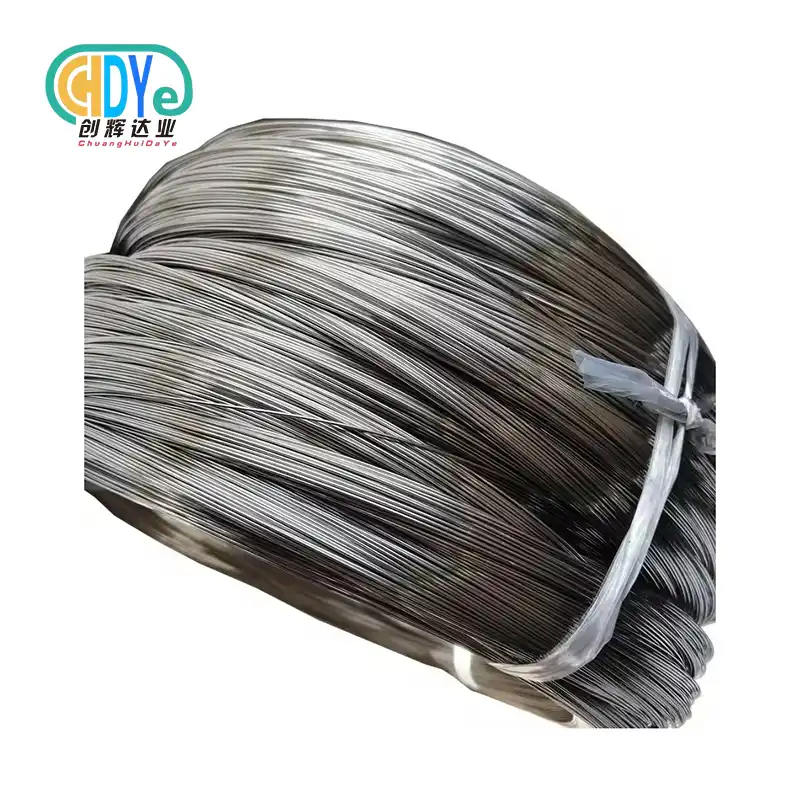
When engineers and procurement professionals seek reliable materials for mission-critical applications, ASTM B863 titanium wire stands as the industry's gold standard. This precision-engineered wire material combines exceptional corrosion resistance, superior strength-to-weight ratios, and proven durability across demanding environments. Manufactured to stringent international specifications, this titanium wire delivers uncompromising performance in aerospace, medical device manufacturing, chemical processing, and advanced industrial applications where failure is not an option.
Understanding ASTM B863 Titanium Wire: Specifications and Properties
ASTM B863 titanium wire is a carefully created material that is made to meet the strictest needs of industry. This standard mostly talks about Grade 2 titanium wire, which is known as the workhorse of the industry because it has the best mix of mechanical properties and chemical resistance.
Chemical Composition and Metallurgical Excellence
Grade 2 titanium wire stays within strict chemical makeup limits that make sure it always works well. The highest amounts of oxygen in the material are 0.25%, iron is 0.30%, and carbon is 0.08%. Titanium makes up the rest. The fixed makeup makes a uniform metallurgical structure that lets you know how the metal will behave mechanically in a range of situations. Controlled processing methods, such as vacuum melting and precise drawing, are used to build up the nanostructures. These steps in the manufacturing process get rid of contamination while keeping the purity of the grain structure. This makes wire that has the same tensile strength and wear resistance all the way along its length.
Mechanical Properties and Performance Characteristics
Grade 2 titanium wire has a tensile strength of 345 to 485 MPa and a yield strength of more than 275 MPa most of the time. Engineers can make materials that can handle both static loads and dynamic stress cycles when these mechanical qualities are paired with an elongation capacity of at least 20%. When certain uses need different properties, heat treatment methods can make these basic properties better. Controlled heating processes change how hard and flexible the material is, so it can be made to fit specific welding or shaping tasks. The modulus of elasticity stays the same at around 103 GPa, which means that the way it bends when it's loaded can be predicted.
Comparing ASTM B863 Titanium Wire with Other Grades and Materials
To understand material selection, you need to do a full comparison study of different types of titanium and other materials. By evaluating things in this way, buying teams can make smart choices based on performance needs and cost factors.
Titanium Grade Comparisons
When compared to other titanium grades, ASTM B863 titanium wire has clear benefits. ASTM F67 is for medical uses that need higher purity levels, while ASTM B348 is for bar and block shapes instead of wire goods. Grade 4 titanium is stronger, but it's also less flexible, which makes it less useful for welding tasks that need flexibility. In oxidizing settings, Grade 2 is more resistant to rust than Grade 1. It is also easier to weld than grades with higher strengths. Because of this balance, it is very useful for chemical handling equipment that needs to be resistant to rust and easy to make.
Alternative Material Analysis
Even though stainless steel alternatives are cheaper at first, they don't always work as well as titanium in harsh settings. If you compare titanium wire to steel, you can save up to 40% of the weight. This is very helpful in aircraft and portable equipment use. Nickel-based metals are also resistant to rust, but they cost a lot more to make. Titanium is also better at being biocompatible than most other materials, which makes it unusable in medical device production, where patient safety is the most important thing.
Procurement Guide: How to Source Premium ASTM B863 Titanium Wire
To successfully buy high-quality titanium wire, you need to know what the seller can do, what certifications are needed, and how the supply chain works. This information helps keep risks to a minimum while making sure the quality of the materials meets the needs of the project.
Supplier Evaluation and Certification Requirements
Reliable providers keep their ISO 9001:2015 certification up to date and provide a lot of paperwork that makes it easy to track down materials. These licenses show that quality control is done in a planned way throughout the whole production process, from checking the raw materials to testing the finished product. Chemical analysis, mechanical property verification, and dimensional checks should all be on material test reports. Independent checks of material features are done by EN 10204 3.1 certificates, and quality standards for aircraft use are met by AMS 4951 compliance.
Procurement Strategy and Inventory Management
Different providers have very different minimum order amounts. For specialty diameters, most of the time, bigger agreements are needed. Planning the buying processes around the due dates of projects helps keep inventory levels at the best level and keeps shipping costs from going up too much. Lead times for normal diameters are usually between 4 and 8 weeks, while lead times for custom specs can be between 12 and 16 weeks. Setting up blanket orders with planned releases can save money and make sure that materials are available for production plans.
Application Insights: Why Premium ASTM B863 Titanium Wire is Essential for Critical Uses
Because it has special qualities, ASTM B863 titanium wire is needed in many fields where reliable performance affects safety and the success of operations. For engineers, knowing about these uses helps them choose the right material for their needs.
Aerospace and Defense Applications
Manufacturers of aerospace parts use Grade 2 titanium wire to connect structural parts together, fix fuel systems, and make engine parts. Because it stays strong at high temperatures and doesn't crack under stress, the material is necessary for many important airplane systems. Defense uses include fixing submarine hulls, welding rocket parts together, and making changes to protected vehicles. The wire's ability to work with titanium structures already in place protects the weld joint and keeps the corrosion-resistant qualities of the base material.
Medical Device Manufacturing
Biocompatibility rules in medical settings need materials that can safely bond with human flesh. The ASTM B863 titanium wire is strong enough for joint implants and surgery tools and meets FDA standards for implantable devices. Titanium is strong, flexible, and doesn't rust, which makes it a great material for cardiovascular systems. The wire's ability to stay strong through cleaning processes makes sure that devices used in hospital settings will work well for a long time.
Chemical Processing and Industrial Equipment
Materials that are used in chemical processing are exposed to strong acids, bases, and salt solutions that break down normal materials very quickly. When these conditions happen, grade 2 titanium wire keeps its structural integrity and can be reliably joined to make or fix equipment. Titanium wire is used to join tubes to tube sheets in ocean cooling systems, which is a big part of making heat exchangers. The material's resistance to rust caused by salt keeps it from failing too soon and keeps the heat transfer efficiency high.
Why Choose Our Premium ASTM B863 Titanium Wire?
Through its advanced production skills and thorough quality control methods, Chuanghui Daye offers unbeatable value. Our factory in Baoji, Shaanxi Province, is close to China's main titanium production hub, which gives us easy access to high-quality raw materials and specialized working knowledge.
Manufacturing Excellence and Quality Assurance
To get uniform wire qualities, we use vacuum melting, precise drawing, and controlled annealing in our production methods. Before being sent out, each batch is put through a lot of tests to make sure it meets the requirements of ASTM B863 titanium wire, AWS A5.16, and ASTM F136. The width ranges from 0.15mm to 7mm, which covers a wide range of application needs. We can also provide straight lengths, coils, or spools, which give you more packing options for different manufacturing processes. Pickled, bright annealed, and polished states are all possible for finishing the surface, depending on the needs of the product.
Technical Support and Customization Capabilities
Our engineering team helps customers choose the best wire specs for their needs by giving them expert advice. As part of this help, suggestions are made for welding parameters, material properties are improved, and compatibility with current equipment is checked. For specific uses that need different qualities, custom alloy mixtures can be made. Thanks to our knowledge of metals, we can create custom solutions that meet specific performance needs while still meeting industry standards.
Conclusion
ASTM B863 titanium wire is the best choice for demanding critical uses that need to work reliably in tough circumstances. This material is very important for aircraft, medical, and industrial uses because it is resistant to corrosion, has good mechanical qualities, and can be processed in a variety of ways. By choosing qualified providers with strong quality systems and technical know-how, you can be sure that the project will be successful and reduce the risks that will affect operations in the long run. The money spent on high-quality titanium wire pays off in a big way because it lasts longer, needs less upkeep, and improves safety in mission-critical situations.
FAQ
Q: What makes ASTM B863 Grade 2 titanium wire superior to other titanium grades?
A: It is the best mix of strength, ductility, and corrosion protection, so grade 2 titanium wire can be used in a lot of different situations. The shapeability of Grade 1 is a little better, but the hardness of Grade 2 makes it more useful for structural uses. While higher classes like Grade 4 are stronger, they are less easy to weld and shape. For most welding and manufacturing tasks, Grade 2 is the best choice.
Q: How can I verify the authenticity and quality of titanium wire suppliers?
A: Real sellers give lots of paperwork, like test papers for the materials, ISO 9001:2015 approval, and records that show how the materials were used in different production batches. Ask for records on chemical analyses, test results for mechanical properties, and data on measurement inspections. Reliable providers also keep up with the latest ASTM and AWS welding procedures and can give you customer examples from jobs that are similar.
Q: Can titanium wire specifications be customized for specific applications?
A: Yes, you can change the wire's size, mechanical qualities, and surface finish as long as they don't go beyond what is allowed by ASTM B863 titanium wire. To meet the needs of each application, we can make sizes that aren't standard, anneal them in special ways, or change the way the surface is finished. Customization, on the other hand, usually means bigger minimum orders and longer lead times than normal specs.
Partner with Chuanghui Daye for Superior ASTM B863 Titanium Wire Solutions
Our quality ASTM B863 titanium wire is made to the highest industry standards, and Shaanxi Chuanghui Daye is ready to meet your urgent material needs. Our thirty years of experience with rare metals and ISO 9001:2015-certified production processes make sure that the materials you receive work better than you expected. Our technical team is here to help you from the first meeting all the way through delivery, whether you need standard specs or custom solutions. Get in touch with our experts at info@chdymetal.com to talk about your unique needs and get full technical specs. We are a top producer of ASTM B863 titanium wire, and we can give your important uses the quality and dependability they need.
References
1. ASTM International. "ASTM B863-18: Standard Specification for Titanium and Titanium Alloy Wire." American Society for Testing and Materials, 2018.
2. American Welding Society. "AWS A5.16/A5.16M: Specification for Titanium and Titanium Alloy Welding Electrodes and Rods." Miami: American Welding Society, 2017.
3. Boyer, Rodney R. "Titanium for Aerospace: Rationale and Applications." Advanced Performance Materials, vol. 2, no. 4, 1995, pp. 349-368.
4. Lutjering, Gerd, and James C. Williams. "Titanium: Engineering Materials and Processes." 2nd ed., Springer-Verlag, 2007.
5. Donachie, Matthew J. "Titanium: A Technical Guide." 2nd ed., ASM International, 2000.
6. Peters, Manfred, et al. "Titanium Alloys for Aerospace Applications." Advanced Engineering Materials, vol. 5, no. 6, 2003, pp. 419-427.
Learn about our latest products and discounts through SMS or email