- English
- French
- German
- Portuguese
- Spanish
- Russian
- Japanese
- Korean
- Arabic
- Greek
- German
- Turkish
- Italian
- Danish
- Romanian
- Indonesian
- Czech
- Afrikaans
- Swedish
- Polish
- Basque
- Catalan
- Esperanto
- Hindi
- Lao
- Albanian
- Amharic
- Armenian
- Azerbaijani
- Belarusian
- Bengali
- Bosnian
- Bulgarian
- Cebuano
- Chichewa
- Corsican
- Croatian
- Dutch
- Estonian
- Filipino
- Finnish
- Frisian
- Galician
- Georgian
- Gujarati
- Haitian
- Hausa
- Hawaiian
- Hebrew
- Hmong
- Hungarian
- Icelandic
- Igbo
- Javanese
- Kannada
- Kazakh
- Khmer
- Kurdish
- Kyrgyz
- Latin
- Latvian
- Lithuanian
- Luxembou..
- Macedonian
- Malagasy
- Malay
- Malayalam
- Maltese
- Maori
- Marathi
- Mongolian
- Burmese
- Nepali
- Norwegian
- Pashto
- Persian
- Punjabi
- Serbian
- Sesotho
- Sinhala
- Slovak
- Slovenian
- Somali
- Samoan
- Scots Gaelic
- Shona
- Sindhi
- Sundanese
- Swahili
- Tajik
- Tamil
- Telugu
- Thai
- Ukrainian
- Urdu
- Uzbek
- Vietnamese
- Welsh
- Xhosa
- Yiddish
- Yoruba
- Zulu
How to Choose the Best Titanium Wire Supplier?
To find the best titanium wire for sale, you need to carefully consider the supplier's skills, the quality of the product, and their knowledge of the business. The best provider uses advanced production methods, strict certification standards, and dependable supply chain management to give you high-quality goods that are always the same. Quality titanium wire providers offer a range of types, such as commercially pure and alloyed versions, keep tight limits on sizes, and give full paperwork for tracking. As part of the procurement process, technical specs are looked at, supplier records are checked, and long-term partnerships are formed to meet both current needs and the needs of future growth.
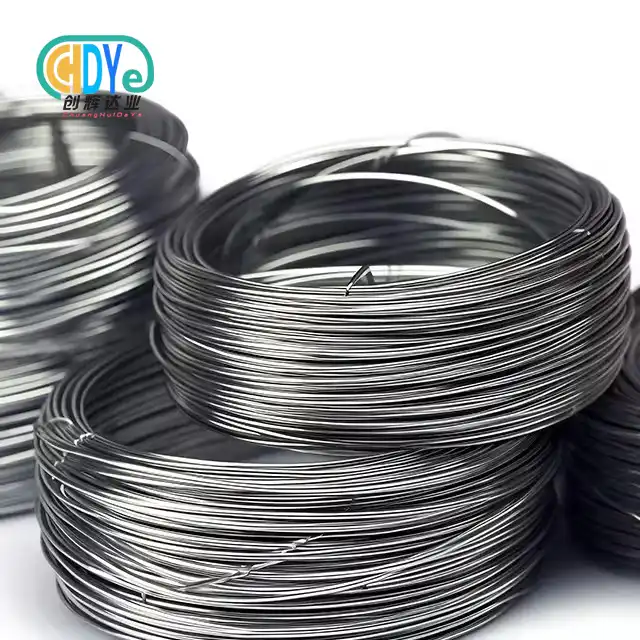
Understanding Your Titanium Wire Needs
Finding out exactly what materials are needed is the first step in making good procurement choices. Only then can you start talking to possible suppliers. Different businesses need different performance traits, which have a direct effect on how suppliers are chosen and what products are made.
Industry-Specific Applications and Requirements
Aerospace and defense companies need titanium wire that has uniform mechanical qualities and a high strength-to-weight ratio. For these uses, you need materials that can keep their shape even when the temperature changes a lot, and the load changes over and over again. Biocompatibility and surface finish quality are important to companies that make medical devices, especially when they are looking for materials for surgical instruments and implantable devices.
Manufacturers of chemical and petrochemical tools put a lot of thought into how well their products prevent rust. This is especially important when working in harsh settings with acids, alkalis, and chloride solutions. Companies that make electronics and semiconductors need materials that are very clean and have controlled amounts of interstitial elements so that they don't get contaminated during high-temperature processes.
Grade Selection and Material Properties
Knowing the differences between commercially pure titanium grades and titanium alloys can help you choose the right material. Both Grade 1 and Grade 2 are very good at resisting rust and can be shaped easily, which makes them good for chemical processing. Grade 5 (Ti-6Al-4V) has the high strength that is needed in aircraft and automotive uses.
Material approvals are a very important part of judging a seller. ASTM B863 talks about general industry uses, while AWS A5.16 talks about the needs of welding electrodes. International compliance is ensured by ISO standards, and ASTM F136 requirements must be followed for medical uses.
Establishing Core Supplier Evaluation Criteria
A full review of a provider offering titanium wire for sale looks at many factors that have an effect on the quality of the product, the dependability of delivery, and the success of the relationship in the long term.
Quality Assurance and Certification Standards
ISO 9001:2015 approval is one of the most important ways to tell if a quality management system is working well. Suppliers who keep this license show that they are dedicated to regular quality control and efforts to make things better all the time. Material test records, chemical composition reports, and proof of mechanical properties are all important pieces of information that can be used to track down and confirm the quality of a product.
Another important rating factor is batch uniformity. Statistical process control methods are used by reliable providers to keep differences between production runs to a minimum. When looking for materials for uses that need exact dimensional limits or certain mechanical qualities, this consistency is very important.
Technical Support and Consultation Services
Expert technical assistance greatly improves the results of buying by giving advice that is specific to the application and helping with troubleshooting. Suppliers with metallurgical knowledge can suggest the best grades for different uses, the best ways to handle them, and ways to solve specific industrial problems.
Respondent customer service makes sure that technical questions and changes to orders are answered quickly. Suppliers who keep specialized expert teams show that they care about their customers' success and want to build long-term relationships with them.
Supply Chain Reliability and Logistics Capabilities
Predictable lead times and a range of shipping choices make it easier to plan production and keep track of inventory. Suppliers who already have global transport networks set up can meet immediate needs while keeping shipping costs low.
Managing inventory, which includes keeping raw materials on hand and making sure produced things are available, adds to the security of the supply chain. When suppliers keep smart amounts of inventory, they can quickly meet emergency needs or changes in demand that come up out of the blue.
Comparing Titanium Wire Suppliers: What Matters Most?
Manufacturers of specialized titanium wire have clear benefits over general metal providers because they have focused expertise, advanced processing capabilities, and a wealth of product knowledge.
Manufacturing Expertise and Process Control
Titanium processing needs special tools and technical know-how because of the way the material is made. Vacuum melting methods make sure that the material is very pure and has the same makeup all over. When accurate tools are used in cold drawing, tight tolerances on dimensions and a high-quality surface finish are achieved.
The ability to heat treat, especially controlled atmosphere annealing, lets the material qualities be optimized for certain uses. When compared to suppliers who rely on outside companies, those who do all of their own handling have better control over quality and delivery times.
Pricing Structure and Cost Considerations
Understanding the factors that affect prices helps make the most of procurement funds while still ensuring high standards are met. The price of raw materials changes based on the market for titanium sponge, and the price of processing depends on the thickness of the wire, the surface finish needed, and the number of orders.
Hidden costs like extra charges for special orders, approval fees, and fast shipping can have a big effect on the total cost of buying. Clear pricing systems make it easier to make accurate budget plans and compare suppliers.
Most of the time, volume deals can save you a lot of money, especially when you combine needs from several projects or make a yearly purchase agreement. Suppliers with flexible number tiers can handle orders of different sizes while still keeping prices low.
Verifying Supplier Quality and Authenticity
Quality problems, supply interruptions, and possible safety risks that come with using products that aren't up to par can be avoided by carefully checking suppliers of titanium wire for sale.
Documentation and Certification Verification
Complete chemical analysis, verification of mechanical properties, and measures of the material's size should all be included in test results. Third-party laboratory approvals make sure that promises made by suppliers are true and that they follow industry standards.
Traceability paperwork that links finished goods to sources of raw materials lets you look into quality problems and show that you're following the rules. For aircraft and medical uses that need thorough material pedigree records, full traceability is especially important.
Factory Audits and Quality Assessment
On-site plant checks are a great way to learn about how things are made, how quality control works, and how good the equipment is. Virtual audits are a cost-effective option to in-person meetings when it's not possible or affordable to do so.
Sample order testing verifies a supplier's skills by examining real products. Small pilot orders let you check the stability of quality, the speed of shipping, and the responsiveness of customer service before committing to bigger orders.
Audits of quality management systems look at rules for paperwork, methods for calibration, and training programs for employees. These evaluations find places where things could be better and make sure that quality standards are being met.
Streamlining Your Procurement Process for Titanium Wire
A good buying method makes the most of what suppliers can do while minimizing the work that needs to be done and the time it takes to deliver.
Custom Processing and Flexibility Options
When it comes to particular application needs, suppliers who offer custom wire diameters, surface finishes, and packing choices are more useful. Custom preparation gets rid of unnecessary steps and lowers the total cost of materials.
Scalable number choices let you meet different production needs without having to pay more. Just-in-time inventory management is possible with flexible shipping schedules that keep output going.
Building Long-Term Partnership Benefits
Strategic relationships with suppliers have many benefits besides just supplying materials. Collaborative ties allow people to work together to make new products, improve processes, and cut costs.
Preferred supplier agreements usually include better prices, faster shipping times, and more expert support staff who are only used by the preferred supplier. These relationships give businesses a competitive edge by making materials work better and lowering the cost of buying them.
Regular performance reviews and feedback events keep the supplier's skills up to date with the changing needs of their customers. Open lines of contact make it easier to keep getting better and build relationships.
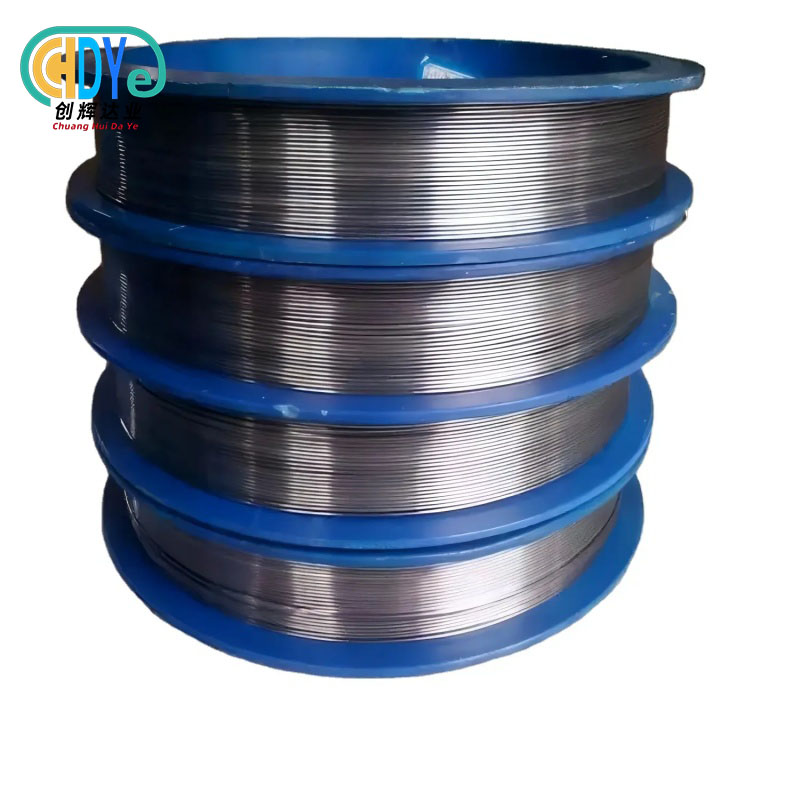
When evaluating titanium wire for sale options, Chuanghui Daye's position in Baoji, China's "Titanium Valley," gives them access to advanced production tools and expert knowledge. Because we are ISO 9001:2015 certified, we can offer a wide range of grades, such as Gr1, Gr2, Gr5, Gr7, Gr9, and Gr12. These grades meet the needs of a wide range of industries.
Conclusion
To find the best titanium wire provider, you need to carefully look at their technical skills, quality control methods, and services they offer. To make sure a long-lasting relationship works, good procurement includes both a thorough needs assessment and a thorough source verification. Key factors for evaluation include production knowledge, licensing compliance, the dependability of the supply chain, and the quality of customer service. Building strategic relationships with skilled providers gives you a competitive edge by improving the performance of your materials, lowering your costs, and giving you the chance to work together on technical issues. Putting time and money into choosing the right suppliers pays off in big ways: better product quality, lower buying risks, and more efficient operations.
FAQ
Q: What certifications should I look for in titanium wire?
A: For general commercial uses, ask for ASTM B863, for welding electrodes, ask for AWS A5.16, and for medical devices, ask for ASTM F136. Getting ISO 9001:2015 quality control certification means that the production process is reliable. Full chemical analysis and proof of mechanical properties should be on the material test papers.
Q: What is the best way to choose the right type of titanium wire for my project?
A: Grades 1 and 2 are very resistant to rust and can be used in chemical processes. Grade 5 (Ti-6Al-4V) is very strong and is used in aircraft and cars. For biocompatibility, medical uses usually need Grade 2 or Grade 23. When choosing grades, you should think about the working temperature, the corrosion climate, and the strength needs.
Q: What factors affect the price of titanium wire?
A: The price of raw materials changes depending on how the titanium sponge market is doing. Prices are affected by how hard it is to process things like wire thickness, surface finish, and tolerance standards. Total costs are also affected by the number of items ordered, the certification standards, and the shipping plans. Custom specs and faster shipping usually come with extra costs.
Q: How can I be sure that the provider is real and of good quality?
A: Ask for test results, certifications, and records of how the materials were made. When you can, do plant audits or virtual reviews. Place small sample orders to check how consistent the quality is and how well the delivery works. Check the certifications from a third party and the recommendations of the provider from similar projects.
Q: What are the pros of building long-term ties with suppliers?
A: People who work together for a long time often get better prices, faster delivery times, and more focused technical help. Collaborative ties allow people to work together to make new products and improve processes. Strategic partnerships lower buying risks by making the supply chain more visible and making it easier to predict how well things will work.
Partner with Chuanghui Daye for Premium Titanium Wire Solutions
Shaanxi Chuanghui Daye offers the best titanium wire for sale by combining 30 years of experience in the rare metals business with cutting-edge production skills. Our ISO 9001:2015-certified factory is in Baoji's famous "Titanium Valley," and it makes a wide range of grades, from Gr1 to Gr12, that meet ASTM, AMS, ISO, and GB standards. For aircraft, medical, chemical, and electronics uses, our advanced vacuum melting, precise drawing, and controlled annealing methods make sure that the parts are very accurately sized and mechanically sound. Get in touch with our technical team at info@chdymetal.com to talk about your specific needs and find out how our experience as a titanium wire seller can help you get the best deals while offering low factory-direct prices and reliable global delivery.
References
1. Davis, J.R. "Titanium: A Technical Guide, 2nd Edition." ASM International Materials Park, 2006.
2. Boyer, R., Welsch, G., Collings, E.W. "Materials Properties Handbook: Titanium Alloys." ASM International, 1994.
3. Donachie, Matthew J. "Titanium: A Technical Guide." ASM International, 2000.
4. Peters, M., Hemptenmacher, J., Kumpfert, J., Leyens, C. "Titanium and Titanium Alloys: Fundamentals and Applications." Wiley-VCH, 2003.
5. Rack, H.J., Qazi, J.I. "Titanium Alloys for Biomedical Applications." Materials Science and Engineering C, 2006.
6. Lutjering, G., Williams, J.C. "Titanium: Engineering Materials and Processes." Springer-Verlag Berlin Heidelberg, 2007.
Learn about our latest products and discounts through SMS or email