- English
- French
- German
- Portuguese
- Spanish
- Russian
- Japanese
- Korean
- Arabic
- Greek
- German
- Turkish
- Italian
- Danish
- Romanian
- Indonesian
- Czech
- Afrikaans
- Swedish
- Polish
- Basque
- Catalan
- Esperanto
- Hindi
- Lao
- Albanian
- Amharic
- Armenian
- Azerbaijani
- Belarusian
- Bengali
- Bosnian
- Bulgarian
- Cebuano
- Chichewa
- Corsican
- Croatian
- Dutch
- Estonian
- Filipino
- Finnish
- Frisian
- Galician
- Georgian
- Gujarati
- Haitian
- Hausa
- Hawaiian
- Hebrew
- Hmong
- Hungarian
- Icelandic
- Igbo
- Javanese
- Kannada
- Kazakh
- Khmer
- Kurdish
- Kyrgyz
- Latin
- Latvian
- Lithuanian
- Luxembou..
- Macedonian
- Malagasy
- Malay
- Malayalam
- Maltese
- Maori
- Marathi
- Mongolian
- Burmese
- Nepali
- Norwegian
- Pashto
- Persian
- Punjabi
- Serbian
- Sesotho
- Sinhala
- Slovak
- Slovenian
- Somali
- Samoan
- Scots Gaelic
- Shona
- Sindhi
- Sundanese
- Swahili
- Tajik
- Tamil
- Telugu
- Thai
- Ukrainian
- Urdu
- Uzbek
- Vietnamese
- Welsh
- Xhosa
- Yiddish
- Yoruba
- Zulu
Tantalum Metal Plate Benefits for Heat Exchangers
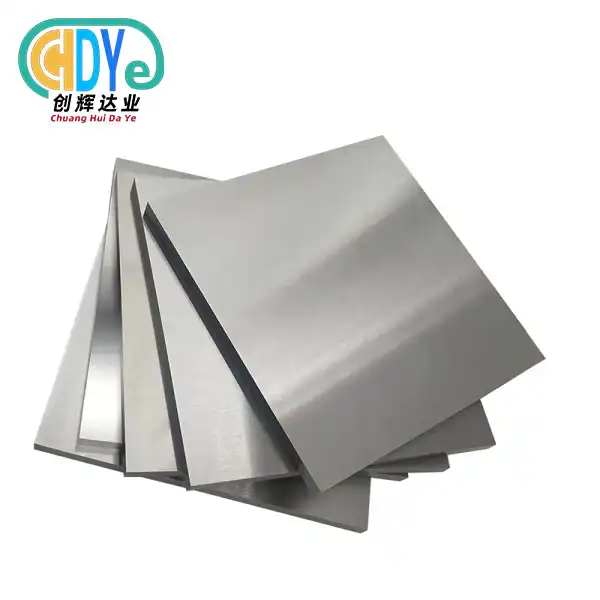
In terms of heat exchangers, engineers and procurement managers always rank tantalum metal plate high on the shortlist. This thick, dark blue-gray refractory metal has a melting temperature of 2,996°C, resists almost all hostile acids below 150°C, and has a self-healing oxide layer that is unmatched by any other metal. If your plant handles boiling sulfuric acid or high-pressure steam cycles, knowing the performance of tantalum flat-rolled materials in thermal exchange conditions may save your team substantial capital and unnecessary downtime during the life of a system.
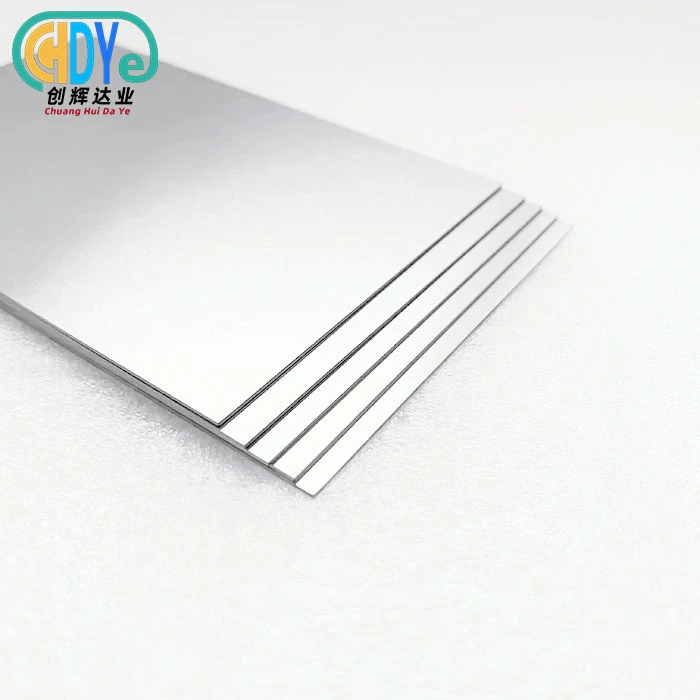
Understanding Tantalum Metal Plates in Heat Exchangers
Chemical and Physical Foundations
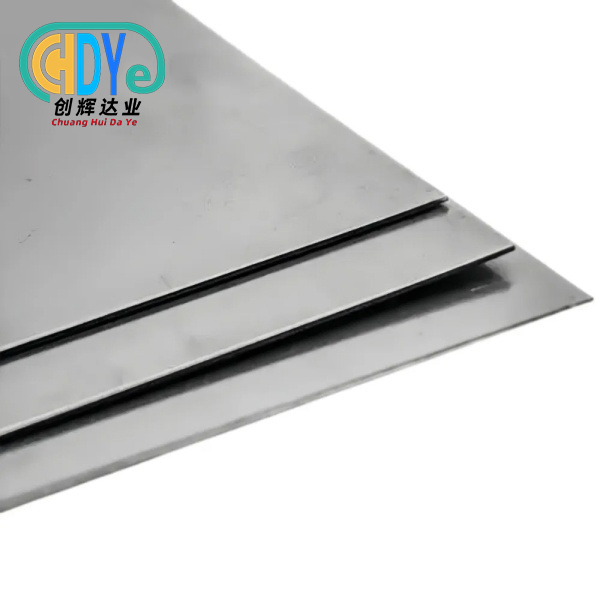
Tantalum (Ta, atomic number 73) is a refractory metal, related to tungsten and molybdenum. A production-grade tantalum sheet has a tensile strength of >200 MPa, a density of ~16.65 g/cm3, and a thermal conductivity of ~57 W/m·K at 99.95% purity and ASTM B 708 specifications, which is sufficient for shell-and-tube and bayonet-type heat exchanger designs. It has a passive oxide (Ta2O5) layer that immediately reforms if the surface is damaged, creating an unbreakable chemical barrier.
Manufacturing Processes That Define Plate Quality
The quality of tantalum rolled plate is inseparable from the manufacturing process. Chuanghui Daye produces by melting in an electron beam furnace and hot and cold rolling to guarantee dimensional accuracy across a broad range of specifications: thickness 0.5–30 mm x width 10–2,500 mm x length 30–3,000 mm. Tight-tolerance heat exchanger assemblies are provided with suitable surface integrity by follow-on finishing operations (cutting, forming, drilling, machining, grinding, and polishing). Each tantalum metal plate is subjected to dimensional inspection, surface inspection, chemical composition testing, and mechanical characteristics assessment before shipment.
Why Tantalum Metal Plates Are Ideal for Heat Exchanger Applications
Procurement teams frequently inquire why tantalum is more valuable than stainless steel or even titanium. The solution is a mix of qualities that no single alternative material can entirely duplicate in a severe-service heat exchanger.
Tantalum flat-rolled materials are especially suited to thermal exchange duty and provide the following key performance benefits:
- Superior corrosion resistance: Tantalum resists hydrochloric acid, sulfuric acid, nitric acid, and most organic acids at concentrations and temperatures that swiftly destroy stainless steel and even titanium alloys. It is soluble only in hydrofluoric acid and highly concentrated alkalis. Hence, it is the preferred material for chemical process heat exchangers dealing with multi-acid media.
- High-temperature structural stability: Tantalum has a melting point approaching 3,000°C and so preserves mechanical integrity at processing temperatures when many competitive metals creep or deteriorate. This property increases the service intervals and decreases the danger of catastrophic failure during temperature extremes.
- Efficient thermal transfer for good heat exchange performance: With a thermal conductivity of ~57 W/m·K, thinner wall sections and more compact exchanger designs may be realized compared to heavier corrosion-resistant alloys.
- Low maintenance, long service life: The self-healing oxide layer drastically decreases surface deterioration, reducing the frequency of inspections and unscheduled shutdowns – variables that directly impact total cost of ownership, not just purchase price.
- The combined benefits provide substantially reduced lifespan costs in difficult chemical, petrochemical, and electronics cooling applications. Plants that have converted shell-and-tube exchangers from Hastelloy C-276 to tantalum-clad designs have reported maintenance intervals ranging from 18 months to more than five years in boiling acid duty.
Comparing Tantalum Metal Plates with Other Common Heat Exchanger Materials
Understanding where tantalum outperforms alternatives helps procurement managers justify capital allocation decisions. The table below summarizes key performance differentiators:
| Material | Max Acid Resistance | Max Service Temp | Relative Cost | Lifecycle ROI in Acid Service |
|---|---|---|---|---|
| Tantalum | Excellent (multi-acid) | ~300°C (liquid) | High | Very High |
| Titanium (Gr. 2) | Good (oxidizing acids) | ~315°C | Moderate | High |
| Stainless Steel 316L | Moderate | ~870°C (dry) | Low | Low in acid |
| Niobium | Good | ~400°C | Moderate-High | High |
| Graphite | Good (reducing acids) | ~450°C | Moderate | Moderate |
Stainless steel is cheaper initially, but in strong chemical service it may have to be replaced in two to three years because of acid corrosion. Titanium resists oxidizing acids but is attacked by reducing acids such as strong HCl. Niobium provides a price compromise but not the range of chemical resistance that is available with tantalum. In severe-duty applications, the initial cost of tantalum is usually repaid over two equipment replacement cycles over stainless steel equivalents.
Procurement Guide: Sourcing High-Quality Tantalum Plates for Heat Exchangers
When selecting a tantalum metal plate supplier, you can't just compare unit pricing. “Industrial buyers are just as concerned about grade purity, dimensional tolerance, traceability documentation, and lead time.
Chuanghui Daye is a supplier of tantalum plates with a purity of 99.95% according to ASTM B 708 (UNS R05200) and a comprehensive range of specifications: thickness 0.5-30 mm, width up to 2,500 mm, and length up to 3,000 mm. Custom dimensions, finishes, and machining configurations are available to fit particular heat exchanger designs.
Here are the parameters for choosing a producer of tantalum metal plates:
- Certification: ISO 9001:2015 certified processes provide strict process control from the receipt of raw materials to final inspection, a must-have standard for aerospace, chemical, and medical supply chains.
- Traceability: Complete traceability documentation of materials such as mill certificates and chemical composition reports enables quality audits and regulatory compliance.
- Processing capabilities: Suppliers with electron beam furnaces, rolling mills, and precision machining centers can process standard catalog items and sophisticated bespoke orders without outsourcing crucial operations.
- Lead Times: Small-batch manufacturing and rapid prototyping capabilities allow us to be very responsive to urgent procurement demands.
Global availability of tantalum ore affects the price of tantalum flat goods; therefore, multi-order agreements with a proven factory-direct supplier often provide more predictable pricing than spot orders.
Real-World Applications and Case Studies in Heat Exchangers
Heat exchanger parts covered with tantalum have a proven history in many demanding industries. In chemical processing facilities that deal with boiling sulfuric acid concentrations exceeding 90%, tantalum bayonet heaters have been operating continuously for more than six years with no visible corrosion damage. Stainless steel counterparts seldom last more than 18 months.
Tantalum is used in the electronics and semiconductor industry. In cooling systems where metallic contamination is not allowed, high-purity tantalum components are used. The metal is inert and will not contaminate the process fluid, therefore safeguarding wafer yield in delicate manufacturing conditions.
Tantalum is also seeing significant traction in renewable energy and power-generating applications, such as heat recovery systems related to cooling of wind turbine generators and electricity production infrastructure in factories. It is a dependable long-term material in thermally cycling environments due to its oxidation resistance and structural stability.
Conclusion
Flat-rolled tantalum metal plate products provide a combination of chemical inertness, thermal stability, and mechanical durability that few materials can equal in demanding heat exchanger duty. From 99.95% purity plates to completely machined bespoke components, according to ASTM B 708, the material’s lifespan benefits in acid-service, high-purity, and thermally harsh applications more than compensate for the increased purchase cost. For procurement pros, engineers, and OEMs that focus on long-term material dependability, tantalum is a strong technical and financially justified option.
FAQ
1. How long does a tantalum plate last in a heat exchanger?
In typical acid-service heat exchangers, a properly specified tantalum plate can operate for 10–20 years with minimal degradation. Its self-healing oxide layer prevents progressive corrosion, which is the primary failure mechanism for competing metals in similar environments.
2. How does tantalum compare to stainless steel in corrosion resistance?
Tantalum resists nearly all mineral acids at concentrations and temperatures that actively corrode stainless steel 316L. In hydrochloric or dilute sulfuric acid environments, the performance gap is substantial—stainless steel may fail within months while tantalum retains structural integrity for years.
3. Can tantalum heat exchanger plates be custom-sized?
Yes. Chuanghui Daye offers custom dimensions within the specification range of thickness 0.5–30 mm, width 10–2,500 mm, and length 30–3,000 mm, with additional processing options including machining, drilling, grinding, and polishing to meet specific design requirements.
4. What standard governs tantalum plate quality?
ASTM B 708 is the primary standard for tantalum and tantalum alloy flat-rolled products used in industrial applications.
Partner with Chuanghui Daye for Reliable Tantalum Metal Plate Supply
Shaanxi Chuanghui Daye brings over 30 years of rare metal expertise and ISO 9001:2015-certified manufacturing to every order. Our tantalum metal plate for sale covers the full ASTM B 708 specification range at 99.95% purity, backed by complete traceability documentation and factory-direct pricing. Whether you need a standard catalogue plate or a precision-machined custom component, our team is ready to support your project from specification to delivery. Reach us at info@chdymetal.com to request a quote today.
References
1. ASM International. ASM Handbook, Volume 2: Properties and Selection—Nonferrous Alloys and Special-Purpose Materials. ASM International, 1990.
2. ASTM International. ASTM B708: Standard Specification for Tantalum and Tantalum Alloy Plate, Sheet, and Strip. ASTM International, 2017.
3. Kolachev, B.A., et al. Refractory Metals and Alloys: Metallurgy and Technology. Metallurgiya Publishers, 1999.
4. Rahmel, A., and Schwenk, W. Corrosion and Corrosion Protection of Metals. Verlag Chemie, 1977.
5. Brostow, W., and Hagg Lobland, H.E. Materials: Introduction and Applications. Wiley, 2017.
6. Donachie, M.J., and Donachie, S.J. Superalloys: A Technical Guide, 2nd ed. ASM International, 2002.
Learn about our latest products and discounts through SMS or email