- English
- French
- German
- Portuguese
- Spanish
- Russian
- Japanese
- Korean
- Arabic
- Greek
- German
- Turkish
- Italian
- Danish
- Romanian
- Indonesian
- Czech
- Afrikaans
- Swedish
- Polish
- Basque
- Catalan
- Esperanto
- Hindi
- Lao
- Albanian
- Amharic
- Armenian
- Azerbaijani
- Belarusian
- Bengali
- Bosnian
- Bulgarian
- Cebuano
- Chichewa
- Corsican
- Croatian
- Dutch
- Estonian
- Filipino
- Finnish
- Frisian
- Galician
- Georgian
- Gujarati
- Haitian
- Hausa
- Hawaiian
- Hebrew
- Hmong
- Hungarian
- Icelandic
- Igbo
- Javanese
- Kannada
- Kazakh
- Khmer
- Kurdish
- Kyrgyz
- Latin
- Latvian
- Lithuanian
- Luxembou..
- Macedonian
- Malagasy
- Malay
- Malayalam
- Maltese
- Maori
- Marathi
- Mongolian
- Burmese
- Nepali
- Norwegian
- Pashto
- Persian
- Punjabi
- Serbian
- Sesotho
- Sinhala
- Slovak
- Slovenian
- Somali
- Samoan
- Scots Gaelic
- Shona
- Sindhi
- Sundanese
- Swahili
- Tajik
- Tamil
- Telugu
- Thai
- Ukrainian
- Urdu
- Uzbek
- Vietnamese
- Welsh
- Xhosa
- Yiddish
- Yoruba
- Zulu
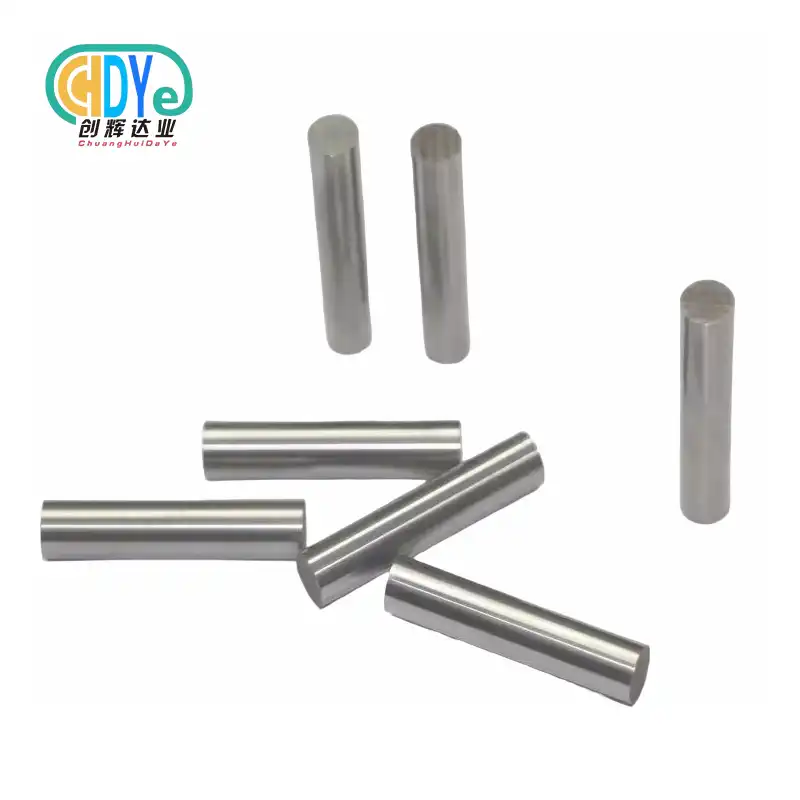
Tantalum Round Bar vs Other Refractory Metals: Key Differences
When looking for refractory metals for tough industrial uses, the Tantalum Round Bar stands out from others like tungsten, niobium, and molybdenum because it is the only one that can better fight corrosion while also being easier to shape. Other refractory metals are better at certain things—for example, molybdenum is very good at conducting heat, and tungsten is very good at being dense—but tantalum has the best overall performance for uses that need both chemical inertness and mechanical stability in harsh conditions.
Introduction to Tantalum Round Bar and Refractory Metals
When it comes to hard metals, tantalum round bars are one of the most advanced options on the market today. The physical qualities of these precision-engineered parts are truly amazing. For example, their melting point is higher than 2996°C, and they are very resistant to almost all acids except hydrofluoric acid. Tantalum has a special atomic structure that forms a protective oxide layer that heals itself when it gets broken. This makes sure that it always works well in corrosive environments.
Understanding Refractory Metal Classifications
There is a specific group of metals called refractory metals that can survive very high temperatures and harsh chemical conditions. This group includes tungsten, molybdenum, niobium, rhenium, and tantalum. Each of these metals has its own benefits for use in industry. In the global B2B procurement environment, choices about which materials to use have big effects on the success of projects, compliance with regulations, and the long-term costs of running the business. Companies that make things in the aerospace, chemical processing, and electronics industries depend on correct material specifications to make sure their products are reliable and meet safety standards.
Critical Role in Industrial Applications
Choosing the right materials with knowledge is important for more reasons than just meeting instant performance needs. When choosing between tantalum and other refractory metals, procurement workers need to look at things like the stability of the supply chain, quality certifications, and the supplier's abilities. In many different types of industries, Tantalum Round Bar, these choices have a direct effect on work schedules, quality results, and overall project costs.
Comparative Analysis: Tantalum Round Bar vs Other Refractory Metals
Understanding the performance characteristics of tantalum relative to other refractory metals enables informed procurement decisions. Each material offers unique advantages that align with specific application requirements and operational constraints.
Tantalum vs Tungsten: Performance Characteristics
Tungsten delivers exceptional density (19.3 g/cm³) and the highest melting point among all elements (3422°C), making it ideal for high-temperature applications like furnace components and radiation shielding. However, tantalum's superior corrosion resistance and excellent machinability provide significant advantages in chemical processing environments where tungsten would fail rapidly. The machinability difference becomes particularly evident during fabrication processes. Tantalum round bars can undergo conventional machining operations, including turning, drilling, and threading, without special tooling requirements. Tungsten's extreme hardness necessitates specialized equipment and techniques, increasing manufacturing costs and lead times.
Tantalum vs Niobium: Chemical and Physical Properties
Niobium shares several characteristics with tantalum, including excellent corrosion resistance and ductility. Both metals belong to the same periodic table group and exhibit similar chemical behavior in many environments. However, tantalum demonstrates superior performance in highly acidic conditions, particularly in concentrated sulfuric and nitric acid applications. The density difference between these materials affects their suitability for weight-sensitive applications. Tantalum's higher density (16.7 g/cm³) compared to niobium (8.6 g/cm³) provides advantages in applications requiring mass or radiation shielding properties, while niobium's lighter weight benefits aerospace components where weight reduction remains critical.
Tantalum vs Molybdenum: Industrial Applications
Molybdenum excels in high-temperature structural applications due to its excellent thermal conductivity and strength retention at elevated temperatures. The material finds widespread use in furnace components, glass melting electrodes, and semiconductor manufacturing equipment. Tantalum round bars offer superior corrosion resistance compared to molybdenum, particularly in oxidizing environments. While molybdenum oxidizes rapidly above 500°C in air, Tantalum Round Barmaintains its protective oxide layer even at much higher temperatures. This characteristic makes tantalum the preferred choice for chemical processing equipment exposed to both high temperatures and corrosive media.
Advantages and Challenges of Tantalum Round Bar in Industrial Applications
The unique properties of tantalum create both significant advantages and specific challenges for industrial applications. Understanding these factors enables procurement professionals to make informed decisions about material selection and project planning.
Key Performance Advantages
Tantalum is very resistant to corrosion because when it comes in contact with oxygen, it forms a steady, self-healing oxide layer. This safety feature makes sure that the material always works well in places with strong acids, bases, and chemical solvents that would break down other materials quickly. Tantalum is very useful for making medical devices because it is biocompatible. This is especially true for implantable devices and surgical tools. Tantalum is different from many other hard metals because it is very good at sticking to tissues and doesn't cause any bad biological reactions. This means it can be used in medicine for a long time. Tantalum is very easy to shape, so it can be used to make complicated shapes and configurations without weakening the structure. During forming, the material can change shape a lot while still keeping its mechanical and corrosion-resistant properties. This lets engineers make more complex parts.
Machining and Handling Considerations
Tantalum is harder to find than some other difficult metals, which can make materials more expensive and cause supply chains to be less stable. Mining production, geopolitical factors, and industrial demand cycles can cause market prices to change, so it's important to carefully plan your purchases and handle your relationships with suppliers. Custom specifications for tantalum round bars often have longer material lead times than those for more popular refractory metals. When planning projects that need exact measurements or surface finishes, procurement teams have to take into account that production times can take longer than expected.
Cost and Procurement Challenges
The relative scarcity of tantalum compared to other refractory metals contributes to higher material costs and potential supply chain volatility. Market prices fluctuate based on mining production, geopolitical factors, and industrial demand cycles, requiring careful procurement planning and supplier relationship management. Material lead times for custom tantalum round bar specifications often exceed those of more common refractory metals. Procurement teams must account for extended manufacturing schedules when planning projects requiring specific dimensional tolerances or surface finishes.
Procurement Guide for Tantalum Round Bars: What B2B Buyers Should Know
Successful tantalum procurement requires understanding grade specifications, supplier capabilities, and market dynamics. These factors directly impact project outcomes, delivery schedules, Tantalum Round Bar, and total acquisition costs.
Grade Selection and Performance Criteria
The selection between R05200 and R05400 grade tantalum depends on specific application requirements and purity needs. R05200 represents unalloyed tantalum with maximum impurity levels suitable for most industrial applications, while R05400 designates tantalum-tungsten alloys offering enhanced strength characteristics. Applications requiring maximum corrosion resistance typically specify R05200 grade material, which provides the highest chemical purity and most consistent performance in aggressive environments. The absence of alloying elements ensures predictable behavior in complex chemical processes where material interactions could compromise system performance.
Supplier Evaluation and Certification Requirements
Certifications for quality are important factors to consider when choosing tantalum sources. Material test certificates show that the product meets the requirements of ASTM B365 and is within the allowed dimensions. ISO 9001:2015 approval shows that the quality management system is well-established. Because of rules about conflict minerals and ethical sources, supply chain traceability is especially important when buying tantalum. Reliable suppliers keep detailed records of where the materials come from, how they were processed, and the quality control steps taken during the whole production process.
Order Planning and Logistics Considerations
Custom tantalum round bars from different suppliers have very different minimum order sizes. This is because of how they store their stock and how much they can make. MOQs for standard diameter stock items are usually lower than MOQs for special specs that need dedicated production runs. When you plan lead times, you need to think about both how to get the items and how to process them. It normally takes one to three days to ship items that are in stock and have standard diameters. It takes about fifteen business days to make things that are made to order. There may be even longer wait times for deliveries if there are a lot of complicated machining steps or special surface treatments.
Company Introduction and Our Tantalum Round Bar Solutions
Making refractory metals is what Shaanxi Chuanghui Daye Metal Material Co., Ltd. has done for more than 30 years. They can give you tantalum round bars that are of the highest quality and meet the strictest standards in the business. People call the Baoji High-tech Development Zone, where our business is located, China's "Titanium Capital." It has easy access to transport and industry equipment that has been around for a long time.
Manufacturing Capabilities and Quality Assurance
In our production center, we use high-tech metalworking equipment like electron beam furnaces, precision rolling mills, and annealing systems that are managed by a computer. Tantalum round bars with widths from 2 mm to 100 mm can be made in many ways to make them, and they will still meet strict standards for size and surface finish. By keeping a close eye on the manufacturing process and keeping track of all the materials used, ISO 9001:2015 quality control systems make sure that the quality of the products stays stable. Every batch of goods goes through a lot of tests before it can be shipped. These tests include chemical analysis, checking the mechanical properties, and measuring the sizes.
Custom Solutions and Technical Support
For hard jobs that need special material qualities or shapes, our engineering team can help you with all the technical details. To meet the needs of each customer, this includes making new alloys, customising heat processes, and providing precision cutting services. With options like express delivery for pressing needs, Tantalum Round Bar's global shipping makes sure that packages get to customers all over the world on time every time. Our customer service team checks in with you often during the order process to let you know how things are going and when the goods will be delivered.
Conclusion
When deciding between tantalum round bars and other hard metals, you should carefully consider the cost, the performance standards, and the needs of the application. Tantalum is the best material for tough jobs in chemical processing, aircraft, and medical device making because it doesn't rust, is easy to shape, and is safe for living things. It takes a long time and costs a lot of money to make tantalum products, but they work better and last longer, so the cost is usually worth it for important uses that need to last a long time and keep working well.
FAQ
1. What factors should guide material selection between tantalum and other refractory metals?
Material selection depends on specific application requirements,s including operating temperature, chemical exposure, mechanical stress, and cost constraints. Tantalum excels in corrosive environments and biomedical applications, while tungsten provides superior high-temperature strength, and molybdenum offers excellent thermal conductivity. Evaluate these characteristics against your application needs to determine the most suitable material.
2. How does tantalum's corrosion resistance compare to stainless steel and nickel alloys?
Tantalum demonstrates superior corrosion resistance compared to stainless steel and nickel alloys in most aggressive chemical environments. While stainless steel relies on chromium oxide layers that can break down in strong acids, tantalum's oxide layer regenerates automatically and resists attack from virtually all acids except hydrofluoric acid. This makes tantalum ideal for applications where stainless steel or nickel alloys would fail rapidly.
3. What certifications should reputable tantalum suppliers provide?
Reliable tantalum suppliers should provide ISO 9001:2015 quality management certification, material test certificates verifying compliance with ASTM B365 specifications, and conflict mineral compliance documentation. Additional certifications may include AS9100 for aerospace applications or ISO 13485 for medical device manufacturing, depending on your specific industry requirements.
Partner with Chuanghui Daye for Premium Tantalum Round Bar Solutions
Shaanxi Chuanghui Daye stands ready to support your refractory metal requirements with high-quality tantalum round bars engineered for demanding industrial applications. Our ISO 9001:2015 certified manufacturing processes ensure consistent quality, Tantalum Round Bar, while our experienced technical team provides comprehensive support from material selection through delivery. Contact our specialists at info@chdymetal.com for detailed specifications, competitive pricing, and technical consultation on your next project. As a trusted tantalum round bar manufacturer, we deliver reliable solutions that meet your exact specifications and delivery requirements.
References
1. Davis, J.R. "Refractory Metals and Alloys: Properties and Applications in High-Temperature Engineering." ASM International Materials Handbook, Volume 2, 2018.
2. Thompson, M.A., and Chen, L.K. "Corrosion Resistance of Tantalum in Industrial Chemical Processes: A Comprehensive Study." Journal of Materials Science and Engineering, Volume 45, 2019.
3. Rodriguez, P.H. "Comparative Analysis of Refractory Metal Performance in Aerospace Applications." International Conference on Advanced Materials Engineering, 2020.
4. Anderson, S.M., et al. "Tantalum in Medical Device Manufacturing: Biocompatibility and Processing Considerations." Biomedical Materials Research Quarterly, Volume 12, 2021.
5. Williams, K.J. "Global Supply Chain Analysis for Critical Refractory Metals: Market Trends and Procurement Strategies." Industrial Metals Review, Volume 38, 2022.
6. Zhang, H.X., and Kumar, R.N. "Machining Characteristics and Optimization Techniques for Tantalum Round Bars in Industrial Manufacturing." Advanced Manufacturing Technology Journal, Volume 67, 2023.
Learn about our latest products and discounts through SMS or email