- English
- French
- German
- Portuguese
- Spanish
- Russian
- Japanese
- Korean
- Arabic
- Greek
- German
- Turkish
- Italian
- Danish
- Romanian
- Indonesian
- Czech
- Afrikaans
- Swedish
- Polish
- Basque
- Catalan
- Esperanto
- Hindi
- Lao
- Albanian
- Amharic
- Armenian
- Azerbaijani
- Belarusian
- Bengali
- Bosnian
- Bulgarian
- Cebuano
- Chichewa
- Corsican
- Croatian
- Dutch
- Estonian
- Filipino
- Finnish
- Frisian
- Galician
- Georgian
- Gujarati
- Haitian
- Hausa
- Hawaiian
- Hebrew
- Hmong
- Hungarian
- Icelandic
- Igbo
- Javanese
- Kannada
- Kazakh
- Khmer
- Kurdish
- Kyrgyz
- Latin
- Latvian
- Lithuanian
- Luxembou..
- Macedonian
- Malagasy
- Malay
- Malayalam
- Maltese
- Maori
- Marathi
- Mongolian
- Burmese
- Nepali
- Norwegian
- Pashto
- Persian
- Punjabi
- Serbian
- Sesotho
- Sinhala
- Slovak
- Slovenian
- Somali
- Samoan
- Scots Gaelic
- Shona
- Sindhi
- Sundanese
- Swahili
- Tajik
- Tamil
- Telugu
- Thai
- Ukrainian
- Urdu
- Uzbek
- Vietnamese
- Welsh
- Xhosa
- Yiddish
- Yoruba
- Zulu
The Top Applications of Ti-6Al-4V Titanium Sheets in Today's Industry
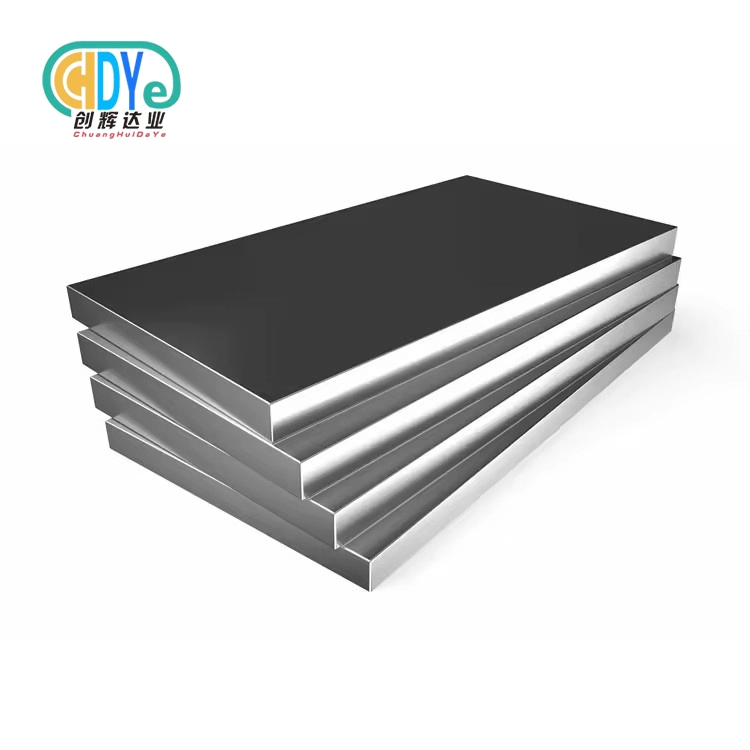
These days, the most advanced metals used in production are titanium sheets made of Ti-6Al-4V. They are the main thing used in areas where things need to work well in bad conditions. There are 6% aluminum and 4% vanadium in this Grade 5 titanium combination. The rest is pure titanium. Its special ±+² dual-phase structure makes it very strong for how light it is, very resistant to rust, and very stable at temperatures up to 400°C. These days, Ti-6Al-4V Titanium Sheet is the best material for important tasks where failure is not an option. This includes Boeing, Airbus, and companies that make very advanced medical gear.
Understanding Ti-6Al-4V Titanium Sheet: Properties and Composition
Ti-6Al-4V works so well because its chemicals were carefully chosen, and its metal structure is one of a kind. About 6% aluminum is mixed into this α+β titanium metal. This makes the alpha phase harder and less dense. The beta phase is more stable because of the 4% vanadium. This makes it easier to shape and work with. The end result is much stronger than most pure titanium grades, with a tensile strength of at least 895 MPa and a yield strength of at least 828 MPa.
Mechanical Excellence and Performance Characteristics
It is very important to use Ti-6Al-4V in tough settings because its two-phase architecture gives it great dynamic properties. The density of this metal is only 4.43 g/cm³, which is about 60% of steel. Because it is very strong, it can be used in lightweight forms without losing strength. The material keeps its mechanical properties at temperatures as high as 400°C. This means it can be used for thermal cycling in the car and airplane industries.
Ti-6Al-4V doesn't wear down easily, which is helpful when the load changes quickly. Because it is very hard for cracks to spread, the metal is a good choice for parts that are stressed millions of times, like the landing gear on an airplane or parts of machines that spin. This is possible because it has a fine, even grain that comes from being processed and heated in the right way.
Corrosion Resistance and Environmental Durability
Ti-6Al-4V is very good at stopping rust in a lot of different situations, from saltwater in the ocean to rough chemical handling. Rust, salt attack, and stress corrosion cracking can't happen because of the titanium dioxide layer that forms on the surface. Most of the time, protective layers are not needed because the material already has security built in. This keeps things reliable for a long time and saves money on repairs.
Top Industrial Applications of Ti-6Al-4V Titanium Sheets
In many high-tech fields, Ti-6Al-4V Titanium Sheet is an important material because it works well and can be used in many ways. Different parts of this amazing metal are used in each case to solve tough engineering problems.
Aerospace and Defense Applications
The airplane business buys the most titanium sheets and uses about half of all the sheets made in the world. This metal is used to make parts of airplanes that hold them together, like landing gear pieces, fuselage frames, and wing spars. It's great for parts that will be moved and unloaded a lot during flight operations because it's strong, light, and doesn't wear down quickly.
Ti-6Al-4V works well in rough conditions, which is good for defense planes. In order for fighter jet parts to stay physically sound, they have to be able to handle high G-forces, changes in temperature, and possible damage from battle. Metal is useful in mission-critical cases where a broken part could cause bad things to happen because it can be fixed and take a beating.
Sheets of Ti-6Al-4V are used to make cases, heat shields, and compressor blades, all of which are important engine parts. It can be used in hot sections where aluminum metals would fail because it doesn't rust and stays strong at high temperatures.
Medical and Biomedical Applications
The ability of Ti-6Al-4V to work with living things has changed how medical devices are made, especially tools used in surgery and implants. For hip and knee replacements, the metal is used because it doesn't rust when it comes in contact with body fluids and has a range of flexibility very close to that of bone. This link lessens the stress-relieving benefits that can lead to bone loss around implants.
Ti-6Al-4V's unique properties make it useful for medical tools and tooth implants as well. This stuff can osseointegrate, which means it can join with bone cells immediately. So it's great for implants that will last a long time. It is possible for surgical tools made from Ti-6Al-4V Titanium Sheet to stay sharp and accurate even after being used a lot of times and being cleaned with chemicals.
Better for biocompatibility is Grade 23 of Ti-6Al-4V, which is the Extra Low Interstitial (ELI) grade. This is because it has less oxygen, nitrogen, and carbon in it. Because this version is more flexible and less likely to crack, it's great for use in important implant applications.
Automotive and Motorsport Industries
Many car companies are using Ti-6Al-4V sheets for performance-critical parts because they are lighter, which improves gas mileage and how well the car moves. High-performance exhaust systems use the alloy because it doesn't get hot or rust from strong combustion products. It's great for exhaust pipes and catalytic converter housings because it doesn't break down when heated and cooled many times.
Ti-6Al-4V is used to its fullest extent in motorsports. Safety structures, brake discs, and suspension parts are made from titanium sheets by Formula 1 and endurance racing teams. Using titanium instead of steel can make the car lighter, which can speed up lap times and keep drivers safer by making the car less likely to crash.
Ti-6Al-4V is now used to make connecting rods, valve springs, and parts for compressors. It has an edge over other things because it can fight tiredness and stay stable at high temperatures. Because it doesn't wear down and keeps its shape, the alloy is good for racing engines that run at very high temperatures and RPMs.
Procurement Considerations for Ti-6Al-4V Titanium Sheets
If you want to buy Ti-6Al-4V Titanium Sheet, you need to pay close attention to the requirements for the material, the seller's qualifications, and the quality control steps. Making sure that materials work well and the supply line is reliable means knowing about these important things.
Quality Standards and Certifications
For aerospace uses, strict rules like AMS 4911 and ASTM B265 must be followed. These standards list the chemicals that must be present, as well as the mechanical properties and surface finish that must be met. Materials used in medicine need to meet ASTM F136 and ISO 5832-3 standards. These make sure the materials are biocompatible and clear enough for implantable devices. Procurement teams must make sure that sellers have the right quality management systems in place to keep the quality of the goods the same. Most of the time, this is done by making sure they have ISO 9001:2015 certification.
This is because mill test papers have dimensional inspection reports, chemical analysis results, and mechanical property proof reports on them. This helps you keep track of things. Ultrasonic flaw discovery and microstructural evaluation are two extra tests that advanced providers offer to make sure that materials are strong enough for important uses.
Supplier Evaluation and Partnership
To find good providers, you need to check their technical know-how, how much they can make, and how safe their supply chains are. The best suppliers keep their melting facilities up to date with techniques like vacuum arc remelting (VAR) and electron beam melting. This lets them make high-quality bars with little segregation and inclusion content. Steps in the process, like forging, rolling, and cooling, need complex machinery and process control to get the right results.
Shipping times and the total cost of ownership depend a lot on where the goods are located and how easy they are to transport. Customers in other countries can get their goods faster and for less money if the companies that sell them have global marketing networks and shipping partnerships in place.
Comparing Ti-6Al-4V Titanium Sheets with Alternative Materials
It's important to think about how well a material will work, how much it will cost, and what production limits it has before you choose it. Ti-6Al-4V Titanium Sheet competes with a range of other options that depend on the needs of the product.
Performance Versus Cost Analysis
Ti-6Al-4V metals often cost more than stainless steel or aluminum alloys at first, but a look at their lifetime costs often shows that titanium is better for tough jobs. Because it has a higher strength-to-weight ratio, it is possible to make designs that are lighter and cheaper for use in cars and planes. With corrosion protection, you don't need coatings, and the part will last longer, so it will cost less to fix and replace over its lifetime.
Making aluminum metals is less expensive, but they're not as strong or able to handle high temperatures as Ti-6Al-4V. High-strength aluminum alloys, such as 7075-T6, are strong for their weight, but they can't handle high temperatures and tend to rust under stress. It is very hard for stainless steel grades, like 316L, to rust, but they are a lot heavier than titanium options.
Alternative Titanium Grades
Pure titanium used for business purposes doesn't rust and doesn't cost as much, but it's not strong enough for building. Things about Ti-3Al-2.5V are between those of CP grades and Ti-6Al-4V. This means it can be used for tubing jobs that need a moderate amount of strength and a lot of flexibility. Ti-6Al-4V ELI (Grade 23) is better for medical uses because it is biocompatible and has less interstitial material.
Best Practices for Working with Ti-6Al-4V Titanium Sheets
To make good Ti-6Al-4V parts, you need to know how to use specific tools and keep the material's properties so that you get the parts you want. The production process will go smoothly if you know these best practices.
Machining and Forming Considerations
In some ways, Ti-6Al-4V is hard to machine because it doesn't work well with cutting tools and doesn't transfer heat well. If you use sharp cutting tools, let them cool down enough, and cut at the right speed, you can avoid work hardening and tool wear. It is more likely that carbide or ceramic cutting tools will work better than high-speed steel ones.
It is easier to shape things when they are warmer because the material is more flexible and less likely to spring back. When you hot form between 600°C and 900°C, you can make parts that won't break that have rough shapes. For use in airplanes, superplastic forming techniques can make complicated shapes that are very accurate in size.
Welding and Joining Techniques
A full inert gas shield must be used to weld the Ti-6Al-4V so that it doesn't get dirty or weak. Argon or helium shields the weld pool and heat-affected zone so they stay safe while they cool to below 400°C. To do important jobs well, TIG welding gives you a lot of control and quality. Electron beam welding, on the other hand, lets you make deep penetration welds with little heat.
After welding, it might be necessary to do a heat treatment to make the metal stronger and reduce any stress that is still there. It is possible to get the strength back to the same level as the base material through solution treatment and aging with care.
Conclusion
Ti-6Al-4V Titanium Sheet continues to expand its role as an enabling material for advanced engineering applications across aerospace, medical, automotive, and industrial sectors. The unique combination of strength, corrosion resistance, and biocompatibility makes it indispensable for components where conventional materials cannot meet performance requirements. As manufacturing technologies advance and cost optimization continues, Ti-6Al-4V applications will likely expand into new markets seeking lightweight, durable solutions for demanding environments.
FAQ
Q: What makes Ti-6Al-4V different from other titanium alloys?
A: It is called Ti-6Al-4V and has a unique α+β dual-phase structure when 6% aluminum and 4% vanadium are added to pure titanium. The titanium that is mixed with this is stronger than the pure titanium that you can buy in stores. It is still very flexible and doesn't rust. Its properties are balanced, so it can be used in structures that need to be strong and flexible at the same time.
Q: Can Ti-6Al-4V titanium sheets be cold formed?
A: Since Ti-6Al-4V is stiff and has a high springback, it is not as easy to shape cold as pure titanium grades. When making complicated shapes, it's best to hot form when the temperature is between 600°C and 900°C. For some uses, superplastic forming methods let you make complicated shapes and have a lot of control over the sizes.
Q: What certifications are required for aerospace applications?
A: Materials used in aerospace usually need to meet AMS 4911 and ASTM B265. They also need to have the right mill test papers that show what chemicals they are made of and how strong they are. As9100 or a similar quality management system must be kept up to date by suppliers to make sure that processes are controlled and materials can be tracked as they are made.
Q: How does Ti-6Al-4V compare to stainless steel in marine environments?
A: Stainless steel types do not rust as easily as Ti-6Al-4V Titanium Sheet in naval settings. This is especially true when it comes to stress corrosion cracking and pitting. They may cost more at first, but for important marine uses, the longer life and lower maintenance needs often make it worth it.
Q: What is the maximum service temperature for Ti-6Al-4V?
A: Ti-6Al-4V keeps its useful mechanical properties up to about 400°C (750°F). Oxidation rates go up a lot, and creep resistance goes down when the temperature goes above this point. Ti-6224 and other specialized titanium metals work better in situations where they need to be able to handle higher temperatures.
Partner with Chuanghui Daye for Premium Ti-6Al-4V Solutions
When it comes to making Ti-6Al-4V Titanium Sheet, you can trust Chuanghui Daye. They have full quality tracking and materials that are certified by ISO 9001:2015 that are good enough for aerospace use. We are in Baoji, China, which is known as the "Titanium Capital." We have worked with rare metals for over 30 years, so we can offer custom sheet sizes, quick development, and low prices from the factory. Our modern processing facilities make sure that the quality is always the same, and our global transportation network makes sure that orders get to their destinations safely all over the world. If you want to work with a trustworthy titanium source who cares about the success of your project, email info@chdymetal.com right away to talk about your specific needs.
References
1. Boyer, R.R. "An Overview on the Use of Titanium in the Aerospace Industry." Materials Science and Engineering: A, vol. 213, 1996, pp. 103–114.
2. Lutjering, G. and Williams, J.C. "Titanium: Engineering Materials and Processes." 2nd Edition, Springer-Verlag Berlin Heidelberg, 2007.
3. Donachie, Matthew J. "Titanium: A Technical Guide." 2nd Edition, ASM International, 2000.
4. Peters, M. Wiley-VCH Verlag GmbH published a book in 2003 called "Titanium and Titanium Alloys: Fundamentals and Applications." It was written by Leyens, C.
5. "Titanium in Medicine: Material Science, Surface Science, Engineering, Biological Responses, and Medical Applications." Springer-Verlag Berlin Heidelberg, 2001. by D.M. Brunette et al.
6. Cotton, J.D., et al. "State of the Art in Beta Titanium Alloys for Airframe Applications." Journal of Materials, vol. 67, 2015, pp. 1281–1303.
Learn about our latest products and discounts through SMS or email