- English
- French
- German
- Portuguese
- Spanish
- Russian
- Japanese
- Korean
- Arabic
- Greek
- German
- Turkish
- Italian
- Danish
- Romanian
- Indonesian
- Czech
- Afrikaans
- Swedish
- Polish
- Basque
- Catalan
- Esperanto
- Hindi
- Lao
- Albanian
- Amharic
- Armenian
- Azerbaijani
- Belarusian
- Bengali
- Bosnian
- Bulgarian
- Cebuano
- Chichewa
- Corsican
- Croatian
- Dutch
- Estonian
- Filipino
- Finnish
- Frisian
- Galician
- Georgian
- Gujarati
- Haitian
- Hausa
- Hawaiian
- Hebrew
- Hmong
- Hungarian
- Icelandic
- Igbo
- Javanese
- Kannada
- Kazakh
- Khmer
- Kurdish
- Kyrgyz
- Latin
- Latvian
- Lithuanian
- Luxembou..
- Macedonian
- Malagasy
- Malay
- Malayalam
- Maltese
- Maori
- Marathi
- Mongolian
- Burmese
- Nepali
- Norwegian
- Pashto
- Persian
- Punjabi
- Serbian
- Sesotho
- Sinhala
- Slovak
- Slovenian
- Somali
- Samoan
- Scots Gaelic
- Shona
- Sindhi
- Sundanese
- Swahili
- Tajik
- Tamil
- Telugu
- Thai
- Ukrainian
- Urdu
- Uzbek
- Vietnamese
- Welsh
- Xhosa
- Yiddish
- Yoruba
- Zulu
Titanium Alloy Sheet Designed for Structural Integrity
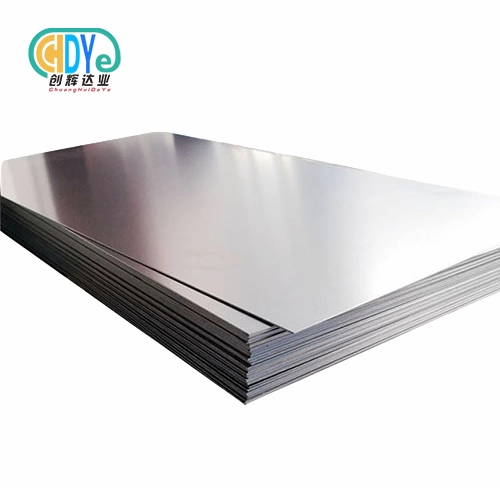
Sheets of titanium alloy made of Ti-6Al-4V are the most advanced metals used in production today. They're the main thing used in fields where things need to work well in rough conditions. It is made up of 6% aluminum, 4% vanadium, and pure titanium (Grade 5). This metal has a special ±+² dual-phase structure that makes it very strong for its weight, very stable at temperatures up to 400°C, and very resistant to rust. Ti 6Al 4V Titanium Sheet is now the best material for serious scenarios where failure is not an option. This includes companies like Boeing, Airbus, and those that make very advanced medical tools.
Understanding Titanium Alloy Sheets and Their Structural Properties
Chemical Composition and Alloy Design
What makes Ti-6Al-4V work so well is its carefully planned chemical makeup and unique metal structure. There is about 6% aluminum in this α+² titanium metal. This makes the alpha phase harder and less dense. The beta phase is kept stable by the 4% vanadium, which makes it easy to form and work with. The end item's tensile strength is at least 895 MPa, and its yield strength is at least 828 MPa. These are much higher strengths than most pure titanium types that are on the market.
Mechanical Performance Benchmarks
Because Ti-6Al-4V has a two-phase microstructure, it has great dynamic properties that make it necessary for use in tough situations. When measured in grams per cubic centimeter, this metal is only 4.43, which is about 60% of steel's density. It's very strong, so it can be used in lightweight forms without losing strength. The material doesn't change mechanically at temperatures up to 400°C, so it can be used for thermal cycling in the car and airplane industries.
When the load changes quickly, Ti-6Al-4V's high resistance to wear comes in handy. Because the metal doesn't crack easily, it's a good choice for parts that are stretched millions of times, like the landing gear on an airplane or parts of machines that spin. It has this quality because it was processed and heated in the right way to make the grains small and even.
Lack of rust and long-lasting performance in tough conditions
There are a lot of places where Ti-6Al-4V titanium alloy sheet doesn't rust, from saltwater in the ocean to rough chemical handling conditions. On its own, the layer of titanium dioxide that forms on top guards against rust, salt attack, and stress corrosion cracking. Many times, protective layers are not needed because the material already has security built in. This saves money on repairs and makes sure that the system will work for a long time.
Comparing Titanium Alloy Sheets with Alternative Materials for Structural Use
Performance Analysis Against Steel and Aluminum
You should think about how well the material will work, how much it will cost, and what production limits it has before you choose it. Ti 6Al 4V Titanium Sheet has a number of alternatives that can be used depending on the product and its needs.
Cost-Benefit Analysis for Structural Applications
Most of the time, Ti-6Al-4V metals cost more than stainless steel or aluminum alloys at first, but a total cost study shows that titanium is better for tough jobs. Because it is stronger compared to its weight, smaller versions can be made that are more cost-effective for use in cars and planes. When you protect against corrosion, you don't need to use coats. The part will last longer, which means it will cost less to fix and replace over its lifetime.
It is easier to make aluminum metals, but they aren't as strong or able to handle high temperatures as Ti-6Al-4V. Some high-strength aluminum alloys, like 7075-T6, are strong for their weight, but they can't handle high temperatures and tend to rust under stress. You can get grades of stainless steel that don't rust, like 316L, but they are a lot heavier than titanium choices.
Titanium comes in different forms.
Pure titanium that is sold in stores doesn't rust and doesn't cost as much, but it's not strong enough for building. There are some qualities of Ti-3Al-2.5V titanium alloy sheet that are similar to those of CP grades and Ti-6Al-4V. For tube jobs that need a moderate amount of power and a lot of shapeability, this means it can be used. With less intermediate material, Ti-6Al-4V ELI (Grade 23) is better for medical uses because it is safe.
Manufacturing and Quality Control of Titanium Alloy Sheets for Structural Performance
Advanced Production Methodologies
You need to know how to use special tools and understand the properties of the material to make things that are of the quality you want. Knowing these best practices will help the production go without a hitch.
Quality Assurance and Certification Standards
For aircraft purposes, strict rules like AMS 4911 and ASTM B265 must be followed. These rules explain the chemicals that must be present, as well as the mechanical qualities and surface finish that must be met. To be used in medical settings, materials must meet the standards set by ASTM F136 and ISO 5832-3. These standards make sure that the materials are safe and clear enough for implanted devices. Buyers need to make sure that sellers have the right quality control systems in place to keep the quality of the goods the same. This is generally done by making sure they are certified to ISO 9001:2015.
Chemical analysis results, mechanical property proof records, and physical inspection reports can all be found on mill test papers, which help you keep track of everything. In order to make sure that materials are strong enough for important uses, more advanced providers offer extra testing methods such as ultrasound flaw finding and microstructural evaluation.
Practical Procurement Guide for Titanium Alloy Sheets in Structural Projects
Supplier Evaluation and Selection Criteria
You need to look at a provider's technical know-how, production ability, and supply chain security to find one that fits your needs. Some of the best providers keep their melting facilities up to date with the latest techniques, like vacuum arc remelting (VAR) and electron beam melting, so they can make high-quality bars with little mixing and inclusions. To get certain values, the steps of forging, rolling, and freezing need complicated machines and process control.
How long it takes to ship and how much it costs to own something depend a lot on where it is and how easy it is to move. If a company's sellers have global marketing networks and established shipping partnerships, customers around the world can get their things faster and for less money.
Custom Processing and Fabrication Services
The Ti 6Al 4V titanium alloy sheet is useful in many high-tech areas because it works well and can be used in many ways. In each case, different parts of this amazing metal are used to make engineering problems easier to solve.
Conclusion
Hire Chuanghui Daye to get the best answers for Ti-6Al-4V problems.
For use in defense and space
The airplane industry uses about half of all the titanium sheets made in the world and also buys the most of them. Airplane structural parts, such as wing spars, body frames, and landing gear pieces, are made from this metal. It's great for parts that will be moved and unloaded a lot during flight operations because it's strong, light, and doesn't wear down quickly.
The fact that Ti-6Al-4V works well in tough conditions makes it very useful for military planes. While still being physically sound, fighter jet parts have to be able to handle high G-forces, changes in temperature, and possible damage from battle. Metal is very useful in mission-critical cases where a broken part could cause terrible effects, because it can be fixed and take a beating.
Blades, cases, and heat shields for compressors are all made from Ti-6Al-4V sheets. These are all important parts for engines. The material can be used in hot sections where aluminum metals would fail because it doesn't rust and stays strong at high temperatures.
Biomedicine and medicine use it.
Biogenic Ti-6Al-4V has changed how medical products are made, especially tools used in surgery and implants. Aluminum is used in orthopedic devices like hip and knee replacements because it doesn't rust when it comes in contact with body fluids and is very flexible, almost like bone. The stress-balancing effects that can lead to bone loss around implants are lessened by this link.
Because of its unique properties, Ti-6Al-4V is also used to make medical tools and tooth implants. It can osseointegrate, which means it can join with bone cells immediately. It's great for long-term transplants because of this. Tools for surgery made from Ti 6Al 4V Titanium Sheet can handle cleaning chemicals and still have sharp edges and accurate readings after being used a lot.
There is less oxygen, nitrogen, and carbon in Grade 23 of Ti-6Al-4V, which makes it even better for biocompatibility. It is called Extra Low Interstitial (ELI). This version is better at being shaped and resisting cracks, so it can be used in important implant uses.
Automotive and motorsports
Automobile companies are using Ti-6Al-4V titanium alloy sheets more and more for performance-critical parts where reducing weight has a direct effect on how well the car moves and how much gas it uses. Because it doesn't get hot or rust from strong combustion products, the metal is used in high-performance exhaust systems. The material is great for exhaust pipes and catalytic converter housings because it doesn't break down when heated and cooled many times.
Titanium sheets are used to make safety structures, brake discs, and suspension parts for Formula 1 and endurance race teams. This is where Ti-6Al-4V is put to its best use. Replacing steel with titanium can make the car lighter, which can speed up lap times and keep drivers safer by making the car less likely to crash.
Among the new things that Ti-6Al-4V can be used for are connecting rods, valve springs, and compressor parts. The fact that it can fight tiredness and stay strong in hot conditions gives it an edge over other plants. Because the metal doesn't wear down and keeps its shape, it can be used in race engines that go very fast and at very high temperatures.
FAQ
Q: What grades of titanium alloy sheet are most suitable for structural applications?
A: Titanium that has been mixed with 6% aluminum and 4% vanadium forms Ti-6Al-4V, which has a unique ±+² dual-phase structure. The titanium is stronger than pure titanium that you can buy in shops, but it is still very bendable and doesn't rust. It can be used in structures that need both power and flexibility because its qualities are matched.
Q: How does thickness affect the structural performance of titanium alloy sheets?
A: Because it is stiff and has a high springback, Ti-6Al-4V is harder to shape cold than pure titanium grades. It is best to hot form at temperatures between 600°C and 900°C for shapes that aren't simple. Superplastic making methods let you make complicated forms with a lot of size control for certain uses.
Q: What is the difference between Ti-6Al-4V and stainless steel in salt water?
A: When used in the navy, Ti 6Al 4V Titanium Sheet doesn't rust as easily as stainless steel, especially when it comes to stress corrosion cracks and pitting. Even though they cost more at first, for important naval uses, the longer life and lower maintenance needs often make it worth it.
When heated to about 400°C (750°F), Ti-6Al-4V still has useful mechanical properties. At higher temperatures, oxidation rates rise, and creep resistance decreases. Ti-6242 and other specialized titanium metals work better in situations where they need to be able to handle higher temperatures.
Q: What surface treatments are available to enhance structural performance?
A: Ti-6Al-4V is sometimes hard to make because it doesn't conduct heat well and reacts chemically with cutting tools. You can keep cutting tools sharp, cool down enough, and cut at the right speed to avoid work hardening and tool wear. Most of the time, carbide or ceramic cutting tools work better than high-speed steel ones.
The material is less likely to spring back when it is heated, which helps with shaping. At temperatures between 600°C and 900°C, hot forming lets you make parts with complicated shapes that won't break. When used on airplanes, superplastic making techniques can make complicated shapes that are very accurate in size.
The Ti-6Al-4V needs to be welded under a full inert gas cover so that it doesn't get dirty or weak. Although they are cooling to below 400°C, shielding gases like argon or helium keep the weld pool and heat-affected zone safe. When you need to do a difficult job, TIG welding gives you the best quality and control. On the other hand, electron beam welding lets you make deep penetration welds with little heat.
It might be necessary to heat treat the metal after welding to make it stronger and reduce any stress that is still there. Solutions and aging can bring back strength levels that are the same as the base material if they are done right.
Why Trusted Titanium Alloy Sheet Suppliers Matter for Structural Integrity
Supplier Reliability and Technical Expertise
You can depend on Chuanghui Daye to make Ti 6Al 4V Titanium Sheet. They have materials that are good enough for space travel, are approved by ISO 9001:2015, and allow full quality control. Our plant is in Baoji, China, which is known as the "Titanium Capital." We have worked with rare metals for over 30 years, so we can offer custom sheet sizes, quick development, and low factory-direct prices. Our modern processing plants make sure that the quality is always the same, and our global shipping network makes sure that orders get to their destinations safely all over the world. Immediately email info@chdymetal.com to discuss your specific requirements and enjoy the benefits of working with a trustworthy titanium supplier who is committed to the success of your project.
Long-term Partnership Benefits
More and more, Ti 6Al 4V Titanium Sheet is being used as a building block for high-tech projects in the medical, car, aerospace, and industry fields. It is needed for parts where regular materials can't meet performance goals because it is strong, doesn't rust, and is biocompatible. As methods for making things get better and attempts to lower costs keep going, Ti-6Al-4V will likely find new uses in areas that need strong but light materials for tough circumstances.
References
1. Boyer, R., Welsch, G., & Collings, E.W. "Materials Properties Handbook: Titanium Alloys." ASM International, Materials Park, OH, 1994.
2. Lütjering, G., & Williams, J.C. "Titanium: Engineering Materials and Processes." Springer-Verlag, Berlin, 2007.
3. Donachie, Matthew J. "Titanium: A Technical Guide, 2nd Edition." ASM International, Materials Park, OH, 2000.
4. Peters, M., & Leyens, C. "Titanium and Titanium Alloys: Fundamentals and Applications." Wiley-VCH, Weinheim, Germany, 2003.
5. Schutz, R.W., & Thomas, D.E. "Corrosion of Titanium and Titanium Alloys." ASM Handbook, Volume 13, Corrosion, ASM International, 1987.
6. American Society for Testing and Materials. "Standard Specification for Titanium and Titanium Alloy Sheet, Strip, and Plate." ASTM B265-20, West Conshohocken, PA, 2020.
Learn about our latest products and discounts through SMS or email