- English
- French
- German
- Portuguese
- Spanish
- Russian
- Japanese
- Korean
- Arabic
- Greek
- German
- Turkish
- Italian
- Danish
- Romanian
- Indonesian
- Czech
- Afrikaans
- Swedish
- Polish
- Basque
- Catalan
- Esperanto
- Hindi
- Lao
- Albanian
- Amharic
- Armenian
- Azerbaijani
- Belarusian
- Bengali
- Bosnian
- Bulgarian
- Cebuano
- Chichewa
- Corsican
- Croatian
- Dutch
- Estonian
- Filipino
- Finnish
- Frisian
- Galician
- Georgian
- Gujarati
- Haitian
- Hausa
- Hawaiian
- Hebrew
- Hmong
- Hungarian
- Icelandic
- Igbo
- Javanese
- Kannada
- Kazakh
- Khmer
- Kurdish
- Kyrgyz
- Latin
- Latvian
- Lithuanian
- Luxembou..
- Macedonian
- Malagasy
- Malay
- Malayalam
- Maltese
- Maori
- Marathi
- Mongolian
- Burmese
- Nepali
- Norwegian
- Pashto
- Persian
- Punjabi
- Serbian
- Sesotho
- Sinhala
- Slovak
- Slovenian
- Somali
- Samoan
- Scots Gaelic
- Shona
- Sindhi
- Sundanese
- Swahili
- Tajik
- Tamil
- Telugu
- Thai
- Ukrainian
- Urdu
- Uzbek
- Vietnamese
- Welsh
- Xhosa
- Yiddish
- Yoruba
- Zulu
Titanium Alloy Sheet with Superior Strength-to-Weight Ratio
Titanium alloy sheet is an innovative material answer that solves the important engineering problem of making something strong while also keeping it light. These new materials have a density of about 4.5g/cm³, which is 43% less than that of steel. They also have great mechanical qualities, so they are the best combination of performance and economy. Because it is stronger than it is heavy, the titanium alloy sheet is the only choice for industries that need to keep structures strong while also cutting weight, like medical implants and aircraft parts, where every gram counts.
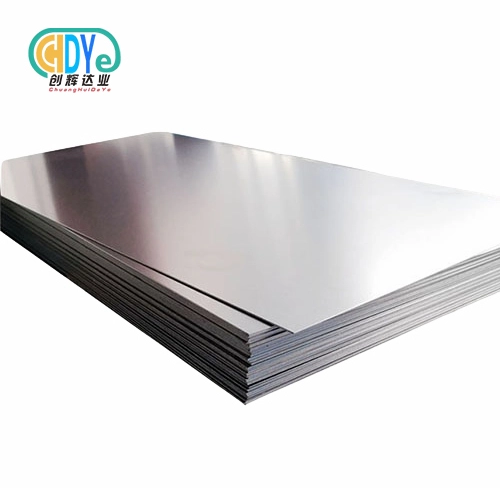
Understanding Titanium Alloy Sheets: Properties and Types
Titanium alloy sheet is basically different from pure titanium because it contains smart alloying additions that improve performance while keeping the benefits of the base metal. These man-made materials use titanium's natural ability to resist rust and be biocompatible, along with better mechanical qualities gained through careful metallurgical processes.
Key Material Properties
With the help of complex alloying methods, titanium alloys have better dynamic qualities than pure titanium. Grade 5 (Ti-6Al-4V), which is the most common titanium metal, has tensile strengths of more than 900 MPa and is very flexible. Adding aluminum and vanadium makes a two-phase lattice that improves both strength and workability. This makes the sheets perfect for complicated shaping processes. Chemical makeup is a very important factor in determining how something works. To keep the material from breaking, interstitial elements like oxygen, nitrogen, and carbon need to be carefully managed. Alloying elements, on the other hand, make certain traits better. The materials that come out of this have great fatigue strength; some types can go through millions of stress cycles without breaking.
Popular Grades and Applications
Grade 2 titanium can be shaped easily and is moderately strong, so it can be used in chemical processing equipment and in the sea environment. This grade is economically pure and has great corrosion protection while still being affordable for structural uses that don't need as much strength. The workhorse of titanium alloys is Grade 5 (Ti-6Al-4V), which has both great strength and good fracture toughness. This alpha-beta metal is used in a lot of places where the strength-to-weight ratio is important, like medical implants, aircraft structures, and high-performance car parts. Compared to Grade 5, Grade 9 (Ti-3Al-2.5V) is easier to shape and still has good strength properties. This metal works great for making things that need to be formed in a complicated way, like smooth tubes and parts that are made with a lot of small parts.
Comparing Titanium Alloy Sheets to Other Materials
Reviewing different types of materials for tough jobs, the titanium alloy sheet constantly shows better results in a number of areas. When procurement workers know about these benefits, they can make choices that improve both short-term success and long-term value.
Performance Comparison Analysis
Titanium alloys are stronger than aluminum alloys, even though aluminum alloys are lighter. Ti-6Al-4V has a specific strength that is about 40% higher than that of high-strength aluminum alloys. This means that it can be used in construction uses with a lot less weight. Titanium also keeps its qualities at high temperatures, while aluminum starts to lose its power and soften. The strength of steel is very high, but it is very heavy. When you look at how strong something is compared to how heavy it is, titanium metals are about the same as steel but weigh less than half as much. In aerospace uses, this benefit is very important because every kilogram saved means better fuel economy and payload capacity.
Corrosion Resistance Advantages
Titanium metals are better at resisting rust than stainless steel in many situations, especially when chlorides are present. Marine conditions can cause pitting and stress corrosion cracking in stainless steel, but they don't seem to affect titanium metals at all. This better resistance to corrosion means longer service life and lower upkeep costs, which more than makes up for the higher starting cost of the materials through better lifecycle economics. Titanium's inactive oxide layer forms on its own and fixes itself when it gets broken. This means that it doesn't need any coatings or treatments to stay protected. Because it can fix itself, this feature makes sure that the part works properly for its whole time, even in harsh chemical conditions.
How Titanium Alloy Sheets Are Manufactured and Processed
High-quality titanium alloy sheet is made using complex mechanical methods that make sure the qualities and performance stay the same. Knowing about these steps helps buyers clearly state their needs and correctly assess the abilities of suppliers.
Primary Production Methods
The usual way to make high-quality titanium alloys is through vacuum arc remelting (VAR). This process gets rid of flaws and makes microstructures that are all the same, which is important for important uses. The melted metal is cooled in a controlled way to create the best grain structures that make the mechanical qualities better. Forging breaks down cast structures and lines up grain flow to make the mechanical features better. When hot forging at temperatures between 900°C and 1000°C, the shape can be changed a lot while the material stays the same. After that, the sheet is rolled to make it thinner while keeping its features the same all over.
Advanced Processing Capabilities
Processes that use heat to change mechanical qualities make them fit the needs of a specific purpose. Solution treatment followed by aging can make things much stronger while still letting them bend easily. As a result, annealing treatments make materials easier to shape, which lets makers make complicated shapes without cracking or tearing. Surface finishing methods improve both how something looks and how well it works. Pickling gets rid of oxide scales and other surface impurities, and mechanical finishing can make the surface as rough as needed. These steps make sure that the quality is always the same and get the areas ready for the next steps, which could be joining or finishing.
Procurement Guide: Choosing and Buying Titanium Alloy Sheets
To successfully buy a titanium alloy sheet, you need to know the important criteria for specifications and how to evaluate suppliers. This all-around method makes sure that products meet performance standards while also taking cost and delivery into account.
Critical Selection Criteria
The choice of metal is based on the strength-to-weight ratio that is needed. High-strength grades like Ti-6Al-4V are best for applications that need to reduce weight as much as possible. Less important applications may use widely pure grades, which are cheaper. To make sure there are enough safety gaps, the tensile strength, yield strength, and elongation numbers must all match the design standards. Specifications for corrosion resistance depend on the factors of the working area. For marine use, metals must be resistant to chloride attack, and tools used in chemical processing may need to be resistant to certain acids or bases. Temperature differences in the environment also affect the choice of alloy, since some types keep their qualities better at higher temperatures.
Supplier Evaluation Framework
Quality approvals make sure that the standards for making are always met. ISO 9001:2015 certification shows that quality management is done in an organized way, while AS9100 certification shows that you follow the rules for the aerospace business. The ASTM and AMS guidelines make sure that materials meet performance levels that are known in the business. Testing skills and how paperwork is done show how technically competent the seller is. Full material test records should have data from microstructural examinations, chemical composition analyses, and mechanical property checks. Documentation that allows tracking from raw materials to finished products helps with quality reviews when they're needed. Flexibility in shipping and customization choices depends on how well a product can be made. Suppliers who can melt, forge, and roll their own products give you more control over quality and schedule. Precision cutting, pressing, and heat treatment are examples of secondary processing techniques that make it possible to create more customized solutions.
Advantages of Titanium Alloy Sheets: Why They Matter to Your Business
Using a titanium alloy sheet strategically in industrial processes has real business benefits that go beyond just switching out materials. These benefits give you a competitive edge and help you reach your goals for operating efficiency and creativity.
Performance-Driven Innovation
The ability to reduce weight makes it possible to make groundbreaking products that would not be possible with normal materials. Using titanium parts together saves a lot of fuel for aerospace companies, and medical device companies are making implants that are lighter for patients without sacrificing power. These improvements in efficiency often make the higher prices of premium materials worth it by making the products more valuable. When compared to options, fatigue resistance qualities make a part last a lot longer. Structures on airplanes made of titanium are very durable, even when loaded and unloaded many times. This means they need less upkeep and are more reliable in use. This means that it will last longer, which will lower lifetime costs and make customers happier.
Economic and Environmental Benefits
The total cost of ownership is cheaper because it requires less upkeep, even though the materials cost more at first. Titanium alloy sheet metals don't rust, so they don't need to be coated or replaced as often as steel parts do. They are also strong, so structures can be made that are lighter and use less energy while they're working. The benefits of sustainability are in line with goals for environmental duty. Titanium can be recycled, which allows closed-loop manufacturing methods. Also, parts that last a long time use fewer resources over time. Less weight means less energy use, which helps lower carbon emissions in moving modes.
Conclusion
Titanium alloy sheet represents a revolutionary new material that meets the most difficult needs of modern industry. Their high strength-to-weight ratio, along with their excellent resistance to corrosion and biocompatibility, opens up new ideas in the medical, automotive, aircraft, and industrial fields. When you invest in titanium alloy technology, you get measurable returns in the form of better performance, less upkeep, and better product features that give you a competitive edge.
FAQ
Q: What factors influence titanium alloy sheet pricing?
A: The price is based on the difficulty of the metal grade, the size of the sheet, the amount needed, and the state of the raw material market. Because of the alloying and processing that go into making Grade 5 (Ti-6Al-4V), it usually costs more than commercially pure grades. Because of economies of scale in making, bigger amounts usually get better prices.
Q: Can titanium alloy sheets be welded and fabricated?
A: When the right methods are used, titanium metals are very easy to weld. Inert gas shielding keeps the weld area clean, and limited heat input keeps the material's qualities. Forming processes need the right tools and methods, but they can make complicated shapes without damaging the material.
Q: What are typical lead times for custom titanium alloy sheet orders?
A: Standard grade materials in popular sizes usually ship within 4 to 6 weeks. Custom specifications, on the other hand, may take 8 to 12 weeks, based on how they need to be processed. Most of the time, rush orders can be processed more quickly, but there may be an extra charge. Scheduling and prices will work best if you plan.
Partner with Chuanghui Daye for Premium Titanium Solutions
Shaanxi Chuanghui Daye stands as your trusted titanium alloy sheet supplier, combining three decades of rare metal expertise with ISO 9001:2015 certified quality management. Located in China's "Titanium Capital," our advanced manufacturing facilities, including electron beam furnaces and precision rolling equipment, ensure consistent quality and competitive pricing. Contact our technical team at info@chdymetal.com to discuss your specific requirements and discover how our customized solutions can enhance your product performance while reducing costs.
References
1. Boyer, R.R. "An Overview on the Use of Titanium in the Aerospace Industry." Materials Science and Engineering: A, Volume 213, 1996.
2. Donachie, Matthew J. "Titanium: A Technical Guide, Second Edition." ASM International Materials Park, Ohio, 2000.
3. Peters, M., Kumpfert, J., Ward, C.H., and Leyens, C. "Titanium Alloys for Aerospace Applications." Advanced Engineering Materials, Volume 5, 2003.
4. Rack, H.J. and Qazi, J.I. "Titanium Alloys for Biomedical Applications." Materials Science and Engineering: C, Volume 26, 2006.
5. Banerjee, D. and Williams, J.C. "Perspectives on Titanium Science and Technology." Acta Materialia, Volume 61, 2013.
6. Lutjering, G. and Williams, J.C. "Titanium: Engineering Materials and Processes." Springer-Verlag Berlin Heidelberg, Second Edition, 2007.
Learn about our latest products and discounts through SMS or email