- English
- French
- German
- Portuguese
- Spanish
- Russian
- Japanese
- Korean
- Arabic
- Greek
- German
- Turkish
- Italian
- Danish
- Romanian
- Indonesian
- Czech
- Afrikaans
- Swedish
- Polish
- Basque
- Catalan
- Esperanto
- Hindi
- Lao
- Albanian
- Amharic
- Armenian
- Azerbaijani
- Belarusian
- Bengali
- Bosnian
- Bulgarian
- Cebuano
- Chichewa
- Corsican
- Croatian
- Dutch
- Estonian
- Filipino
- Finnish
- Frisian
- Galician
- Georgian
- Gujarati
- Haitian
- Hausa
- Hawaiian
- Hebrew
- Hmong
- Hungarian
- Icelandic
- Igbo
- Javanese
- Kannada
- Kazakh
- Khmer
- Kurdish
- Kyrgyz
- Latin
- Latvian
- Lithuanian
- Luxembou..
- Macedonian
- Malagasy
- Malay
- Malayalam
- Maltese
- Maori
- Marathi
- Mongolian
- Burmese
- Nepali
- Norwegian
- Pashto
- Persian
- Punjabi
- Serbian
- Sesotho
- Sinhala
- Slovak
- Slovenian
- Somali
- Samoan
- Scots Gaelic
- Shona
- Sindhi
- Sundanese
- Swahili
- Tajik
- Tamil
- Telugu
- Thai
- Ukrainian
- Urdu
- Uzbek
- Vietnamese
- Welsh
- Xhosa
- Yiddish
- Yoruba
- Zulu
What Is GR2 Titanium Sheet Plate Used for in Industry?
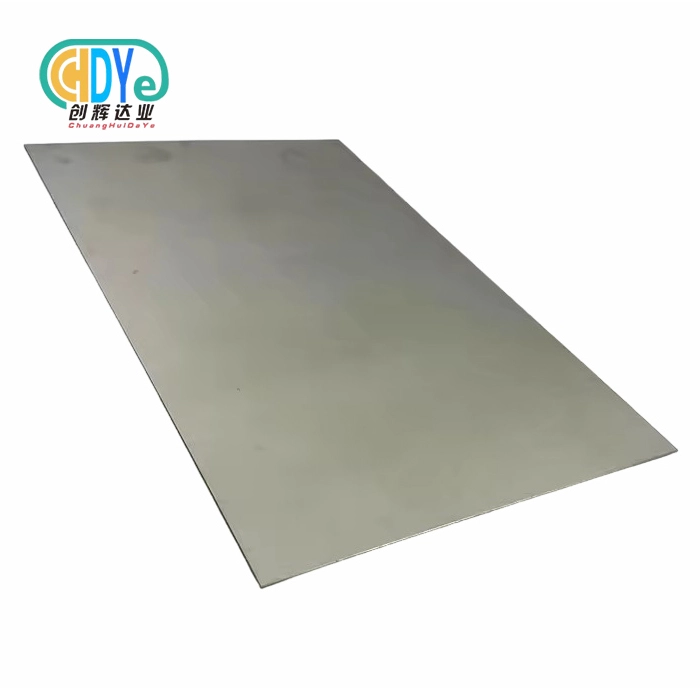
GR2 titanium sheet plate serves as the workhorse material across multiple industries, offering an optimal balance of corrosion resistance, mechanical strength, and formability. Manufactured from commercially pure Grade 2 titanium, this versatile material addresses critical challenges in chemical processing, marine engineering, aerospace, energy systems, and medical device manufacturing. Its exceptional resistance to harsh environments, combined with a strength-to-weight ratio superior to traditional materials, makes GR2 titanium sheet plate an indispensable solution for applications demanding both durability and reliability in extreme operational conditions.
Understanding GR2 Titanium Sheet Plate: Properties and Composition
The superior quality of GR2 titanium sheet plate comes from the fact that it is economically pure titanium, with few alloying elements that keep its natural resistance to rust and excellent formability. This grade is the most common type of titanium used in industry. It is known around the world as UNS R50400 and has a minimum yield strength of 275 MPa (40 ksi) while still having high bending properties that are needed for complex making operations.
Chemical Composition and Purity Standards
International standards like ASTM B265/ASME SB265, ASTM F67, and ISO-5832-2 are very strict about the chemicals that make up Grade 2 titanium. The material has less than 0.30% iron, which makes it very resistant to rusting in places with a lot of salt. Ageing oxygen content is kept below 0.25%, which keeps it from breaking easily and keeps the alpha-phase substructure that gives it its unique mix of strength and flexibility. These exact chemical controls make it possible for materials to work consistently in a wide range of industrial settings where dependability has a direct effect on safety and efficiency.
Mechanical Properties and Performance Characteristics
Grade 2 titanium has a tensile strength of 345 to 483 MPa, which makes it strong enough for use in heat exchangers and pressure tanks. The material stays very tough even at very low temperatures, so it doesn't break easily in places like LNG ports and petroleum storage systems. Its elastic modulus of about 103 GPa keeps its shape even when heated and cooled many times, and its stretch values of more than 20% make complex shaping possible without cracking or breaking down the material.
Industrial Applications of GR2 Titanium Sheet Plate
The usefulness of Grade 2 titanium plates can be seen in many industries where other materials don't have the right mix of rust resistance, strength, and ability to be shaped that is needed for important uses. Each industry uses the material's unique properties to solve its own operating problems while lowering costs and upkeep needs over its lifetime.
Chemical Processing and Chlor-Alkali Production
For reaction vessel linings, washing tanks, and heat exchanger plates exposed to harsh chemicals, GR2 titanium sheet plate is the main material used in chemical processing settings. Wet chlorine gas and hypochlorite liquids quickly break down austenitic stainless steels through stress corrosion cracking, but this material can handle it. Dimensionally stable anodes (DSA) made from Grade 2 titanium last longer in electrochemical processes, which means they don't need to be replaced as often, and there is less downtime. The rule for zero corrosion leeway lets engineers make parts that are thinner, which increases heat transfer efficiency while keeping the structure strong.
Marine Engineering and Desalination Systems
Grade 2 titanium is very resistant to saltwater, which is used in marine applications. This is especially true in desalination plants, where high-velocity brine solutions can be hard on other materials. Plate-and-frame heat exchangers are made of a material that doesn't easily wear down from the sand and silt that are in seawater. Titanium surfaces don't get biofouling, so they keep their heat transfer efficiency without having to be cleaned often. This substance is used in coastal power plants' condenser tube sheets to stop galvanic rusting and to handle thermal shock from sudden changes in temperature.
Aerospace and Defense Manufacturing
In the aircraft business, Grade 2 titanium is used for parts that aren't solid and where resistance to corrosion is more important than strength. The material is resistant to rust in air and changes in temperature, which makes it useful for engine nacelles, exhaust systems, and environmental control parts. In comparison to steel, it is 45% lighter, which helps the engine use less fuel while still being durable in hard conditions. Sonar domes and hull parts for military ships that work in corrosive seas are examples of defense uses.
Comparing GR2 Titanium Sheet Plate with Alternative Materials
When choosing a material, it's important to think about its performance, cost, and how it needs to be processed in order to get the best results in component design and operation. By learning about the benefits of Grade 2 titanium compared to other materials, you can make smart purchasing choices that meet the needs of your project and your budget.
Stainless Steel Versus Grade 2 Titanium
316L stainless steel has strong mechanical qualities and lower start-up costs, but GR2 titanium sheet plate works better in chloride-rich conditions where stainless steel pits and cracks. Titanium's high strength-to-weight ratio lets designers make parts that are smaller, which lowers the system's weight and the amount of material used. Titanium doesn't crack under stress in marine settings, so systems made of stainless steel don't have to worry about catastrophic failure modes. But titanium needs special bonding methods and an inert gas cover to keep it from oxidizing while it is being made.
Aluminum Alloys and Performance Trade-offs
Aluminum metals are very resistant to rust in normal air conditions and are cheaper to make than titanium. However, Grade 2 titanium works better in high-temperature situations above 150°C, where aluminum loses its mechanical power. Titanium's thermal expansion rate is more like steel's, which makes bimetallic assemblies less stressed by heat. Because aluminum and steel can react with each other and cause galvanic rust, they need to be kept away from each other carefully. Titanium, on the other hand, is higher up in the galvanic series, which makes this less of a problem.
Grade 2 Versus Other Titanium Grades
Grade 2 titanium has a higher yield strength than Grade 1 titanium, but it is still very easy to shape into complicated shapes. Additionally, Grade 5 (Ti-6Al-4V) has a lot more strength, but it is less resistant to rust in saltwater environments and harder to shape cold. Grade 7 has palladium added to it to make it more resistant to crevice rust, but it costs more than other grades, which may not be worth it in many situations. Grade 2 is the best mix for most industry uses that need corrosion protection and moderate strength.
Procurement Considerations for GR2 Titanium Sheet Plate
To successfully buy Grade 2 titanium, you need to know a lot about technical specs, quality standards, and the supplier's skills. This is to make sure that the material meets the needs of the application while also being as cost-effective and on time as possible.
Technical Specifications and Dimensional Requirements
Specifications for buying things must include exact limits for sizes, needs for surface finish, and acceptance criteria for mechanical properties. The standard thickness runs from 0.5mm to 50mm, and the widths range from 1000mm to 3000mm, so they can be used for a wide range of purposes. You can choose from different surface finishes, such as bright annealed, pickled, polished, and sanded. Each is best for a different end use. Cold-rolled materials have better surface quality and more accurate measurements, while hot-rolled materials are cheaper and can be used for less important tasks.
Quality Assurance and Certification Requirements
Mill Test Certificates (MTC) that meet the requirements of EN 10204 3.1 norms are necessary for tracking and checking the chemical makeup of goods. Having ISO 9001:2015 certification makes sure that quality control stays the same throughout the production process. Certifications for materials must show that they meet all relevant standards, such as ASTM B265, ASTM F67, and any requirements set by the business. Third-party inspection services can add to the quality assurance in serious situations where a material failure could have major safety or economic effects.
Supplier Evaluation and Supply Chain Management
When choosing a supplier, you should focus on their manufacturing skills, quality processes, and experience with on-time deliveries. Established providers with specific titanium processing centers offer better technical help and the ability to track down materials. Being close to major industry areas cuts down on transportation costs and wait times for urgent needs. Stable and long-term financial health of suppliers ensures a steady flow of materials for ongoing production projects. The minimum order amounts and prices should be in line with the needs of the project and the way the inventory is managed.
Best Practices for Handling and Processing GR2 Titanium Sheet Plate
The qualities of the GR2 titanium sheet plate can be kept while being handled and processed properly, which also protects workers and produces the best results. Knowing these specific needs keeps parts from getting contaminated, oxidized, or damaged mechanically, which could affect how well they work.
Storage and Material Handling Protocols
Titanium sheets need to be kept clean from steel bits that could cause galvanic rusting while they are being used. Cross-contamination from processing carbon steel is avoided by having separate storage places with non-ferrous handling tools. Protective plastic films or interleaving papers keep the sheets separate while they are being stored or moved. Climate-controlled spaces don't let condensation form, which could lead to crevice rust when it's wet outside. Mechanical damage to sheet surfaces can be avoided during handling by using the right pulling methods and padded contact points.
Machining and Fabrication Guidelines
To keep the work from getting too hard and the tools from wearing out, cutting processes need to use the right tools and cutting settings. When inert gas is used to shield the plasma cutter, it makes clean lines with few areas of high heat. Cutting with a water jet completely gets rid of heat effects while keeping precise control over the dimensions. Sharp cutting tools and enough cooling flow keep surfaces from getting too hot, which could damage their qualities. Deburring gets rid of sharp edges that could cause stress to build up during forming.
Welding Techniques and Quality Control
TIG welding, which uses tungsten inert gas, is the best way to join Grade 2 titanium parts because it lets you control the heat perfectly and makes the welds look great. Complete protection with inert gas of both the weld pool and the heat-affected zone stops the rusting that makes the metal weak. In full-penetration welds, backing gas systems protect against root pass. Cleaning after welding gets rid of rust and coloring that could make the metal less resistant to corrosion. The right joint design and fit-up reduce the amount of heat that needs to be added and the amount of warping in finished parts.
Conclusion
GR2 titanium sheet plate is very useful in many industrial settings because it is resistant to rust, has good mechanical qualities, and can be easily fabricated. In areas like chemical processing, marine engineering, aircraft, and energy systems, where standard materials don't work well, this material does the job. It is important to carefully think about technical specs, supplier qualifications, and processing needs in order to choose the best materials and the most cost-effective ways to buy them for uses that need to be reliable and work well for a long time.
FAQ
Q: What distinguishes GR2 titanium from other titanium grades?
A: The best mix between strength and formability is found in GR2 titanium, which is practically pure titanium. Compared to Grade 1, it has a higher yield strength (at least 275 MPa) and is still very flexible. GR2 is easier to work with and more resistant to rust than Grade 5 (Ti-6Al-4V), but it has a lower final strength.
Q: Can the GR2 titanium sheet plate be welded to steel structures?
A: When titanium is directly welded to steel, brittle intermetallic compounds are made that weaken the joint. Explosion-bonded transition materials or mechanical fixing with the right separation to stop galvanic corrosion are needed for a successful joining. When it comes to bolted systems, electrical separation seals work well.
Q: What quality certifications should I look for when purchasing GR2 titanium?
A: Mill Test Certificates that meet EN 10204 3.1 standards, ASTM B265 material compliance, and ISO 9001:2015 quality management proof are all important certificates. For important uses, chemical analysis and review by a third party give extra proof that the material is correct.
Q: How does GR2 titanium perform at elevated temperatures?
A: While Grade 2 titanium keeps its mechanical qualities up to 425°C, it is important to keep in mind that it has limits on its creep strength when it is used continuously above 300°C. Oxidation rates go up a lot above 400°C, which could change the surface qualities after long periods of high-temperature contact.
Contact Chuanghui Daye for Premium GR2 Titanium Sheet Plate Solutions
When your projects need solid GR2 titanium sheet plate with quality and performance guarantees, Shaanxi Chuanghui Daye offers complete solutions backed by more than 30 years of experience in the field. In China's famous "Titanium Capital," our ISO 9001:2015-certified plant can do all kinds of processing, such as custom cutting, forming, and surface treatments. We are a reliable source for GR2 titanium sheet plate, and we offer low factory-direct prices, flexible minimum order amounts, and shipping all over the world. Contact our technical team at info@chdymetal.com to discuss your unique needs and experience the quality advantage that has made us the world's best choice for aerospace, chemical processing, and marine engineering projects.
References
1. Boyer, R., Welsch, G., & Collings, E.W. "Materials Properties Handbook: Titanium Alloys." ASM International, Materials Park, Ohio, 1994.
2. Lutjering, G. & Williams, J.C. "Titanium: Engineering Materials and Processes." Springer-Verlag, Berlin, 2003.
3. American Society for Testing and Materials. "Standard Specification for Titanium and Titanium Alloy Strip, Sheet, and Plate." ASTM B265-20a, West Conshohocken, PA, 2020.
4. Donachie, M.J. "Titanium: A Technical Guide, 2nd Edition." ASM International, Materials Park, Ohio, 2000.
5. Peters, M., Kumpfert, J., Ward, C.H., & Leyens, C. "Titanium Alloys for Aerospace Applications." Advanced Engineering Materials, Volume 5, Issue 6, 2003.
6. Schutz, R.W. & Thomas, D.E. "Corrosion of Titanium and Titanium Alloys." ASM Handbook Volume 13A: Corrosion: Fundamentals, Testing, and Protection, ASM International, 2003.
Learn about our latest products and discounts through SMS or email