- English
- French
- German
- Portuguese
- Spanish
- Russian
- Japanese
- Korean
- Arabic
- Greek
- German
- Turkish
- Italian
- Danish
- Romanian
- Indonesian
- Czech
- Afrikaans
- Swedish
- Polish
- Basque
- Catalan
- Esperanto
- Hindi
- Lao
- Albanian
- Amharic
- Armenian
- Azerbaijani
- Belarusian
- Bengali
- Bosnian
- Bulgarian
- Cebuano
- Chichewa
- Corsican
- Croatian
- Dutch
- Estonian
- Filipino
- Finnish
- Frisian
- Galician
- Georgian
- Gujarati
- Haitian
- Hausa
- Hawaiian
- Hebrew
- Hmong
- Hungarian
- Icelandic
- Igbo
- Javanese
- Kannada
- Kazakh
- Khmer
- Kurdish
- Kyrgyz
- Latin
- Latvian
- Lithuanian
- Luxembou..
- Macedonian
- Malagasy
- Malay
- Malayalam
- Maltese
- Maori
- Marathi
- Mongolian
- Burmese
- Nepali
- Norwegian
- Pashto
- Persian
- Punjabi
- Serbian
- Sesotho
- Sinhala
- Slovak
- Slovenian
- Somali
- Samoan
- Scots Gaelic
- Shona
- Sindhi
- Sundanese
- Swahili
- Tajik
- Tamil
- Telugu
- Thai
- Ukrainian
- Urdu
- Uzbek
- Vietnamese
- Welsh
- Xhosa
- Yiddish
- Yoruba
- Zulu
Titanium Anode Basket Supplier Guide for Industrial Applications
When buying specialised electroplating tools for high-volume production settings, finding the right titanium anode basket can have a big effect on how well your business runs and how much it costs in the long run. These precisely designed clamps are important conductive surfaces in electroplating systems because they hold anode materials that dissolve while keeping the electrical performance stable in harsh chemical environments. Unlike standard solid anodes, titanium anode baskets offer almost 100% material utilisation, consistent current distribution, and minimum sludge production. These features solve problems that purchasing managers in the aerospace, chemical processing, and metal finishing industries face every day. To keep production going and get a steady return on investment over long periods of time, it's important to locate a source you can trust that has a history of making things and offers a full quality guarantee.
Understanding Titanium Anode Baskets: Key Features and Benefits
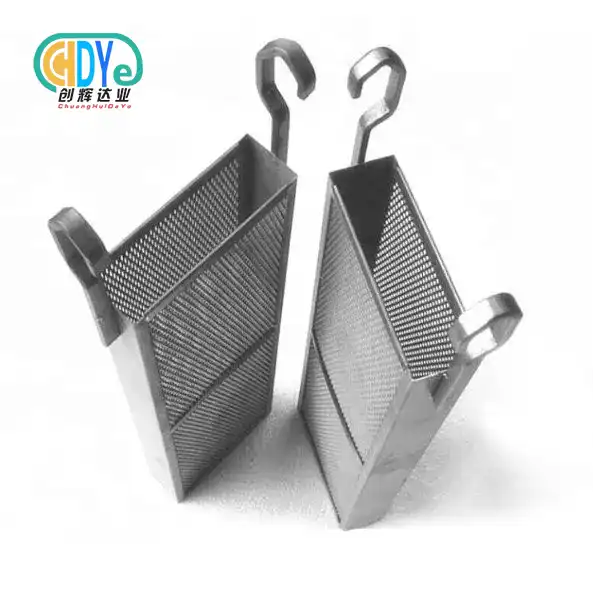
Titanium anode baskets are special holding devices used in electroplating lines. They are made from commercially pure titanium grades (usually Grade 1 or Grade 2 according to ASTM B265) and are filled with anode materials like zinc slugs, nickel rounds, or copper chunks. A protective titanium dioxide film forms naturally on the top of the basket, keeping it electrochemically neutral. This film lets electrical current flow through contact pressure to the anode material inside, which is used up. This design makes sure that the anode surface area stays the same during the plating cycle. This makes sure that the current density is the same across all cathode workpieces, which is crucial for precision manufacturing where coating thickness needs to be kept constant.
Working Principle and Current Distribution Efficiency
The mesh or pierced plate design lets the electrolyte flow through the inside of the Titanium Anode Basket, making sure that the metal ions that are dissolved are spread out evenly in the plating bath. From the busbar links, electricity flows through titanium hooks and into the basket body. It then makes mechanical contact with the anode material. This arrangement stops the size changes and random dissolution patterns that happen with solid slab anodes. It also keeps the voltage needs fixed and lowers the power used during long production runs.
Material Composition and Corrosion Resistance
The first step in our production process is choosing a high-purity titanium substrate that is more than 99.5% pure to ensure it works well in both acidic and basic fluids. Grade 1 titanium is the most flexible and can be used to make complex mesh patterns. Grade 2 titanium is stronger and better for heavy-duty uses. The substance is very strong against sulphuric acid, chromic acid, and most chloride-containing liquids. This is wonderful because normal materials like lead or graphite break down very quickly in these conditions. Because the chemicals are stable, the system can work continuously for years, which means it costs a lot less to replace than other anode systems.
Application Versatility Across Industrial Sectors
These devices are used for a wide range of electroplating tasks, such as nickel plating for car parts, copper plating for making PCBs, chromium plating for decorative finishes, and more specialised processes like silver, zinc, brass, and tin plating. They are used in the chemical processing industry for electrolytic chemistry and to clean up wastewater. They are trusted by the aircraft industry to precisely coat important parts that need to have tight thickness limits. The titanium anode basket's ability to keep electrochemical conditions stable while fitting different types of anode material and replenishment plans is helpful for all of them.
How to Choose the Right Titanium Anode Basket for Your Industrial Needs?
To choose the right electroplating fixtures, you need to carefully look at your process factors and working needs. Knowing how the design of the titanium anode basket affects the electrical qualities and chemistry of the bath helps buying teams make smart choices that balance the costs of the initial investment with the costs of running the system in the long term.
Physical Dimensions and Design Considerations
When deciding the size of the titanium anode basket, it's important to think about the tank's measurements, the distance between the cathodes, and how much anode material is needed to keep production going between refills. For vertical plating systems, cylindrical shapes work best, while rectangular shapes work better for horizontal or barrel plating systems. The smallest anode particle that can be safely held depends on the size of the mesh hole. Diamond patterns that are 10 mm x 5 mm work well for most uses, but for smaller particles, finer mesh inserts are needed. We offer full customisation services that can work with CAD or PDF plans, so they can be easily added to current equipment layouts without having to change the lines.
Electrical Capacity and Hook Configuration
The hook's shape and material make-up are determined by the amperage needs. Solid Grade 2 titanium hooks can be used for uses with less current (less than 500A), while titanium-clad copper hooks are better for high-amperage lines because they combine the corrosion resistance of titanium with the greater conductivity of copper (about 98% IACS). This hybrid design keeps the busbar touch points from getting too hot, which saves energy and keeps the workplace safe. The shape of the hook needs to ensure that it contacts the busbar links all the way across. Even small gaps can cause resistance points that waste power and speed up component wear. Our TIG welding method makes strong hook-to-basket joints that keep their shape even when temperatures change and when they are under a lot of mechanical stress.
Supplier Evaluation and Quality Assurance
When you work with providers who have ISO 9001:2015 certification, you can be sure that the manufacturing process includes regular quality checks at every stage. Material traceability paperwork should show how raw titanium was melted, formed, welded, and inspected before it was finally finished. Test records should prove the chemical makeup, mechanical properties, and correctness of the dimensions. Before committing to full production levels, you should ask possible suppliers about their ability to make custom titanium anode baskets, how quickly they respond to technical questions, and how well they can help with prototype development. When you buy something from another country, warranty terms and after-sales help are even more important due to complicated logistics that can delay replacement parts.
Maintenance, Lifespan, and Performance Optimisation of Titanium Anode Baskets
Using the right repair procedures can make fixtures last longer and keep the quality of the plating throughout all operating cycles. You can understand and avoid failure modes by taking preventative steps. This will reduce unplanned downtime and keep your production timeline safe.
Routine Inspection and Cleaning Procedures
Weld stability, hook state, and mesh structure should all be looked at visually on a regular basis to see if there are any signs of mechanical damage or strange corrosion patterns. Rinse titanium anode baskets well with deionised water after taking them out of service to keep chemicals from moving from one plating bath to another. Periodic acid cleaning, which usually involves using a 10–20% nitric acid solution and then washing well, gets rid of scale buildup and makes the surface passable again. It is important to pay extra attention to hook contact surfaces because rust or pitting in these areas raises electrical resistance and makes current passage less efficient.
Service Life Expectancy and Durability Factors
Titanium anode baskets that aren't coated usually last between 5 and 10 years of constant use in nickel or copper sulphate baths under normal conditions. They need to be replaced more because of mechanical wear than chemical rust. Operating voltage has a big effect on how long something lasts. Keeping levels below 10–12V stops the protected oxide film from breaking down, which could cause passivation. Electrolytes that contain fluoride need extra care because these ions can remove protective layers and speed up the breakdown of titanium. Coatings like mixed metal oxide (MMO) or platinum treatments make titanium anode baskets useful for insoluble anode uses. However, these coatings need to be replaced every 1–5 years, based on how much power they are exposed to.
Performance Optimisation Strategies
When you load the titanium anode basket correctly, the current flows smoothly. If you underfill the basket, the useful anode surface area goes down, and if you overfill it, the electrolyte movement can be slowed down. Keeping the distance between the anode and cathode the same during production runs stabilises the voltage needs and keeps the covering even. Monitoring the bath chemistry factors, especially the chloride levels in systems that tend to passivate, helps maintain the electrochemical conditions needed for stable operation. When titanium anode baskets start to work less well, fixing them quickly by replacing the hooks or rewelding the mesh is often cheaper than buying a whole new set. This is because it extends the life of the asset and lowers the cost of buying new ones.
Procurement Guide: How to Secure High-Quality Titanium Anode Baskets?
To find your way through the global supply chain for specialised titanium parts, you need to know how the market works, how prices are set, and how shipping affects the total cost of ownership.
Sourcing Strategies and Supplier Networks
Buying teams can get titanium electroplating fixtures from direct manufacturers, area dealers, or markets that specialise in industrial equipment. Working directly with makers in places like Baoji, China's "Titanium Capital," that are already known for making titanium can save you money by letting you combine production processes and keep you close to sources of raw materials. These connections make it easier for custom engineers to work together, and they usually offer more open minimum order amounts for making prototypes or using products in unique ways. Regional wholesalers offer localised merchandise and faster emergency replacement access, but their prices are usually higher than those of direct buying.
Pricing Factors and Budget Considerations
The grade of the material directly affects the cost structure. Grade 1 titanium costs more because it has to be more pure, while Grade 2 titanium is a reasonable compromise between performance and cost for most uses. Size, mesh complexity, and hook design all affect how much titanium anode baskets cost to make, so the price goes up or down accordingly. Customisation needs like special shapes, welding details, or surface processes raise the cost per unit, but they often pay off in the long run by improving performance. Large purchases save a lot of money because the tools wear out faster and the production process is more efficient. This makes large orders much cheaper than small ones.
Logistics and After-Sales Support
When shipping titanium parts internationally, you need to pack them properly to keep the surfaces from getting damaged during shipment. Suppliers should give full paperwork, such as test reports on the materials, certificates for checking their dimensions, and directions on how to handle them. The terms of warranty coverage should make it clear what manufacturing defects and operating wear are, and there should be enough time for review and settlement. Comprehensive support after the sale, such as expert advice for installation, troubleshooting help, and repair services, adds a lot of value after the initial purchase, especially for complex custom setups or new uses.
Leading Titanium Anode Basket Brands and Trusted Suppliers
There are specialised producers with a lot of technical knowledge and a track record of meeting the needs of demanding industrial uses in the global market for electroplating fittings. Checking the qualifications of suppliers helps procurement teams find partners who can meet long-term business needs.
Supplier Profiles and Manufacturing Capabilities
The Baoji High-tech Development Zone is home to Shaanxi Chuanghui Daye Metal Material Co., Ltd., a company with more than 30 years of experience in the rare metal business that works with soldering equipment. Our building has advanced equipment for melting, forging, rolling, and precise cutting, such as electron beam ovens, annealing systems, and TIG welding stations that are designed to make titanium parts. This vertical integration lets you handle the whole process, from choosing the raw materials to doing the final check. This approach makes sure that the quality of each production batch is the same. Our engineering team works directly with customers to make sure that titanium anode basket designs are the best they can be for different bath chemicals and operational conditions. This approach is an example of technical help that goes beyond just supplying products.
Geographic Distribution and Service Responsiveness
Suppliers with an established export system and experience in foreign markets handle customs processes, shipping logistics, and rule compliance better than makers who only serve customers in their own country. Because we are in China's main titanium-producing area, we have easy access to raw materials and specialised processing tools. This lets us offer affordable prices without lowering quality standards. We keep open lines of communication for technical questions, requests for custom quotes, and reports on the progress of orders throughout the procurement cycle. This way, we make sure that B2B clients get the help they need to make smart decisions and confident specification development.
Conclusion
To choose the right Titanium Anode Basket provider, you need to look at more than just price. You also need to look at the supplier's professional skills, quality assurance systems, and service infrastructure. Because making titanium is so specialised, the seller's knowledge has a direct effect on how well the product works and how reliable it is. Manufacturing facilities with a wide range of processing options, certified quality control systems, and skilled engineering support provide better value by making designs more efficient, maintaining uniform product quality, and working together technically in a quick and helpful way. Building ties with suppliers who know the needs of specific applications and can change production methods to meet changing industry needs is beneficial for procurement teams because it ensures the long-term stability of the supply chain for important production tools.
FAQ
Q: What causes titanium anode baskets to stop conducting electricity?
A: When the working voltage goes above the breaking point of the protective titanium oxide film, which is usually above 10–12V in some bath chemistries, passivation takes place. Electrolytes that contain fluoride can also remove the inactive layer, which results in a lack of conductivity. This problem can be avoided in situations that are prone to it by keeping the right voltage ranges and bath chemistry or selecting anti-passivation coatings like MMO or platinum.
Q: How long do these fixtures typically last when they operate continuously?
A: Standard nickel or copper plating baths with uncoated titanium anode baskets usually last 5 to 10 years before they need to be replaced because of mechanical damage rather than chemical breakdown. When MMO-coated baskets are used for insoluble anode uses, the coating needs to be replaced every 1–5 years, based on the amount of current exposure. However, the titanium structure itself can be used for much longer periods of time.
Q: Can damaged baskets be repaired instead of replaced?
A: Hook replacement and mesh rewelding are the most common ways to fix titanium anode baskets, and they are often cheaper than replacing the whole basket. Once the catalyst layer wears off, coated baskets can be sanded, pickled in acid, and coated again, which increases their total service life. Repairability depends on how severe the damage is and how much of the structure is still intact.
Q: How should I determine the correct mesh size for my application?
A: To keep material from being lost as the anode dissolves, the mesh hole sizes must be smaller than the smallest particle width. Most ball or nugget anodes can fit through standard 10 mm x 5 mm diamond mesh. For smaller particles, you'll need micro-mesh inserts or tighter perforation designs. Talking to technical experts can help you match the mesh specs to the types of anode materials.
Partner with Chuanghui Daye for Reliable Titanium Anode Basket Solutions
If procurement managers are looking for a reliable titanium anode basket manufacturer with a track record of technical excellence and full customisation options, Shaanxi Chuanghui Daye is the only company that can meet the needs of challenging industrial uses. Our factory in Baoji's High-tech Development Zone has quality systems that are ISO 9001:2015 approved and decades of experience working with rare metals. This makes sure that every fixture meets strict requirements for electrical performance, corrosion resistance, and exact size. We can make titanium anode baskets that exactly fit your tank's shape and process needs by using custom CAD and PDF plans. The TIG-welded construction gives them better structural stability for high-amperage uses. Email our engineering team at info@chdymetal.com to discuss your unique needs, get thorough technical advice, and get competitive quotes for developing a prototype or producing a large quantity. Our dedication to a quality-first attitude and customer-focused service means that you will get reliable electroplating fixtures and quick technical help as you go through the buying process.
References
1. American Society for Testing and Materials. (2021). ASTM B265: Standard Specification for Titanium and Titanium Alloy Strip, Sheet, and Plate. West Conshohocken: ASTM International.
2. Chen, L., & Wang, J. (2019). Titanium and Titanium Alloys in Industrial Electrochemistry: Properties, Applications, and Processing Technologies. Materials Science and Engineering Review, 45(3), 112-145.
3. Electrochemical Society. (2020). Modern Electroplating: Materials, Processes, and Quality Control in Surface Finishing Industries. Pennington: ECS Publications.
4. Mohanty, U. S. (2018). Corrosion Resistance of Titanium in Industrial Electrolytes: Mechanisms and Practical Applications. Corrosion Engineering Journal, 62(8), 734-758.
5. National Association for Surface Finishing. (2022). Guidelines for Anode Selection and Maintenance in High-Precision Electroplating Operations. Washington: NASF Technical Publications.
6. Zhang, H., Liu, Q., & Thompson, R. (2020). Advances in Titanium Fabrication for Electrochemical Applications: Welding, Surface Treatment, and Performance Optimisation. Journal of Materials Processing Technology, 287, 116-129.
Learn about our latest products and discounts through SMS or email